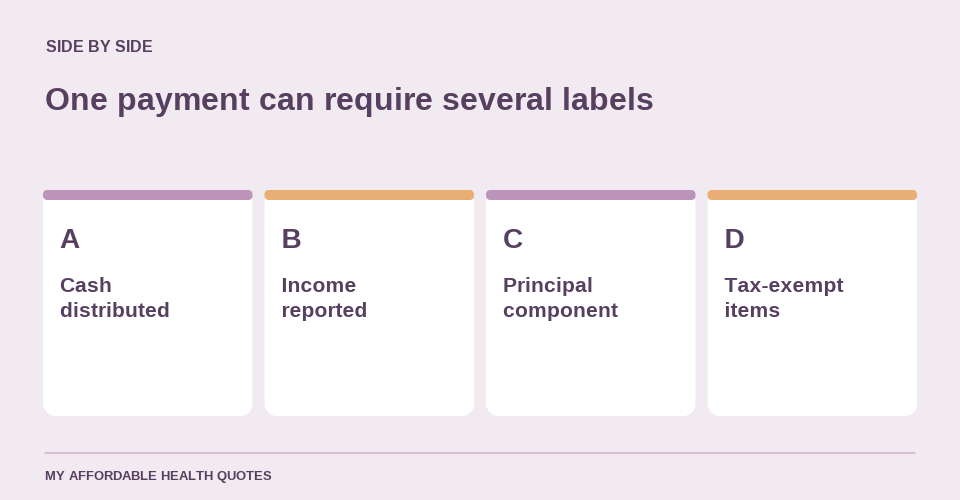
A trust distribution can help pay a household's health insurance premiums without revealing, by itself, the amount that belongs in a Marketplace income estimate. The payment may include items with different treatment, and the appropriate reporting can depend on the trust and beneficiary circumstances. A Wyoming resident receiving trust support should ask what the payment contains before entering the full deposit as income or assuming that none of it counts. The answer belongs in a coordinated discussion with the trustee and tax adviser.
The insurance task is practical: obtain a reasonable annual household forecast and use it consistently when comparing or updating coverage. It is not to reinterpret the trust instrument or recommend changes to distributions. Those decisions may involve legal duties, tax rules, and family objectives that extend beyond insurance. A clear handoff between professionals allows the coverage application to reflect the relevant facts without asking an insurance agent to become a trust accountant.
Begin with the reporting arrangement
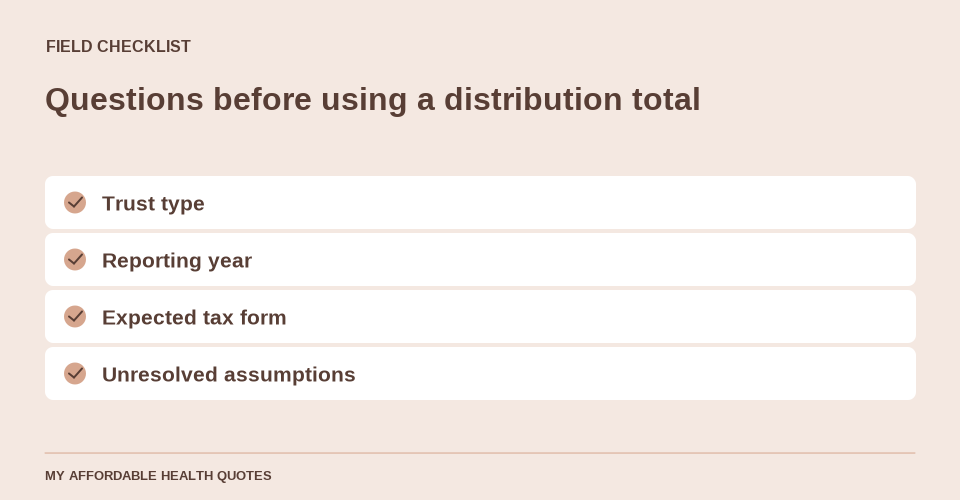
Ask the trustee what type of tax reporting the beneficiary should expect and who can provide an estimate before final forms are issued. A trust's name or the family's informal description of it does not necessarily establish the treatment. Some arrangements report items differently from others. The IRS Form 1041 instructions explain trust and estate reporting, including distinctions involving grantor arrangements and beneficiary reporting. The tax professional should identify which framework applies to the actual facts.
Record the responsible contact, expected reporting year, and anticipated form. If the household receives payments from more than one trust or estate, keep them separate. A combined bank deposit history can hide important distinctions. The beneficiary should be able to identify which source produced each payment and which professional will explain its tax character. That is the foundation for a reliable insurance estimate.
A deposit is evidence of cash, not a complete classification
The amount arriving in checking tells the household how much cash it received. It does not necessarily tell the household which income categories should be reported. The IRS beneficiary instructions for Schedule K-1 describe the reporting of a beneficiary's share of income, deductions, and other items. Those categories should be reviewed by a qualified preparer rather than collapsed into a single informal label such as family support.
Keep the spending budget separate from the reporting worksheet. The budget may use the cash distribution to pay rent, premiums, and ordinary bills. The reporting worksheet uses the adviser-reviewed income information. The two totals can differ without either being an error. Problems arise when the household silently substitutes one for the other or assumes that a payment's purpose determines its tax treatment.
A hypothetical beneficiary conversation
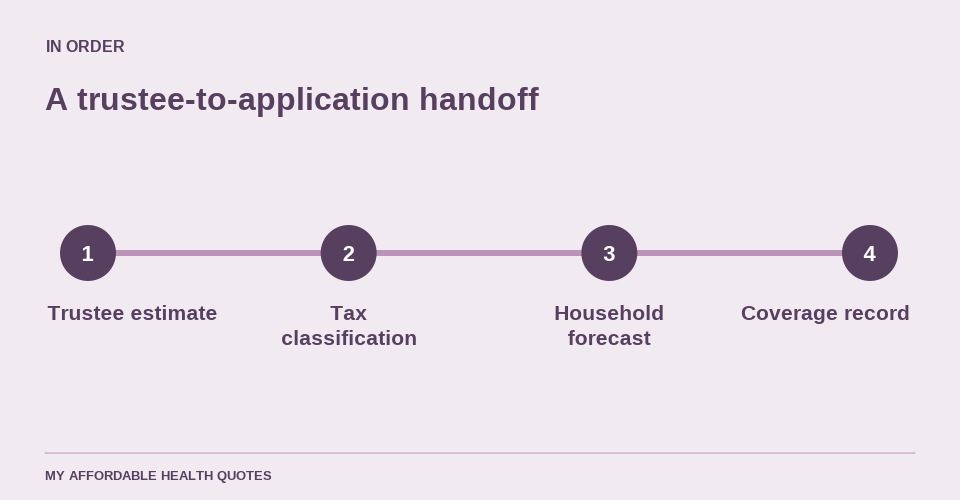
Imagine a Wyoming beneficiary who receives quarterly payments and buys individual health coverage. During renewal, the beneficiary asks whether to enter the sum of those payments as income. The trustee explains that a tax statement will identify several items and offers a preliminary estimate. The tax adviser reviews that estimate together with the beneficiary's wages and investment accounts, then prepares the household figure used for the coverage application.
The example supplies no assumed taxable percentage because there is no universal fraction that can safely be applied to every trust payment. It also does not assume that the final statement will equal the preliminary estimate. The useful practice is to obtain a source-specific explanation, document the assumptions, and revisit the forecast when better information arrives. That process is more reliable than treating every trust as either entirely taxable or entirely outside the income calculation.
Ask about income that is not distributed as cash
Some reporting questions cannot be answered by looking only at payments received. The trustee and tax adviser should explain whether any relevant items are reported to the beneficiary under the applicable rules even when the cash pattern differs. Do not infer the answer from a month with no deposit. The legal and tax structure, not the beneficiary's checking-account activity alone, determines the analysis.
Ask for a concise summary suitable for the household forecast. It can identify the relevant categories and expected amounts without circulating the entire trust instrument. If the estimate depends on a planned transaction or an unresolved accounting decision, note that explicitly. The household then knows which future event should trigger a review rather than assuming the first number is final until a tax form appears.
Check the Marketplace-specific additions
A tax adviser's adjusted gross income projection may require an additional review for the Marketplace's income definition. HealthCare.gov describes the specified additions used for Marketplace modified adjusted gross income, including tax-exempt interest. Ask whether any trust-reported item is relevant to that review. Do not assume that a tax-exempt label automatically means an item can be ignored for every benefit or insurance calculation.
This does not require the beneficiary to perform a separate trust tax analysis. It requires a clear question to the adviser: does the household forecast use the income definition needed for this application? Keep the answer with the worksheet. If several professionals use different versions of modified income for different purposes, label each definition and year so an amount prepared for another planning task is not copied into the insurance application by mistake.
Forecast the year, not the last distribution
A quarterly payment may be regular, but the underlying income or distribution pattern can change. Ask the trustee whether the current year's expected reporting differs from the prior year and why. A sale within the trust, a change in beneficiaries, or another event may require review. The insurance estimate should use a reasonable view of the coverage year, not automatically annualize the latest deposit or repeat last year's form.
Keep actual information to date separate from expectations for the remaining months. If a payment is discretionary or contingent, note the uncertainty and ask how the best available estimate should be prepared. Private scenario planning can help the household understand potential outcomes, but it should not be used to select an artificially low number for an application. The forecast should be explainable from the facts known when it is submitted.
Preserve privacy while obtaining enough evidence
Trust documents can contain sensitive information about other family members and assets unrelated to the insurance question. Do not paste them into a general quote request. Ask the exchange or adviser what specific evidence is needed and use an appropriate secure channel. A summary or relevant tax document may answer a request without exposing the entire arrangement. Follow the actual verification instructions rather than assuming more paperwork is always better.
Retain the submitted version and confirmation. If the trustee provides a revised estimate, keep both versions with a note explaining the change. This makes it easier to answer follow-up questions and prevents the beneficiary, spouse, and insurance assister from using different totals at the same time. Assign one household member to maintain the current worksheet while keeping the underlying professional records intact.
Evaluate private coverage independently of the trust
The existence of trust support does not determine which policy is suitable. Compare the exact provider network, prescription coverage, deductible, and covered in-network out-of-pocket exposure. For a Wyoming resident who travels for specialist care, verify the particular physician and facility, including any out-of-state location. Do not assume that a policy with a broad-sounding network name includes every destination the household uses.
Record the full premium and any assistance separately. A distribution schedule can help plan payments, but it should not conceal the policy's underlying cost. Ask whether available cash would cover premiums and an early medical expense without depending on an unconfirmed future distribution. A household can have access to substantial assets while still needing a realistic liquidity plan for recurring insurance obligations.
Do not let a premium quote dictate trust decisions
Changing a distribution may have consequences for other beneficiaries, trustee duties, taxes, or long-term planning. Those issues should be evaluated by the appropriate professionals. An attractive insurance scenario is not a complete reason to alter a trust's administration. Ask the adviser to compare the full consequences and explain which assumptions are controllable and which are fixed by the governing arrangement.
If the household receives conflicting advice, identify the question each person answered. The trustee may be discussing distributable cash, the accountant taxable items, and the insurance assister the annual application figure. Those answers can differ legitimately. A short reconciliation is more useful than choosing whichever number produces the lowest premium. The goal is consistency across roles without pretending that each role uses the same measure.
Reconcile the final forms
When the final tax statement arrives, compare it with the latest forecast and ask the preparer about any material difference. Determine whether the issue affects a completed year's reconciliation, a current application, or both. Do not enter a prior-year correction into the current year without understanding the reason. Keep amended statements with the originals and record the professional guidance received.
For a private-plan review, contact My Affordable Health Quotes with the current household estimate and coverage priorities. The trustee and tax adviser should remain responsible for classifying trust items. A successful process leaves a clear trail from the trust's records to the household forecast, while the insurance choice remains focused on benefits, access to care, and costs the household can actually manage.
Before the next renewal, confirm that the trustee contact and reporting schedule are still current. A change in administration can interrupt the flow of estimates even when distributions continue normally. Keeping that contact information beside the coverage calendar helps the household request updated figures early enough to make a considered decision rather than rushing through enrollment with an unexplained number.
Sources and further reading
- IRS: Beneficiary Instructions for Schedule K-1
- IRS: Form 1041 Instructions
- HealthCare.gov: Marketplace MAGI