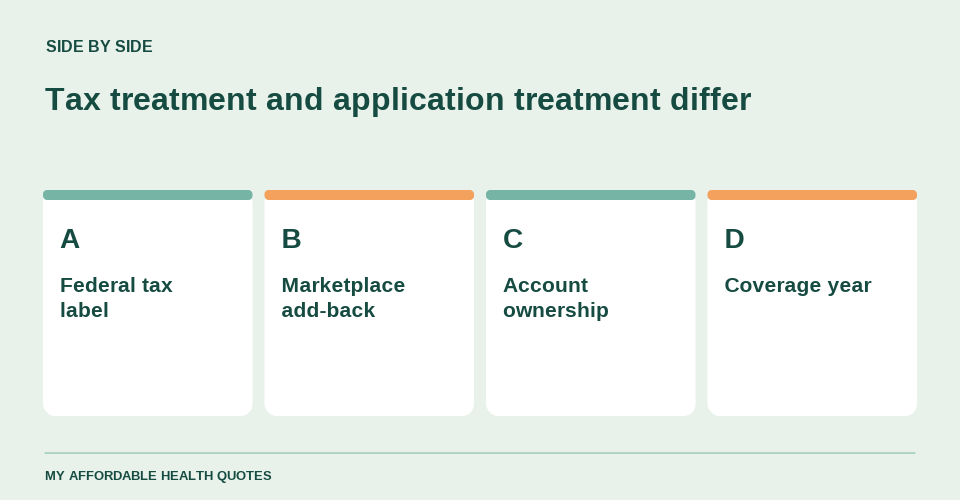
The words tax-exempt can create a misleading shortcut when a household estimates income for health insurance. An investment may receive favorable federal income-tax treatment while still mattering to the Marketplace calculation. Wyoming residents buying individual coverage should check the specific income definition rather than assuming that an investment adviser’s tax label answers the enrollment question. The practical fix is a deliberate add-back review, supported by the account records and a tax professional's explanation.
This issue often appears in households that have accumulated savings and now rely less on wages. Their tax return's adjusted gross income may look modest while other relevant income is present. The goal is not to discourage municipal bonds or recommend an investment change. It is to prevent a coverage application from using an incomplete number and to make the insurance budget understandable alongside the household's investment plan.
Begin with the definition used by the application
HealthCare.gov defines Marketplace modified adjusted gross income as adjusted gross income with specified additions, including tax-exempt interest. That means copying adjusted gross income alone can miss an item. The definition also explains why a number used for a different financial or tax purpose may not transfer directly to the health insurance application. Ask which definition is being used before comparing two estimates that appear inconsistent.
Create a worksheet with a visible line for the add-back review rather than hiding it in a note. If the household has no relevant amount, document that the check was performed. If it does, record the source and the coverage year. This small structural choice makes it harder to overlook the item during renewal, particularly when a different family member or adviser prepares the next application.
Distinguish interest from money returned
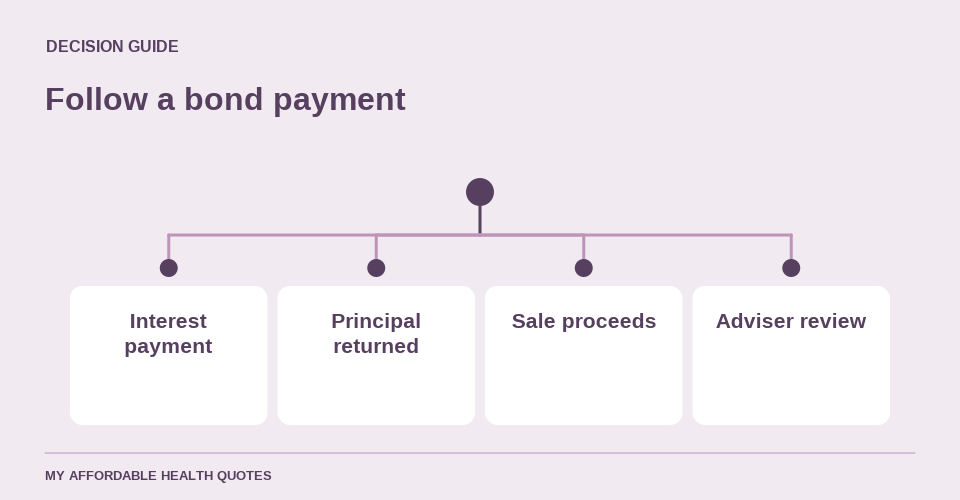
A bond-related deposit may represent interest, principal at maturity, or proceeds from a sale. Those are not interchangeable. A brokerage statement can show several events together, making the total cash movement a poor substitute for an income calculation. Ask the tax adviser to identify the character of each relevant payment. The IRS investment-income publication provides the framework for interest, gains, and related reporting questions, but individual records still need review.
For a household using a bond ladder, a large maturity payment can arrive in the same month as a regular interest payment. The bank deposit may be substantial even though the income portion is much smaller. Conversely, an interest payment reinvested automatically may never appear as spending cash. The insurance forecast should not be based solely on what entered checking. Label the transaction before deciding where it belongs in the annual estimate.
A hypothetical add-back discovery
Consider a Wyoming couple who recently reduced working hours. They prepare an insurance estimate by copying an adjusted gross income figure from a draft tax projection. During review, the accountant notices that the household also expects tax-exempt interest. The couple adds a separate line for the relevant amount and asks the enrollment assister to evaluate the revised application. The important correction is not a change to the investments; it is a change to the completeness of the information.
The example deliberately avoids a subsidy calculation because household size, coverage year, location, and other eligibility facts matter. It also avoids assuming that every bond payment is tax-exempt. The household needs the actual classification from its records. The lesson is that a technically correct tax projection can still be incomplete for another program if the required additions are not carried across.
Reinvestment does not remove the reporting question
Many investors direct interest or fund distributions back into investments automatically. That can be useful for their investment plan, but it does not by itself answer whether the amount belongs in an income estimate. Keep the reinvestment record so the adviser can distinguish income recognition from a decision about how proceeds were used. A statement showing no withdrawal to a bank account should not be treated as proof that no income occurred.
Similarly, changing the destination of a payment from a brokerage cash account to checking does not necessarily create a new income event. A transfer between the household's accounts can be counted twice if each deposit is added separately. Give every transaction a source label and retain the original statement. The objective is to count the relevant income once, using the correct classification, rather than counting every movement of the same money.
Review account ownership and household membership
A household may hold investments individually, jointly, or through an arrangement requiring special tax treatment. Determine whose income is involved before adding it to an application. A financial relationship does not automatically create a shared Marketplace household, and a person not seeking coverage can still be relevant under household rules. If ownership or dependency is unclear, resolve that with the appropriate professional rather than assigning the entire account to whichever spouse handles insurance.
Keep the insurance application focused on the information required. Detailed holdings, account numbers, and estate-planning documents generally belong in secure adviser channels, not a general quote form. A summary can identify the relevant income estimate and its source without exposing the entire portfolio. If the Marketplace requests evidence, respond with the accepted documents that answer that request and retain the confirmation.
Update the forecast when the portfolio changes
An estimate based on last year's interest may become inaccurate after a bond matures, a fund is sold, or new investments are purchased. Ask the adviser for a reasonable projection of the remaining year. Separate income already received from income expected later. If the household is considering a transaction but has not decided, keep that scenario clearly marked so it is not confused with a completed event.
Do not assume that a stable account balance means stable income. Different holdings can produce different payment patterns, and a portfolio change may also create a realized gain or loss requiring separate review. The insurance estimate should reflect the actual plan for the coverage year. Schedule a check when a major transaction becomes definite instead of waiting for year-end forms to reveal a difference that was already foreseeable.
Evidence should explain the difference from the tax return
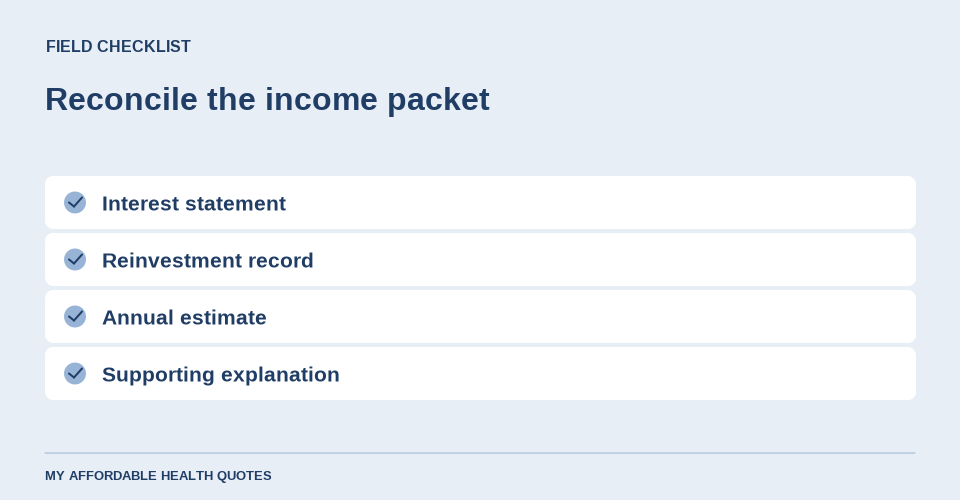
The CMS guide to confirming household income explains the use of modified adjusted gross income and supporting information. If an application total differs from a prior return, a concise explanation can help show why. The difference may reflect a new coverage year, changed employment, or the required treatment of an income source. Do not assume that a mismatch means the forecast must be replaced with an outdated figure.
Prepare a reconciliation with the prior reference amount, expected changes, and the resulting estimate. Attach only the evidence requested through the approved channel. Keep a copy of the explanation and the version of the worksheet used. This makes follow-up easier if a reviewer asks about a particular line and prevents the household from giving different totals in separate conversations simply because each person used a different document.
Keep the investment choice broader than insurance
A household considering a portfolio change should evaluate risk, liquidity, diversification, tax treatment, and its overall objectives. An effect on insurance assistance is one input, not a complete investment recommendation. Ask the financial adviser to compare the full consequences rather than choosing an asset solely because someone describes it as invisible to an insurance calculation. A product label is not a substitute for checking the actual rules.
The same discipline applies when comparing private policies. Record the full premium, then show any financial assistance separately. Examine the network and benefits before deciding that one policy is less expensive in a meaningful sense. A lower net premium can coexist with a less suitable provider arrangement or a different patient-cost exposure. The insurance decision should remain grounded in the household's care needs.
Wyoming care geography belongs in the comparison
For a Wyoming household, make a list of where routine and specialist care is actually obtained. If care involves another state, verify those providers and facilities against the exact policy rather than relying on a broad network label. Ask about routine out-of-area services separately from emergency care. These are plan-specific questions, and the presence of investment income does not make them less important.
Include practical access issues such as appointment availability and the need to coordinate multiple providers. A financially comfortable household may still prefer a policy that reduces administrative friction or preserves a specialist relationship. Conversely, a high premium does not prove better access. Keep written verification tied to the particular product and coverage year so the comparison can be revisited accurately at renewal.
Use one final number with a visible trail
Before submitting or updating an application, make sure the household, tax adviser, and enrollment assister are using the same dated estimate. It should show the add-back review and distinguish interest from principal and transfers. Resolve duplicate entries and note any uncertainty that remains. A forecast is not guaranteed to equal the eventual tax return, but it should be reasonable and explainable when made.
For assistance comparing private coverage, contact My Affordable Health Quotes with the current estimate and care checklist. Ask the tax professional to handle investment classification and keep the detailed records available if verification is requested. The desired result is simple: the household understands why its insurance income number may differ from a familiar tax figure, and its policy decision uses that information without confusing tax-exempt investments with income that never needs review.
At the next renewal, repeat the add-back check instead of assuming the prior worksheet still applies. Note which securities matured and whether replacement holdings changed the expected payments. This keeps the record useful as the portfolio evolves and prevents a correction made once from disappearing when the household starts a fresh application.
Sources and further reading
- HealthCare.gov: Modified Adjusted Gross Income
- IRS: Investment Income and Expenses
- CMS: Confirming Household Income