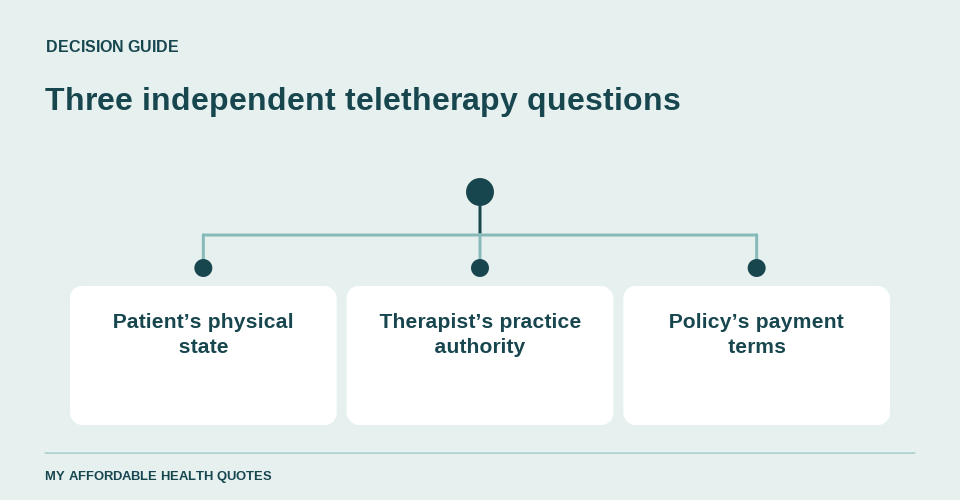
A West Virginia attorney has worked with the same therapist for years. Several times a month a hearing requires a night in another state. When buying a new individual health plan, the attorney finds the therapist in the directory and sees that video visits are covered. A more revealing question is whether a Wednesday appointment can go ahead while the attorney sits in a hotel room across the border. A familiar clinician, the same laptop and the same insurance card can add up to a different answer once the patient changes locations.
Build the example around the appointment hour
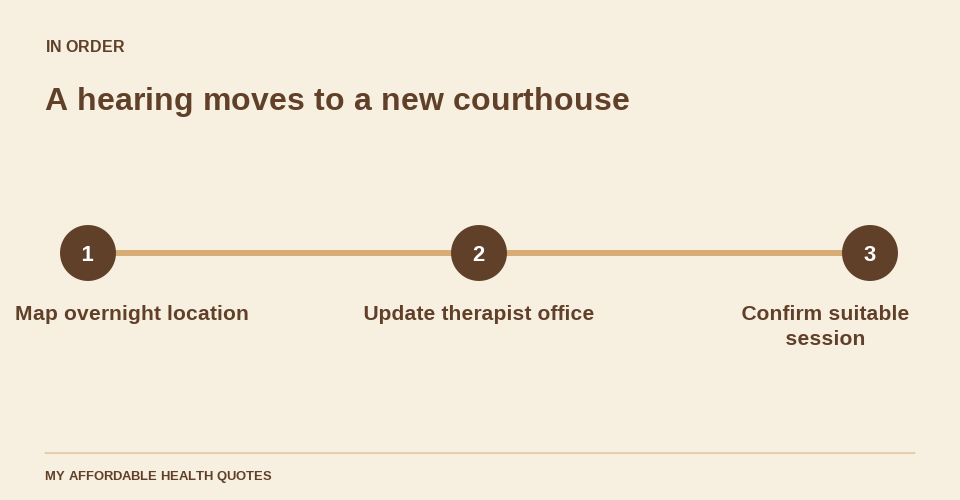
Write down where the patient will physically be when the session starts. A home address in West Virginia, a law office receiving mail there and a West Virginia insurance policy do not make a hotel room in Pennsylvania part of West Virginia. HHS guidance on interstate telehealth explains why the provider must consider the state where the patient is located. A filing schedule that changes overnight can change the question again. The useful calendar entry gives the location for that particular confidential appointment, separate from the legal venue or the office representing the client.
Give the therapist only the travel details needed for planning. For instance, share that the next regular session may take place from a private room in Pennsylvania and the one after that will take place at home. No client name, docket number or confidential hearing material is necessary to discuss geography. If the trip remains uncertain, ask how late the patient can confirm the location and what the office’s cancellation or rescheduling terms are. That conversation can save a last-minute scramble even when every ordinary appointment at home has gone smoothly.
Ask the clinician about the specific destination
Different behavioral health professions have different licensing rules. A psychologist, counselor, psychiatrist and clinical social worker may face different routes to practicing across state lines. HHS identifies possible pathways such as a state license, registration or participation in an applicable compact. Whether a pathway exists for a profession is distinct from whether this individual professional currently has the authority needed for the proposed encounter. Ask the treating office a narrow question. Can this professional provide this type of scheduled session to an established patient who will be physically located in the named state on that date?
A positive response deserves one further check. Does the office actually offer appointments from that destination under its policies, clinical judgment and service arrangements? A clinician may be permitted to practice in multiple states yet decline sessions under particular circumstances. If an office gives a conditional answer, record what condition needs to be met and who will confirm it. Avoid asking the professional to characterize a short stay as a session from home or to use a home address in place of the real location. A sound insurance comparison needs the same accurate scenario the clinician is being asked to consider.
Ask the insurer a separate payment question
Once the practice confirms that it can offer the encounter, contact the insurer for the exact private product under review. Give the clinician’s billing name, practice address and individual identifier if the office supplies it. Explain that the patient lives in West Virginia and would occasionally attend a scheduled video therapy session from the destination state. Ask which telehealth benefit applies, whether using the regular therapist is permitted, and whether the insurer limits the benefit to a contracted virtual platform. A directory entry supports the conversation, but participation for office visits alone does not settle every question about video services.
Then ask about cost sharing and any visit requirements. Is the service treated under outpatient behavioral health, a special virtual care benefit, or another policy provision? Does deductible status affect the amount? Would changing the appointment to audio only affect coverage? The practice also needs to decide whether a particular format is clinically appropriate and permitted. If a salesperson quotes a low fee for an on-demand video service, ask whether that figure applies to this ongoing relationship. An introductory visit with a platform clinician and an established therapy session can be quite different purchases.
Walk through two travel weeks
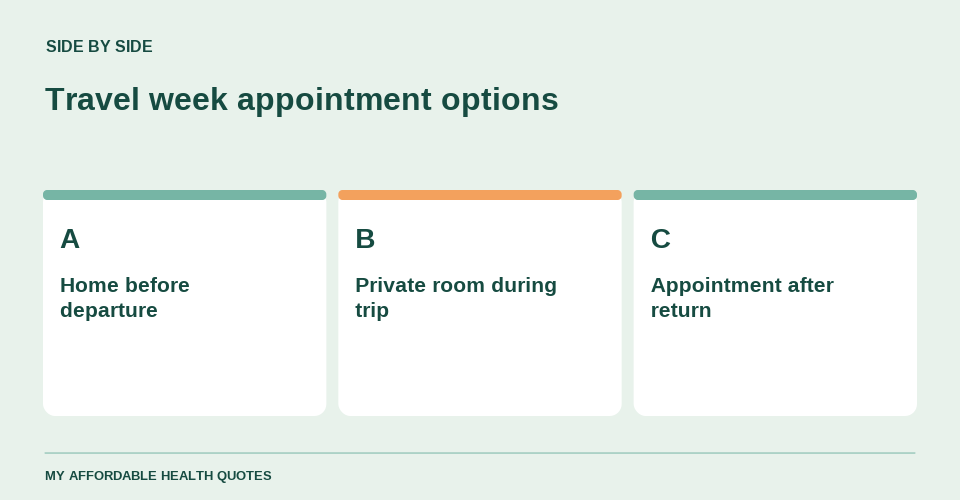
Imagine a Thursday hearing in western Pennsylvania. The attorney usually drives up after lunch on Wednesday and has the regular therapy appointment Wednesday morning from home. The plan’s home-state benefit and the therapist’s usual availability may be entirely sufficient. There is little reason to pay more for a broad interstate option if ordinary scheduling preserves the relationship and work obligations allow the earlier departure to remain flexible. What matters is whether the apparent solution will work more than once, including during a busy season when the hearing time or travel arrangements may change.
Now imagine a proceeding that lasts two weeks, with the client expecting the attorney to remain near the courthouse. The next appointment falls entirely inside the trip. Ask whether the therapist can hold a private session from that location, whether the insurer will process it, and what follow-up arrangements are suitable. A private room with a stable connection matters in real life. So does a time when the attorney is genuinely free of client obligations. A break that can be interrupted in a public hallway is a poor foundation for a confidential appointment even if coverage and licensure both check out.
Give continuity a place in the premium comparison
Consider a hypothetical choice where one plan costs sixty dollars more each month. Across twelve months the difference is seven hundred twenty dollars before any care. Determine what that additional premium buys for this particular patient. Does it preserve access to the established therapist at home? Does it improve the benefit for confirmed eligible travel appointments? Or does it simply add an unrelated virtual platform? A family may reasonably pay for continuity even if it cannot express every benefit in dollars. The comparison becomes more honest once the additional premium is connected to a service the person can actually use.
If some sessions would be self-paid, ask the office what it charges and what its arrangement with the plan permits. Ask the insurer about any out-of-network reimbursement, documentation and deductible before treating a possible reimbursement as cash in hand. A self-pay agreement cannot turn a session the clinician is unable to offer into a permissible encounter. Similarly, finding a clinician who can conduct the session has no automatic effect on payment. A careful budget has a line for the expected fee, a line for confirmed member responsibility and an explicit unknown when a reimbursement estimate remains unresolved.
Plan for the appointment that cannot happen
Ask the therapist to help design a clinically appropriate backup for foreseeable travel. Depending on the circumstances, that might mean moving a session earlier, scheduling an appointment after returning or identifying a local professional when an extended stay warrants it. A substitute provider needs their own availability, intake arrangements and means of receiving any information the patient elects to share. A directory of hundreds of names has limited value if none can accept a patient during the stay. The patient and treating professional should decide what continuity reasonably requires rather than letting an enrollment representative set the clinical plan.
Discuss the logistics of a remote session before one takes place on a trip. The office may ask for the patient’s actual location and a way to reestablish contact if the video disconnects. Keep the address where the appointment is happening handy and use a private personal device if available. A law firm or client may have policies about use of its network or rooms. Staying clear of client systems can help protect both the attorney’s personal health conversation and professional obligations. A boarding area, shared rideshare or automobile in motion is unsuitable for a planned private session.
Keep the answer usable after renewal
Make a small record with one row for each state the attorney visits frequently. Alongside it list the date of the practice’s confirmation, the carrier’s response about the specific plan and the backup the patient agreed upon with the clinician. A new state merits its own check. A new policy year, a change in the therapist’s practice or a shift from individual to group care can also change the result. The record can be short. Its purpose is to keep three separate decisions from collapsing into an unreliable statement that telehealth works anywhere.
When requesting comparable quotes, describe the current clinician and the actual pattern of travel. Ask each advisor to identify a plan that fits the home visits first, then explain which travel scenarios the plan information supports. A plan that reliably supports the most important relationship at home can be preferable to a more expensive option promising broad video access to unfamiliar clinicians. Another professional who spends months away might reach the opposite conclusion. The right comparison is personal, grounded in where the patient will sit, who can provide the care there and what the purchased coverage will pay.
Before committing, repeat the answer in a sentence the attorney could use when booking the next hearing week. For example, the home session is confirmed for a specific plan, and the office will reconsider a travel appointment once the destination is known. That level of precision makes future changes manageable. It leaves room for the hearing date to move while preserving the most important fact about the insurance decision: the attorney knows exactly which parts of the arrangement have already been checked and who can resolve the rest.