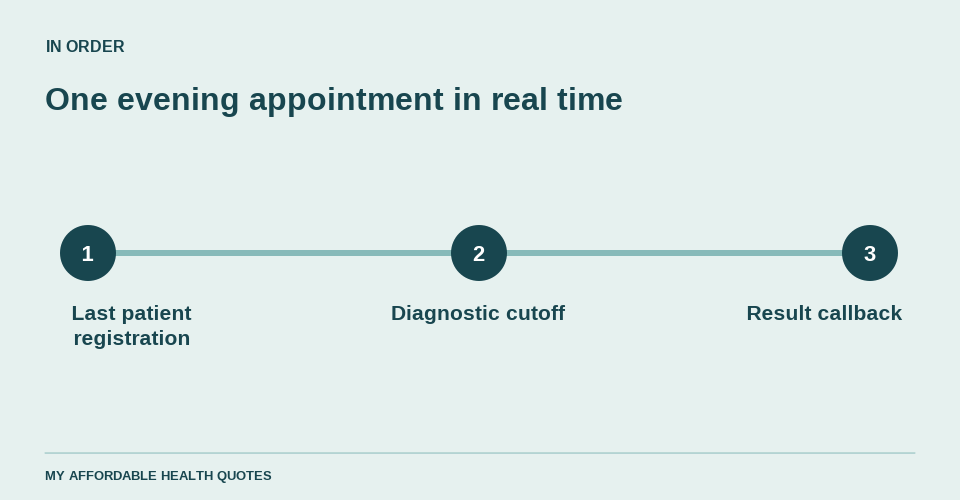
A Virginia consultant who manages overnight software outages can earn a good living and still have very few usable appointment hours. After a night at work, an eight o’clock appointment may be technically possible and practically exhausting. Looking for a private health plan, the consultant finds six urgent care listings near home. Only one accepts new arrivals after the evening handoff, and its laboratory closes earlier than the clinic. The difference between six locations on a map and one workable appointment is worth discovering before paying the first premium.
Draw a map for the hour you actually leave
Choose a representative week in the on-call rotation. Mark the handoff time, the place where the consultant expects to be and the hours actually reserved for sleep. A remote worker might end one shift at home in Fairfax County and the next at a client office closer to Arlington. Another might cover an evening incident from a temporary office in Richmond. Use the real starting locations for the household that will use the plan. A statewide directory search is a poor substitute for a drive that can be made after work with enough time left to register.
For each plausible clinic, record its exact address, whether it sees adults, and whether appointments or walk-ins are available. Call the front desk and ask when the last walk-in is accepted on an ordinary weekday. Ask separately about weekends and whether registration stops earlier when the office fills. A posted closing time can indicate when the doors shut even though the schedule for new patients filled an hour earlier. A scheduling page that displays open appointments today is encouraging evidence of how the system works, but carries no promise about a different night next winter.
Identify what the building bills as
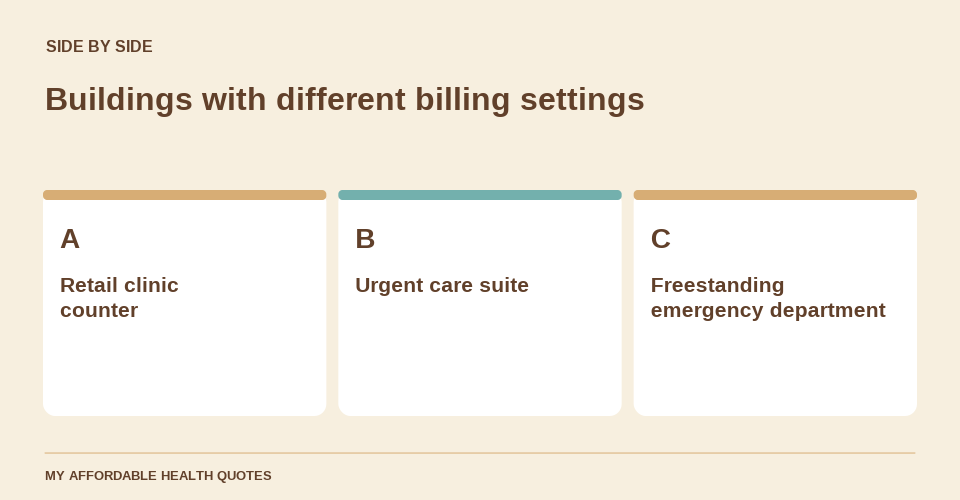
After-hours care can happen in different settings with similar-looking entrances. Ask the office how it bills the visit under the exact product being considered. Is the site an urgent care center, a physician office with extended hours, a hospital outpatient department or a freestanding emergency department? Ask whether the facility and clinician may generate separate charges, and which billing names the plan should check. A location that belongs to a familiar hospital system can participate differently across its addresses and products. Use the site and department, rather than the logo above the door, as the subject of each question.
Compare the answer to the relevant pages of the policy. A quote may show an attractive cost for a primary care visit yet use a different benefit for urgent care and another for emergency care. Ask whether the displayed copayment applies before the deductible and what happens if an additional service is performed. Federal surprise billing protections can apply to emergency services at specified facilities under qualifying coverage, including independent freestanding emergency departments. Protected cost sharing can still leave the member with an expense. CMS explains the applicable protections and the role of in-network cost sharing in its consumer resources.
Use an ordinary nonemergency visit as a purchasing example
Imagine the consultant has already received clinical guidance that a nonurgent issue can be evaluated at an appropriate outpatient site. The buying question is whether the plan has one available at a useful time. It is not necessary to decide in advance which of several facilities is appropriate for a future set of symptoms. In a possible emergency, get emergency help immediately. A spreadsheet prepared for enrollment is for comparing access and potential costs. Keep it out of urgent decisions about whether to seek care or how quickly someone needs an evaluation.
For the outpatient example, ask how a visit would work if the clinician orders a routine test. Is the test offered at that location during the evening, or must the patient return in daylight? Who performs the test and whose name appears on the claim? If a specimen is sent out, which laboratory normally receives it and how does the patient learn the result? The operator may be able to describe the normal workflow without predicting a specific clinician’s decision. Knowing what happens to an ordinary order can make the difference between one trip and an extra half-day away from paid work.
Put a realistic price on the schedule
Take an illustrative choice between two individual plans. A shorter-hours network costs forty dollars less each month, or four hundred eighty dollars across a full year. The other includes a clinic with evening appointments that fits a rotating schedule. Suppose the consultant could rearrange two daytime appointments each year without losing revenue, but a third appointment would displace a fixed client meeting. The value of that third slot depends on the contract and the ability to reschedule. A quoted hourly rate multiplied by every hour of waiting can seriously exaggerate the cost of daytime care for a salaried or retainer-based consultant.
Then price each plan’s treatment of the same hypothetical visit. If a quoted urgent care copay applies only to the evaluation, allow room for a separately billed test. If a plan applies its deductible, ask the carrier whether an estimate of the negotiated amount is available for that location. Keep unknowns visible. A sample visit price from an online cash promotion may describe a different package from a claim submitted to insurance. Ask whether a cash purchase would generate a claim or any credit toward a plan’s accumulators before including that amount in an annual comparison.
Follow the visit into the following morning
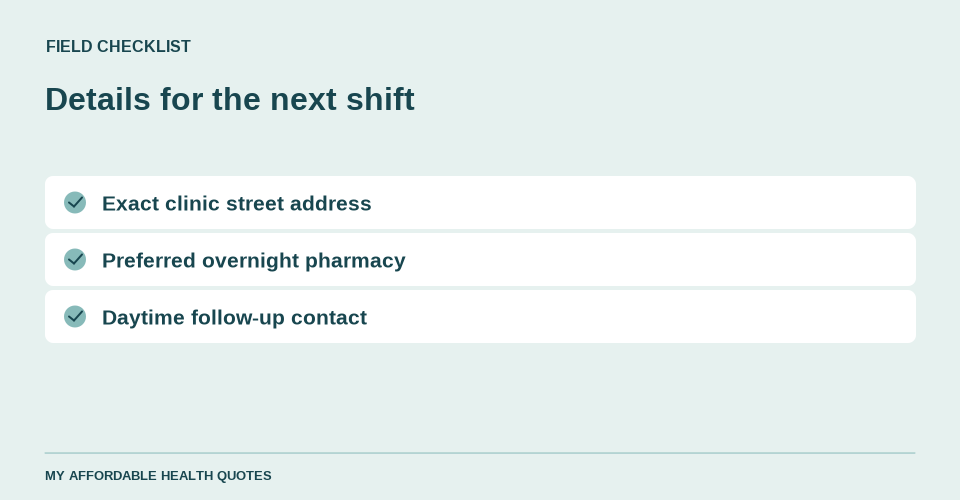
A workable night clinic can still leave an awkward gap after discharge. If the clinician asks the patient to contact their usual primary care practice, how does the report get there? Learn whether the site sends a summary into a shared chart, offers a secure download or needs a release. Ask how a clinician can reach the patient with an important result when that person is sleeping during the day. Give the office a safe contact method that will be monitored as instructed. A client’s secure incident line and a personal medical callback number serve different purposes and should be kept separate.
The pharmacy leg deserves its own check. Look up the retail location closest to the clinic and confirm when the pharmacy counter operates. A store may remain open after the staffed prescription counter closes. Confirm the exact branch with the plan’s pharmacy directory and ask how the plan distinguishes preferred and other participating locations. The clinician will determine whether prescribing is appropriate. The insurance comparison concerns where an order could be filled, what the member may owe and what to do if the nearest participating branch cannot dispense it that evening.
Account for the other people on the policy
If the consultant is buying family coverage, repeat the exercise for the people who will actually use it. A clinic that accepts adults late into the evening may have different age rules or service hours for children. A spouse who commutes in the opposite direction may prefer a daytime primary care practice close to work. Give each person one likely nonemergency scenario and identify the first reasonable option they could reach. This approach avoids overpaying for a long directory that solves the consultant’s schedule while leaving everyone else with an impractical drive or a hard-to-book appointment.
Use a simple priority order. First identify an appropriate likely access point for each person. Next verify participation and service hours. Then compare costs under the candidate policies. Keep a second location if one is available, especially when a single clinic’s closing time would leave little room after a delayed shift. The backup need not be a second urgent care site if a regular primary care practice offers suitable scheduled hours. Document the arrangements precisely enough that another household member could repeat the calls and understand what was confirmed.
Keep a short record for the renewal decision
At renewal, count encounters that actually depended on evening access. Review whether the clinic was available, whether it billed as expected and whether an additional charge reflected an ordered service or a processing error. A claim paid under the wrong benefit deserves a question to the insurer with the provider’s bill, date and location at hand. An accurately processed claim that was much more expensive than expected deserves a closer look at the plan design. Those two situations call for different next steps and lead to different conclusions about the value of changing plans.
To request an individual quote, give the advisor the relevant Virginia ZIP codes, the exact after-hours location and the plan year. Ask for the benefit paragraph that corresponds to that site’s confirmed setting. Bring the most recent schedule notes to the final comparison, including the time of the last conversation with the front desk. Overnight work can be unpredictable, yet the purchasing decision can still rest on something concrete: whether each plan offers a route from the end of a real shift to appropriate outpatient care and an achievable follow-up the next day.
One last check is inexpensive. Try to navigate the appointment system while awake at the time you would normally use it. Note whether it supports future reservations, directs after-hours callers elsewhere or requires an account before showing locations. You can learn a great deal about the plan’s practical value before needing the appointment itself. Save the verified booking route on your personal phone so the next shift change starts with that information in hand.