A pilot who buys individual health insurance needs two budgets: one for personal medical care and another for the process of maintaining professional certification. A qualifying exam may matter enormously to your livelihood even if the policy treats it as an employment or licensing expense. The FAA does not set the price charged by an aviation medical examiner. Ask the examiner for the fee, then ask the insurance carrier whether the particular service is covered under the plan you are considering. A provider’s participation in the network does not settle that question.
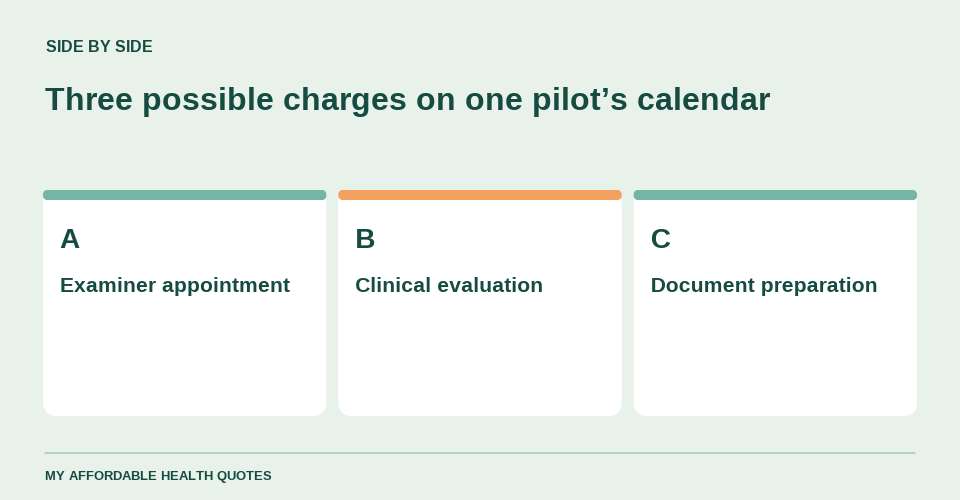
A hypothetical contract pilot based in Richmond has two competing quotes on the desk. One costs more per month and lists the pilot’s examiner in its provider directory. It is tempting to buy it on the theory that an upcoming exam will make the price difference worthwhile. Before making that calculation, break the examiner’s appointment down into the examiner fee, any separate clinical services, and any additional records needed for an aeromedical decision. Different parties can charge for each, and the answers can change the choice entirely.
Start with what the examiner is selling
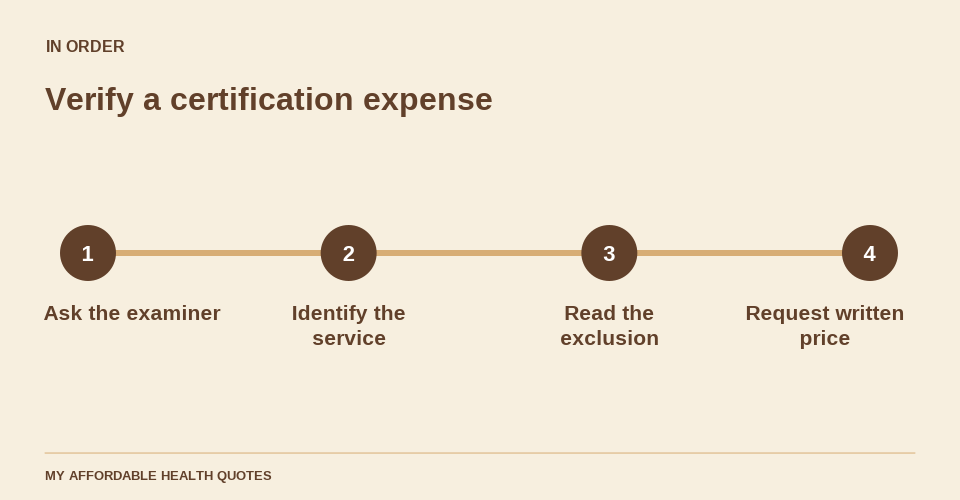
Call the examiner’s administrative office and describe the class of certificate you are seeking and the nature of the visit. Ask what the quoted price includes and what is billed separately. An office may offer an all-inclusive cash price for the examination, or it may have a separate charge for certain paperwork, tests or extensive records handling. Those are questions about this office’s services, not universal features of the FAA process. Ask whether the practice bills health insurance for this type of visit at all.
Keep the question narrow enough to get a usable answer. “Do you take my carrier?” might produce a yes because the physician treats patients under that carrier in ordinary practice. “Will your office bill this particular individual policy for my FAA certification exam, and what do I owe if it is excluded?” asks about the transaction you actually face. If a different office handles the physician’s personal medical practice, request the correct contact for each type of work.
Write down the office’s quoted amount and the date of the conversation. The Federal Aviation Administration explains that examiners may charge an appropriate fee and recommends discussing costs directly with the examiner. There is no need to borrow another pilot’s price from a discussion board. Another person may have used a different examiner, needed a different service, or received a fee reimbursement from an operator. Ask how long the office will honor its quote and what cancellation policy applies should your flying schedule change.
Find the distinction in the private policy
Look in the certificate or evidence of coverage for exclusions concerning physical examinations for employment, licensing, administrative purposes or other third-party requirements. The terms may use different language. Search within the document and check both the examination section and the exclusions. A table listing office visits with a fixed copay is only useful after you establish that the reason for visiting is a covered benefit. Bring the precise provision back to the insurer if the wording is unclear.
Read preventive care separately. An annual preventive visit and an aeromedical certification exam can involve the same individual having a conversation with a physician. Their purposes can differ substantially. Before the appointment, ask whether your clinician recommends a separate personal visit and how each service would be scheduled and billed. Do not ask staff to change the stated purpose or select a different code to get an expense paid. The correct description of what happened matters to the insurance claim and your medical record.
If a certification visit uncovers a concern, clinical evaluation of that concern is a new question. Ask which provider would evaluate it, the setting, the likely service category, and whether a referral or prior authorization would be needed under the plan. An exclusion for professional paperwork does not establish that every subsequent clinical service is excluded. Conversely, insurance paying for a clinical evaluation does not mean it will pay the physician to prepare a detailed aeromedical report afterward.
Follow a hypothetical three-invoice case
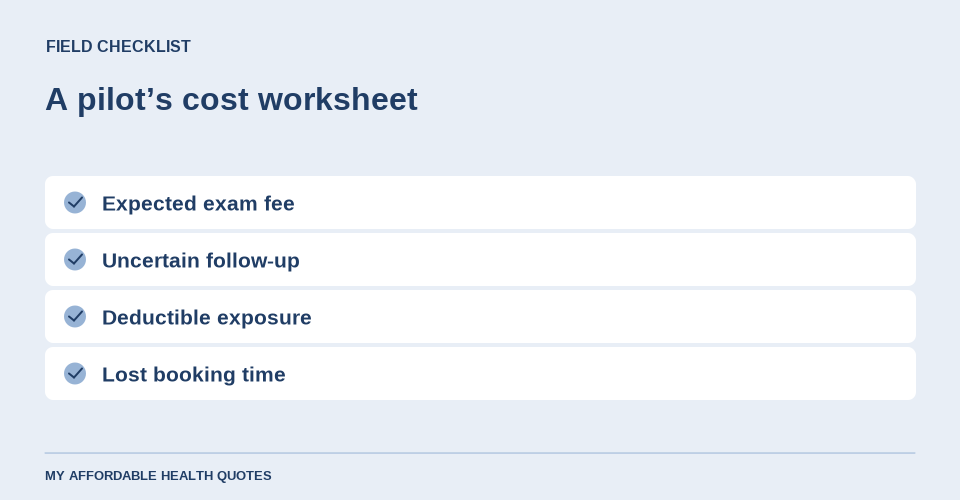
Suppose the examiner quotes this pilot $180 for the exam and does not submit that fee to insurance. A separate clinician later orders a medically indicated evaluation, and the pilot needs a copy of the results sent to the examiner. The three potential expenses are the original $180, the patient’s cost for the clinical evaluation, and any permitted records or administrative fee. Only the first has been priced. The other two need their own answers. This is an example for budgeting, not a prediction of any pilot’s medical requirements.
Now suppose one policy costs $32 more per month. Over twelve months that is $384 before the pilot uses any healthcare. Even if that policy paid the entire hypothetical $180 exam while the lower-premium policy paid nothing, that one fee would not offset the additional annual premium. With both policies excluding the exam, it provides no financial distinction at all. The more expensive policy might still be the right purchase because of a specialist, a prescription or the way ordinary care is paid. State the actual reason.
Rework the example if the clinical evaluation represents a large expense. Obtain an estimate using the exact provider, facility and plan, and ask whether you have to satisfy a deductible first. A pilot can afford to self-fund one predictable administrative exam yet still want substantial protection for unrelated ongoing care. Combining three differently priced transactions under a single label like “pilot medical” obscures which policy provisions matter and makes it harder to recognize a reasonable cash expense.
Think about timing in days away from the aircraft
Even a small difference in examiner availability can cost a contract pilot substantial working time. Keep availability separate from insurance benefits. Ask the examiner’s office how far ahead it books, what documents to bring and whether the office has enough time for your circumstances. The FAA describes the application and examination process on its own website. Check the current instructions directly, particularly before submitting an application. A health insurance agent cannot say which certificate the FAA will issue or when it will issue one.
Map the practical timeline backward from a period when you expect to be available. A pilot working out of different airports may be able to complete ordinary follow-up near home more predictably than during a layover. Check whether the local specialist has appointments outside the hours when you typically accept assignments. A broad directory that contains a specialist several counties away can be less useful than a smaller network with realistic appointment access. A promised opening is only firm when the practice actually schedules it.
Consider where the information must go after the visit. A record sent to a treating physician for clinical care may use a different workflow from a record requested for certification. Ask for the practice’s process, required authorization, turnaround and secure delivery method. Store the contact instructions with your own planning materials. Sharing sensitive information with a charter client or sending records to a general insurance quote inbox is unnecessary when the receiving medical office has a defined channel for them.
Compare insurance for the other 364 days
Build a short list of care you expect to use independently of certification. Include the pharmacy you actually visit, any specialist who manages an ongoing condition, and the hospital you would choose near your Virginia home. For a household policy, include the other family members’ priorities. Check those items against the exact plan. Selecting a whole family’s coverage around one professional appointment can create a much larger problem when someone needs a service the competing network would have handled better.
Think about lost income as its own exposure, too. Medical insurance pays according to covered healthcare benefits. A question about replacing flying income during a period when you cannot work concerns a different kind of protection. Put it on a separate agenda so a health quote does not acquire a promise the policy never made. The amount of revenue at risk can be useful in deciding how much schedule flexibility to buy, but revenue lost from a canceled booking is not a medical deductible.
When evaluating a final pair of quotes, keep two short written findings. The first identifies your out-of-pocket examiner fee under the office’s policy and whatever the health insurer confirmed about certification. The second states which day-to-day medical or family benefits justify your choice. If the office cannot confirm how an exam will be processed, set aside enough to pay its stated price and label any possible reimbursement uncertain. That avoids treating an optimistic phone answer as money already in hand.
A successful insurance conversation for a working pilot can end with an ordinary conclusion: pay a known examination fee, choose personal coverage around the medical care you and your family use, and follow the FAA’s instructions for certification. Bring the examiner quote, the relevant exclusion, and one concrete follow-up example when you ask for assistance. Those three documents let an agent distinguish a difficult coverage question from a predictable business expense before you commit to a year of premiums.
Date both findings so next year’s review begins with a real comparison instead of a half-remembered assumption about what the previous carrier paid.
Sources and further reading
- Federal Aviation Administration — Medical certificate fees
- Federal Aviation Administration — Getting a medical certificate
- HealthCare.gov — Comparing health plans