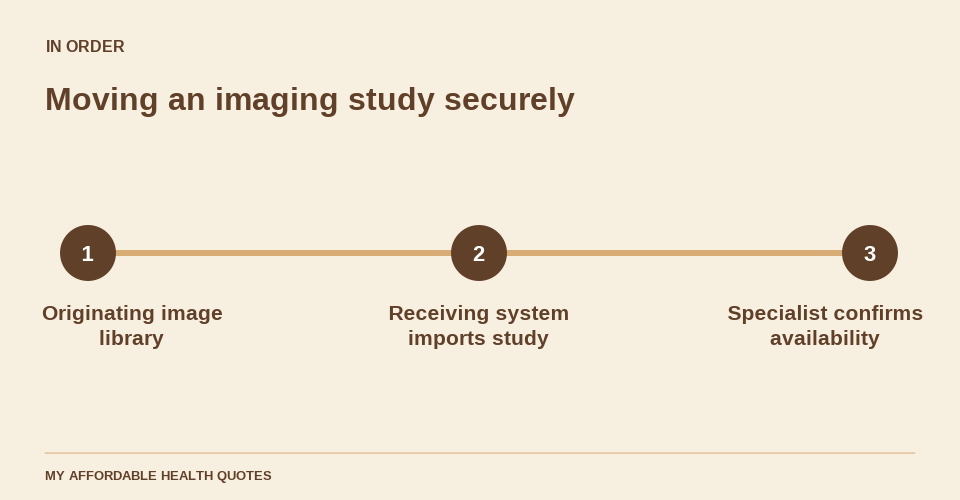
A West Virginia engineering consultant has a recommendation for a planned procedure and would like another specialist’s assessment. The first clinic already obtained imaging. The consultant assumes the second appointment will involve a single office copay because the images already exist. Before choosing a private plan, it pays to distinguish four transactions that can get bundled together in conversation: obtaining copies of records, transferring them into another system, seeing a second specialist, and paying for any formal reinterpretation or newly ordered imaging. Each has a different person who can answer questions about the cost.
Ask the receiving office what the specialist needs to see
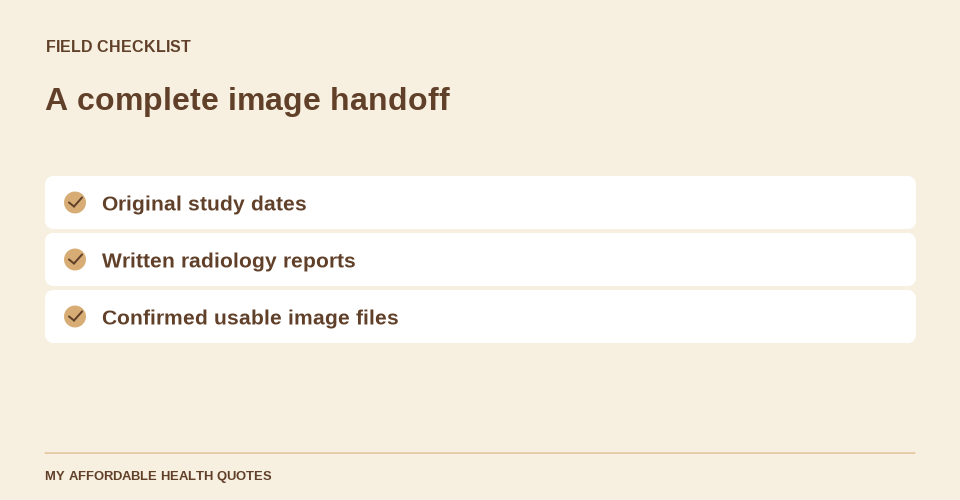
Start at the second office, before ordering copies from the first. Does it require actual image files as well as the radiologist’s written report? Which studies and dates are needed? Will the office schedule before the records arrive, or does a clinician review them at intake? A patient who sends only a screenshot from a portal may have provided enough to identify the study yet too little for the specialist to evaluate it. Ask for the office’s approved electronic transfer process, accepted alternatives and name of the team that confirms the records are usable.
The specialist may also need prior reports, procedure notes or information about earlier treatment. Ask for a short, specific list and send it to the originating facility through an appropriate channel. A professional accustomed to assembling large technical files for clients might be tempted to give the recipient every record available. A focused transfer is easier to confirm and reduces unnecessary disclosure. Avoid using a business file-sharing service, a colleague’s email or an unverified upload link for sensitive personal information. Ask the practices how they exchange clinical files and how the patient can participate securely.
Identify the owner of the image archive
The clinician who ordered the study may have a report in the practice chart while another facility maintains the images. Read the report header for the performing location, study date and identifying information. Ask whether the hospital’s imaging library, an independent radiology practice or another records office handles patient requests. Keep the original report and write down where each request went. A network that uses a single brand across West Virginia can still have different records systems at different facilities. Confirming the archive early can save days of asking the wrong office for a file it never held.
HHS explains that individuals generally have a right under HIPAA to obtain copies of diagnostic images held in their designated record set by a covered entity, subject to the applicable access rules. Discuss the requested form and available format with the custodian. HHS also describes limits on fees for copies provided through the individual right of access. Ask for the estimated charge and delivery method in advance. The rules around a patient’s personal copy and other arrangements can differ. A charge for making a copy is also distinct from a specialist’s clinical fee for interpreting the images.
Learn whether anyone issues a new radiology report
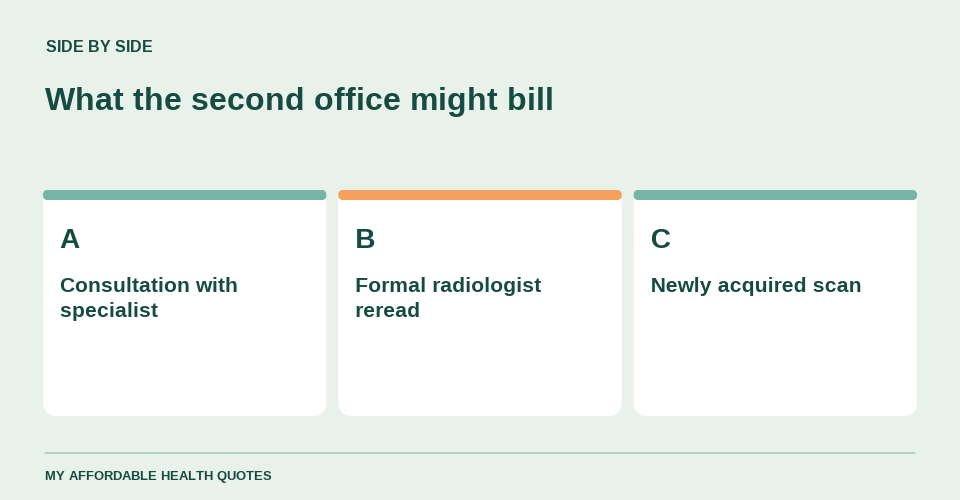
Some specialists review existing images during their consultation and document their findings in their own notes. A facility may instead require a radiologist to issue a separate formal interpretation of outside images. Ask the receiving office which workflow applies to this appointment, who performs a formal reread if needed and whether it is billed separately. Ask for the billing name and likely charge description the insurer should review. The patient’s clinical question might be identical in either arrangement while the financial result differs substantially.
Suppose the second specialist is in the network under consideration, but a separately contracted radiology group would handle an outside-image reinterpretation. Confirm that group with the carrier and ask about cost sharing for that service at that location. A second-opinion program advertised by an insurer may use a specific vendor to review records remotely. Find out whether that program includes the chosen specialist, whether it produces a written opinion, and how an in-person consultation is processed outside the program. An attractive remote review may be valuable, especially when travel is difficult, but it purchases a different service.
Price the trip using the patient’s actual address
A consultant near the West Virginia border may be closer to a specialty facility in a neighboring state than to one across West Virginia. Use the member’s home ZIP code for the quote and the actual facility address for the visit. Ask about planned outpatient services outside the usual service area, referral requirements and network participation for the particular plan. Some network designs provide narrower options for scheduled care. A general statement about emergency care during travel is not an answer about a planned specialist consultation at a destination chosen in advance.
Check the visit location as well as the specialist. The same person might offer appointments in a physician office and a hospital outpatient department, with different charges. Ask who bills at each site and which would accept the existing images. If a remote visit is offered, confirm both that the clinician can see the patient from the place where the patient will be physically located and that the policy covers the encounter. An independent consultant with a flexible calendar may be able to choose a lower-cost location, provided the specialist considers the format and setting appropriate.
Avoid promising that a new scan will be unnecessary
Ask the receiving team when it can decide whether the existing study is sufficient. Age, clinical changes, the body area imaged, quality, technique and the question the clinician needs to answer can all affect that judgment. The patient can reasonably ask why additional imaging is recommended and what the new study is intended to clarify. The treating team determines the clinical need. Saving an image file is useful administrative preparation. It cannot settle whether a new scan is medically appropriate or whether changes in symptoms deserve prompt care.
If the clinician orders new imaging, start a separate cost inquiry. Identify the proposed test, location, interpreting group, need for advance review and expected member amount. Ask the practice whether the patient may choose a participating imaging location suitable for the order. A prior authorization for a procedure or an earlier scan may not apply to a new study at a different facility. Keep any policy review aligned with the actual order. When care is urgent, follow clinical guidance promptly. Price comparison is designed for the planned portion of a second opinion that can appropriately wait.
Build two budgets for a realistic comparison
In the first budget, assume the existing scans are suitable and the second office charges only for the consultation and an identified formal reread. In a second, add a newly ordered study and associated interpretation at a specified facility. Use estimates for the policy’s allowed amounts and the member’s deductible status where available. Label amounts that remain uncertain. A fee for transferring records or paying for transport and an overnight stay can matter to the household while falling outside covered medical spending. Keep those expenses separate from amounts that can affect the policy’s deductible or out-of-pocket tracking.
For example, if a more flexible policy costs fifty dollars more monthly, the fixed difference is six hundred dollars over a full year. A one-time second opinion should be assessed against that annual figure and the other care each plan supports. A lower-premium network with a confirmed suitable specialist nearby may work well. If several planned consultations are likely at a destination center, the broader arrangement could have a different value. Ask what each policy offers across the whole household before allowing one specialist’s reputation or one unexpectedly expensive image-copy estimate to drive the purchase.
Verify receipt before taking a day off
A message that the originating hospital sent a study is half the handoff. Ask the receiving office whether it imported the correct study under the right patient and whether the specialist can open it. Request confirmation that the written report arrived too. Find out when the office will say whether the visit can proceed and whether it has enough information to request any required insurance approval. A patient who has arranged travel should also understand cancellation terms and what happens if the practice needs more records at the last minute.
After the appointment, obtain the written second opinion through the appropriate channel and ask where it should go for follow-up. Check the explanation of benefits against the actual services performed. If a charge appears for a new scan on a day only a reread took place, ask the provider to identify the service before paying or disputing it. When requesting future West Virginia quotes, retain the names of the billing organizations that genuinely participated. That short list, alongside the consultation report and the correct image archive, will be a far better starting point than a generic request for a plan with good imaging coverage.
For the consultant, the time saved can be as meaningful as the direct cost. Knowing that the specialist has opened the correct file before leaving home turns an expensive day away from client work into a planned clinical conversation. It also gives the patient more room to focus on the reason for seeking another opinion in the first place. Keep a copy of the second specialist’s contact instructions as well. A later question about the opinion can then reach the right practice without restarting the original records search.
Sources and further reading
- HHS, access to diagnostic images
- HHS, fees for copies of health information
- HealthCare.gov, plan and network types