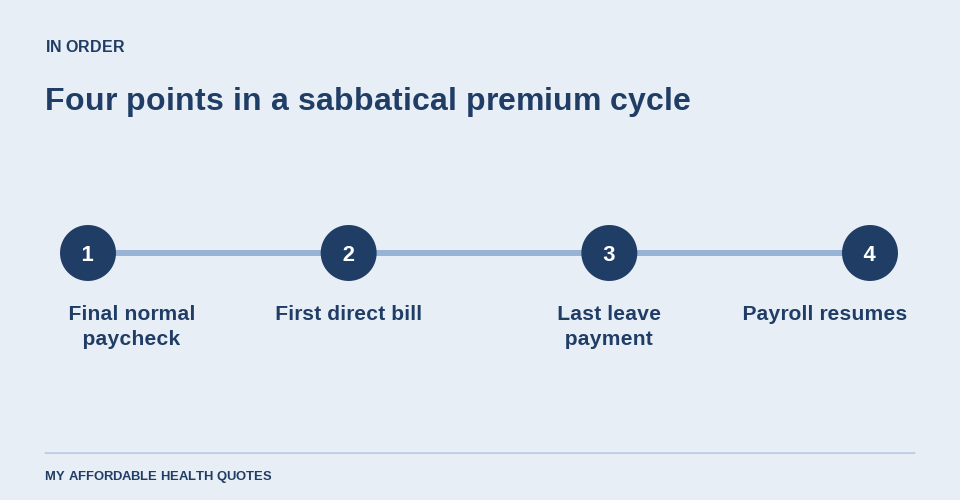
A Utah engineering director plans to take twelve unpaid weeks to finish a noncommercial research project. Her spouse is a well-paid independent consultant, so replacing her salary for a few months is manageable. The easy-to-miss expense is the health insurance contribution normally collected from her paycheck. Once payroll stops, who pays whom, when, and for which month? A family can have plenty of cash and still discover a premium was never credited because two offices each thought the other was arranging it.
Read what the leave approval actually approves
A manager’s email may approve time away and identify a return date. It may say nothing about benefits eligibility while the employee is away, how long the employer contribution continues, or how dependents are treated. Request a written explanation from benefits administration using the specific leave category, duration and anticipated dates. Ask whether the answer changes if the first few days are covered by paid time off and the rest are unpaid. A return date on a department calendar is a scheduling commitment. It does not answer the family’s insurance questions by itself.
Distinguish a discretionary sabbatical from qualifying leave under the Family and Medical Leave Act. The Department of Labor explains that eligible employees taking qualifying FMLA leave can continue group health coverage under the same terms as if working, including responsibility for their usual share. The law has eligibility and qualifying-reason requirements. A personal research break is not automatically covered because it lasts twelve weeks or has been approved by a manager. If the reason for the leave changes, speak privately with the appropriate leave administrator about what protections and procedures apply. Avoid making the family’s coverage decision from a label on the team calendar.
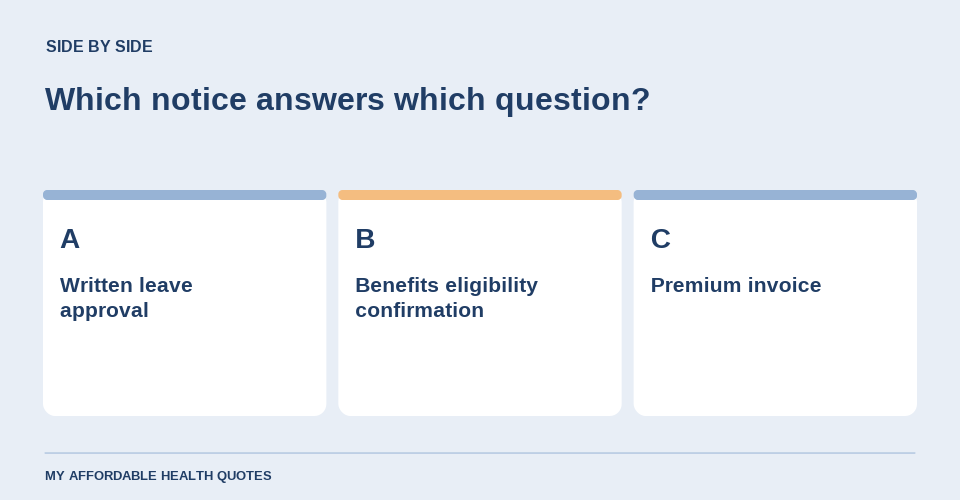
Obtain a statement of eligibility for each family member
Ask benefits administration to list who remains covered, the last day of coverage under the current arrangement and any date on which the contribution changes. If coverage continues through the full approved leave, the first task is maintaining the payment process. If coverage ends earlier or the employer stops contributing, the family may have a different decision. Ask whether further continuation is offered, who handles notices and what it will cost. Keep the written explanation even if the employer expects a seamless return. If a claim later shows inactive coverage, it provides a clear starting point for identifying where the records diverged.
Take care with a change affecting only some family members. A company might describe the employee’s continued eligibility without explaining the arrangements for a spouse and children. Ask for the applicable family tier and the actual amount to be collected for it. If the spouse carries another policy, verify which household members are currently on each one. A check of both cards can also uncover a dependent who aged into a different arrangement or a recent change that never reached payroll. The sabbatical payment schedule is the wrong place to discover for the first time who has actually been enrolled.
Match paycheck deductions to coverage months
Collect the last two pay statements and ask payroll which coverage periods the deductions purchased. A semi-monthly deduction, a biweekly deduction and a monthly invoice are different payment units. The family cannot safely assume that two ordinary deductions equal the direct bill for every calendar month. Ask whether payroll withholds in advance or arrears, whether a final paid check will include a normal deduction and whether a direct billing vendor will take over. Identify the last date covered by a deduction, then ask the administrator to name the next coverage month and its due date.
Imagine normal pay slips show a hundred and twenty dollars twice monthly. The family reserves two hundred forty dollars for each full month away. That arithmetic may be right if the employer continues its contribution and direct billing simply replaces payroll at the same family rate. Suppose, however, the written policy provides that after a specified period the employee becomes responsible for an additional employer contribution. The assumed figure could then cover only part of a bill. Request an actual schedule by coverage month, including partial months, instead of multiplying the net amount on a familiar paycheck by the number of weeks away.
Learn how to pay the first invoice
Ask whether the family must enroll in a new payment portal, set up automatic withdrawal, send a check with an account identifier or make an arrangement before leaving work. A bank transfer to the company may reach the employer without ever being credited to the health premium account. Ask where the receipt will be sent and whether the employee’s corporate account will remain accessible. If a third party handles leave billing, obtain its name and verified contact method from benefits administration. Learn how long the administrator expects a payment to take to appear on the account.
Record two dates for the first payment: when it must reach the administrator and when the household plans to send it. If a notice never arrives, call the identified billing contact before the due date and ask how to obtain a duplicate. Silence does not establish that coverage is free or that a grace period applies. Conversely, sending a duplicate payment in a panic can complicate reconciliation. Ask whether a payment is pending and how to document it. A dated confirmation tied to the employee identifier and coverage month is more useful than a bank image with no indication of the purpose.
Compare replacement coverage only when you know the trigger
If the employer explains that eligibility actually ends, request documentation of the reason and exact end date. HealthCare.gov describes how losing qualifying job-based coverage can permit Marketplace enrollment outside ordinary open enrollment. A voluntary decision to stop paying or drop coverage should not be treated as an interchangeable trigger. If considering a spouse’s employer policy or continuation coverage, ask each administrator separately about eligibility, deadlines, effective dates and costs. The family may be comparing several legitimate paths, but no single administrator controls all of them.
For an individual plan, quote the Utah residence, identify the people who need coverage and check the providers and prescriptions they expect to use during leave. A research trip or temporary stay elsewhere creates practical questions about planned routine care away from home. If comparing expected annual household income, include the months already worked and the spouse’s expected income as applicable under the Marketplace rules. The employee earning zero salary for three months does not necessarily make the household a low-income household for the coverage year. Distinguish an official eligibility determination from a preliminary quote based on incomplete income information.
Give the short leave its own expense comparison
Suppose the family can keep its existing plan by paying specified contributions totaling twelve hundred dollars during the leave. An alternative for which enrollment is genuinely available would cost nine hundred dollars over the same coverage months. Before choosing the apparent three-hundred-dollar saving, consider whether the new arrangement would start a new deductible, change ongoing authorizations or require a new provider. Ask whether returning to the employer plan later would restore prior accumulations. A substantial amount already paid toward a deductible can change the value of staying, although the answer depends on the plan’s actual rules and timing.
A short replacement policy comparison also needs an end date. If the employee returns on a Monday, ask when restored active benefits begin rather than assuming the Monday itself. An individual plan might need a separate termination instruction once replacement coverage is confirmed. Record the effective dates for each household member and the final premiums due. If returning part time, confirm whether that schedule meets the employer plan’s eligibility rules. A person who returns for a few hours to help a project may be back on payroll before reaching the benefits status expected by the family.
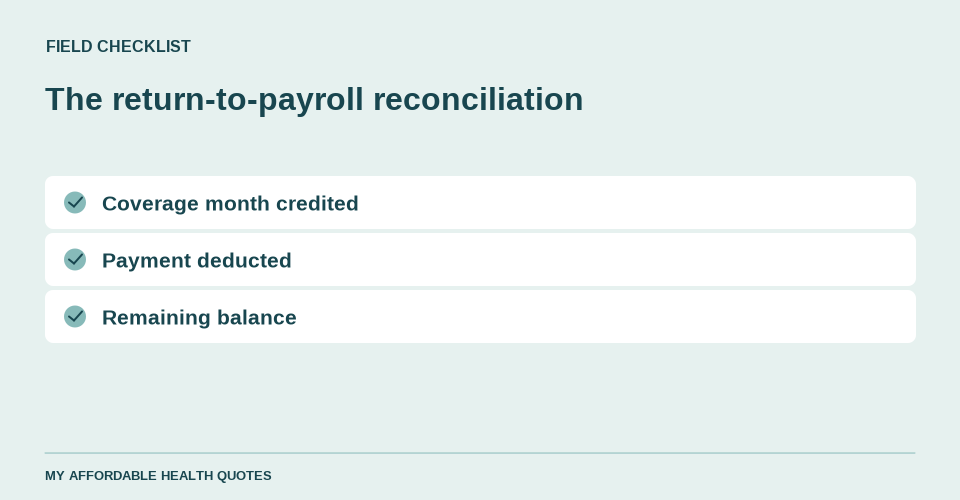
Reconcile the first two checks after the return
Provide the leave billing office and payroll with the agreed return date. Ask who closes the direct billing account and when automatic deductions should stop. Compare the final direct payment, the first two new pay slips and any balance-forward notice. An extra-large deduction might represent an agreed catch-up contribution or an error. A missing deduction might mean the month has already been paid or that payroll has not restored the correct benefits code. Request a breakdown by coverage period and family tier before assuming which explanation fits. Keep proof that any duplicate was credited or refunded.
If a clinic reports an inactive policy after the family made its payments, speak with both benefits administration and the carrier. Ask the employer whether an eligibility update was transmitted and the carrier whether it was received and applied. Give the clinic a factual update and ask how it handles claims while records are being corrected. Where the coverage decision is genuinely disputed, use the plan’s written review process and deadlines. A payroll receipt is important evidence of payment, but confirming eligibility and processing a medical claim can require action by different teams.
Before the first day away, the family should be able to answer a plain question for every month of the break. Which plan covers each person, who owes which premium, and how will they know it was credited? Where the answer is uncertain, address the uncertainty with the office responsible for that month. The household can then judge whether it needs a Utah private insurance quote and, if so, for exactly whom and for how long. That gives the research sabbatical a dependable budget even when work, benefits administration and billing run on three different calendars.
Sources and further reading
- U.S. Department of Labor, employee protections during FMLA leave
- U.S. Department of Labor, FMLA overview
- HealthCare.gov, losing job-based insurance