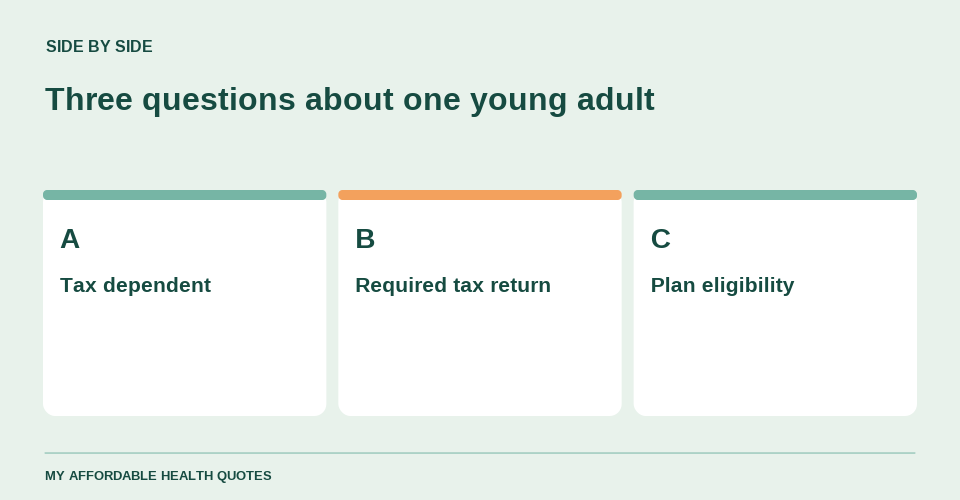
A child's investment account can introduce an unexpected question at health insurance renewal: does the income belong in the family's Marketplace estimate? The answer is not determined simply by the child's age or whether the parents use the investment money. Utah families should distinguish tax dependency, the dependent's filing requirement, and eligibility to remain on a health plan. These are separate rules, and a correct answer to one does not automatically settle the others.
This issue may arise after a custodial account earns interest, an investment is sold, a trust reports income, or a young adult combines summer wages with investment earnings. The family should ask a tax professional to evaluate the actual facts and use the current application instructions. The goal is accurate reporting and suitable coverage, not restructuring ownership or dependency solely to obtain a preferred insurance price.
Establish who owns the income
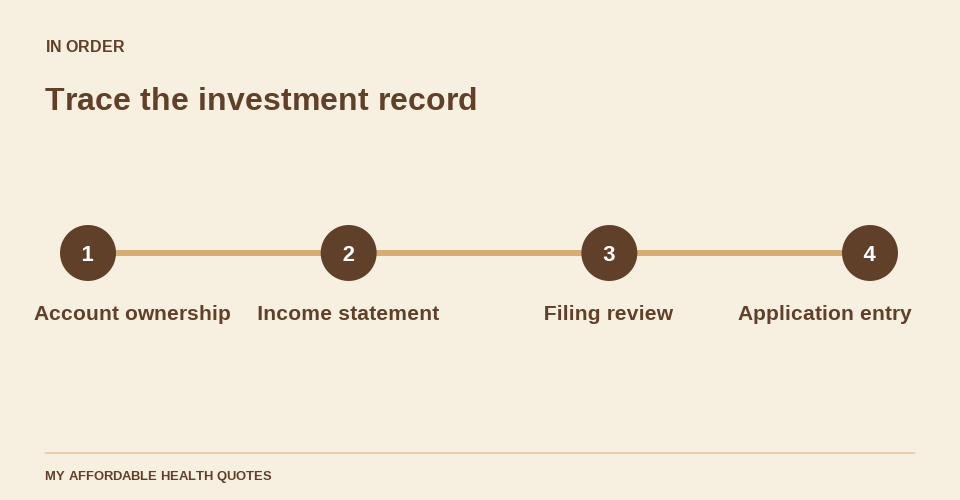
Start with the account's legal and tax records. A parent's informal description of an account as money for a child does not necessarily identify who owns it or who reports its income. Conversely, a parent managing an account may not be the person whose tax return reflects it. Obtain the account title, relevant tax statements, and any trust or custodial information needed by the adviser. Do not infer ownership from who has the login credentials.
Keep each account separate until the tax professional has reviewed it. If a child has both a custodial investment account and wages from work, those sources may require different analysis. A transfer from a parent is not automatically the same as income earned by the account after the transfer. The application should reflect the resulting classification, not a total assembled from every deposit in the child's bank account.
Ask the filing-requirement question directly
IRS Publication 501 explains dependency and filing requirements, including distinctions between earned and unearned income. Use the rules for the actual tax year and the dependent's circumstances. Avoid applying an old threshold found in a saved article or assuming that a part-time job is the only reason a dependent might need to file. Investment income can make the review necessary even when wages are small or absent.
Ask the adviser for a clear answer about whether a return is required, not merely whether filing would produce a refund. A voluntary return and a required return can have different relevance to the Marketplace income analysis. Keep the explanation with the household forecast. The family should be able to identify why the dependent's income was included or treated differently without relying on a vague recollection that the accountant said the child was fine.
Follow the application's household instructions
HealthCare.gov's reporting guidance discusses dependent income and the importance of the filing requirement. The application may ask for information even when some income is later excluded from the eligibility calculation. Answer the questions accurately rather than omitting a source because the parent has already decided it should not count. Let the application and appropriate assistance process apply the relevant rules.
The household-membership guidance also distinguishes who belongs in the household from who needs coverage. A young adult's insurance eligibility, tax dependency, and income reporting should be reviewed separately. Do not remove someone from the household record simply because they are away at school, and do not assume that remaining on a parent's policy automatically establishes tax dependency. Resolve the facts rather than using the insurance arrangement as proof of the tax result.
A hypothetical custodial-account review
Imagine a Utah family whose student has a custodial investment account. During the coverage year, an investment is sold and the account receives dividends. The parents initially focus only on the student's summer wages. At renewal, the tax adviser asks for the investment statements and evaluates the filing requirement. The family then updates its income worksheet and answers the Marketplace questions using the complete information.
The example does not assume that the sale proceeds equal taxable income or that the student must file in every case. Basis, income type, and current rules matter. It illustrates why the parent should not decide the answer from the size of the student's paycheck alone. A small amount of work can coexist with investment activity that deserves a separate review, and a large account balance does not itself reveal the year's income.
Keep one-time events from becoming recurring estimates
If an investment sale creates an unusual year, label it clearly. The following year's forecast should reflect what is reasonably expected then, not automatically repeat the prior sale. At the same time, ongoing dividends or interest should not vanish from the estimate merely because no further sale is planned. Ask the adviser to separate recurring sources from completed one-time events. This makes renewal more accurate and easier to explain.
For a young adult beginning work, the next year may also include a new wage pattern or a different dependency situation. Keep the current-year and next-year assumptions in separate files. A family conversation about what might happen after graduation should not be entered as though every detail is already final. Update the forecast when an offer, move, or other material fact becomes definite.
Coverage geography matters for students
A student may remain connected to a Utah household while spending much of the year elsewhere. Before renewing a policy, verify access to routine care near the school as well as at home. Ask about the exact network and the handling of out-of-area services. Emergency benefits do not necessarily answer questions about counseling, ongoing prescriptions, specialist appointments, or ordinary primary care near campus.
If a school offers its own health plan, obtain the actual benefits and eligibility information before comparing it with family coverage. Do not assume that a school policy is always better or always duplicative. The family should compare the student's care needs, provider access, costs, and coordination requirements. The investment-income question may affect the application, but it does not replace this practical assessment of where the student will receive care.
Compare the family's total arrangement
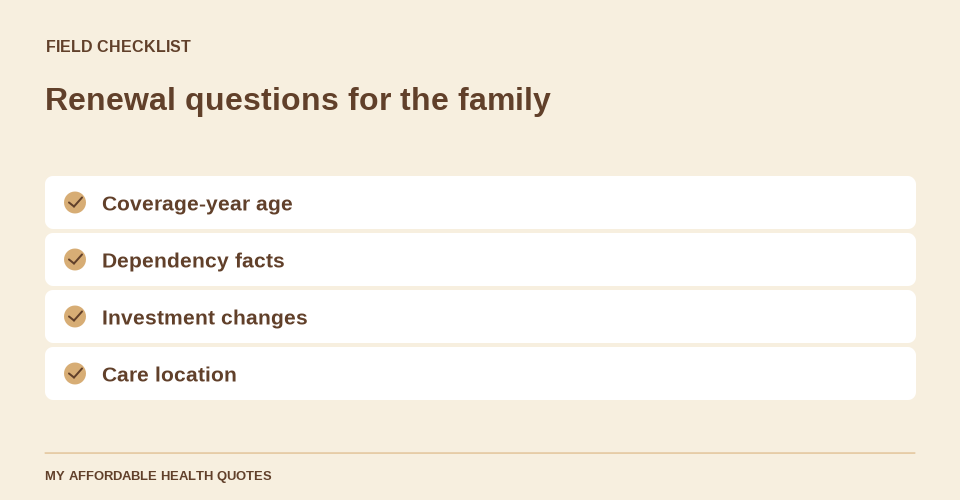
If the young adult uses a separate policy, review how the family's premiums and cost-sharing structure change. A separate deductible and out-of-pocket limit do not automatically combine with the parents' plan. Ask which expenses apply to which policy. If everyone remains together, check the individual and family limits and any age-related rating or eligibility details applicable to the policy. Obtain an actual household quote rather than extrapolating from a single-person example.
The Utah Insurance Department provides individual-market resources for checking available coverage information. Use the current coverage year and location. A carrier's presence in Utah does not guarantee that a particular product fits a student's out-of-state care pattern. Keep the plan identifier and verification notes so the family can revisit the choice if the student's location changes.
Give the young adult a role without losing oversight
A young adult can help collect account statements, wage records, and provider information. Explain why the family needs the records and which questions a tax adviser will answer. This is an opportunity to distinguish income, account value, and cash transfers in a concrete way. Avoid asking the student to make a legal or tax determination from a short online summary. Their role is to provide accurate facts and understand the coverage they will use.
Agree on a secure place for documents and a person responsible for the final application update. Do not circulate account numbers or tax forms through casual group messages. If the young adult has their own insurance account, follow the insurer's authorization process rather than assuming a parent can access it automatically. Administrative responsibilities can change with age even when the family continues to help with costs.
Watch for changes during the year
A new job, investment sale, trust distribution, or change in dependency expectations can make the original forecast stale. Set a review point when such events occur. The family does not need to monitor market values daily for insurance purposes, but it should recognize transactions and income changes that may affect the annual estimate. A simple note from the person managing the account can prevent the information from surfacing only at tax time.
If the tax adviser later determines that an earlier assumption was wrong, ask which records need correction. The current application and a completed tax year's reconciliation are different tasks. Preserve the original and revised explanation. Do not solve the problem by deleting a household member or changing an income category without understanding why. A documented correction is more useful than a new unexplained number.
Finish renewal with a person-by-person check
Confirm who is enrolled, where each person can obtain care, and which financial facts the application uses. Check the premium and effective date, and give the student current insurance information before travel or a semester begins. Keep the prior policy records for older claims. A successful renewal should leave the family able to explain both the coverage arrangement and the treatment of the dependent's income.
For help comparing private health insurance options, request a review from My Affordable Health Quotes with the current household facts and the student's care locations. Use a qualified tax adviser for dependency and filing determinations. The useful outcome is not a shortcut based on age or account balance, but a coordinated decision that accurately represents the family and gives each person workable coverage.
Keep the final filing-requirement explanation with the renewal worksheet rather than only in the tax folder. Next year, review it again using that year’s facts. A decision that was correct for a student with one income pattern may need a fresh analysis after graduation, a new investment transaction, or a different support arrangement.
Sources and further reading
- IRS: Dependents and Filing Information
- HealthCare.gov: Income and Household Reporting
- HealthCare.gov: Household Members
- Utah Insurance Department: Health Reform