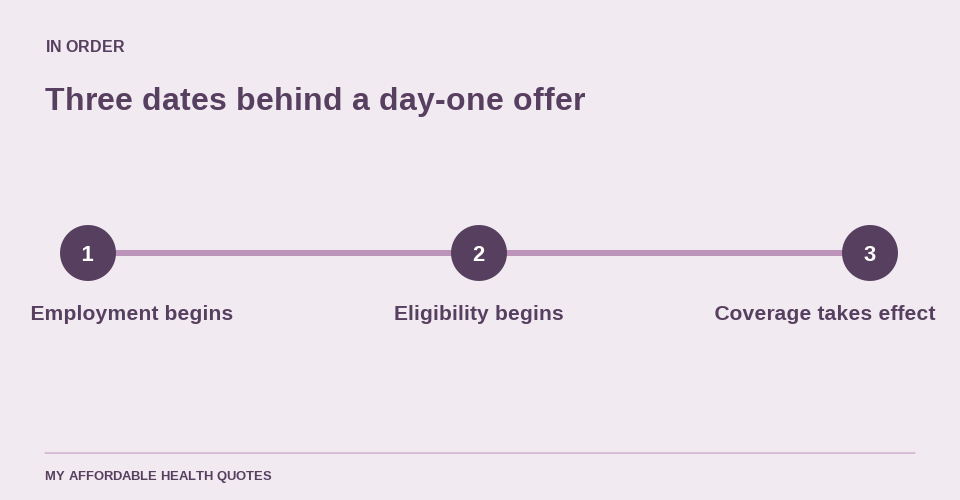
A Texas travel assignment can be accepted, signed, and nearly ready while the health insurance start date remains unresolved. Credentialing may take longer than expected, the facility may move orientation, or the first scheduled shift may disappear. If the recruiter described benefits as starting on day one, ask what event actually creates eligibility before canceling your existing coverage. The safest decision is based on the plan administrator's confirmed effective date, not the originally proposed arrival date.
This guide addresses a specific problem: a start date that changes after you have made coverage decisions. It does not assume that every staffing company uses the same eligibility rules or that Texas imposes one universal start date on every agency plan. A clinician working in Texas may participate in a plan sponsored elsewhere, and the employer's funding arrangement can affect which regulator handles a dispute. The underlying documents matter more than the assignment's ZIP code.
Translate day one into a defined event
Ask the benefits department to complete a sentence: coverage becomes effective on the date that blank occurs. Possible answers might refer to employment, an eligible assignment, completed enrollment, or another condition specified by the plan. Do not supply your own answer because a recruiter used familiar shorthand. Ask whether an orientation day counts, whether paid onboarding changes anything, and whether eligibility survives a facility delay when the agency continues to employ you.
The Department of Labor advises workers changing jobs to examine eligibility and waiting periods. Its guidance describes limits on waiting periods once a worker is otherwise eligible, but that is not a promise that every newly signed contract creates immediate coverage. Request the Summary Plan Description and enrollment instructions so that you can separate the eligibility condition from the administrative process. A completed election form and an active insurance record are related milestones, not necessarily the same milestone.
Write down three separate dates: the date the agency considers employment to begin, the date you become eligible under the health plan, and the effective date reported by the insurer or administrator. When they differ, ask why. A precise answer might reveal an ordinary processing lag; another answer might identify a real gap. Treat those situations differently. Administrative reassurance that everything will eventually appear is not enough if you need care during the disputed period.
Build a small evidence file before departure
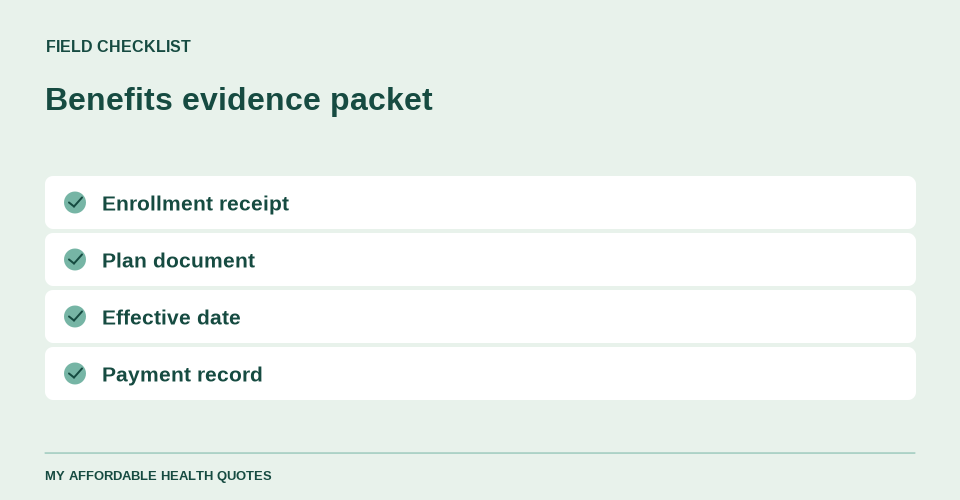
Keep the accepted assignment, the revised orientation notice, your benefits election, and the message confirming the coverage date. Save them outside a recruiter messaging app that could become inaccessible after a contract ends. Include the plan administrator's contact information and a reference number for any eligibility call. Avoid storing unnecessary medical information in the same general employment folder; the coverage question can usually be documented without a diagnosis or detailed treatment history.
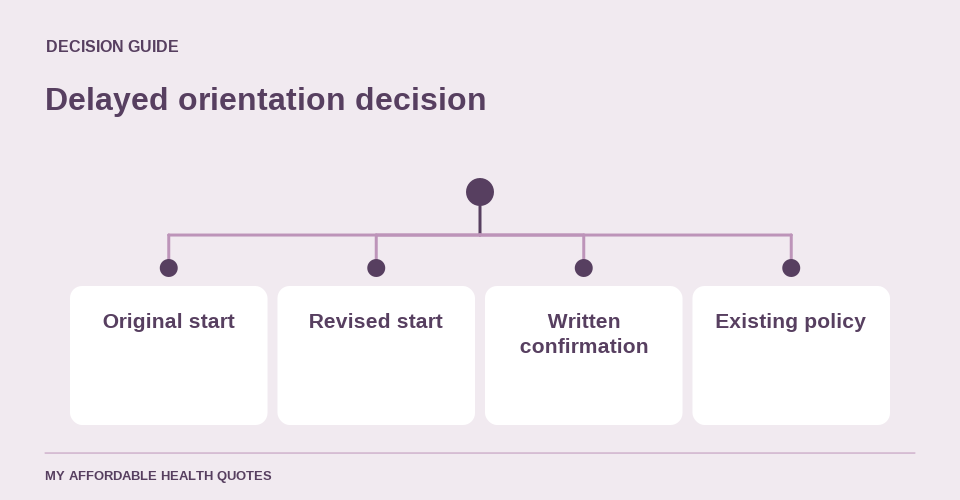
Your request to the benefits team can be direct: my orientation moved from the original date to the revised date; please confirm whether my medical coverage remains effective on the original date and identify any action required from me. Add whether dependents were included in the election. If your spouse has an appointment during that interval, the administrator needs to answer for the dependent as well as for you. Do not assume the family record mirrors the employee record without checking.
Then verify how the plan records required employee payments during the delay. An agency may explain a payroll deduction schedule, a direct billing process, or another arrangement. Obtain the actual instructions rather than guessing from the absence of a paycheck. A deduction that has not yet appeared does not independently prove that coverage is inactive, and a deduction that appears does not independently prove that the insurer has the correct effective date.
A worked timeline with a delayed hospital start
Consider a hypothetical registered nurse, Elena, who accepts a Houston assignment with orientation planned for Monday the eighth. Her current policy is scheduled to end on the seventh because she expected the agency plan to start immediately. On Friday, the hospital moves orientation to the fifteenth while it finishes credential verification. Elena receives a reassuring message that the contract is still good. That message answers the employment opportunity question, but it does not establish the insurance answer.
Elena contacts the benefits administrator rather than asking the hospital scheduler to interpret the health plan. She provides the original and revised dates, her completed enrollment receipt, and the names of the covered household members. The administrator explains which event controls eligibility and confirms the date in writing. If the date remains the eighth, Elena asks how a provider can verify coverage while the electronic record is updating. If it moves to the fifteenth, she treats the intervening days as a real planning problem.
Suppose Elena has not yet canceled the prior policy. She can contact that plan about the consequences and timing of cancellation, using the newly confirmed date. If she already canceled it, she asks whether any correction is available; she does not assume reinstatement is automatic. Depending on the prior coverage and circumstances, continuation coverage or an eligible Marketplace enrollment route may be relevant. Those options have their own rules, payments, and dates, which must be checked separately.
The example does not suggest that buying any policy for seven days solves the problem. A replacement might start later than expected or provide materially different benefits. Elena's task is to identify actual coverage on each date, not to collect another confirmation email. She also checks whether a prescription refill scheduled during the interval can be handled under the applicable active plan, without changing medication use merely to fit an administrative timeline.
Make the cancellation decision only after checking both ends
A good cancellation comparison contains the old plan's last covered day and the new plan's first covered day, along with any required premium. Ask the old plan what date a requested cancellation will produce. Ask the new administrator whether enrollment is complete and whether any missing document could affect activation. Keep both answers together. The goal is a continuous sequence you can explain, not a vague sense that one insurer will take over when the other stops.
Brief overlap can sometimes be a deliberate choice, but it is not automatically necessary or affordable. If two policies will be active, ask how other coverage should be reported and how claims will be coordinated. Do not hide one plan from the other or assume you can choose whichever one pays more on a particular visit. Evaluate any extra premium against the value of confirmed continuity, especially if important treatment or dependent care is scheduled near the transition.
Also distinguish a coverage gap from a network gap. A policy can be active on arrival yet provide poor access to routine care near the Texas assignment. Verify the exact product and network for local clinicians, pharmacies, and facilities. The Texas Department of Insurance's coverage guide explains differences among network arrangements, but the individual policy supplies the controlling details for your benefits. Being physically inside a hospital for work does not make its clinicians participating providers for your personal plan.
Respond to an eligibility denial with records, not guesses
If a claim is denied because the plan says coverage had not started, request the written explanation and compare its date with your evidence. Ask whether the problem is an incorrect eligibility file, an unprocessed election, or a disagreement about plan terms. These are different problems with different fixes. A provider's billing office may help identify the response it received, but it cannot rewrite the employer's eligibility record or decide your appeal rights.
Follow the claims and appeal instructions supplied by the plan. The Department of Labor's claim guide explains why the Summary Plan Description, denial notice, and relevant records are important. Keep deadlines from the actual notice visible. Do not treat an ongoing phone conversation as proof that a formal appeal deadline has paused. If the agency promises a correction, ask what will happen to affected claims and how you will know the correction has reached the administrator.
For a Texas-regulated insurance issue, the state insurance department may be an appropriate source of assistance. For some employer arrangements, federal employee-benefit assistance may be the relevant route instead. Ask which entity regulates the plan before sending the same packet everywhere. Include the exact plan name and sponsor, the coverage dates in dispute, and the specific outcome you want, such as correction of an eligibility date and reprocessing of a particular claim.
Use the next contract to eliminate the same uncertainty
After the situation is resolved, preserve a short personal checklist for future offers. It should ask what day-one means, what happens if orientation moves, how dependents become active, how payments work before the first paycheck, and who confirms eligibility. These questions belong before you make cancellation arrangements, even when you have worked with the agency before. A new product, plan year, or employment classification can change the answer.
The most useful result is not a verbal guarantee that delays never cause problems. It is a process that produces a confirmed effective date and a usable contact when something changes. If you are evaluating individual coverage alongside an agency offer, request a comparison using your actual timeline and Texas care locations. Keep the delayed-start question separate from the general question of which plan has the lowest premium, because a low price does not resolve uncertainty about when coverage exists.