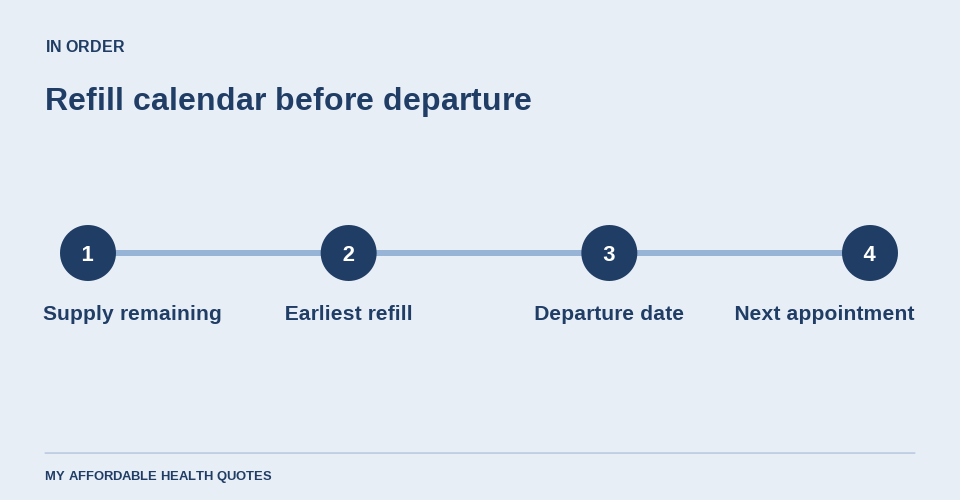
Before leaving an Arkansas home base for a clinical assignment, build a refill plan around the medication you actually use, the dates you will be away, and the pharmacy rules of the policy that will be active. A national pharmacy brand, a familiar prescription, or a paid insurance premium does not guarantee that a refill will be available at the destination exactly when you need it. Confirm the process before your supply becomes urgent.
The task is administrative preparation, not changing treatment. Your pharmacist and prescribing clinician should advise on medication supply, storage, transfers, and any clinical considerations. Some prescriptions have restrictions that differ from ordinary maintenance medicines. Do not assume an early refill, extended supply, interstate transfer, or replacement for a lost package is automatically permitted. Ask about your particular medicine and plan.
Start with the calendar on the bottle
Record the current quantity, usual instructions, expected date the supply will run out, and the next planned refill. Include the date of any required prescriber follow-up. Then place departure, orientation, temporary housing check-in, and the first reliable day off on the same calendar. This often exposes a problem that a general request for travel coverage misses: the refill may fall before you have settled into the destination or after the home office closes for a holiday.
Use the prescribed schedule when estimating supply. Do not make a medication last longer by skipping or dividing doses unless the prescribing clinician specifically directs a change. If the quantity seems inconsistent with the label or your expected use, resolve that with the pharmacy. The insurance planning worksheet should reflect a clinically appropriate regimen rather than a regimen altered to fit travel logistics.
Keep the inventory concise and private. The name, strength, formulation, prescriber, pharmacy, and next refill date are usually sufficient for initial coordination. Store sensitive information securely and share it through appropriate clinical or insurance channels. Your recruiter may need to know that you require a scheduled appointment, but generally does not need your detailed medication list to arrange an assignment.
Ask whether a longer supply is available
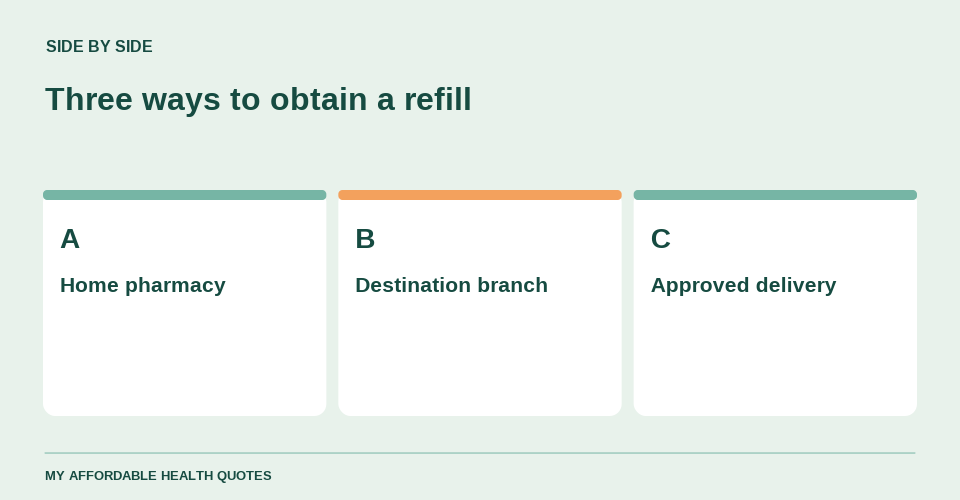
A longer supply can reduce logistical friction, but it is a question to investigate, not a default entitlement. Ask the prescriber whether it is clinically appropriate, the pharmacy whether the prescription can support it, and the plan whether the quantity and dispensing channel are covered. A plan may have different cost-sharing for different supply lengths or pharmacies. Obtain the actual answer for the product and medication you will use.
Ask the insurer how an early refill request is handled when travel dates conflict with the normal refill schedule. If an exception process exists, ask who submits the request, what information is needed, and when a decision can be expected. Do not wait until the evening before departure to discover that the request needs prescriber involvement. If the request is not approved, work with the pharmacy and clinician on an appropriate alternative arrangement.
Compare prices on a consistent supply basis. A quoted cost for ninety days should not be compared directly with a thirty-day copay as though the quantities were equal. Also distinguish an insurance transaction from a cash or discount-program purchase. Ask how a payment will be recorded and whether it counts toward the plan's deductible or out-of-pocket limit, rather than assuming every pharmacy payment accumulates in the same way.
Verify the destination pharmacy before transferring anything
Search the specific health plan's pharmacy network near your temporary housing. Call the proposed location to confirm that it can handle the prescription and has a practical way to receive the necessary order or transfer. Ask about pharmacy-counter hours, not just the store's opening hours. If you work nights, check whether the available pickup window conflicts with sleep or the start of your shift.
HealthCare.gov explains that plans differ in both covered medications and participating pharmacies. Its guidance recommends using insurer materials and direct confirmation. Apply both checks even if you already know the medicine is covered at home. A destination branch, specialty dispensing arrangement, or mail-order requirement may create a different process. Do not treat the insurer's brand and the pharmacy chain's brand as enough information to complete the check.
For any prescription subject to special transfer or dispensing rules, ask the pharmacist and prescriber what is permitted. Avoid making a general legal assumption based on another clinician's experience with a different drug. If a new prescription is required, identify who will provide it and whether an appointment must occur first. The point is to establish a lawful, workable route before the existing supply runs out.
A worked travel example from an Arkansas home base
Imagine a hypothetical physical therapist, Morgan, who lives near Little Rock and is leaving for a ten-week assignment. Morgan has twenty-one days of a regular medication remaining and departs in nine days. The ordinary refill date falls during orientation week. Morgan initially plans to handle it after arrival, but the calendar shows that the destination pharmacy closes before the orientation day ends.
Morgan asks the home pharmacist about the available options. A longer supply may be possible if the prescriber and plan agree, but neither approval is assumed. Morgan also identifies a participating destination pharmacy with weekend hours and asks what it would need to fill the prescription. This creates two viable paths to verify rather than a single last-minute request. Morgan records which path is confirmed and cancels unnecessary duplicate arrangements with the professionals involved.
Suppose the plan approves the usual quantity but not an early extended supply. Morgan coordinates the destination fill and confirms when the prescription information will arrive. The pharmacist explains any timing restriction. Morgan then adjusts the pickup plan around a day off. Nothing about the medication schedule changes; the travel logistics change instead. That distinction is central to a safe administrative plan.
Now suppose the agency offers a new health plan beginning halfway through the supply period. Morgan checks the same drug under the new formulary and pharmacy network before switching arrangements. Coverage under the old policy does not prove coverage under the new one. If authorization or an exception is needed, Morgan asks the relevant parties to begin the process early and keeps the prescriber informed.
Use temporary addresses carefully
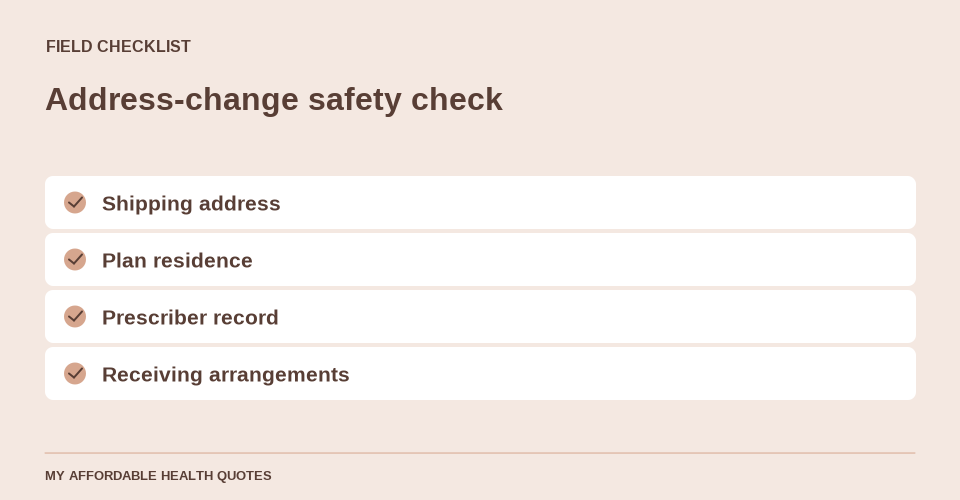
A shipping address and an insurance residence are not necessarily the same concept. Give the pharmacy the address where a package can actually be received, following its requirements, and give the insurer accurate residence information according to its application and plan rules. Do not change one record blindly because you changed another. Ask which address fields need updating for temporary travel and which changes could affect service-area eligibility.
Before choosing delivery, confirm whether the housing accepts packages, whether someone can receive them securely, and whether the carrier can reach the location. Temporary housing can change unexpectedly, so avoid sending a refill to an address you may leave before delivery. Ask the pharmacy how to correct a shipment destination and what happens if delivery fails. A tracking number does not eliminate the need for a reliable receiving plan.
Temperature-sensitive medicines require particular attention. Follow the labeled storage instructions and professional advice rather than improvising a cooler or leaving a package in a vehicle. FDA preparedness guidance emphasizes knowing the supply on hand and planning appropriate storage when normal conditions are disrupted. Use that principle for travel without assuming all medicines tolerate the same temperatures or handling.
Keep the next prescriber visit in view
A refill plan can fail because the prescription expires or a required follow-up is missed, even when the pharmacy and insurer are otherwise ready. Ask the prescribing office when the next evaluation is needed and how it can be arranged while you are away. If a virtual visit is proposed across state lines, have the clinician confirm that it is permitted from your physical location and ask the plan about coverage separately.
Keep a copy of the current medication record and relevant contact information available through a secure method. If you need local care, the receiving clinician should have accurate information rather than a memory-based account after a long shift. Do not expect an urgent care visit to reproduce an established specialist relationship or guarantee a particular prescription. Plan continuity with the existing clinical team when possible.
Resolve denials by identifying the actual obstacle
If a refill is rejected, ask for the specific reason. It may involve timing, quantity, network pharmacy, coverage status, a formulary restriction, missing authorization, or another issue. These causes require different responses. A pharmacy message that says insurance will not pay is not detailed enough to choose the next step. Obtain the plan's explanation and involve the appropriate professional rather than repeatedly submitting the same unresolved claim.
Keep receipts and communications, but do not assume a cash purchase will later be reimbursed. Ask the plan about any reimbursement process before relying on it, and follow its documentation requirements. For a dispute involving an Arkansas-regulated policy, state insurance assistance may help identify the correct route. An agency plan may have a different regulator or appeal process, so establish the plan type first.
Before the return trip, repeat the calendar check. Confirm the remaining supply, next refill location, next appointment, and any new coverage date. A travel refill plan is complete only when it also accounts for coming home or moving to the next assignment. When comparing future policies, bring this workflow to the discussion: the useful benefit is a reliable path to the medicine, not simply a brochure saying prescription coverage is included.
Sources and further reading
- Getting prescription medications
- FDA medicine preparedness guidance
- Arkansas health insurance marketplace assistance