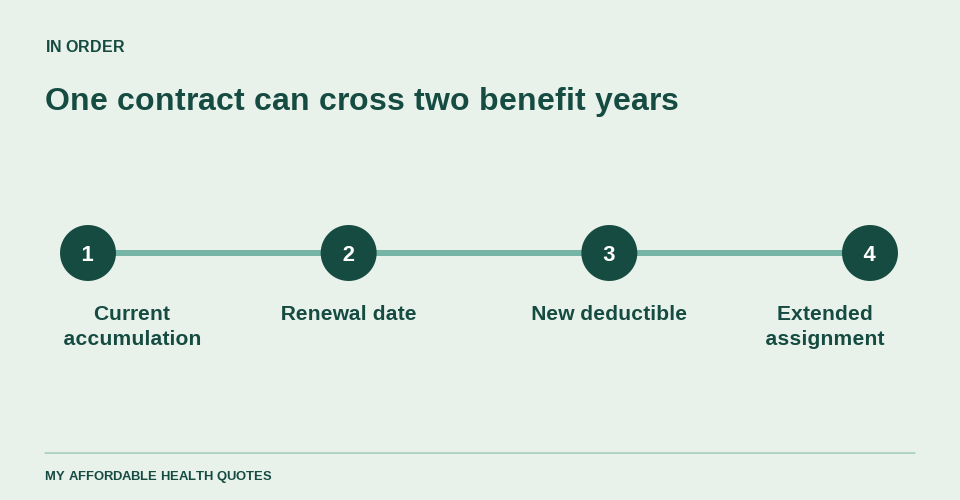
An Arkansas assignment extension can look financially attractive while the health-plan year is about to reset. Before comparing the new pay package with the current one, confirm the plan-year dates, renewal requirements, employee premiums, and benefits that will apply during the extension. Continuing with the same agency does not necessarily mean keeping the same deductible accumulation, network, or prescription rules.
The important boundary is the health plan's year, which you should verify rather than assume always matches the calendar. A contract can remain continuous while the benefits renew. Conversely, a change in agency or product can create another transition even when no annual renewal occurs. This guide helps you evaluate the extension's medical-budget consequences without suggesting that you should schedule or delay treatment solely for financial reasons.
Identify the actual reset date
Ask the benefits administrator for the beginning and end of the current plan year and the date that deductibles and out-of-pocket accumulators restart. Use the plan's documents and current member information. A payroll year, contract year, and insurance year may not be interchangeable. Put the confirmed dates beside the proposed extension dates so the overlap is visible.
Download the current explanation of benefits or accumulator information, understanding that recently submitted claims may not yet be reflected. If the amount matters to a decision, ask how pending claims are handled and whether the displayed balance is current. Do not assume a portal estimate is final when a substantial bill is still processing. Keep the date of the information with the number.
HealthCare.gov's total-cost guide explains why premiums and cost-sharing should be considered together. Apply that principle separately to the remaining current year and the new year. A single annual average can hide a concentrated expense immediately after renewal. You need a month-by-month view when a short extension includes only a small part of the new benefit period.
Request the new documents before evaluating the offer
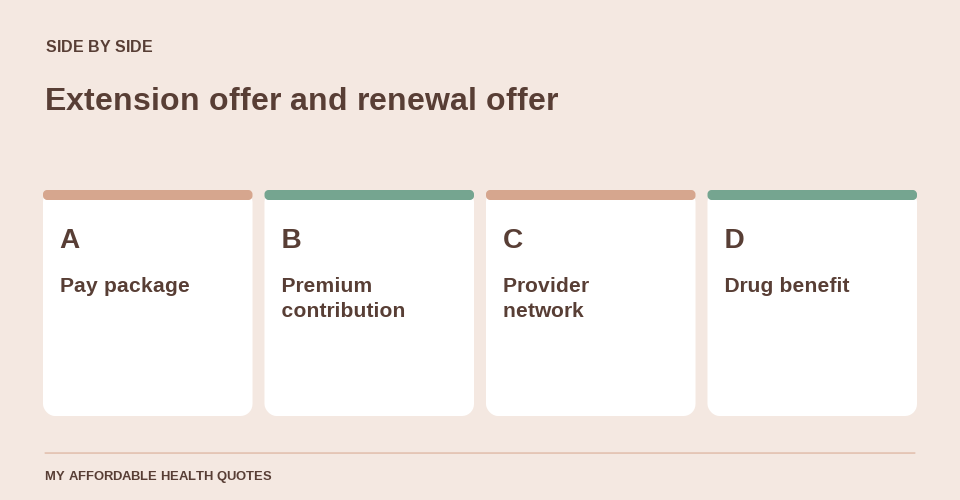
Ask for the renewal Summary of Benefits and Coverage, employee contribution schedule, and enrollment instructions. Compare the exact product names, not merely the insurer logos. A familiar carrier may offer a different network or benefit design at renewal. If the agency has not finalized the new plan, mark the benefit portion of the extension decision as unresolved instead of filling the gap with last year's terms.
Check the services you expect to use during the extension: routine visits, specialist care, prescriptions, therapy, testing, and any planned procedure. Look for changed deductibles, cost-sharing, exclusions, or authorization requirements. The standardized benefits summary helps organize this comparison, but use the detailed policy or administrator's explanation for questions the summary does not answer.
Verify the providers and medications again under the renewal product. A directory result from the current year is not proof of participation next year. If a drug changes tier or requires a new review, ask when the request can be submitted. Keep a list of unresolved continuity issues so that a modest increase in weekly pay does not distract from a significant change in access.
Complete renewal enrollment even if the contract is continuous
Ask whether you must actively elect coverage or whether any default renewal applies. Do not assume that signing the assignment extension also completes benefits enrollment. The staffing contract and health-plan election are separate administrative tasks. Record the deadline and the method for confirming that the election was received.
Review dependents, addresses, beneficiaries where relevant, and payment elections through the appropriate process. A family member may remain on the current policy but be omitted from a new election if the information is incomplete. Verify each person after renewal. A continuous employee record does not guarantee every dependent record has been carried forward correctly.
If you are considering a different available plan, ask how the switch affects pending authorizations, scheduled visits, and accumulated spending. Do not assume a deductible credit transfers between products or insurers. Request any available credit rule in writing and identify the dates and expenses it covers. If no credit applies, include the new exposure honestly rather than treating it as an unexpected surprise later.
A worked extension comparison
Consider a hypothetical travel nurse, Ben, who is asked to extend an Arkansas assignment for eight weeks. Four weeks fall before the plan's confirmed annual reset and four fall after it. Ben has already paid a substantial amount toward the current deductible and expects a specialist follow-up during the later part of the extension. The agency offers a higher weekly rate, but the renewal medical contribution also increases.
For illustration, suppose the extension adds $70 per week in gross compensation and the new employee premium contribution is $20 per week higher for the four post-renewal weeks. The gross pay increase is $560 across eight weeks, while the additional premium contribution in this simplified comparison is $80. These figures are hypothetical and exclude taxes, other compensation changes, and medical cost-sharing. They show why the offer and benefit changes should be calculated on the same dates.
Ben then asks for the expected patient share of the specialist follow-up under the new plan, using the planned service date and current benefit information. The estimate may be different after the deductible resets. Ben does not move the appointment without clinical input. Instead, Ben uses the estimate to decide whether the extension's overall financial and practical value remains attractive and how much cash to reserve.
Suppose the agency also changes networks at renewal. Ben confirms whether the specialist remains participating and whether a new authorization is required. If the answer is unresolved when the extension must be considered, Ben treats that uncertainty as part of the decision and asks for a clear benefits contact and timeline. A higher weekly rate does not remove the need to verify access.
Plan for care that crosses the boundary
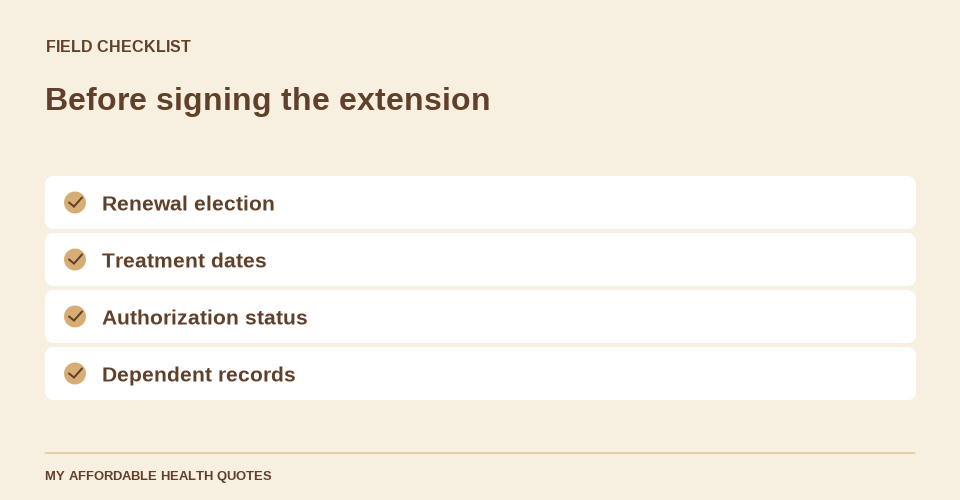
A course of therapy, staged procedure, or recurring prescription can generate claims on both sides of renewal. Ask the provider how services are dated and billed, and ask the insurer which year's benefits apply. Do not assume that beginning treatment before the reset places every later service under the old deductible. Different services may have separate dates and claims.
If a prior authorization spans the boundary, ask whether it remains valid under the renewal plan and whether the provider must submit updated information. Keep the authorization identifier and approved dates, but remember that authorization and active coverage are separate questions. A continuing approval does not prove enrollment after renewal, and an active policy does not mean every service has completed its required review.
For prescriptions, check refill timing and the new formulary before the first post-renewal fill. A pharmacy rejection on the first day of a new plan can reflect updated member information rather than a clinical problem, but it still requires prompt clarification. Give the pharmacy the new card details and ask the insurer about any unresolved restriction. Avoid changing medication use to bridge an administrative issue without professional advice.
Compare the extension with realistic alternatives
If declining the extension means changing agencies, compare the new employer's coverage dates and benefits rather than imagining that all alternatives preserve the current accumulation. A new plan could create another deductible and different access. If taking time off means losing agency eligibility, obtain the termination date and available continuation information. The meaningful comparison is between actual routes, not between a documented renewal and an undefined ideal policy.
Use three budget lines: premiums you will definitely owe, expected care under stated assumptions, and potential covered cost-sharing during a more expensive period. Keep noncovered and out-of-network expenses separate. If the assignment lasts only part of the new year, do not prorate the deductible automatically; ask how the policy applies it. A short enrollment period does not necessarily create a proportionally smaller deductible.
Consider household timing too. A spouse or child may have care scheduled after your contract ends, and the agency plan's termination rule may be relevant to that appointment. An extension that preserves coverage for a few additional weeks can have practical value, but confirm the exact dates. Do not estimate family continuity from the final scheduled shift alone.
Recheck after the first renewal paycheck and claim
After renewal, compare the deduction with the confirmed contribution schedule and verify active member records. If the amount is different, ask payroll which coverage period it represents before assuming an error. Catch-up deductions or payroll timing may explain the difference, but the explanation should be documented. Correct a genuine mismatch promptly rather than allowing it to accumulate over the extension.
Review the first claim under the renewed plan for the expected network and cost-sharing treatment. If the provider used old member information, ask how it will be corrected. Keep current and prior documents because claims from the old period may arrive after the reset. The date a bill reaches your mailbox is not necessarily the date that determines the applicable benefit year.
Before your next Arkansas extension, repeat the same focused review: reset date, renewal election, actual premium, essential providers, medications, and scheduled care. The purpose is not to turn a contract decision into a perfect prediction of future medical costs. It is to prevent a known benefit-year boundary from being overlooked while you compare pay, housing, and work schedules.
If you need help comparing individual coverage with an agency renewal, provide the actual effective dates and the care requirements that cross them. A useful comparison will show its assumptions and unresolved questions. That is more reliable than a statement that staying with the same employer means nothing changes.