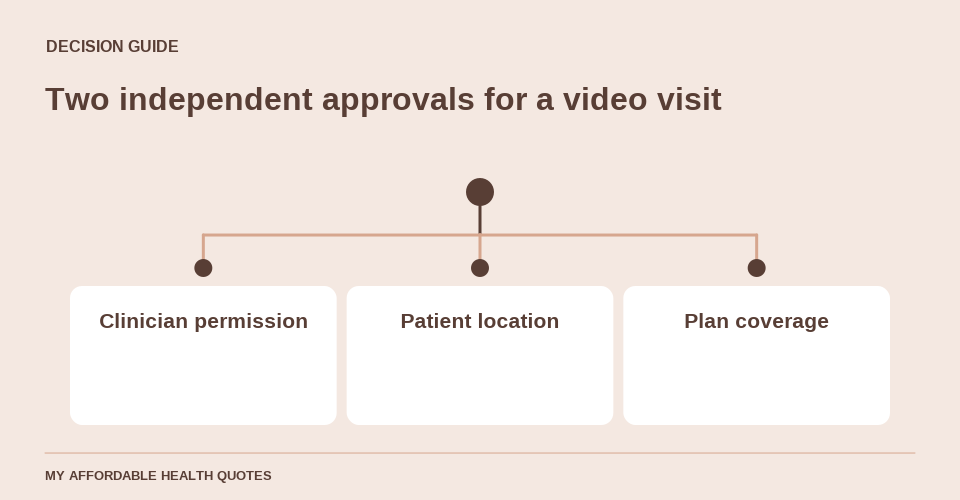
You may be able to continue seeing your established therapist by video while working a Tennessee travel assignment, but confirm two separate things first: whether the clinician is permitted to treat you while you are physically in Tennessee, and whether your health plan covers that visit. Neither answer automatically supplies the other. A familiar video platform, an existing therapeutic relationship, and a home address in another state are not enough to resolve the question.
Start the conversation before departure. Tell the practice where you will be located, the expected assignment dates, and whether your insurance will change. Ask the clinician or practice administrator to verify the applicable professional requirements. This article does not determine a particular therapist's licensing status or give clinical advice about changing treatment. It provides a practical sequence for preserving continuity without assuming interstate appointments are unrestricted.
Explain your physical location accurately
HHS guidance states that interstate telehealth practice depends on state requirements and applicable permissions, and that providers should verify patient location. For a visit taken from temporary housing in Tennessee, tell the practice that you are in Tennessee. Do not use the permanent home address on an insurance card as a substitute for where you are sitting during the session. The two addresses may serve different administrative purposes.
Ask whether the clinician can provide the intended service from that location for the expected period. The answer may involve a state license, a compact privilege, a temporary practice provision, or another lawful pathway, depending on the profession and circumstances. Do not infer that a rule applying to physicians, nurses, psychologists, counselors, or social workers applies identically to all of them. Have the practice verify its own situation.
If the practice is uncertain, give it time to check before putting recurring appointments on the calendar. An administrative staff member's willingness to book a video slot is not the same as a confirmed professional authorization. Request a clear answer about the assignment period and any conditions that matter, such as notifying the clinician when you change states again.
Check the insurance product separately
Once the practice confirms that it can provide care, contact the plan about coverage. Identify the exact clinician, service, network, and product. Ask whether virtual behavioral health visits are covered with that clinician, whether the plan requires a designated platform or vendor, and what cost-sharing applies. If a referral or authorization is relevant, ask how it is obtained and whether it remains valid after a plan change.
Do not assume a benefit described as free virtual care includes every therapist you already see. A plan might be describing a particular service rather than unrestricted reimbursement for outside clinicians. Likewise, an out-of-network benefit may involve different costs and claim procedures. Obtain the specific answer for your provider instead of trying to interpret an advertising phrase on a benefits enrollment page.
If you will switch from individual coverage to an agency plan, repeat the check under the new policy. A therapy relationship can remain clinically continuous while its billing arrangement changes. Ask the practice when it needs the new member information and whether it will verify benefits before the first appointment billed to the new plan. Keep old and new effective dates available so visits are submitted to the appropriate coverage.
Plan for privacy in temporary housing
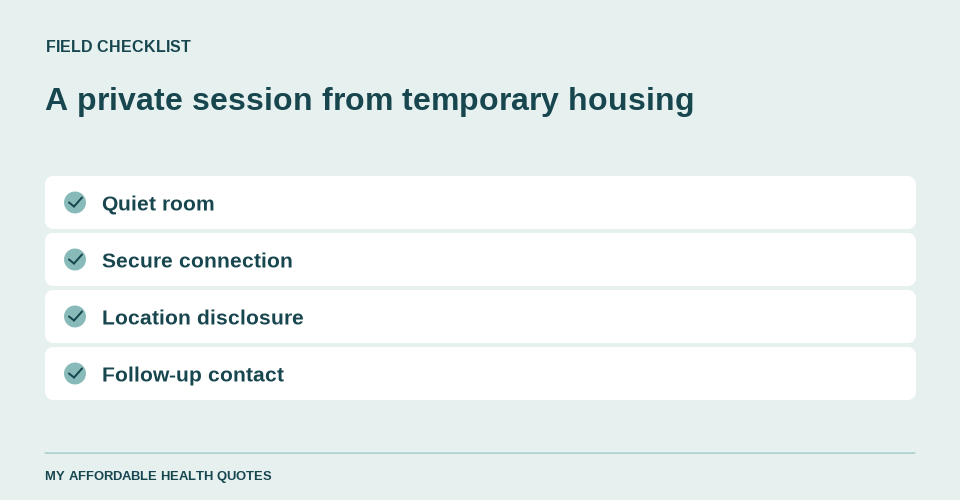
Think about where a session can occur without coworkers, roommates, or guests overhearing. A shared kitchen, hospital break room, or vehicle in a busy parking lot may not provide the privacy or reliable setting you want. Ask the therapist what environment is appropriate and what to do if the connection drops. Arrange the session at a time when you can participate without rushing directly from a demanding shift.
Test the internet connection and device before the appointment. Use the practice's approved platform and instructions, and avoid recording or sharing a session without discussing it with the clinician. If you need headphones, charging equipment, or a private room reservation, arrange them ahead of time. These details do not determine insurance eligibility, but they can determine whether a covered appointment is actually usable.
Tell the clinician about your local contact and location information through the practice's process. Ask how urgent concerns and between-session messages are handled while you are away. A virtual appointment is part of a care relationship, not simply a video call. Clear expectations about follow-up can matter when you are in an unfamiliar city and your work hours differ from the practice's usual schedule.
A worked continuity example
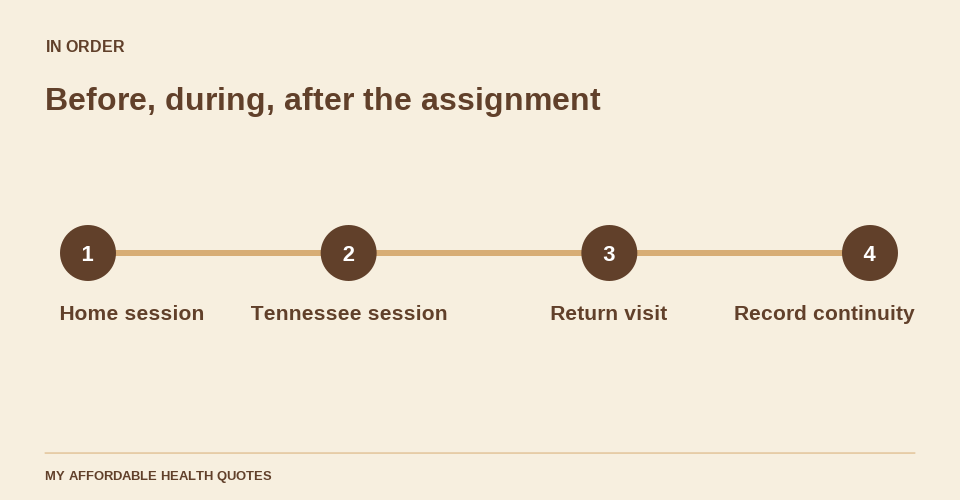
Imagine a hypothetical travel nurse, Avery, who sees a therapist every other week and accepts a twelve-week assignment near Knoxville. Avery initially assumes that an existing video arrangement can continue unchanged. Before leaving, Avery tells the therapist the Tennessee location and dates. The practice checks whether the clinician can provide those sessions and explains the result. Avery separately asks the agency insurer whether the exact clinician is participating and whether the virtual visits are covered.
Suppose the clinician is permitted to continue but the new agency plan treats the therapist as out-of-network. Avery asks for the relevant benefit details and an estimate from the practice. A different plan option may include the clinician, or Avery may consider the stated self-pay cost, subject to the practice's arrangement. Avery does not assume that a receipt will automatically produce reimbursement or that paying cash will count toward the plan's deductible.
For a hypothetical budget illustration, six planned sessions at an additional $45 per visit would create $270 of extra expense over the contract. Those numbers are not a market rate or coverage promise. They help Avery compare an actual continuity cost with any premium difference between eligible plans. The therapeutic value of remaining with the established clinician is discussed with that clinician rather than reduced to arithmetic alone.
Now imagine the clinician cannot continue sessions from Tennessee under the applicable requirements. Avery asks about an appropriate transition plan and local or otherwise permitted alternatives. The practice may help coordinate records or referrals, but availability is not guaranteed. Avery begins that process before departure instead of discovering the problem after missing several appointments. The result is a deliberate care transition rather than an improvised administrative workaround.
Handle schedule changes without hiding location changes
A travel assignment can include a weekend at home, a visit to another state, or an extension at a different facility. Tell the practice where you will physically be for each session when required. Do not assume permission for Tennessee automatically covers every nearby state. If a session would occur while you are traveling, ask whether it should be rescheduled and where it can appropriately take place.
Coordinate appointment times using the actual time zone and your shift schedule. A recurring calendar invitation may move unexpectedly when a phone updates to local time or when a work rotation changes. Confirm the time in plain language and avoid scheduling a session during a commute. The purpose is to protect the care appointment from the operational noise of travel work, not to add another complicated system.
If you extend the contract, revisit any permission that was described as temporary and any coverage that is ending. Give the practice the new dates promptly. Do not assume that an initial twelve-week arrangement remains valid indefinitely. The insurer and clinician may need different updates, so ask each what changed rather than sending one generic message and considering the task complete.
Understand what to do with a denied claim
If the insurer denies a visit, obtain the written reason. A network classification issue, missing information, an inactive policy, and a noncovered service are different problems. Compare the denial with your coverage confirmation and the actual service date. Ask the practice whether the claim information is correct, then follow the plan's correction or appeal process as appropriate. Preserve any formal deadline even if informal calls are ongoing.
Do not ask a clinician to change the reported service or location to make a claim pay. The record should accurately describe what occurred. If the plan's answer before the appointment differs from the claim result, document the discrepancy and request review using the reference information you saved. Accurate records support a legitimate dispute; inaccurate records create another problem.
Prepare for the return home
Before the assignment ends, confirm whether the same therapist will continue after you return and whether insurance will change again. If you used a temporary local provider, ask how records and follow-up should be coordinated. Avoid letting the end of a work contract silently become the end of a treatment plan. The return transition deserves a calendar entry just as the departure did.
Keep the coverage and professional-permission answers together but clearly labeled. One tells you whether the visit can be provided from the location; the other tells you how the plan may pay. That distinction makes future assignments easier to evaluate. When requesting health coverage help for Tennessee travel work, identify ongoing therapy as a continuity requirement and ask about the specific clinician, rather than treating a generic telehealth feature as a complete solution.
A successful arrangement is one you can explain before the first away-from-home session: the clinician has confirmed the location is permitted, the plan's benefit is understood, the appointment setting is private, and follow-up is clear. If any part remains unresolved, address it directly with the appropriate party. Preserving care is easier when the practical questions are asked early and answered accurately.