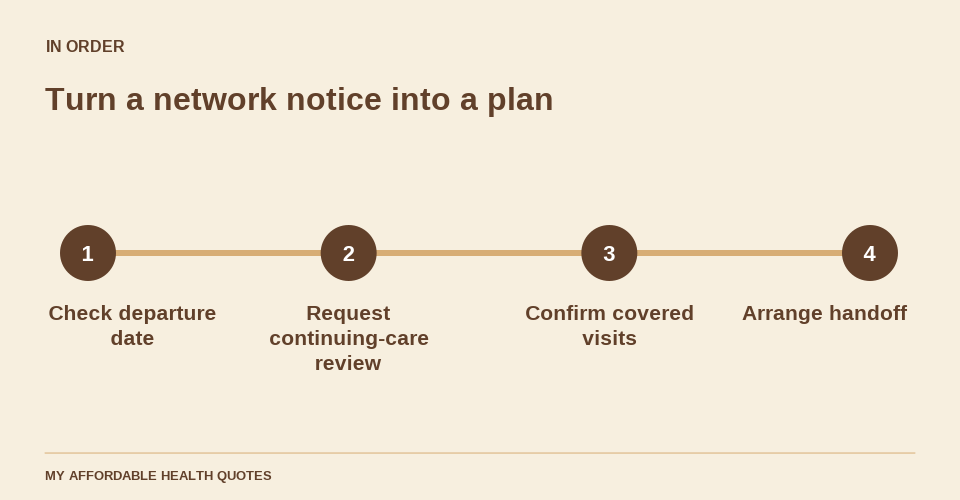
A patient opens a letter about an insurer's contract negotiations and reads the familiar name of a specialist halfway down the page. The patient is already in treatment. Appointments have been scheduled and the care team knows the history. The letter gives a date when the specialist may leave the network, but the next appointment reminder still says confirmed. The immediate task is to understand what changed, whether temporary continuing-care protections apply and what arrangements are needed for the next service. A calendar reminder alone cannot answer any of those questions.
Consider a self-employed consultant who regularly sees a specialist and buys a private individual insurance policy. The consultant receives a network notice shortly before a planned service. The family has the means to consider paying privately for some care but wants to understand its existing coverage first. The nature of treatment, the kind of policy, the reason a network relationship ends and the actual dates can all matter. Start with the patient's own notice and the treating team. A general claim that existing patients always get a grace period is too broad to guide this decision.
Read the notice for the event it actually describes
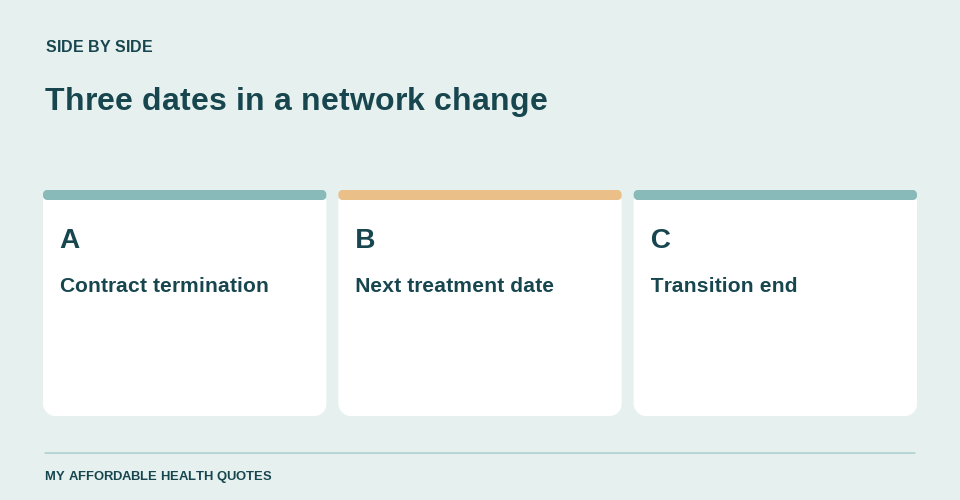
Some patient messages announce that negotiations are still underway. Others identify a confirmed termination date and describe the choices or protections the plan offers. Note which kind of message arrived, who sent it and when it was received. Copy the exact provider or organization name and the product listed. A health system can issue a broad notice while certain locations or products have different arrangements. A physician joining another practice is also a different event from a whole group leaving the plan. Ask both parties to specify which relationship will change for this patient's appointment.
Check the plan member's own status at the same time. A provider leaving the network while a member stays in the same policy is a different starting point from a household voluntarily changing to a new insurer. The federal continuing-care guidance addresses qualifying changes to a network relationship and eligible continuing-care patients. Do not assume its terms automatically follow someone into any new plan the household selects. If the change occurs during renewal, ask separately about this year's existing treatment and next year's proposed policy. Different representatives may need to handle the two questions.
Ask the clinical team about the course of treatment
CMS describes certain patients who may qualify for temporary in-network treatment after a provider leaves the network. The categories include people receiving treatment for a serious and complex illness, certain inpatient or institutional patients, people scheduled for non-elective surgery, patients receiving treatment for pregnancy, and people receiving treatment for a terminal illness. CMS tells patients to ask their provider whether their circumstances fit. A routine longstanding relationship may be deeply important without meeting the applicable definition. Have the treating team explain the situation and the insurer evaluate the request under the relevant rules.
The point of contacting the clinician is to establish the real course of care, not to invent a qualifying label. Ask the practice which service has been scheduled, what stage the patient has reached and whether transferring immediately would affect the care arrangement. Ask it what information it can send the insurer and who coordinates that exchange. The patient should also get clinical instructions about what to do if an appointment cannot proceed as scheduled. Coverage questions cannot determine whether a medical delay or a move to another professional is appropriate.
Make a request with a date and a named recipient
Call the member number on the insurance card and identify the notice, provider, scheduled service and departure date. Ask whether the plan considers the patient potentially eligible for continuing care and how the patient can elect or request that arrangement. Find out whether there is a written notice, response deadline, form or need for information from the practice. Ask if a case manager can help when the next appointment is close. Record when the plan received the request and when the patient can expect an answer. A member-services note is different from a decision authorizing a particular course of care.
Ask the practice whether its billing staff knows about the pending review and who handles patients with temporary continuing-care status. A practice receiving hundreds of inquiries during a contracting dispute may route ordinary scheduling and network questions to different desks. If the appointment desk suggests canceling everything because the practice is leaving, tell the clinician and the person managing the insurer review before changing an important care arrangement. Let the treating team address medical timing and ask the insurer to explain the practical options while a decision is pending. Document any confirmed appointment changes immediately.
Understand the possible window and its boundaries
CMS explains that an eligible continuing-care patient may receive relevant care at in-network rates for up to ninety days when a provider leaves a plan's network. The wording matters. It is a potential temporary protection for applicable care. It is not a promise that everyone gets ninety days of unrestricted visits or that every service at the provider group remains covered. Ask for the actual beginning and ending conditions in the plan's determination and how they apply if the relevant course of treatment ends sooner. The plan can explain how the patient should recognize the last eligible service.
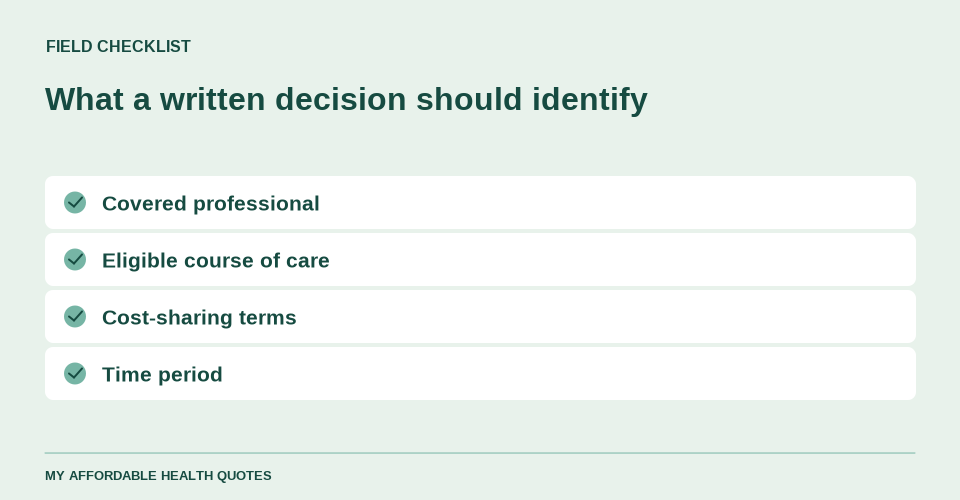
A written approval should be specific enough to use. Ask whether it applies to the clinician, a facility, or both, and whether the intended service and its dates are included. Ask how ordinary member cost sharing will work and whether existing referral or authorization requirements still apply. If another organization supplies testing or another physician assists, ask the plan about that participant separately. Keep the approval with the original departure letter and appointment details. An approval for the specialist to continue a particular course of treatment does not resolve an unrelated provider's charges by implication.
Start preparing the transfer before the temporary period ends
The consultant asks the insurer for participating clinicians who can accept the type of case the current specialist is managing. The treating team can help identify the relevant expertise, and the receiving office must say whether it accepts the patient. Directory results are a starting point. Ask the receiving practice when it can review records, whether it requires a new referral and when it can offer a clinically appropriate visit. If it reports a long wait, give the insurer the specific date and tell the treating team about the gap. Avoid waiting for the end of a temporary protection before discovering that a new intake review takes weeks.
The handoff needs a clear owner for each outstanding item. Who receives a report that comes in after the old office's final visit? Who is responsible for scheduling the next evaluation? Which team will answer clinical questions until the new office accepts the transfer? Ask the practices to clarify their roles, and use their preferred secure method for sharing records. A new appointment time is valuable but may not be the moment when responsibility formally changes. The patient should hear directly from the teams about how to get appropriate support during the interval.
Investigate a refusal or a bill that conflicts with an approval
If the plan says the patient does not qualify, ask for its reasoning in writing, the policy or legal basis it used and the review or appeal options. A reviewer needs the specific event, treatment dates and description from the clinician, not merely an account of how long the patient has preferred this office. A self-employed person with individual insurance may also use the insurer's consumer assistance channels and contact the appropriate regulator for guidance. CMS offers a patient action plan for doctors leaving a network and information about federal medical billing rights. The right contact depends on the type of coverage and problem.
Suppose the patient received temporary approval, attended the covered appointment and then got a statement processed at outside-network rates. Match the provider, service and date on the explanation of benefits with the written determination. A claim may have been submitted under a different billing identity or routed before the approval appeared in the system. Ask the plan and the practice to identify what happened and which party can correct it. If they dispute the scope of the approval, keep the earlier notice, the determination and the bill together and follow the relevant review deadlines.
At the next policy comparison, the consultant now has two different access questions. Does a candidate plan include the intended long-term specialist and location? What specific handoff is necessary from the temporary arrangement already in place? A plan that clearly supports the long-term destination may be attractive even if the current transition still requires work. A plan listing the old physician needs verification against the correct product and future date. The concrete outcome that matters is a next appointment that the clinician considers appropriate, a written understanding of its financial terms and a receiving team prepared to carry the treatment forward.
One practical question remains when the two organizations announce a new agreement before the transfer is complete. Ask the insurer to confirm the date and products covered by the new contract and how it will handle care furnished during any gap. Ask the old practice whether the original appointment and treatment arrangements are still available before canceling a transfer visit. A public announcement can change the available choices, but only the offices involved can confirm which appointment is booked and who has accepted responsibility for the next step.
Sources and further reading
- CMS: When a doctor goes out of network
- CMS: Know your medical bill rights
- HealthCare.gov: Comparing health plans
- HealthCare.gov: Appealing a health plan decision