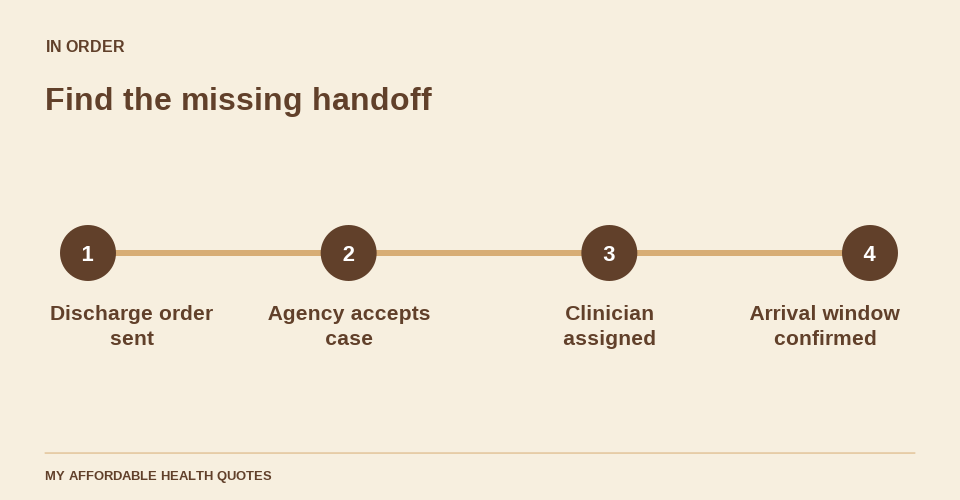
On Tuesday a hospital team says it has made a referral for nursing at home. On Thursday a family member asks when the nurse will arrive. One office says it sent the order; another says it has not accepted the case. Both statements can be accurate. For a household planning time away from work, the difference between a submitted referral and a staffed visit is substantial. For the person going home, it means there is still a care arrangement to confirm with the clinical team. The insurance card alone does not put someone at the door.
An Oklahoma bookkeeper who owns a small practice is helping a spouse come home after a hospital stay. A clinician has ordered a specific home service and has explained when it is needed. The couple lives outside the city, and the spouse plans to stay briefly at a relative's house. The bookkeeper can work remotely for part of the week, but cannot provide professional nursing care. The family needs a clear answer about the actual location of the visit, the agency's eligibility under their private policy and who will address a gap if nobody can attend in the prescribed timeframe.
Get the service and location right before tracking the referral
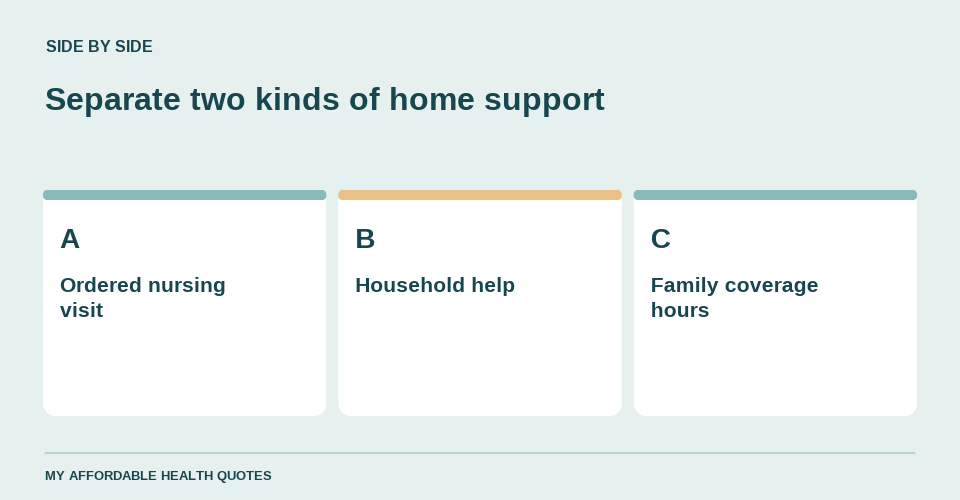
HealthCare.gov describes skilled nursing care as care provided by licensed nurses at home or in a nursing home. A plan may distinguish skilled nursing from therapy, personal care, homemaking or continuous supervision. Ask the discharge professional to identify the service being ordered in terms an agency and insurer can recognize. Ask who wrote the order, how to contact that office and how the team describes the expected timing. The family should rely on the care team's explanation of what is appropriate. A relative's decision to stay home with the patient does not turn ordinary household assistance into a substitute for a clinical visit.
Next, give everyone the address at which the patient will actually receive care. Include the town, postal code, gate or apartment instructions and the period of the temporary stay. A home listed as the mailing address on an insurance card can be an hour from the relative's house. The agency that serves the permanent residence might have no staff assigned to the temporary one. Ask the insurer whether the address affects the benefit or network, and ask the agency whether it can actually dispatch the required professional there. Those questions go to different organizations for a reason.
Find out what each person has already done
Instead of asking whether everything has been arranged, the bookkeeper asks the discharge coordinator which agency received the referral, when it was sent, and whether anyone at that agency confirmed acceptance. If a referral went to multiple agencies, ask which one is expected to respond and who is tracking the answer. A referral can sit with an intake team while it checks staffing, records or benefits. Get a direct intake number or a designated liaison so the family does not have to retell the entire case to the hospital switchboard.
The agency's intake staff can then say which step remains open. It may have the order without the clinical documentation it needs. It may be checking the plan contract, waiting for authorization or trying to assign a nurse to that region. Each explanation points to a different next call. Missing information may require the sending clinician's office. A missing approval may involve the insurer. A workforce gap may require the discharge team to find an alternative. A vague promise to follow up is less useful than a named person and a time at which the family can check back.
Read the home benefit beside the proposed schedule
Ask the insurer how the policy treats the particular ordered service, which agencies participate at the location and how it defines a visit for benefit purposes. Some policies use visit limits or require review of additional visits. Ask whether any stated allowance is specific to nursing or shared with other home services. Ask how deductibles and cost sharing apply and whether the agency bills for supplies separately. Do not import rules from a relative's Medicare experience into a private individual or family plan. The applicable contract and insurer's determination govern this household's insurance question.
The discharge team may mention an initial schedule that changes after the agency evaluates the patient. Use the initial schedule as an estimate, identify what the insurer has authorized and ask who requests a revision if the clinician changes the plan. The words twice a week could mean visits on two days rather than many hours of coverage spread across the week. Ask the agency what it expects the ordered visits to include and who will explain the care plan. A household that assumes someone will remain for an entire afternoon may commit to work it cannot realistically cover.
Build a home calendar with two separate rows
The first row belongs to professional visits. Record only the visits the agency has accepted and the best available arrival window. The second row belongs to support the household has chosen to arrange, such as meals, a ride to an office, someone to answer the door or a relative available during a scheduled visit. Where the care team specifies additional needs, ask it who can meet them and what alternatives apply if the family cannot. Keep the two rows distinct so that a paid helper or a family volunteer is never counted as the clinician who is expected to arrive.
For illustration, imagine the agency can offer a two-hour arrival window on Friday and the bookkeeper must attend a client meeting during the first hour. A sibling can open the door but has no authority to discuss the spouse's private information. The patient can ask the agency whether they want to authorize the sibling for scheduling, clinical discussion or neither. The bookkeeper can then decide whether to move the meeting. The direct financial cost may be very small while the logistics are consequential. A higher-paying business does not create additional available hours during the one window the agency can staff.
Have a plan for an appointment that fails to materialize
Before discharge or as soon as the issue arises, ask the clinical team what to do if no agency confirms the visit in the prescribed timeframe. Get an appropriate contact for nights, weekends and changes in the patient's condition. If the expected nurse does not arrive, contact the agency and the responsible clinician according to their instructions. An insurance call can help find another participating agency or address a payment issue. It is not the place to decide whether a delayed service is medically safe. Emergency concerns warrant prompt emergency care.
If each participating agency says it cannot take the case, write down the agencies called, the service area each covers and the earliest specific date offered. Give those facts to member services and ask it to help locate a participating agency that can actually staff the order. If it cannot, ask about its process for reviewing an alternative agency and whether an arrangement must be confirmed in writing before service. Get the scope, dates, cost-sharing terms and billing contact for any approval. An agency name offered by a representative is a lead to follow, not a staffed appointment.
Reconcile the received service after the door closes
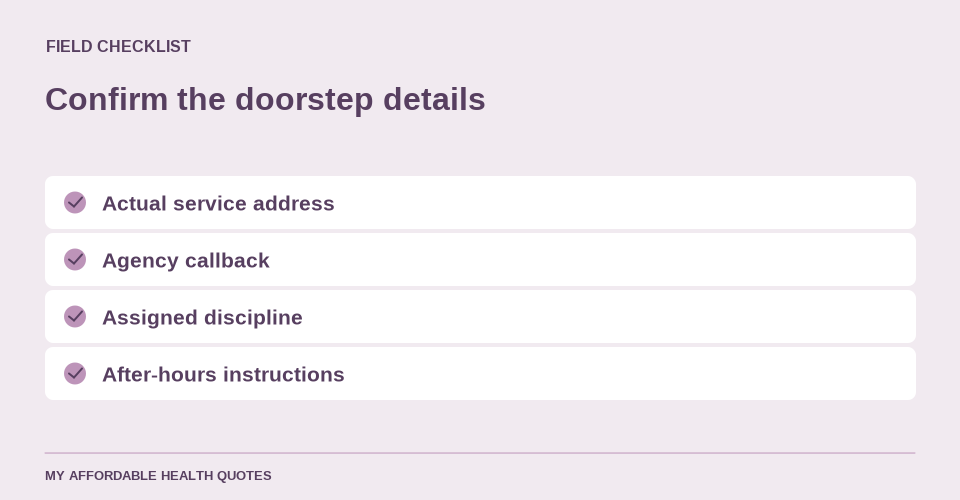
When the visit takes place, note the agency, date and professional discipline. Ask the agency how it confirms any future visits and whom to contact if the patient changes addresses before the next one. Compare later insurance explanations with what occurred and with the authorization or benefit description. If an evaluation and an ongoing visit were billed differently, ask the agency to explain the distinction. A private invoice for additional household help may belong wholly beyond the health insurance claim process. Keep its contract and payment details separate from the nursing account.
For an upcoming insurance comparison the bookkeeper can now ask a precise local question. Which participating agencies can provide the identified home service at the temporary address, how is the first visit approved, and what happens when no agency has staff? Add the permanent address if the family expects a second transition. The Oklahoma Insurance Department provides consumer resources when a state-regulated insurance issue remains unresolved. The result the couple needs is tangible: a professional has accepted the order, knows where to go, can give a realistic arrival window and has explained how the family can reach the right clinical contact if plans change.
If the spouse returns home between two visits, repeat the address confirmation with the agency that actually employs the assigned professional. An updated address at the hospital may never reach a scheduler who already printed tomorrow's itinerary. Ask whether the branch can continue or needs another team to accept the remaining visits. A direct call before the move can spare a clinician a trip to an empty house and tell the family whether the next appointment has to be arranged again.
One particularly useful item to keep is the name of the professional who can revise the order. Families often have the number of the scheduling desk and the insurer's claims line but lack a contact for the person authorized to update clinical instructions. The discharge team can clarify who fills that role once the patient is home. Writing it down avoids asking the insurer to change a care order or asking a scheduling clerk to decide whether an ordered service can be omitted.
Sources and further reading
- HealthCare.gov: Skilled nursing care
- HealthCare.gov: Summary of Benefits and Coverage
- HealthCare.gov: Comparing health plans
- Oklahoma Insurance Department: Consumer services