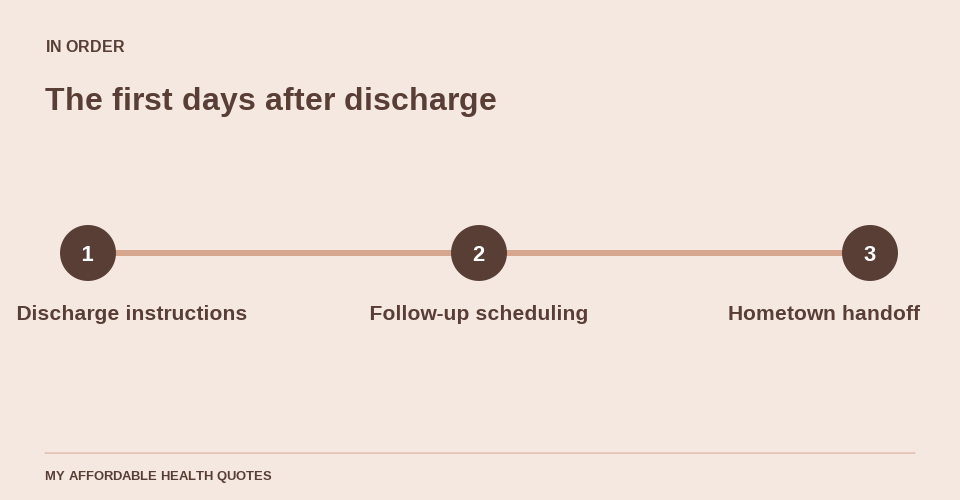
The emergency department gives you a folder, a contact number and instructions for follow-up. Your suitcase is still in a hotel, and your return flight leaves in two days. Someone at the discharge desk offers an appointment with a local practice. It is natural to hear that as one continuous arrangement with the hospital. From the point of view of insurance, however, a scheduled office appointment may be a separate service with its own provider, location and network rules. Knowing how to investigate that appointment can help a traveler protect both the follow-up the clinicians want and the household budget.
Consider the experience of an independent marketing consultant who lives in Florida and travels for conferences. On a trip she receives emergency evaluation before discharge. Her instructions direct her to contact a particular specialist within a timeframe her care team sets. Her original policy comparison emphasized the emergency benefit because she frequently leaves Florida. Now the important question is how she gets care once she has left the emergency department. The sequence below concerns arrangements after discharge. Anyone concerned about an immediate emergency should seek emergency care promptly. Questions about whether someone is safe to travel or wait belong to clinicians.
Identify the first decision that belongs to the care team
The consultant reads the instructions with the discharge professional before deciding what to do about her flight. Does the team expect follow-up locally? Could a clinician near home take over within the indicated timeframe? Is there a contact for a medical question that arises after departure? Clarifying the team's instructions gives the insurer something specific to help arrange. A plan representative can explain benefits and locate participating professionals. That person cannot determine whether postponing a visit for a journey is medically appropriate. If the timing cannot wait for office hours, the team should explain how to obtain appropriate care.
Written instructions sometimes say to call an office rather than promising an actual appointment. The distinction matters during a trip. A practice listed on discharge paperwork may be closed on the weekend, may require review of records before booking, or may have appointments only after the flight home. Ask who will call whom and how to confirm the handoff happened. Save the procedure or encounter summary the team provides, any follow-up order and the best number for records. Hotel checkout is a poor time to discover that the only copy of an important instruction is in a discarded envelope.
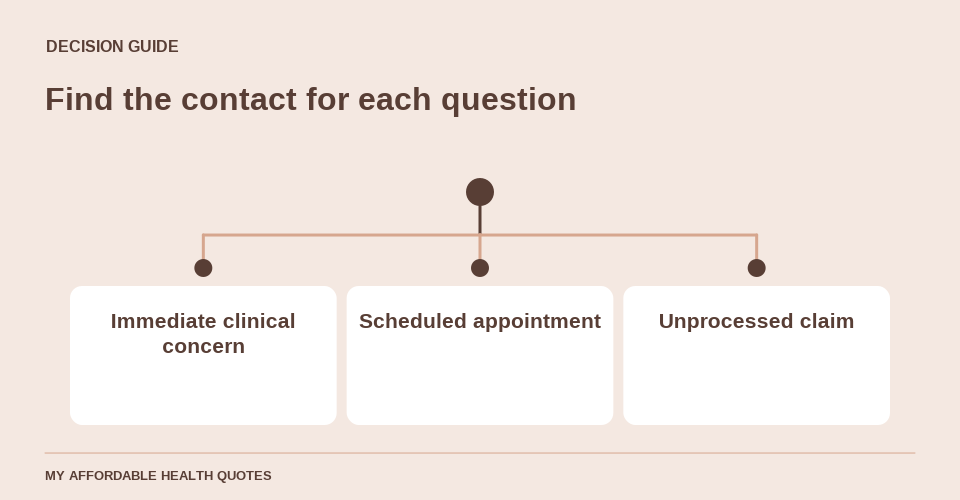
Understand the boundary of the emergency benefit
HealthCare.gov explains that Marketplace plans cover emergency services and describes protections when emergency care is obtained outside the network. Federal surprise billing protections also cover many emergency situations for people using most private health insurance. Certain post-stabilization services can have protections subject to specific conditions. Details matter, including setting and circumstances, so anyone facing a disputed charge should use the federal consumer guidance and the insurer's explanation. A traveler should not infer from an emergency department's status that every later service, including a separate elective office visit days later, receives the same financial treatment.
In this example the consultant has been discharged, left the hospital and been offered a future appointment at a separate office. She gives those facts to the plan. Asking whether follow-up from an emergency is covered, without giving the location or the type of appointment, might produce a general answer about hospital charges. Instead she identifies the office address, clinician, date and service expected. If there is a question about services received while still at the hospital, she makes a separate inquiry using the hospital's name and the timeline involved. Treating the two encounters individually makes each answer easier to evaluate.
Compare local and hometown appointment routes
The recommended local specialist can see her tomorrow. Her regular doctor can speak with her care team today, but a hometown specialist's first listed opening is a week away. She asks the discharge team to explain which options meet its instructions. Meanwhile she gives her plan the local specialist's billing identity and asks for alternatives in the travel area if that clinician is outside her network. A directory search is a starting list. Calling a practice to verify it accepts her exact product, is taking this type of referral and can meet the timeframe establishes whether the appointment is actually usable.
If a plan supplies a distant participating option, note the appointment offered and the distance from the patient's present location. A listing two hours from a hotel means more when the traveler has no vehicle or cannot drive. Share concrete barriers with member services and ask whether the plan can arrange an appropriate appointment or review a request to use another professional. Such a request has its own criteria and approval process. Get the scope of any agreement in writing, including the clinician and services, before treating a nonparticipating option as financially equivalent to the in-network choice.
Account for the return journey without placing a price on safety
Suppose the team considers either local or hometown follow-up appropriate within the specified interval. In that hypothetical, the consultant can compare the financial effects of two feasible routes. The local route might entail an estimated office charge, a hotel extension, a ground ride and one missed session with a client. The home route might entail moving the flight, getting records to the home practice and arranging a different appointment schedule. Put the cost-sharing estimates and the personal travel costs in separate columns. A household's travel expenses generally need their own funding unless a specific benefit or separate policy applies.
A high annual income is a particularly poor proxy for the price of disruption. An owner who charges per project may lose no income by moving one meeting. A different person earning the same yearly amount may have to cancel a nonrefundable assignment or pay someone else to cover it. Use real cancellation terms and actual substitute costs where available. Avoid putting a full day's gross sales down as a loss when the work can be rescheduled at little expense. Either way, the options compared must first satisfy the care team's timing. A lower price cannot settle a medical question.
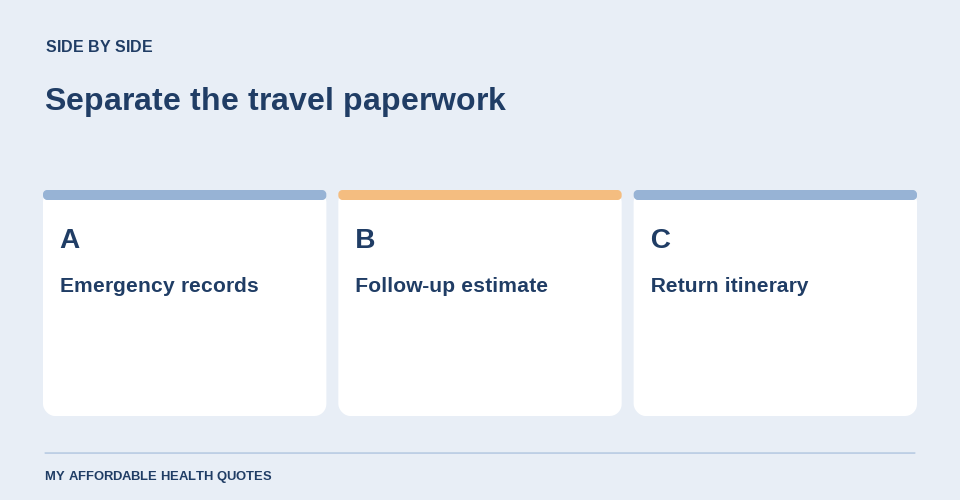
Send the right information ahead of the appointment
The next clinician needs more than a date and the name of an emergency department. Ask the receiving practice which records to send and how to transmit them securely. Perhaps it needs the full visit note, images in a format its software can read, or a report still being finalized. Ask who at the emergency department manages requests after discharge and whether any pending result has a named recipient. A traveler may be registered under a different address or surname in two systems. Matching contact details reduces the chance that a report lands in a queue awaiting manual identification.
An arrival confirmation should refer to the material the clinician needs. The home office may say it got a fax, while the only pages received are a cover sheet and a release form. Ask whether the note or report itself is visible and who will review it. If some records must follow separately, tell the clinician's office what is still outstanding. The patient can carry a personal copy according to the facilities' directions. The consultant's goal is to leave the clinical interpretation with the professionals while making sure they can see the same information before making a decision.
Put each bill next to the encounter it describes
Back in Florida, the consultant creates three dated entries. The first covers the hospital visit and the clinicians who participated. The second covers the scheduled follow-up outside the hospital. The third covers services furnished after she returned home. An explanation of benefits tells her how the insurer processed a claim, while a provider bill asks for payment. Compare the two for the same service before assuming that an early billing statement reflects the final member share. If a service date or location looks wrong, contact both billing and the plan with enough detail to identify the particular encounter.
If an unexpectedly large balance concerns the emergency visit, consult the CMS medical bill rights resources and ask the plan to explain how it applied the relevant protections. If it concerns the scheduled recheck, obtain the coverage reason for that particular claim. An outside-network decision, missing referral and billing error are different problems with different solutions. An office that entered the wrong plan identifier may be able to correct the claim. A disagreement with a formal coverage decision may require a timely appeal. Florida's consumer insurance service can help direct state-regulated insurance questions and explain where another office has jurisdiction.
Use the experience when shopping for the next travel season
At renewal the consultant keeps one realistic travel example. For a commonly visited city, can each quoted policy identify a regular outpatient provider and a route to specialist follow-up? Who handles arrangements after hours? Is there a referral process when her usual primary care office is across a state line? Each response belongs beside the correct product name and plan year. If travel destinations vary constantly, ask about the least predictable part of the process, such as assistance finding a time-sensitive appointment after discharge. A broad network claim carries little weight without a way to find the actual service.
The policy that works for a person who can reliably return to Florida the next morning may work differently for a consultant who spends three consecutive weeks on one assignment. Spell that pattern out in a quote request, along with the home county and examples of work destinations. A useful comparison explains the first step after the hospital doors close, identifies what requires a separate inquiry and makes clear which travel costs the family expects to handle. The discharge folder then serves its intended purpose as a set of care instructions, and the insurance questions each have an appropriate destination.
Sources and further reading
- HealthCare.gov: Getting emergency care
- CMS: Know your medical bill rights
- HealthCare.gov: Comparing health plans
- Florida Department of Financial Services: Insurance help