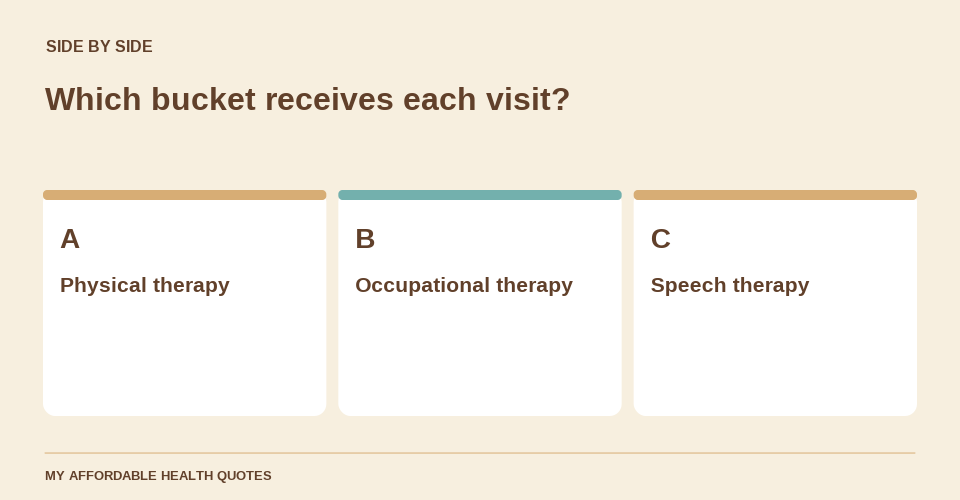
An outpatient rehabilitation benefit can look generous until several services draw from the same allowance. For a household comparing Oklahoma health plans, the most revealing question may be how the policy counts an appointment. A visit with a physical therapist followed by occupational therapy in the same building might be two distinct services. An initial evaluation may follow different counting rules from a treatment session. The terms of the particular policy determine the answer. The therapy office and the insurer each see a different part of the process.
Imagine an Oklahoma business owner planning for a period when his clinician expects him to use two kinds of outpatient rehabilitation. No one knows his future schedule exactly. He can, however, compare how two private policies would handle a made-up calendar. This exercise does not predict the appropriate amount of therapy. It turns a vague benefits comparison into a test of what the plan documents actually say. A household comparing insurance before anyone has an appointment can use the same exercise with hypothetical visits.
Identify the unit before you count anything
Read the rehabilitation line in the Summary of Benefits and Coverage, then follow its reference to the full coverage document. Highlight the noun beside the number. Is the allowance written in visits, sessions, treatment days, or another unit? Does the document define that word? If it refers to individual therapies, note whether the number belongs to each service separately or to the whole group. If the benefit summary says limitations apply without explaining them, request the page that spells them out.
Ask the insurer a question built around a specific calendar date. “If an eligible member sees two participating clinicians on Tuesday, one for physical therapy and another for occupational therapy, how would these count against this product's outpatient benefit?” A clear answer names both the count and the section that supports it. A representative who can only provide a general estimate may need to refer the question to a benefits specialist. Record whether the plan can answer before enrollment or only once it has the service descriptions.
Pay attention to qualifying language about the place of service. The therapy suite inside an orthopedic office, a hospital outpatient department, a home health service, and an independent therapy practice can have different payment or approval arrangements. Even when they use the same therapy discipline, it is risky to carry a limit from one setting into another. Tell the representative where the clinician expects appointments to happen and ask about that setting. Request separate answers for any realistic alternative rather than a generic promise about physical therapy.
Make an illustrative six-week calendar
Put Mondays and Thursdays in a column for physical therapy. Put a Wednesday in each of the first four weeks for occupational therapy. Under this purely hypothetical schedule there would be twelve physical therapy appointments and four occupational therapy appointments. Now add an initial evaluation for each discipline on different days before the first treatment. There are eighteen appointments on the page, although the number counted by the insurer might differ. These numbers illustrate arithmetic, not a recommended clinical program or a policy limit.
Read that calendar to the insurer. If the product combines all eligible visits and counts both evaluations, it might record eighteen units under the assumptions of the example. If it excludes evaluations from the count, the same calendar might consume sixteen. If each discipline has a separate bucket, you need two remaining balances instead of one. Do not choose an interpretation because it gives the most appealing result. The value of the exercise lies in asking the insurer which description matches the specific policy.
Now try one change. Move two occupational therapy appointments to days on which the patient already has physical therapy. The number of appointments is unchanged, but the number of distinct dates falls. A policy counting treatment days could respond differently from one counting visits per discipline. If the plan cannot explain whether this matters, preserve the question in writing. Guessing incorrectly at this point could change which competing plan looks more useful to the family.
Count permission and payment on different sheets
A visit allowance does not guarantee that every visit will meet the policy's coverage conditions. Likewise, a clinician's recommendation for another month does not settle how many visits the insurer has authorized. Ask whether an order, referral, or prior authorization is needed and whether the rule changes after a certain point. Find out who starts the request and when the office expects to receive a decision. A referral to a therapist and permission for a particular treatment schedule may be recorded in different places.
On your second sheet, write the authorization's start and end dates, any authorized number of services, its named practice, and the person who will ask for an update. Imagine the coverage year allows more visits than the insurer has approved in the current period. The patient might still need another authorization before using the remaining benefit. Alternatively, the clinician might have an authorization that extends into a period when the member's coverage or available benefit changes. Both sheets need to agree before a future session can be priced with confidence.
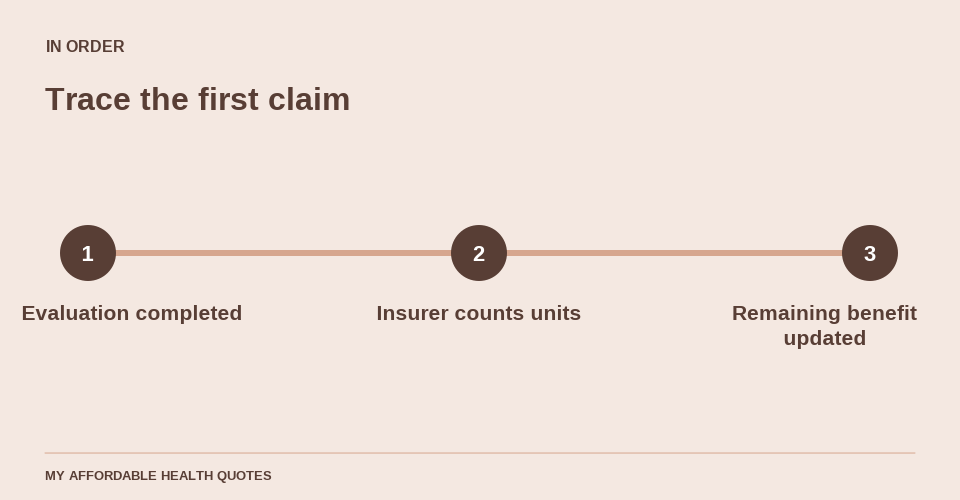
Ask the clinic how quickly a completed session becomes visible to the plan. Bills sometimes arrive after the next round of scheduling. A portal showing several remaining visits may be missing recent claims. Ask whether the clinic can provide a list of dates already billed, dates still awaiting submission, and visits scheduled but never performed. A canceled visit charged under the practice's separate attendance policy raises a different question from a service billed to insurance. Resolve the mismatch with the clinic before treating the portal balance as final.
Compare the full price at each participating location
Two clinics can both be in network and still lead to different costs. One may bill through a hospital outpatient department; another may bill as an independent practice. Give the insurer the facility name, street address, and billing entity. Ask how an evaluation and follow-up visits would be priced in each setting. If a plan quotes a flat copayment, ask which services and settings qualify for that amount and whether any separately billed services could also apply.
For a hypothetical budget, suppose an independent clinic estimates a patient's share at forty dollars for each of sixteen covered treatment visits. Multiplication gives six hundred forty dollars before the evaluations, assuming the stated share actually applies to each visit. A competing plan might show a smaller premium but charge deductible and coinsurance on the allowed amount. To estimate that alternative, you need the contracted estimate and the member's remaining deductible. Substituting the clinic's full billed charge for the allowed amount can greatly distort the comparison.
The business owner's other expense is time. A close clinic has earlier openings and can combine appointments on one afternoon, while a distant facility requires two round trips each week. Estimate traveling and waiting time in a separate column from insured costs. When one option is clearly unaffordable on either measure, identify the reason. Calling it a network problem when the real difficulty is appointment availability will send you to the wrong person for help.
Stress-test a schedule that crosses January
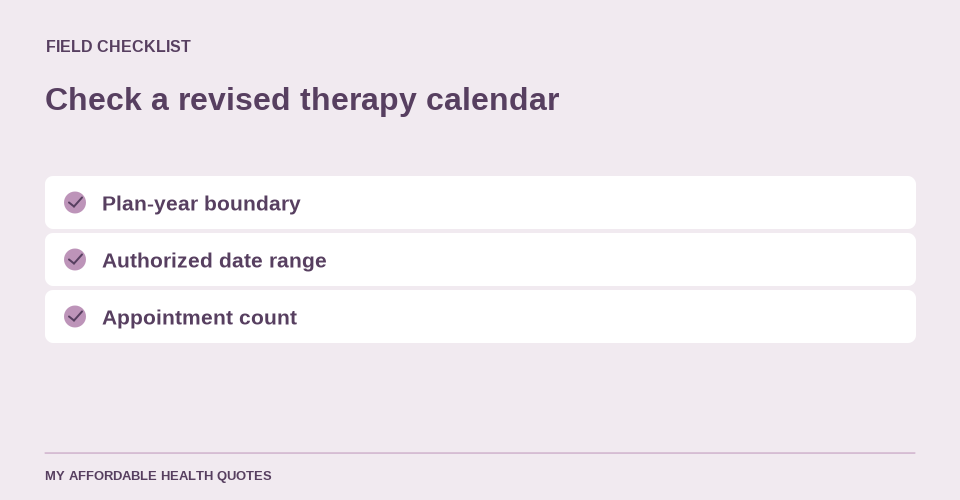
Coverage periods and benefit limits can reset on different terms. Find the actual dates stated in the policy instead of assuming every count follows the calendar year. If an episode crosses a renewal, ask whether a new evaluation or authorization is needed, whether the practice will participate in the next product, and how the new deductible applies. A scheduling system that automatically repeats appointments does not verify any of those details. Recheck it against your plan notice before the first appointment under new coverage.
Discuss what happens if the approved course changes. A clinician may determine that one discipline is no longer needed while another should continue. Ask whether unused appointments can be reassigned across disciplines and whether a new request must describe the revised need. Never change a treatment plan yourself to optimize a benefit counter. Understanding the counter gives the patient a better way to discuss administrative and financial constraints with the clinicians responsible for care.
If a bill raises a dispute, identify its exact cause first. The practice may have billed a session twice, used an unexpected setting, or attached the claim to an old member number. The insurer might instead have interpreted a shared visit maximum or decided that additional services fail a coverage criterion. Ask for written reasoning and the applicable plan language. A corrected claim from the office may resolve a clerical error. A disagreement with a formal benefit decision may require following the appeal instructions in the notice.
For an Oklahoma quote conversation, bring your sample calendar and the two plan passages describing the limit. Ask the agent to find where each contract addresses evaluations, shared limits, site differences, and approvals. For an unresolved question involving a policy within its authority, the Oklahoma Insurance Department has a consumer assistance division. The most informative output is a dated count you can reproduce. If one policy describes exactly how your proposed schedule counts and another leaves the result unknown, make that difference visible alongside the premiums.
If a session is canceled, check the ledger before making the next booking. A canceled appointment might generate an office fee under its missed-visit policy even when no insurance claim for therapy was filed. Ask the insurer whether a visit was actually counted, and ask the practice what it billed. The two records can tell different stories without either person having deliberately charged for a session that did not occur.
Sources and further reading
- HealthCare.gov: Marketplace benefits
- HealthCare.gov: Summary of Benefits and Coverage
- Oklahoma Insurance Department: Consumer services
- HealthCare.gov: Appealing a health plan decision