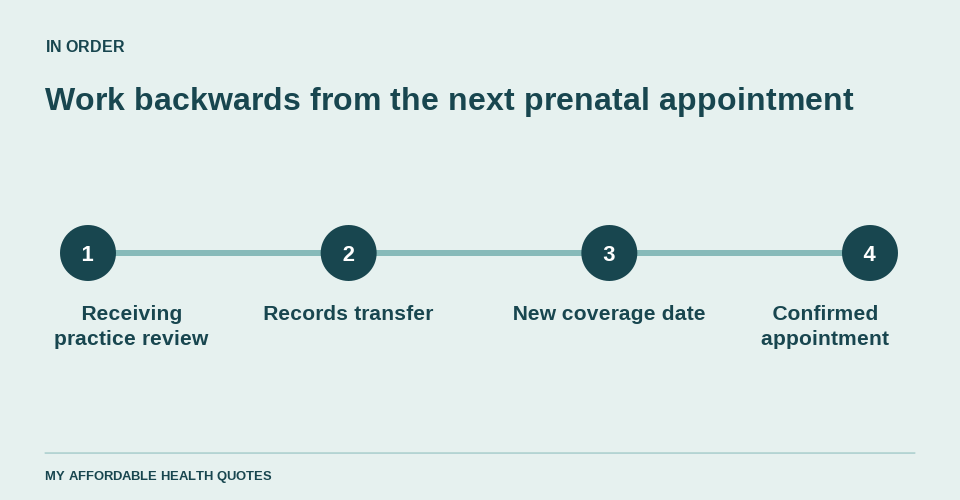
Two households can move into the same South Dakota neighborhood on the same day and have very different health insurance problems. One has months until anyone needs a scheduled visit. The other has a prenatal appointment on the calendar next week and a delivery hospital selected in the state it is leaving. For the second household, shopping by ZIP code and monthly premium is only the beginning. Someone must accept the transfer, receive the pregnancy records, arrange the next visit and explain what will happen at the intended delivery site under the new policy.
Suppose Jordan owns a design business and is moving permanently to Sioux Falls partway through a pregnancy. A relocation package from an employer would have provided a familiar benefits contact, but Jordan buys individual coverage and handles the move independently. The example assumes no urgent symptoms and no medical instruction to delay travel. Questions about travel, appointment intervals and where delivery should occur go to the treating team. The insurance task is to make the recommended clinical schedule possible across a change of address, providers and potentially insurers. Start with the calendar the practice gives you.
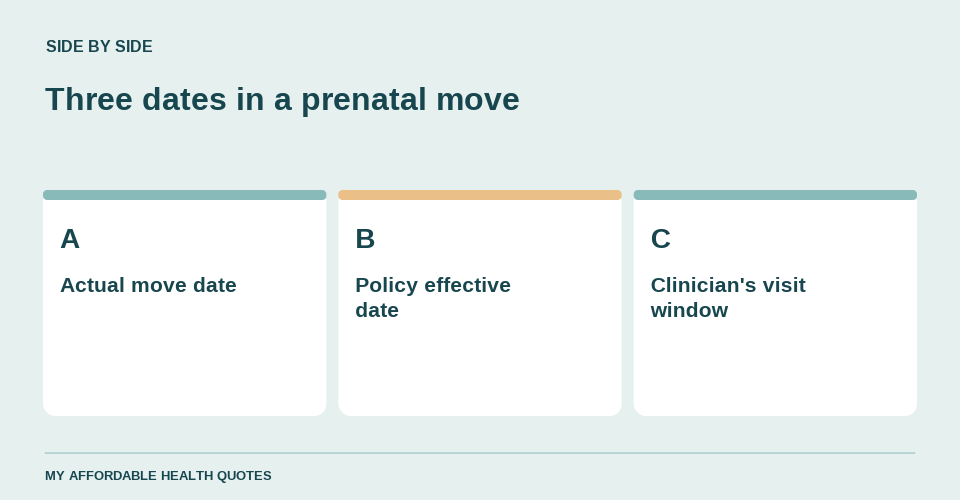
Draw three lines across the moving calendar
On the first line, mark the date the household actually relocates and when members stop living at the old address. On the second, mark the coverage dates the current insurer and the enrollment system have confirmed. On the third, mark the last appointment at the old practice, the next visit the clinician recommends and any pending results the new team needs. Moving those three lines independently reveals problems that a single entry labeled moving day would hide. The furniture truck could arrive before a new plan takes effect, or the old practice could close its transfer file before another practice has accepted it.
HealthCare.gov describes when a permanent move can create a Marketplace special enrollment opportunity, including qualifying moves to a new ZIP code or county. Conditions apply, including prior coverage requirements for many moves. A trip solely for treatment or a vacation does not qualify as a move under that provision. Ask the Marketplace about the actual circumstances, documentation, enrollment deadline, selection date and coverage start. Its pregnancy guidance also distinguishes pregnancy from the birth of a child in the federal Marketplace enrollment process. Do not assume that one event automatically resolves a separate enrollment question about the other.
Record confirmation numbers for both the old and new arrangements. If a representative asks for proof of the prior home or prior coverage, find out exactly which documents the enrollment system accepts and how to confirm receipt. Avoid canceling an existing policy based solely on an estimate of a new start date. Ask the current insurer what happens when the family moves outside its service area and how to coordinate the end date. A policy's availability to residents and a clinician's willingness to see a visitor are different questions. Neither one alone establishes benefits on the date of the first local appointment.
Ask for a transfer appointment while there is still time to send records
New-patient scheduling and pregnancy transfers may go to different people. Ask a prospective practice who handles transfers at the current stage of pregnancy, what the practice requires before acceptance and how long review usually takes. The office might ask for the current clinician's contact information, a transfer summary and records of previous visits or tests. Ask the existing team to determine the clinically necessary material. If the new office cannot offer a visit in the recommended interval, return to the treating clinician for guidance and ask the insurer to locate an appropriate participating option with actual availability.
An appointment labeled preliminary intake can mean several things. It might be an administrative registration call, an evaluation with a clinician or a review that precedes a decision about accepting the transfer. Ask the receiving office to describe the step and who will assume responsibility for care afterward. Jordan marks three separate milestones on the calendar when relevant: paperwork received, transfer accepted and visit booked. This makes it possible to identify where to intervene if a due date for the next contact arrives. A household can be fully registered in a portal while still waiting for a clinical appointment.
Make reports and pending work visible to both teams
The departing office can send a packet today and still have a report arrive tomorrow. Ask it to list outstanding tests, who expects the results and how the results will get to the receiving clinician. Confirm the new office's preferred secure transfer method and the name of its transfer coordinator. A scanned copy that a patient keeps for reference may be helpful, but the new team should specify whether it needs original data, images, reports or additional documentation. Ask it to confirm that the transfer packet can be read and matched to the patient's appointment record.
Jordan also asks which numbers to call before and after the first new visit. During a move, messages can end up with the old practice because its portal is familiar, while the new office believes it has already assumed care. Agree on a handoff point with the teams and ask for instructions about time-sensitive concerns. If someone else will help handle scheduling during the move, ask both practices how to authorize that person's involvement. Updating a mailing address with a moving service does not automatically update the care team's emergency contacts or the insurer's member account.
Verify the practice and planned hospital as separate purchases
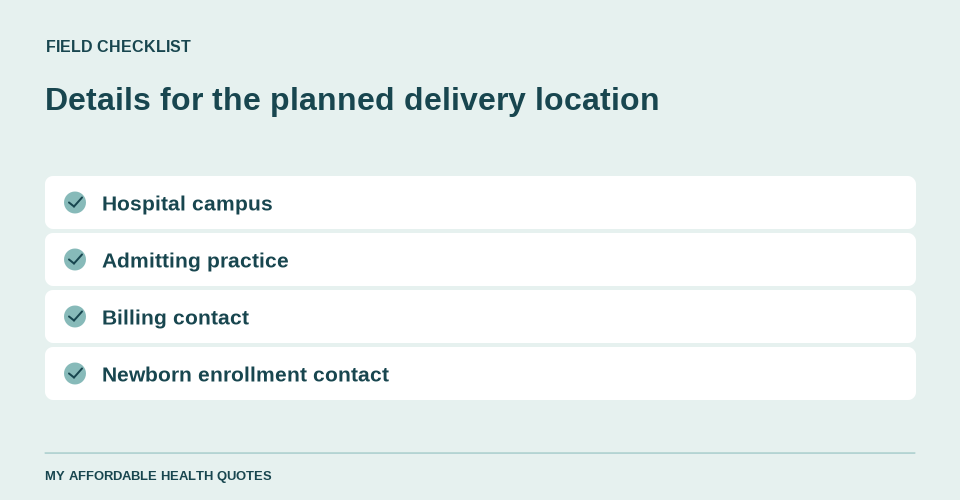
An obstetric practice may deliver at more than one campus. Ask which facility the team plans to use for this patient, what arrangements exist when a different clinician is on call and which office handles hospital registration. Give the insurer the actual practice name, precise campus and quoted product, including its network name. The hospital that the household can see from the new apartment might belong to the same health system as the planned delivery location without being the same facility. Verify the relevant site and save the date and source of the answer.
Marketplace policies include maternity and newborn care within their essential health benefits. That general standard leaves plan-specific questions about participating providers, cost sharing and arrangements for services before and after delivery. Ask each candidate plan how to locate the rules for prenatal office visits, hospital care and newborn care. A standardized coverage example in plan materials can illustrate how an example is structured. It cannot predict this family's final bills, especially when prenatal and delivery services span different contracts. Request an estimate from the receiving practice that describes the actual transfer situation and the planned remaining services.
Check how the departing and receiving offices handle payments
A deposit at the old office may have been calculated on the assumption that the same practice would provide the entire course of care. Ask its billing team to identify services already furnished, claims already submitted, any unapplied credit and the method for reviewing a refund or balance. At the new practice, ask what its requested deposit includes and whether it assumes that earlier visits occurred there. Comparing a full-pregnancy deposit with a transfer estimate without checking their scope can make one arrangement appear far cheaper than it is. Get the payment terms and contact details in writing.
For example, imagine the old office shows a patient credit of four hundred dollars and the new office requests six hundred dollars before delivery. Those illustrative numbers create two cash-flow entries, not an automatic two-hundred-dollar obligation. The new office may not have access to the credit at all, and the old office may still have outstanding claims to reconcile. Budget for the payment actually due while finding out how and when the original office settles its ledger. Avoid counting an unprocessed credit as money already available. Keep the old explanation of benefits files accessible after the move.
Include the newborn and the period after delivery in the handoff
Before delivery, ask the enrollment system or benefits contact how to report the birth, what deadline applies and what evidence is required. HealthCare.gov describes birth as a qualifying event and explains when coverage can begin for eligible enrollees. Ask how to identify the newborn on hospital and clinician claims while enrollment processing is underway. The hospital recording a birth and the household updating an insurance application are separate tasks. Choose a person to help track them if appropriate and find out which steps require the parent's own participation or permission.
Then check where postpartum appointments will take place and how the household can arrange the baby's early care through a participating practice. Verify that the identified pediatric office takes the relevant product and can accept a newborn in the expected timeframe. The family's first few weeks in South Dakota may involve two separate scheduling systems, two sets of bills and several contacts still in the old state. Give each patient a distinct entry in the household's insurance file so a statement about one person does not accidentally get reconciled against the other's deductible or visit.
A useful quote request for this move includes the destination county, reliable coverage dates, the intended practice and hospital and the next scheduled care window. The decision turns on which quoted plan can support the sequence that is actually coming. Once Jordan has an accepted appointment, confirmed effective date, accessible transfer record and a named contact for delivery billing, the household has a much clearer basis for choosing. The South Dakota Division of Insurance can direct questions about state-regulated coverage when an insurer's answer and the written contract appear to conflict during the move.
Sources and further reading
- HealthCare.gov: Coverage during pregnancy and after birth
- HealthCare.gov: Special enrollment opportunities
- HealthCare.gov: Comparing health plans
- South Dakota Division of Insurance: Consumer resources