When selling a South Carolina business, health coverage belongs on the closing checklist alongside payroll, leases and customer contracts. Employees need to know which plan covers them after the transaction, who sends notices and how premiums will be paid. A purchase agreement that allocates expenses between buyer and seller does not automatically establish what the insurer or plan administrator will do.
The seller's task is to provide accurate records, obtain the necessary decisions and avoid promises that exceed confirmed terms. This guide focuses on preparing the health-benefit portion of a sale. The transaction's legal advisers should determine responsibility under the applicable contracts and laws, particularly where continuation coverage or an ownership restructuring is involved.
Begin with a map of the current arrangement
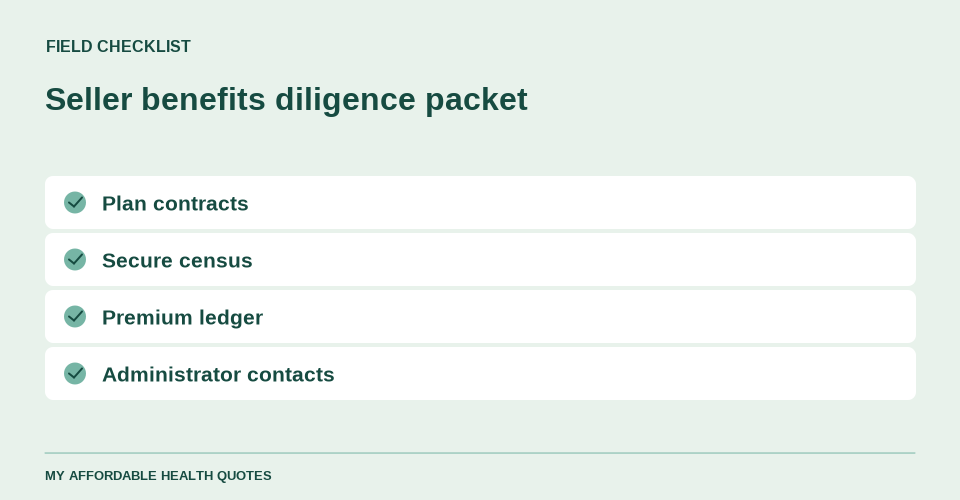
List every health-related benefit the business provides. Medical insurance, dental, vision, reimbursement arrangements and spending accounts may use different providers and administrators. Identify the legal employer sponsoring each arrangement, the plan year, renewal date, billing contact and authorized decision maker.
Collect the governing documents and current employee-facing summaries. A broker proposal is not a substitute for the contract that was actually issued. Include amendments and recent notices so the buyer does not evaluate an outdated version of the benefit.
Prepare a secure census with the information the transaction advisers request. Distinguish active employees, covered dependents and people receiving continuation coverage. Do not provide individual diagnoses or detailed claims in a general diligence folder. The parties should determine what information is necessary and how it can appropriately be shared.
Describe the deal structure to the insurer
Tell the benefits adviser whether the transaction is expected to involve assets, equity or another structure. State whether the legal employer remains the same, whether workers will be hired by a new entity and whether existing operations continue. Those facts can affect the analysis, and a generic statement that the company is being sold is not enough.
Ask the insurer what approvals, notifications or replacement applications are required. Request the answer before the closing date is fixed if possible. Do not assume the buyer can simply keep paying an invoice issued to the seller and thereby preserve the arrangement.
If the parties are still negotiating, label proposed dates as tentative. Establish who will send the final notice when the transaction closes. An insurer acting on a premature termination instruction can create a problem even if the deal later fails or is delayed.
Use South Carolina resources to verify the insurance side
The South Carolina Department of Insurance small-business page explains the state's small-group market and purchasing routes. It distinguishes that market from individual coverage for people without qualifying employees. Use it to orient the discussion, then obtain an insurer-specific response for the transaction.
The department also publishes information about health insurers. This can help the buyer verify the company behind a proposed replacement plan. A marketing brand, administrator or network name is not necessarily the insurer responsible for paying benefits.
Ask the professional handling the sale which questions fall under state insurance oversight and which concern the employer plan or federal benefits law. This prevents a request for help from being sent repeatedly to offices that cannot decide the issue.
Create a coverage timeline for every affected group
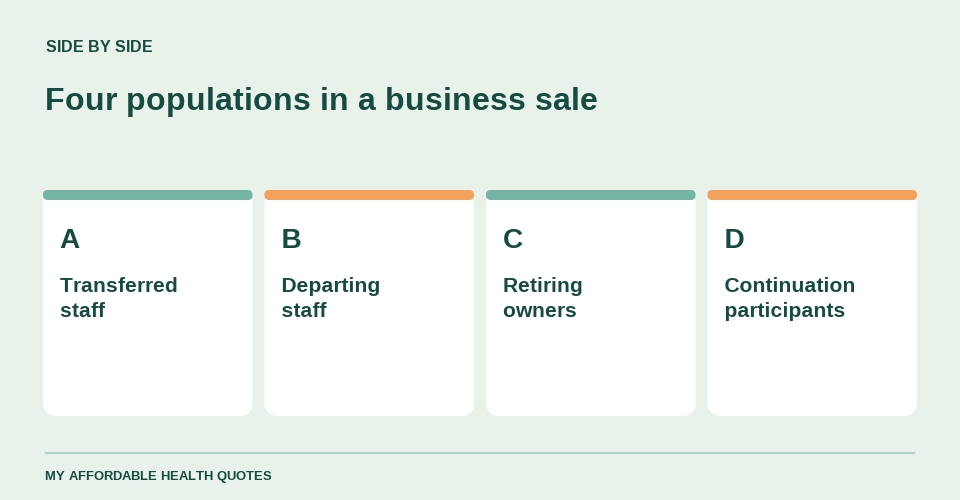
Divide the population into groups with different transitions: employees staying with the buyer, employees leaving at closing, owners who will stop working and people already on continuation coverage. The same closing date does not mean everyone has the same insurance outcome.
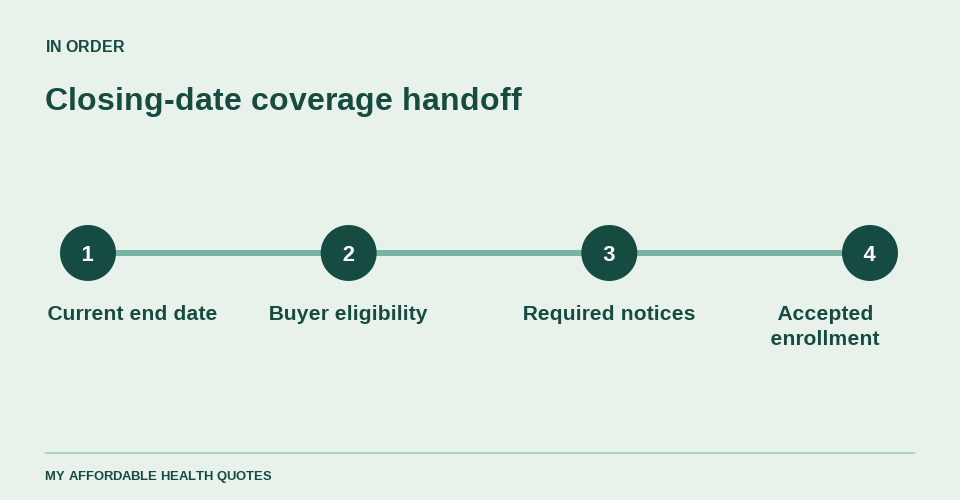
For each group, record the last confirmed day under the current arrangement, the proposed next coverage and the person responsible for notices. Include the date employees must act and the date the insurer must receive enrollment information. Where an answer is pending, show the gap explicitly.
Do not use the final paycheck date as a proxy for the coverage end date. Ask the administrator to confirm the actual rule. Likewise, an offer of employment from the buyer does not prove that the buyer's health plan starts on the first workday.
A hypothetical sale with a delayed closing
Suppose a Columbia repair company plans to sell its assets on June 30. The buyer expects to employ most staff on July 1 and intends to offer its own health plan. The seller tells employees that coverage will be seamless before the buyer's administrator has confirmed eligibility dates.
Closing then moves to July 12. The parties now have two unresolved questions: whether the existing arrangement remains active through the delayed period and when the buyer's plan can accept the transferred workforce. A statement about seamless coverage made weeks earlier does not answer either one.
A better process would have kept the communication conditional, identified who could authorize any termination and required written effective-date confirmation. The seller and buyer would update a shared transition schedule while their advisers resolve the plan requirements. This example does not imply that a particular bridge arrangement is available; it shows why the timeline must remain tied to confirmed facts.
Assign continuation-coverage questions to qualified advisers
The Department of Labor's guidance on an acquired employer notes that special successor-liability rules can affect continuation coverage. The answer can depend on the transaction and whether a group plan continues. Do not assume that closing the seller's plan eliminates every responsibility.
Have counsel or the qualified administrator identify the affected people and the party responsible for required notices and administration. Put the operational assignment in writing. If the agreement says the buyer reimburses the seller for a cost, still determine who actually sends the notice and accepts the election.
People already receiving continuation coverage should not disappear from the project because they are absent from the active payroll roster. Confirm that their records, payments and contact details are addressed through the approved process. The seller should retain evidence of the handoff rather than assuming the buyer found those people in another file.
Reconcile money without confusing it with coverage
Prepare a schedule of premiums paid, employee deductions collected, pending adjustments and known credits. Identify which coverage period each amount belongs to. An invoice paid after closing may relate to an earlier month, and a credit received later may belong to a period funded partly by employees.
Ask the accountant and benefits adviser how those items should be handled. Do not distribute a refund solely according to the purchase agreement without reviewing whether any portion involves participant contributions or plan assets. The parties need the correct treatment, not merely a convenient accounting shortcut.
Keep billing and enrollment reconciliation connected. A missing charge might mean an employee was not enrolled, but it might also reflect invoice timing. Investigate the underlying record before collecting an extra deduction or declaring that coverage has ended.
Prepare an employee message that can be relied on
The first communication should explain what has been decided, what remains under review and when employees will receive final instructions. Include a private contact for household-specific questions. Do not ask supervisors to interpret plan terms during informal conversations on the shop floor.
The final communication should identify the confirmed coverage transition, enrollment steps and sources for benefit documents. If the network changes, give employees enough information to check their providers and prescriptions. Avoid describing a replacement as identical unless the documents support that claim.
For employees leaving the business, provide the applicable notices and neutral information about available enrollment routes. An owner can direct someone to official resources without promising that a particular subsidy, plan or effective date will apply. Keep the distinction between general information and an actual eligibility determination clear.
Close the information-access gap
Decide who retains access to the old insurer and administrator portals after closing. The seller may still need records to resolve a prior-period billing question, while the buyer needs authorized access for ongoing administration. Arrange appropriate permissions rather than sharing personal credentials.
Export the approved records before accounts are shut down. Keep a record-retention plan reviewed by the advisers responsible for the transaction. Employee records should not be abandoned in a former owner's personal cloud folder or sent broadly to the buyer's entire management team.
Identify a named contact on each side for the first several post-closing billing cycles. A documented question queue is useful: issue, affected period, responsible party, requested evidence and resolution. That makes it possible to separate genuine coverage problems from ordinary lagging invoice adjustments.
Preserve a fallback if the transaction fails
Ask the advisers what happens if the sale does not close. A benefits termination should not proceed merely because a draft calendar once listed that date. Require final authorization through a named contact and confirm how an instruction can be withdrawn before it takes effect.
Keep employees informed if the timeline changes. A worker who has begun arranging replacement coverage needs accurate information about the continuing policy. The company should explain the confirmed facts and refer enrollment questions to the appropriate administrator. A failed transaction is stressful enough without an avoidable insurance change based on an obsolete closing assumption.
Measure completion by confirmations
The benefits portion of the sale is complete when the required transitions are documented, notices are handled, enrollment records are accepted and money has been reconciled. It is not complete merely because the purchase price was paid.
Schedule a post-closing check with the buyer's administrator. Confirm that transferred employees received identification information, that deductions match their elections and that unresolved continuation cases have an owner. Preserve the results with the transaction file.
If individual coverage is needed for a departing owner or employee, request a plan comparison using the confirmed coverage-loss date and household circumstances. A well-prepared South Carolina sale gives people accurate facts early enough to make their next coverage decision, while leaving legal responsibility and policy interpretation with the professionals qualified to resolve them.
At closing, save a copy of each notice where both spouses can find it after business email access ends. Record which household members appear on each document. If a dependent is missing, request correction while the seller still has a working benefits contact. Put the first premium due date beside the effective date on the family calendar and check the payment cleared.
Sources and further reading
- South Carolina DOI: Small-business coverage
- South Carolina DOI: Health insurer information
- DOL: Acquired employers and continuation coverage
- DOL: Employer COBRA guide