When the last nonowner employee leaves a small business, the owner should ask the insurer whether the group health arrangement can continue. Keeping the business entity open and paying another invoice may not answer the eligibility question. The relevant facts include who remains employed, who is enrolled, the plan's rules and any applicable continuation requirements.
This situation can arise when an owner returns to solo consulting, closes a staffed shop but keeps an online business, or replaces an employee role with outsourced work. The next coverage decision should begin before the final payroll is processed. A clear end date and a confirmed replacement are more useful than hoping the existing group policy will remain valid indefinitely.
Tell the insurer what is changing
Prepare a factual description of the departing employee's last workday, anticipated coverage end date and the people who will remain in the business. Distinguish owners, spouses, other family members and nonowner workers. Do not change how someone is described solely to preserve a preferred insurance arrangement.
Ask the insurer or authorized administrator which documents it needs to assess continued eligibility. It may need employment and enrollment facts that are not visible from a premium payment. Request a written answer identifying any deadline, effective date or additional action.
For SHOP coverage, HealthCare.gov describes employee requirements that exclude certain owners and family members from the qualifying count. Other group arrangements also require a review of their own eligibility rules. Do not assume that an answer for one purchasing route applies automatically to every policy.
Separate three possible events
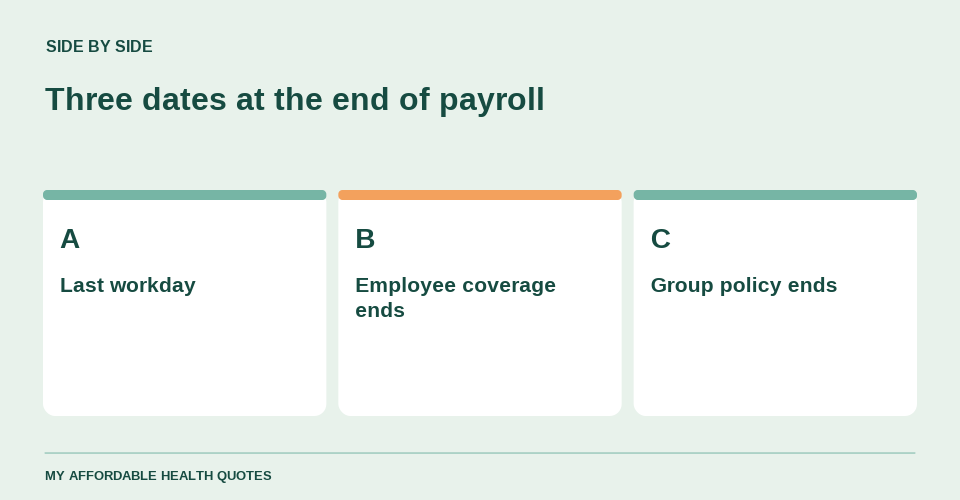
The employee's employment may end on one date, their coverage may end on another and the employer's group policy may terminate on a third. Record all three. The owner needs to know which event creates a personal coverage problem and which event triggers an administrative responsibility toward the departing worker.
A final paycheck can include work performed weeks earlier. It therefore should not be used as proof of the insurance end date. Similarly, an insurer invoice generated before a termination is processed may not establish that coverage continues for the full billed month.
Ask the administrator to reconcile the dates before notices or cancellation requests are sent. If a date changes, update every affected record and communication. An owner who gives different dates to the employee, broker and payroll provider creates avoidable confusion.
Map the people who need a next step
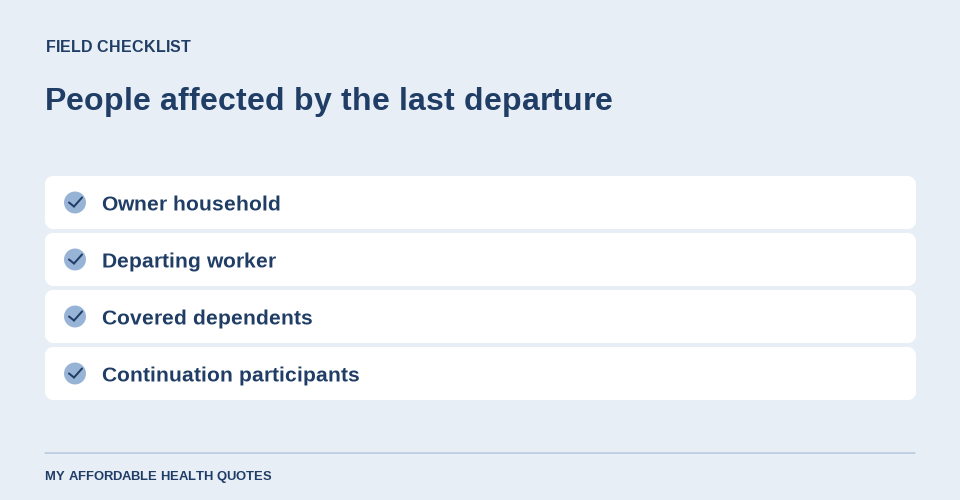
List the owner, any covered spouse or children, the departing employee and that employee's covered dependents. Include anyone already receiving continuation coverage. Each person may need different information or a different enrollment route.
The owner should not make private coverage choices for the departing employee. The business's role is to provide accurate information and any required notices, while the individual evaluates their options. Keep household income and medical details out of the employer's closure project unless an authorized process specifically requires them.
For the owner's household, identify existing alternatives such as a spouse's employer plan or individual coverage. Confirm actual eligibility and timing. Do not assume that another household member can add the owner whenever convenient; the receiving plan has its own enrollment rules.
Do not promise COBRA without an applicability review
Federal COBRA does not apply to every small employer, and state continuation rules can differ. Ask the qualified administrator or legal adviser which requirements apply to the actual plan. The Department of Labor's employer guide provides the federal framework, but the business's facts still need review.
Also ask what happens if the employer no longer maintains any group plan. The Department of Labor explains that continuation can be affected when no group plan remains, with special issues where an acquisition or successor employer is involved. Continuing to send a former employee a bill is not a substitute for establishing that coverage exists.
Keep the applicability decision and operational instructions in the file. Identify who sends any required notice, who accepts payments and who answers questions. If no continuation option applies, avoid describing the situation casually as “COBRA is unavailable” without having the relevant facts reviewed.
A hypothetical return to solo work
Imagine a consulting firm with one owner and one unrelated employee enrolled in its group plan. The employee accepts another job, and the owner intends to continue serving clients alone. The owner assumes the business bank account can simply keep paying the existing premium.
Before the employee leaves, the owner asks the insurer to review the new workforce. The insurer requests the relevant employment facts and provides a written answer about the group arrangement. The owner then uses the confirmed coverage timeline to evaluate individual options and any available spouse-plan enrollment.
Meanwhile, the administrator handles the departing employee's records and applicable notices. The two processes are coordinated but distinct. The owner does not delay their own coverage review while waiting to see whether the former employee wants continuation, and does not assume the former employee's decision alone determines the group's eligibility.
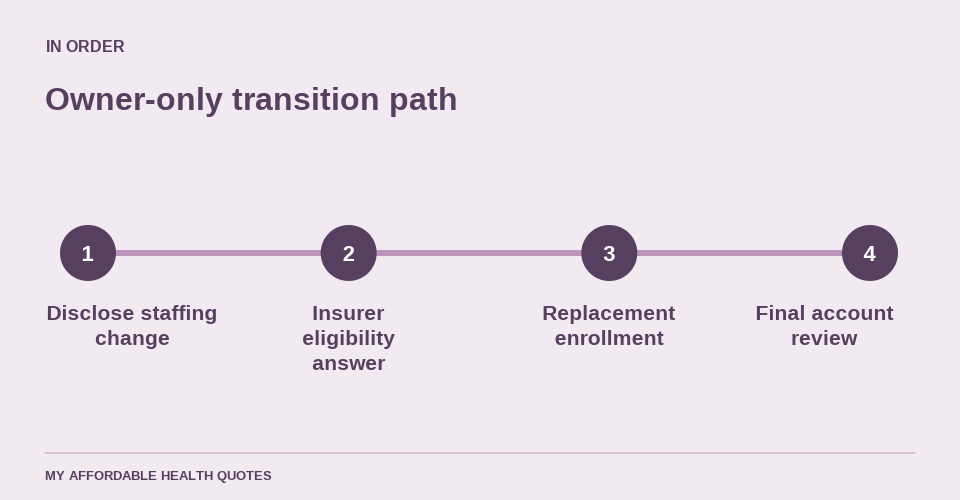
This invented example does not predict the insurer's answer. It illustrates the safer sequence: disclose the staffing change, obtain the decision, then arrange the next coverage with accurate dates.
Prepare the individual-plan comparison
If the owner needs individual coverage, gather the household members needing insurance, current providers, prescriptions and the expected start date. Prepare a household income estimate using the applicable rules. A reduction in payroll expense does not automatically mean the owner's personal income will fall, so do not reuse an old estimate without review.
Compare the exact benefits and networks of available plans. The group insurer's brand may appear in the individual market, but that does not establish that the same doctors participate. Check the specific product and coverage year.
Ask how a midyear change affects deductibles and prior authorizations. Do not assume that amounts paid under the group policy transfer to a new individual policy. Obtain plan-specific answers for scheduled treatment before choosing a replacement.
Confirm an enrollment opportunity
A qualifying loss of coverage can create a Marketplace Special Enrollment Period, but the event, documentation and effective date need confirmation. Use official Marketplace guidance and the applicable state Marketplace process. Do not voluntarily cancel first and assume that cancellation itself establishes eligibility.
Retain the insurer's termination or coverage-loss documentation. The Marketplace may request evidence, and a verbal explanation that the business became smaller may not be enough. Read the eligibility notice and complete any document request by its stated deadline.
If the dates do not line up, raise the issue immediately with the enrollment professional. A quote request is not coverage, and a submitted application may still require selection, payment or verification. The owner should know the confirmed effective date before treating the transition as complete.
Close the group account carefully
Ask the insurer for the final billing process and how credits or adjustments will be handled. Reconcile employee deductions already collected with the coverage periods they were intended to fund. Have the accountant and benefits adviser review any refund involving participant contributions.
Do not close the company's bank account or administrative email before outstanding benefits matters are resolved. A final invoice, refund or notice may arrive after the last employee leaves. Maintain an authorized contact and a reliable address for those communications.
Export the necessary records from payroll and insurer systems before access ends. Follow the retention guidance applicable to the business and plan. Keep the records in controlled storage rather than assuming the former employee or broker will preserve everything the employer may need.
Review the owner's ongoing business budget
Moving from a group arrangement to individual coverage can change how the premium is paid and recorded. Ask the accountant for the appropriate treatment based on the entity and ownership structure. Do not continue an old payroll deduction merely because it was convenient.
Build the confirmed premium into the solo business and household budget. Separate the recurring payment from a reserve for medical spending. If earnings vary, choose a reminder schedule to review the income estimate and payment method rather than leaving the arrangement unattended.
Check whether automatic payments on the former group account have stopped only after the administrator confirms the final instructions. At the same time, confirm that the new policy's payment process is active. Avoid a situation where the business pays the old invoice but misses the first payment on the replacement.
Keep a plan for a future hire
If the owner may hire again, retain a short note describing why the previous arrangement ended and which documents supported the decision. A future hire does not automatically reactivate the old group policy. The business should request a fresh eligibility and availability review at that time.
Do not promise a prospective employee the former benefits package until the new arrangement is confirmed. The insurer, workforce and pricing may have changed. The old file is useful background, but the next offer should be based on current terms and a realistic implementation schedule.
Use a final verification call
Once the transition has occurred, confirm the owner's active coverage, enrolled dependents and access to identification information. Verify the final group termination record and any remaining employee-related responsibilities. Record unresolved items with a named owner and follow-up date.
Ask the departing employee only for information needed to resolve the employer's administrative duties. Do not require them to reveal their new household coverage choices merely to close the company's file. Respect the boundary between the employer's records and the former worker's personal decisions.
Request help comparing replacement coverage once the insurer has confirmed the relevant dates. The key to leaving the group market is not speed alone. It is a documented transition from a workforce-based arrangement to coverage that fits the owner's actual situation, without leaving the former employee's administration unfinished.
Sources and further reading
- HealthCare.gov: SHOP eligibility
- DOL: Employer COBRA guide
- DOL: No current group plan
- HealthCare.gov: Special enrollment opportunities