Selling a business can make a Marketplace income estimate wrong even when the owner stops receiving a regular paycheck. The sale may produce taxable income, while the owner may also earn wages, consulting fees, investment income or business profit during the same year. The coverage estimate should reflect the applicable household income rules for the entire year, not simply the income expected after closing.
The sale price is not automatically the correct number to enter, either. A transaction can contain different assets, costs and payment terms. The practical solution is to ask the tax adviser for a coverage-year income forecast and update the Marketplace using that analysis. This guide explains the information handoff; it does not calculate the tax consequences of a business sale.
Separate cash received from income recognized
A bank deposit tells you how much cash arrived. It does not necessarily tell you the taxable income associated with the transaction. Debt repayment, basis, asset allocation and other tax considerations can make the two figures different. Avoid using the net cash left in the checking account as a shortcut.
The IRS explains that selling a business often involves multiple assets with different tax treatment. That is why the accountant needs the transaction documents rather than a single statement that the business sold for a particular amount.
Ask the adviser to explain which amounts affect the income estimate for the year of coverage. Request a usable summary, not merely a copy of a technical tax workpaper. The Marketplace application needs accurate information, while the detailed transaction analysis can remain in the accountant's secure records.
Build a full-year income timeline
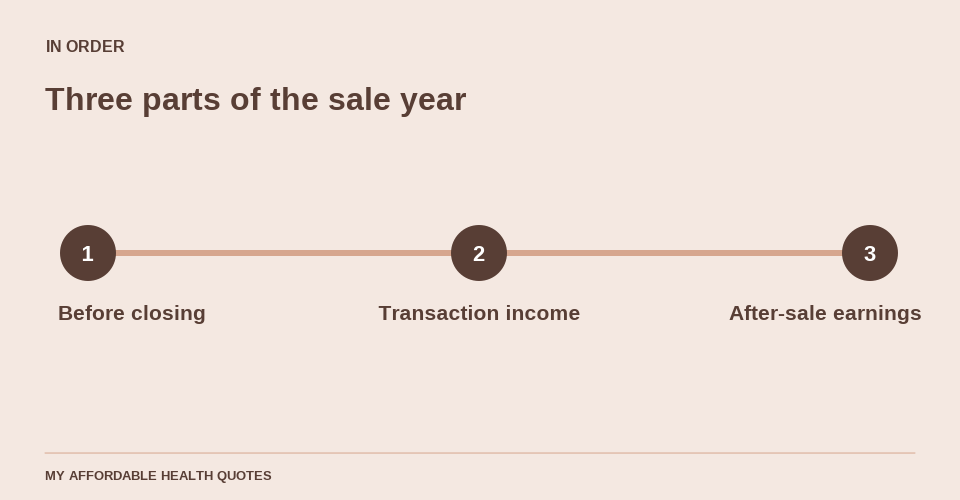
Divide the year into the period before the sale, the closing transaction and the period afterward. List known wages or business income before closing, the sale-related items the accountant identifies and the income expected after closing. Add the relevant household members' income under the applicable rules.
Include any consulting agreement with the buyer. An owner may stop running the business but continue receiving payment for transition services. That income should not disappear from the forecast merely because the business ownership ended.
Also ask about investment or retirement income used to support the household after the sale. HealthCare.gov's income guidance identifies categories such as capital gains, net self-employment income and investment income. Use the official definitions and professional advice rather than assuming every withdrawal or receipt has the same treatment.
Give the accountant the right insurance context
Tell the accountant that the forecast will be used for Marketplace coverage and financial assistance. Provide the coverage year, household information and whether advance premium tax credits are being used. A tax estimate prepared for another purpose may not be presented in the format needed for the application.
Ask when the estimate can reasonably be updated. The adviser may need final closing statements or an allocation schedule that is not ready on the day the deal is signed. Record what is known now, what remains uncertain and when a more complete calculation is expected.
Do not ask the accountant to select an income amount that preserves a preferred premium. The objective is a good-faith forecast based on the facts. If the transaction materially changes expected income, the insurance budget needs to reflect that reality.
A hypothetical sale-year surprise
Imagine an owner who estimates household income using the business's expected annual operating profit. In August, the owner sells the company and stops taking regular compensation. Looking only at the remaining months, the owner assumes income has fallen and expects more Marketplace assistance.
The accountant points out that the sale itself produces income items that must be considered. The household also has wages earned earlier in the year and a short consulting contract with the buyer. The revised full-year estimate therefore differs from the owner's simple after-closing cash-flow view.
The owner updates the application using the supported estimate and reviews the new eligibility result. The monthly premium budget changes, but the update reduces the risk of continuing to rely on an outdated assumption. No invented subsidy amount is needed to understand the lesson: stopping work does not erase income already earned or income created by the sale.
Handle installment and contingent payments carefully
A buyer may pay over time or make part of the price depend on future performance. These terms can complicate the timing of taxable income. The IRS installment-sale publication describes rules and exceptions, including issues involving business assets. Do not assume that every dollar is counted only when received or that every sale qualifies for one simple method.
Give the accountant the full payment schedule, interest terms and contingent-payment provisions. Ask which events should trigger a revised estimate. A later adjustment to the purchase price may need attention even if the owner is no longer involved in daily operations.
Keep a calendar for expected payments and adviser reviews. The insurance application should be updated when the supported income estimate changes, rather than only when annual tax documents arrive. A reminder is especially useful when payments are irregular and easy to overlook.
Update the Marketplace and read the result
HealthCare.gov directs enrolled consumers to update income and household changes promptly. Use the official process for the Marketplace serving your state. Submit the supported information, complete the required steps and retain the resulting eligibility notice.
Do not stop at editing a draft field without finishing the application update. Read any instructions about documents, plan selection or revised assistance. If a notice appears inconsistent with the information supplied, contact the Marketplace or authorized assistance rather than ignoring it.
The IRS premium-tax-credit instructions explain the relationship between advance payments and the final tax calculation. Ask the accountant how the revised forecast affects the household's tax planning. Avoid relying on an old repayment assumption or a threshold from a different tax year.
Keep the coverage change separate from the income change
A sale may also end the owner's group coverage, but that is a separate issue from income. Obtain the actual coverage end date from the insurer or administrator. The closing date, last workday and insurance termination date may not be identical.
If replacement coverage is needed, confirm the enrollment opportunity and effective date. An income update does not automatically establish that a new plan can begin whenever desired. Likewise, a coverage-loss event does not determine the correct household income estimate.
Use a two-part checklist: one part for enrollment timing and one for financial information. Assign each unanswered question to the appropriate professional. This keeps the owner from treating a tax estimate as proof of coverage or an insurance quote as tax advice.
Budget for uncertainty without inventing precision
Where the final transaction income is not yet known, ask the accountant for a reasonable range and the assumptions behind it. Use that range for household planning while submitting the best supported estimate through the official application. Do not enter multiple speculative numbers simply to see which produces the desired result.
Set aside room in the budget for a higher premium or a later tax adjustment if the adviser indicates that possibility. The amount should come from the household's actual analysis, not a generic percentage in an article. Keep medical spending reserves separate from the tax reserve so the same cash is not counted twice.
Review automatic payments after an eligibility change. A revised premium may require attention to the insurer's payment setup. Confirm the amount due and retain payment evidence; updating the Marketplace should not be assumed to resolve every billing detail automatically.
Prepare the next coverage year's estimate independently
The year after a business sale can look very different from the sale year. Do not copy the unusually high or low figure without reviewing expected income sources. At the same time, do not assume income becomes zero because the owner no longer operates the company.
Consider remaining installment payments, consulting work, investment income and other relevant household earnings with the accountant. Ask whether the transaction has continuing tax consequences. Use a fresh projection for the new coverage year.
Review the plan itself as well as financial assistance. Retirement from daily operations may change where the owner lives, travels or receives routine care. A policy that fit the operating business's location may need a new network review for the next stage.
Ask the adviser to identify which assumptions could materially change the next-year forecast. A payment scheduled for January but actually received or recognized under different tax rules may need a different analysis from the owner's cash calendar. The point is not to predict every possible outcome, but to know which developments warrant another call before the household relies on the initial estimate for many months.
Keep a small evidence packet
Retain the dated income forecast, the Marketplace update confirmation, relevant eligibility notices and the insurer's coverage dates. Store the full sale documents with the transaction and tax records, sharing them only where needed. The insurance agent generally needs the applicable figures and dates, not the entire confidential purchase agreement.
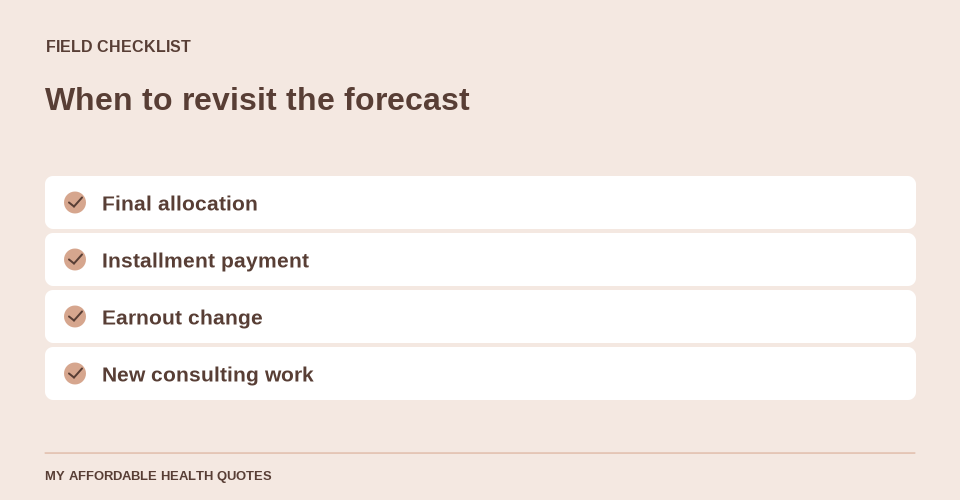
Write a short note identifying the next expected update trigger, such as a final allocation, an earnout payment or a consulting extension. This turns a one-time correction into a manageable review process.
If the owner changes accountants after the sale, provide the new adviser with the forecast history and notices. A clear record helps them understand which estimates were used and why, instead of treating every difference as an unexplained error.
Request help comparing coverage after a business sale when the insurance timeline is known. Bring a tax-adviser-supported household estimate and the confirmed coverage dates. That combination lets the plan comparison reflect the year you will actually have, rather than the paycheck pattern you have just left behind.
Sources and further reading
- IRS: Sale of a business
- IRS: Installment sales
- HealthCare.gov: Included income
- HealthCare.gov: Reporting changes
- IRS: Premium tax credit instructions