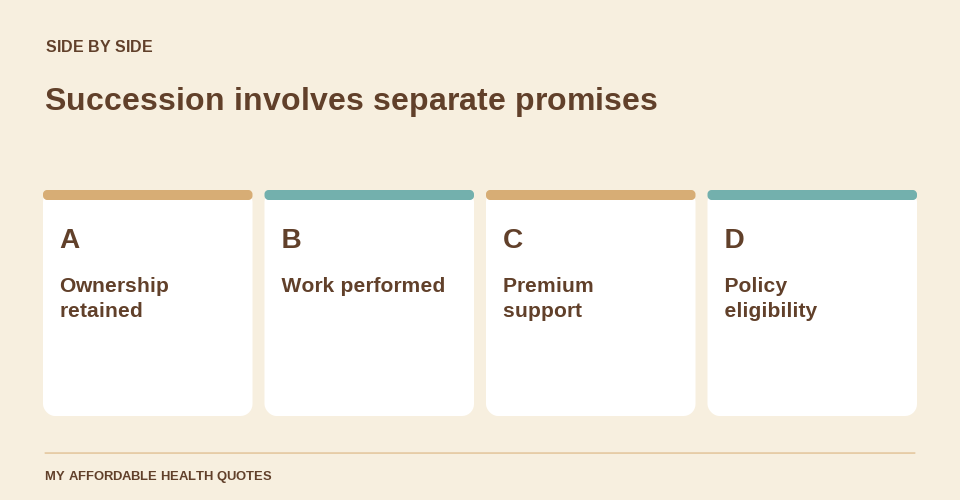
A founder can hand over daily management while retaining an ownership interest, but health-plan eligibility should not be inferred from the title founder, adviser or shareholder. Before stepping back, ask how the actual change in work and compensation affects the existing coverage. The insurer's answer, the business agreement and any Medicare timing questions need to be coordinated.
This is a succession-planning issue rather than a general early-retirement shopping guide. The business may continue under a family member, partner or hired manager, and the founder may remain involved in limited ways. The objective is to define that role accurately and obtain a documented coverage plan before the transition occurs.
Describe what retirement means in practice
Write down the planned last day of regular work, any continuing duties, expected hours, compensation and ownership status. A founder who attends quarterly meetings has a different role from someone who continues working a normal schedule while giving up a management title. The benefits administrator needs the facts, not a ceremonial job description.
Ask the transaction or employment adviser to confirm how the role is documented. Do not create an artificial employment description solely to keep insurance. The records used for payroll, governance and benefits should be consistent with the arrangement that actually exists.
Identify whether the business has a retiree arrangement or only active-employee coverage. A promise by the successor to “keep paying your insurance” does not establish that the insurer permits continued enrollment. The payment commitment and coverage eligibility are separate questions.
Request a written eligibility review
Give the insurer or authorized administrator the proposed role and effective date. Ask whether the founder can remain covered, under which provision and for how long if a limit applies. Include any spouse or dependents currently enrolled through the founder.
If the answer depends on facts not yet settled, record the dependency. For example, the administrator may need the final employment agreement or work schedule. Do not turn a conditional response into a guarantee when explaining the succession plan to the household.
Ask whether an ownership change also affects the employer's group arrangement. If the founder sells an interest or the employing entity changes, the review may involve more than personal retirement. Keep those business facts visible so the insurer does not answer a narrower question than the one the transaction creates.
Build separate timelines for the founder and family
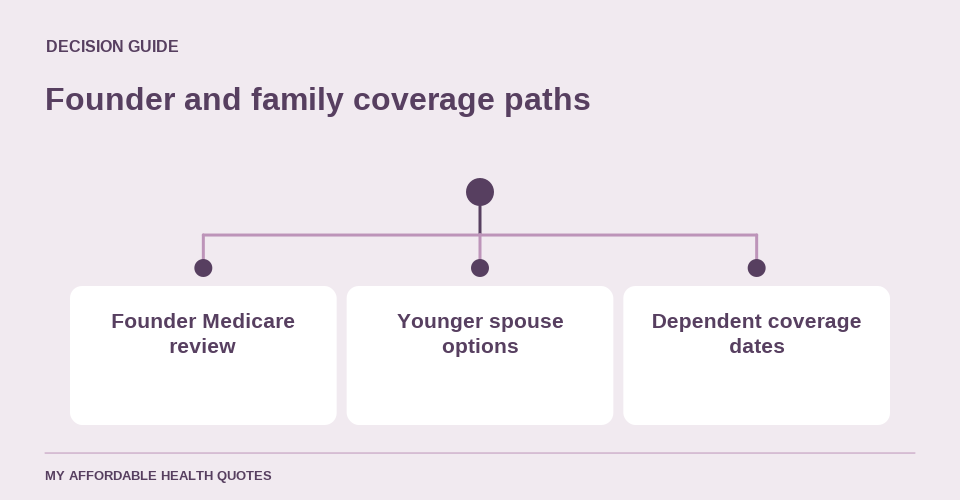
A founder approaching Medicare eligibility may have a younger spouse or dependent child who still needs other coverage. List each person's current policy and proposed next step. Avoid assuming that one family enrollment decision will fit everyone.
Record the confirmed group-coverage end date, any available continuation option and the earliest effective date of a replacement. Include required application and payment steps. A timeline should distinguish a quote from an accepted enrollment.
Ask the administrator how a change affecting the founder is communicated to dependents. A spouse should not discover that coverage ended only when trying to fill a prescription. Provide accurate dates and a route for private household questions before the transition.
Review Medicare before relying on continuing business coverage
Medicare's working-past-65 guidance distinguishes coverage based on current employment from other arrangements and tells self-employed people to verify the type of coverage they have. Retaining an ownership interest does not by itself settle Medicare enrollment timing.
Ask the administrator how the plan coordinates with Medicare and obtain qualified Medicare assistance where needed. Employer size and the type of coverage can matter. Do not rely on a colleague's experience at a much larger company as proof that the founder can delay enrollment safely.
Medicare's retiree-coverage page explains that retiree benefits may require Medicare enrollment to pay fully. A continuing company payment is not necessarily continuing active-employment coverage. Resolve that distinction before the founder stops working.
A hypothetical family-business handoff
Consider a founder who plans to transfer management of a wholesale business to an adult child. The founder will retain a minority ownership interest and occasionally advise on supplier relationships. The family agreement says the business will pay health premiums for another year.
The accountant can explain the payment's treatment, but the insurer still needs to review coverage eligibility. The founder also asks how the change in work status affects Medicare timing. A younger spouse requires a separate review of available coverage and dates.
The family revises the agreement to describe the payment commitment accurately without guaranteeing a particular policy that has not been approved. The benefits administrator provides the confirmed coverage answer, and the household completes any necessary enrollment steps before the founder's regular work ends.
The example is invented, but the conflict is practical: a succession agreement can promise financial support without being able to control an insurer's eligibility rules. Separating those questions makes the promise more precise and the coverage plan more reliable.
Review the payment promise with the accountant
Ask how premiums will be paid after the role changes and what records the business and founder should retain. The answer may depend on the entity, ownership and arrangement. Do not continue ordinary employee payroll treatment without checking whether it still applies.
If the business agrees to contribute toward a replacement policy, have the adviser review the structure before implementation. An informal reimbursement is not automatically the same as an established employee benefit or a tax-free payment. The agreement should match the approved treatment.
Set a clear end date or review point for any financial commitment. Specify how premium changes will be handled and who receives invoices. This reduces the chance that the successor believes the company promised a fixed amount while the founder believes it promised unlimited coverage costs.
Protect treatment continuity
If the founder or a dependent must change policies, identify scheduled care, essential providers and ongoing prescriptions. Check the exact replacement network and formulary rather than assuming that a familiar insurer brand provides the same access.
Ask about prior authorizations and deductible accounting under the new arrangement. An approval under the former group policy may not answer what the replacement requires. Obtain the relevant insurer's instructions for treatment already scheduled.
Keep medical details between the household, clinicians and insurer where possible. The successor management team needs to understand administrative timing and approved costs, not the founder's full medical history. A clear privacy boundary can make a family-business transition less uncomfortable.
Transfer plan administration away from the founder
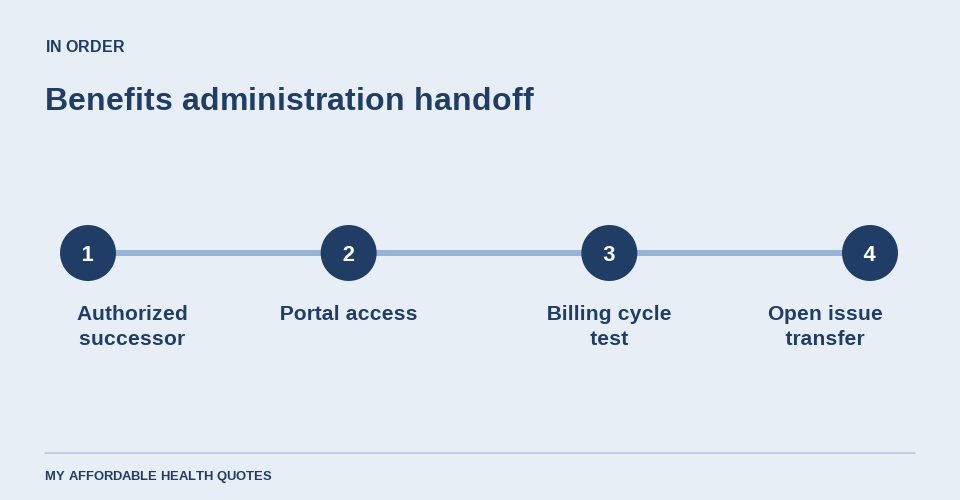
Even if personal coverage continues, the founder may no longer be the right person to approve employee enrollment or premium payments. Identify the successor administrator and arrange proper system access. Review any plan documents that name the founder in an official role.
Provide the successor with current contracts, administrator contacts, billing instructions and unresolved issues. Do not leave the company's benefits process dependent on the retired founder's personal email or phone. The operational handoff should be complete enough for a normal month to proceed without interruption.
Test the new arrangement with a real billing cycle before the founder fully steps away if possible. Confirm that the successor can retrieve the invoice, reconcile the roster and obtain the required approval. Fix access problems while both people are available.
Document what happens if the role changes again
A founder may initially work part time and later stop completely. The coverage review should identify which future changes require another notice to the administrator. Do not treat the first approval as permanent regardless of work status.
Set a review date tied to the succession schedule. If the founder's consulting period ends, compensation changes or the remaining ownership is sold, revisit the relevant questions. Keep the household informed before an administrative change takes effect.
If the founder returns to work, ask how the plan treats the new circumstances. Do not assume that prior enrollment can simply be restarted or that an earlier waiting-period answer still applies. Use the current facts and obtain the appropriate confirmation.
Plan for a delayed succession
If the successor needs more time, confirm whether the founder's actual work arrangement remains the same or changes in stages. A delayed ownership transfer does not necessarily mean the original employment and benefits assumptions remain correct. Update the administrator with the facts that have changed and obtain revised dates where needed.
Keep the household's enrollment decisions synchronized with the revised schedule. Do not withdraw a completed application or cancel a confirmed replacement solely because a family discussion suggests the founder might stay longer. First establish the permitted coverage arrangement and applicable enrollment consequences with the relevant administrator. A business schedule can be flexible while insurance deadlines still require a definite action.
Keep enrollment evidence in the household file
Retain coverage confirmations, effective dates, payment records and any Medicare-related employment documentation. Medicare provides official enrollment forms and employment-information resources for situations where those records are needed. Use the applicable process rather than relying on an informal letter if a specific form is required.
Give a trusted household member access to the necessary information through appropriate authorization. The founder's business successor and personal helper may be different people. Each should have only the access needed for their role.
Review the first month after the transition. Confirm that premiums were paid, identification information is available and the old and new arrangements match the intended dates. Resolve a mismatch promptly rather than waiting for a claim to reveal it.
For a founder or family member who needs individual coverage before Medicare, request help comparing available health plans with the confirmed transition dates. For Medicare decisions, use official Medicare resources or qualified Medicare assistance. A sound succession plan gives the business a new leader and gives the founder a coverage arrangement supported by actual eligibility, not a title alone.