A neighborhood café owner opens a letter from a restaurant association. Membership includes purchasing discounts, training and access to health benefits. The letter quotes a monthly figure below what the owner expected to pay. It does not say whether that figure is for the owner alone, what employees would pay, or what kind of coverage a member can actually buy. Those omissions do not settle whether the offer is attractive. They tell the owner which questions to answer before treating association membership as a health insurance decision.
Suppose Laila employs a café manager and several counter staff. She already compares coffee suppliers through a local buying network, so she knows a group price can be useful. Her manager wants coverage for a spouse. Another worker has coverage elsewhere and is unsure about enrolling. Laila would like a clear estimate for the business and an understandable offer for each eligible worker. She starts by following the manager through the proposal from enrollment to a hypothetical claim, then checks whether the same arrangement works for the rest of the café.
Open the health documents before pricing the perks
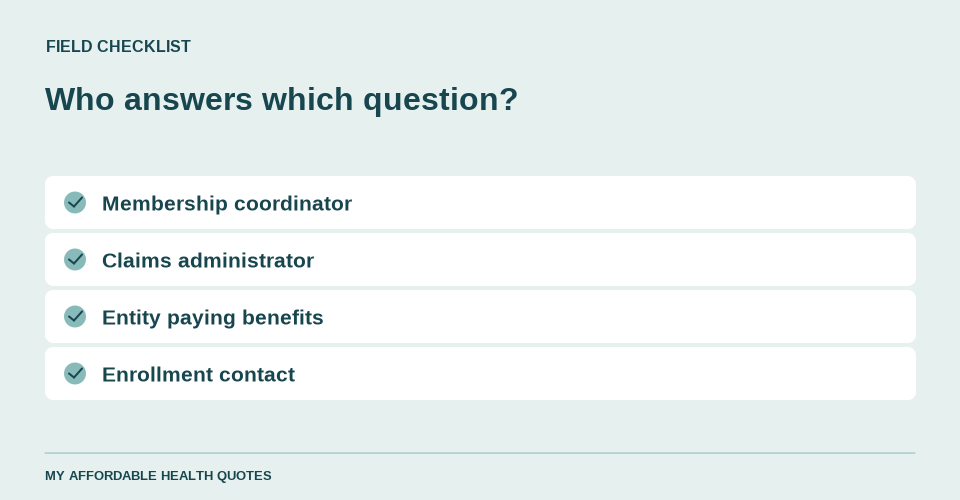
Ask the association for the exact name of what it is offering, its current plan materials, benefit summary, applicable policy or governing documents, and written eligibility requirements. Identify the association, any insurer, the plan sponsor or entity responsible for benefits, the claims administrator and the broker or enrollment office. These names can belong to different organizations. A familiar insurer’s logo on a directory may identify a network relationship without identifying who pays claims. Ask the representative to point to the document that identifies the party financially responsible for the health benefits described.
An association might introduce businesses to a licensed carrier, make an employer arrangement available to qualifying members, or sell a membership that offers discounts on certain services. Laila should not assume a particular legal structure from a sales headline. The Department of Labor explains that qualifying association health plans can involve both federal rules and state oversight. The details depend on the arrangement. Ask the relevant state insurance department or a qualified benefits adviser how to verify the exact entity and offering in the state where the café operates. If the answer is that the product gives discounts, investigate what financial protection the business would still need.
Build the census with the café's actual staffing pattern
Laila prepares a simple headcount containing only information needed for a quote through the designated secure channel. It distinguishes owners from employees, work schedules and the coverage tiers workers are considering. Ask the benefits contact which workers are eligible, what waiting period applies, how the owner qualifies, and whether the employer must meet participation or contribution conditions. The association’s rules for joining the organization may differ from the health arrangement’s requirements for enrolling employers and workers. Obtain the answer for this café rather than assuming every dues-paying business can place any employee on the plan.
A real café week makes these distinctions visible. The manager works a regular schedule, two workers rearrange shifts during exam season and the owner covers an open shift whenever necessary. Ask how the arrangement evaluates variable schedules and when an employee’s status is reviewed. Do employees declining coverage affect participation? Does the offer allow a spouse or child to enroll, and at what cost? Document answers against the appropriate worker category. Eligibility should follow the actual rules with appropriate advice, not the owner's preference for giving one employee a benefit that appears difficult to offer to another.
Work backward from a usable insurance card
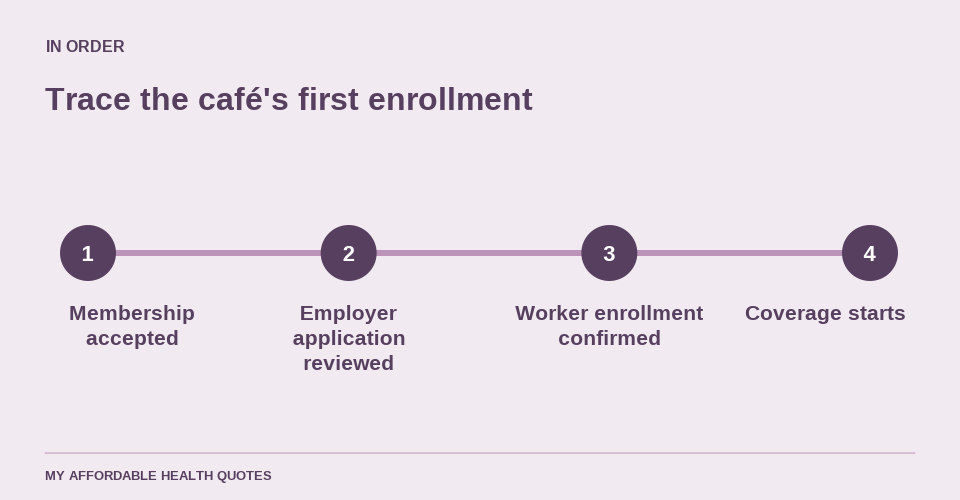
Ask what happens after the membership application is accepted. Must the business then submit a separate health application? Is an employee enrollment complete only after a form, payment or verification reaches a different organization? Who confirms the effective date? When does the manager receive an identification number that a medical office can verify? The association may be able to start a membership immediately while a health arrangement begins only on a later confirmed date. Record those dates independently and avoid promising staff that a benefit is active based only on a dues receipt.
Laila also asks about a new worker hired after the initial enrollment. If the manager leaves and a different person is promoted, who reports the change, when does the contribution change and how are billing adjustments shown? A café with a stable team may face these questions rarely. A business with seasonal turnover may need to handle them several times during the year. The actual administrative burden belongs in the comparison. A slightly higher premium through a route with clear enrollment responsibility could appeal to an owner who lacks dedicated benefits staff, depending on what the alternatives really offer.
Add membership costs once and employee costs separately
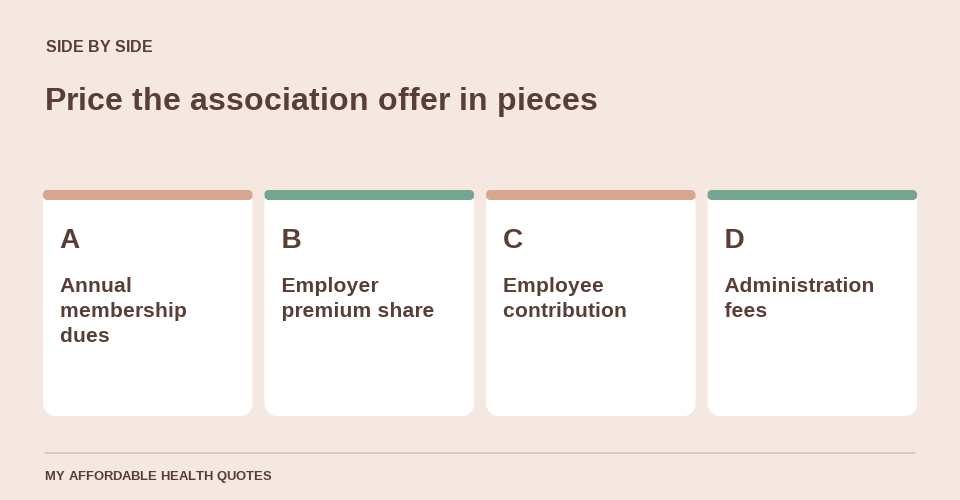
Imagine a purely illustrative offer charging twelve hundred dollars in annual membership dues plus a monthly employer contribution of three hundred dollars for each of four enrolled employees. Assume everyone enrolls for all twelve months and no other employer fees apply. Employer contributions total fourteen thousand four hundred dollars. Adding membership dues produces fifteen thousand six hundred dollars for the year. If only three employees enroll and the business still qualifies at that participation level, the same arithmetic gives ten thousand eight hundred in contributions and twelve thousand dollars after dues. The quote needs to specify whether different enrollment changes the rates or eligibility.
The owner may already want the association for training and supply discounts. In that case she can compare two legitimate views: the total cash leaving the business, and the incremental cost of adding the health offering to a membership the café would otherwise buy. Under the latter view avoid counting the full dues twice. If the café would join solely for health benefits, the dues belong in the price of that route. Do not subtract an advertised supply discount from health costs unless the café actually buys the relevant products and can reasonably document the savings.
An employer total alone does not explain the worker's decision. Give the manager the contribution required for employee-only and employee-plus-spouse coverage and identify any separate dependent charge. Show the amount per pay period using the café's actual payroll calendar. Monthly figures divided by two will be inaccurate for some biweekly payrolls. Confirm rounding and partial-period treatment with payroll. A worker may reasonably decline an offer that looks inexpensive to the owner but expensive for the family. Keep individual elections private and ask the appropriate adviser or enrollment contact about any effects of an employer offer on other coverage options.
Try a real-world benefit question before buying
Without sharing anyone's medical history, identify a representative service employees commonly want to understand. Laila chooses an ordinary specialist visit near the café. Which plan document explains the benefit? How would someone find a participating practice in the specific network? Does the plan require a referral? Can the employee call the claims administrator before enrollment for a product-specific explanation? If the association offers multiple products, answer each question for the same one shown on the price page. Information from one option combined with a premium from another does not describe a product anyone can buy.
For the manager’s spouse, use the home address and work schedule to test location and availability. A clinic close to the café might be inconvenient for someone working in another town. A directory may list a clinic under one name while the practice handles insurance under another. Ask the clinic and plan to verify the actual product and service address. Compare the available benefit with a genuinely comparable alternative for the business, such as a small-employer quote for which it meets the requirements. HealthCare.gov describes SHOP options and directs businesses to check eligibility. A membership offer and an alternative quote should cover the same people and period before their prices are compared.
Check the exit as closely as the entrance
Read how long the membership lasts, whether it renews automatically, what notice the business must provide and what happens to health coverage when membership ends. Ask whether the benefits offering can change before the dues period expires, and how workers are notified if an insurer, administrator, price or eligibility rule changes. The membership cancellation date and the health coverage termination date may be different. If they are, ask who reconciles the final invoice and where employees will get information about any rights or options when coverage ends. A sales representative's assurance of flexibility is less useful than a written provision the owner can locate later.
Before presenting the proposal, Laila puts three contacts on one sheet. One can confirm the café's membership and dues, one can confirm employee enrollment, and one can explain benefit and claim decisions. She adds the governing document names, the price for each offered tier and any eligibility question still pending. She can now tell staff what the offer buys, what participation would cost them and which organization will answer when an appointment or claim goes wrong. If those details fit the café, membership may be worth buying. If they do not, the owner has a specific list of terms to seek in a competing quote.
The manager's first payroll statement provides a simple final check. Compare the deduction with the election the employee actually signed, confirm the coverage tier in the administrator's records and look for any charge collected for a period before the effective date. If something differs, use the named contact for that issue. An early correction helps the owner avoid repeating the same problem when the next barista becomes eligible.
Sources and further reading
- U.S. Department of Labor: Association health plan guidance
- HealthCare.gov: SHOP health insurance overview
- HealthCare.gov: Checking SHOP eligibility