If the owner is the only person who knows how to pay the health-insurance bill, an illness can become an administrative coverage problem for the whole business. A continuity plan should let an authorized backup keep routine benefits work moving without needing access to the owner's private medical information. Build that plan while the owner is available to explain the process.
The objective is modest and concrete: premiums are handled correctly, employee changes reach the administrator, required communications are not missed and urgent questions have a responsible contact. This guide focuses on operational continuity. It does not determine an owner's medical leave rights, eligibility for disability benefits or the legal authority of a particular substitute decision maker.
Identify the work that depends on one person
List the benefits tasks the owner actually performs during a normal month. Include invoice approval, payment release, enrollment submissions, employee questions, administrator notices and renewal decisions. Look at the last two months of activity rather than relying on memory; small tasks often disappear from a high-level description.
For each task, record the deadline, system used, required authority and evidence that the task was completed. “Pay insurance” is too vague. “Review the medical invoice, resolve roster differences, release the approved payment and retain confirmation” describes work that another person can follow.
Separate routine tasks from decisions requiring professional judgment. A backup can gather a missing date or forward a notice, but should not invent an eligibility exception or interpret a complex claim. Name the broker, administrator, accountant or legal adviser who handles those questions.
Use proper authority rather than shared passwords
Ask each vendor how to add an authorized administrative contact. Use individual access and the permissions appropriate to the backup's role. A password written on a sticky note may provide entry to a system without establishing that the person is allowed to act.
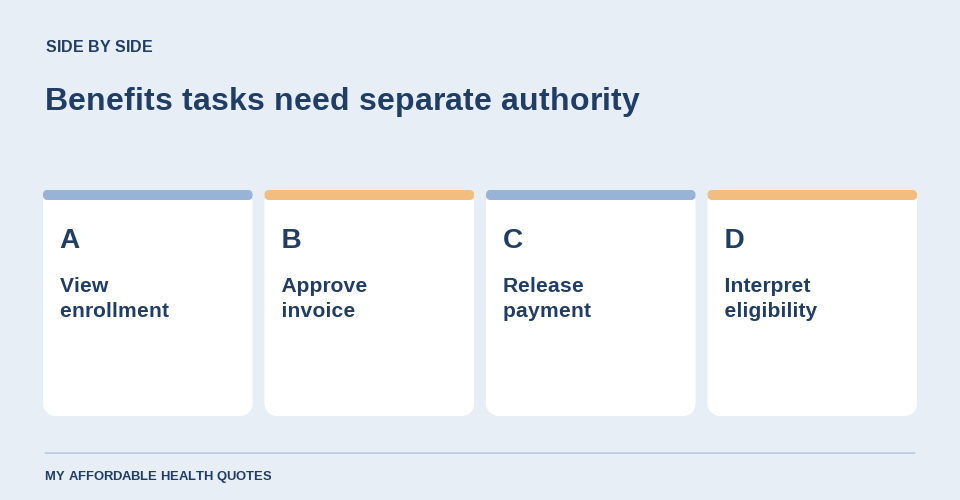
Check payment authority separately. An employee may be able to view the insurer invoice but not release a bank payment. Conversely, a bookkeeper may pay bills without permission to change enrollment. The continuity plan needs both responsibilities covered and should preserve the company's normal approval controls.
If the owner is also the named official in plan documents, ask the benefits adviser whether a formal update or delegation is needed. The Department of Labor's fiduciary guidance emphasizes plan documents, recordkeeping and the functions people actually perform. A casual title change is not a substitute for reviewing the arrangement.
Create a benefits operations file
The file should identify the insurer, policy or group identifiers, administrator, broker, billing cycle and approved payment method. Include the latest benefit documents and a concise map of where enrollment records are stored. Keep credentials in an appropriate access-management system rather than embedding them in the file.
Store the current roster with restricted access. The backup may need enrollment status and dependent information for administration, but that does not justify access to unrelated medical records. Separate personnel and health-related material according to the company's approved privacy practices.
Add a list of open issues. A pending newborn enrollment, a disputed termination date or a premium adjustment can become difficult to reconstruct when the person handling it is unavailable. Each entry should show the question, last action, responsible vendor and next follow-up date.
Write the premium process in enough detail to use
Document where the invoice arrives and who can retrieve it. If it goes only to the owner's personal email, change the delivery arrangement through the vendor's authorized process. The backup should not have to search a private inbox for a message containing the company's payment obligation.
Explain how the invoice is compared with the expected enrollment. Record the normal process for additions, terminations and retroactive adjustments. Tell the backup whom to contact if the invoice differs from the roster, and how to handle payment while the discrepancy is being reviewed under the vendor's instructions.
Do not build the plan around an assumed grace period. The policy and administrator should provide the applicable payment rules. A backup should work toward the normal due date and escalate a funding problem promptly rather than treating late payment as a routine source of business credit.
A hypothetical owner absence
Imagine a small engineering firm whose owner approves every benefits invoice. The owner unexpectedly needs several weeks away from work. An office manager can see the company bank balance but cannot access the insurer portal, while the bookkeeper has the invoice but does not know whether two departing employees should still appear on it.
Without a continuity file, both people wait for the owner to respond. With a prepared plan, the manager has authorized portal access, the bookkeeper knows the reconciliation contact and a second approver can release payment. Questions about the departing employees go to the administrator with the relevant dates.
The difference is not that the backup makes insurance decisions without expertise. The difference is that routine work continues and specialized questions reach the right professional. The owner can focus on recovery instead of being the only bridge between payroll, the insurer and staff.
Protect the owner's own coverage separately
An owner's absence may also raise a personal eligibility question, depending on employment status, work hours and the plan terms. Ask the administrator how the actual situation is treated. Do not assume that ownership alone guarantees continued coverage or that a temporary absence automatically ends it.
If the owner has individual insurance, identify the premium payment process and a trusted person who can help through appropriate authorization. Keep the personal arrangement separate from the company's employee-benefit administration. The company backup does not need broad authority over the owner's household insurance.
Where a coverage change becomes necessary, obtain the confirmed end date and review available enrollment routes promptly. Do not let a business continuity exercise turn into an unreviewed cancellation of the owner's policy. Any replacement needs its own enrollment and effective-date confirmation.
Give employees a reliable contact path
Tell staff who handles benefits during the absence and what that person can resolve. Provide a route for confidential questions directly to the administrator or insurer. Avoid inviting employees to send medical details to a general office mailbox.
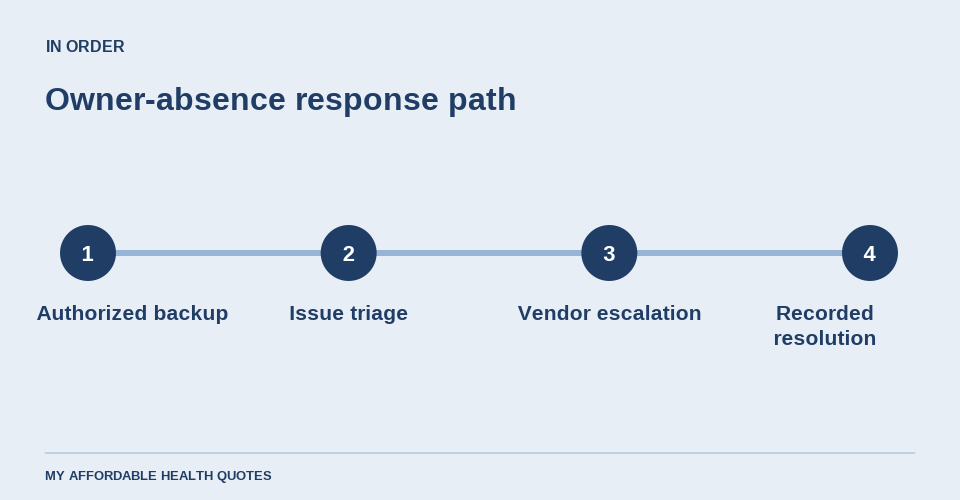
Use a simple triage process. Payroll deduction errors go to payroll and the administrator. Identification-card questions go to the insurer's member-service channel. Eligibility questions go to the authorized benefits contact. Urgent care and claims questions should reach the insurer or relevant professional, not wait in an internal management queue.
Make clear that the owner's absence does not change employees' instructions unless a formal communication says otherwise. Workers should continue to follow the plan's procedures and report relevant life changes through the established process. The continuity plan is meant to preserve those processes, not create an informal parallel system.
Handle upcoming renewals deliberately
If renewal falls during the absence, identify what decisions must be made and who has authority to make them. Gather the current plan, renewal terms and any alternative proposals in one controlled folder. The backup should know whether they can approve a continuation or must obtain another decision maker's authorization.
Set a review meeting with the benefits adviser before the deadline. Ask for a comparison that identifies actual changes in premiums, benefits and administration. A rushed instruction to select the cheapest option may create employee access problems that the backup cannot assess from a price alone.
If a decision cannot be made on the original schedule, ask the insurer or administrator what options exist. Do not assume that silence renews a plan or that a missed deadline can be fixed retroactively. Record the vendor's instructions and the person responsible for acting on them.
Test the plan before it is needed
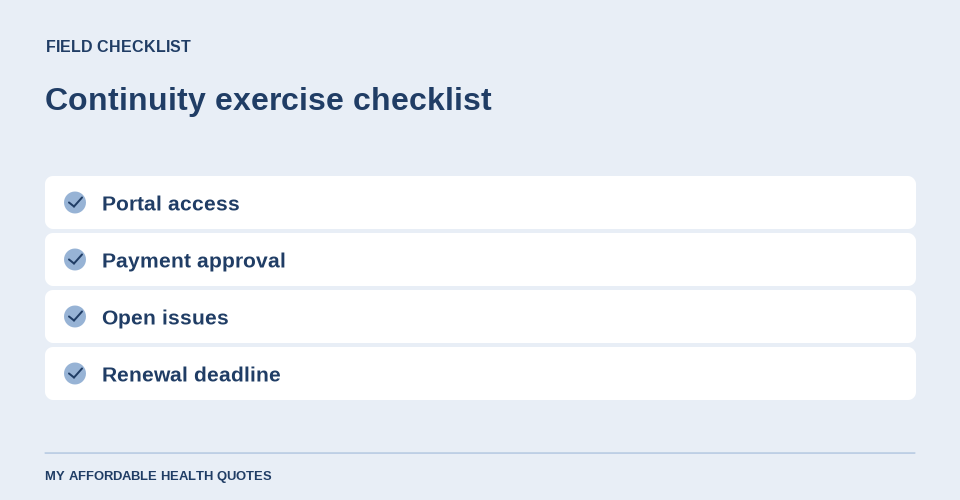
Run a short exercise using a previous month's invoice and an invented employee change. Ask the backup to find the relevant documents, identify the required approval and explain where the request would go. Use fictional personal details for the exercise so the test does not create unnecessary exposure of employee information.
Observe where the backup gets stuck. Perhaps a vendor recognizes only the owner, the payment approval depends on a device the owner carries or the roster is stored in an inaccessible folder. Fix those obstacles while the owner is available to authorize the changes.
Repeat the test after a major vendor or payroll change. A continuity plan written for an old insurer portal may be technically complete but practically useless. Keep the instructions short enough to use, with links or references to the detailed documents where needed.
Restore responsibilities when the owner returns
Prepare a handback summary listing payments made, employee changes completed, unresolved questions and decisions coming due. The owner should be able to review the period without reconstructing every email. Have the backup retain the evidence in the normal company records.
Review access permissions after the handback. Some backup access may appropriately remain for future continuity, while temporary authority may need removal. Follow the vendor and company process rather than leaving unused permissions indefinitely.
Discuss what the absence revealed. If the backup needed repeated emergency assistance, the process may still rely too heavily on one person. Improve the workflow so the next absence, whether illness or ordinary vacation, is less disruptive.
A useful continuity plan does not need to be a large manual. It needs accurate contacts, authorized access, clear payment instructions and a way to escalate decisions. Request a coverage review if the exercise reveals that the business or owner's insurance arrangement needs to change, and keep administrative continuity separate from that plan-selection decision.