A second opinion can mean a specialist reads a file, a patient travels for an examination, or a team repeats part of an evaluation. Before comparing insurance prices, find out which service the receiving center actually offers. A plan that covers a visit with a particular physician may handle a remote review of records differently. A family can spend hours researching a hospital only to discover that the program they want operates through a separate office with a separate payment arrangement.
Consider an independent architect in Ohio whose treating physician suggests another evaluation. She wants to see a specialist in a neighboring state, return home with a written opinion, and continue with her own doctor unless the clinical recommendation changes. She has enough savings to pay for a consultation. What she does not want is to authorize a string of additional charges without knowing which ones her policy will recognize. Her purchase decision turns on where the consultation ends and another episode of care begins.
Get the receiving office to describe a real appointment
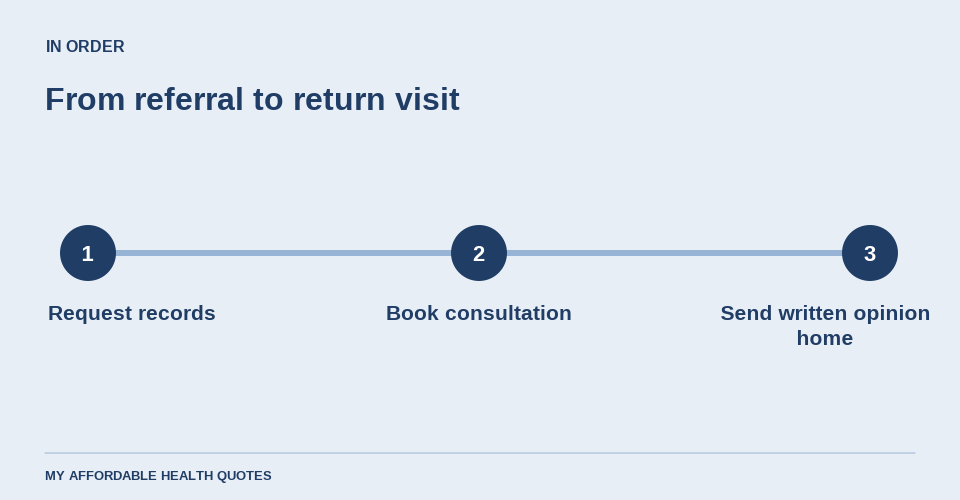
Ask the scheduling team what happens between its first call and the moment it sends the referring doctor a report. Will the center first review records to decide whether it can offer an appointment? Is there a fee for that initial review? Does the patient see the named specialist or another member of the team? What communication can the patient expect afterward, and who receives the report? Write down the service as the office describes it, rather than your own interpretation of “second opinion.”
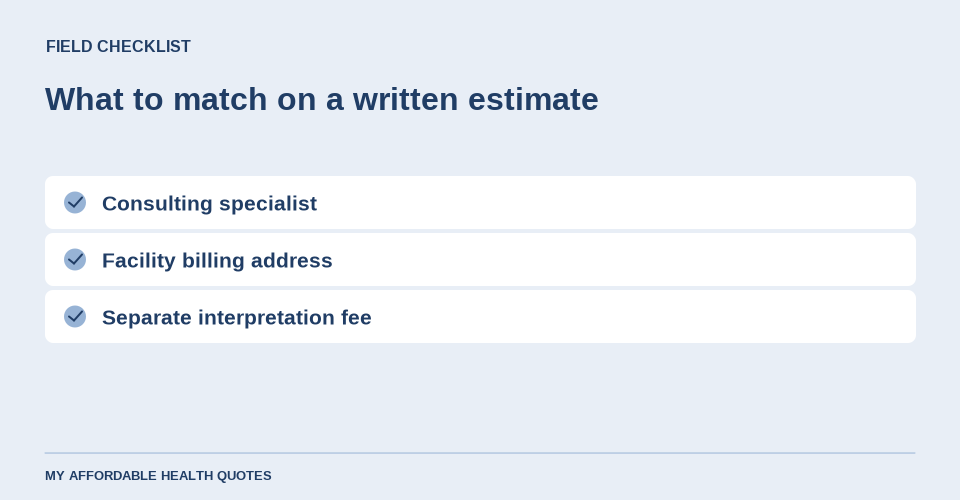
A consultation described as one appointment might involve a clinic fee, a physician evaluation, and a separate professional reading of images. The patient does not need to learn to code claims. The office can supply the names of the entities that may bill, the address where the visit takes place, and any billing descriptions it can provide in advance. If the staff cannot provide a precise code until the visit occurs, record that uncertainty. An estimated range with an explanation is more useful than an exact-looking figure built on guesses.
One useful question sounds almost too simple: “If I attend the consultation and decline any separately scheduled tests until I have spoken with my local physician, what bills should I expect?” The answer gives you a baseline to investigate. It also makes clear that you are asking about the initial opinion, not preauthorizing an elective procedure. Decisions about whether additional tests are medically needed belong with the clinicians. You are finding out when and how the coverage conversation will occur.
Separate a specialist's availability from the plan's permission
A center can be willing to see you even when your insurer will pay little or nothing toward the appointment. Ask for the exact insurance product and network name, then check the specialist at the actual practice location. The large logo on the front of a card is rarely specific enough to settle this. A physician may appear in the insurer's directory at one office while the location offering your consultation participates through a different arrangement. Record any discrepancy and request clarification before reserving a trip.
The referring physician's recommendation answers a clinical question. The insurance plan may also require a referral entered by a participating provider or authorization before it recognizes the visit. Ask which of these steps applies, who initiates it, what information must be submitted, and how the patient will know the insurer has received a complete request. If you have not enrolled, the insurer may only explain the procedure and decline to make a decision about a future appointment. That limitation belongs in your comparison.
Suppose the insurer says it can consider an exception when an appropriate specialist is unavailable within its network. Ask where that process appears in the policy and whether the plan can identify an in-network option with the necessary expertise. Ask what written agreement must exist before an outside specialist can be treated at the in-network cost level. An exception that changes how the plan calculates your share does not by itself tell you what an independent office will accept as payment. The office and the insurer may both have unanswered questions.
Give the films and samples their own line on the budget
A radiologist who reads outside images again provides a different service from a clerk who receives the files. Ask whether the specialist needs the actual image set, a report, or both. Find out whether the center routinely has its own clinicians review outside material before they see a new patient. If pathology material is requested, ask the sending and receiving offices who manages the transfer, whether either office charges a fee, and where a repeat interpretation would be billed. Start the transfer early enough to correct an unreadable or incomplete file.
Look carefully at what the quote includes. A hypothetical center may offer a flat price for reviewing records while reserving the right to recommend an in-person examination afterward. Another may estimate only an office visit and bill image interpretation separately. Put the two offers into the same units before comparing their totals. If neither office will estimate a separate reading, mark that line unknown in both columns. Assigning zero to the unknown price makes the cheaper-looking option appear more certain than it is.
For the Ohio architect, the travel expense is only one part of the risk. An incomplete image transfer could force her to reschedule after she has reserved time away from a client. Waiting a few days to buy a nonrefundable ticket can be financially meaningful. Ask the receiving team which materials must be in hand before it confirms the visit. Ask the home office to tell you when it sent them, then get confirmation from the destination that it can open and use them.
Compare travel, live video, and a records-only opinion on equal terms
A records-only review may be attractive if the aim is a written interpretation rather than a physical examination. Establish whether it is available for your situation, what the reviewing clinician agrees to evaluate, and whether it is an insurance-billed service or a separate purchase. If the program requires payment directly from the patient, ask your insurer whether you may submit an itemized bill yourself and what conditions apply. Budget for the possibility that the answer will be no.
A video appointment offers a conversation without a drive, but insurance participation and professional licensing are separate questions. HHS explains that authorization to provide care across state boundaries depends on applicable rules. Tell the receiving office you expect to be physically in Ohio during the call and ask whether its clinician can see you there. If the office proposes scheduling the call while you are visiting another location, disclose where you will actually be. Do not alter the address on a form to obtain an appointment that the office has declined.
An in-person consultation may offer the opportunity to have an examination and discuss follow-up testing in one trip. It can also expose the patient to facility fees or a separate test she had not accounted for. Calculate transport, a companion's time and any overnight stay outside the insurance estimate unless your written policy expressly provides a travel benefit. If the policy does include travel support, ask whether preapproval or use of a designated center is required. A receptionist's suggestion to save receipts is a reason to investigate, not a promise of reimbursement.
Take the report home before assuming the journey is finished
Find out who will explain the result after the visit. Is a follow-up conversation included, billed separately, or available only in person? Will the consulting clinician communicate directly with your Ohio doctor, or is it the patient's job to deliver the report? Ask how new images or interpretations move back to your home practice. A comparison based only on the first appointment can miss the cost and effort required to make the opinion usable.
Write a one-page record of what the plan, referring office and consulting center each confirmed. Put the date beside every answer. If one representative gave a verbal estimate and another supplied a formal authorization, distinguish the two. Keep an authorization number together with its service description and validity dates. When an explanation of benefits arrives, compare the listed provider and service with your notes. A question about a different billing entity calls for a different conversation from a denial based on a missing referral.
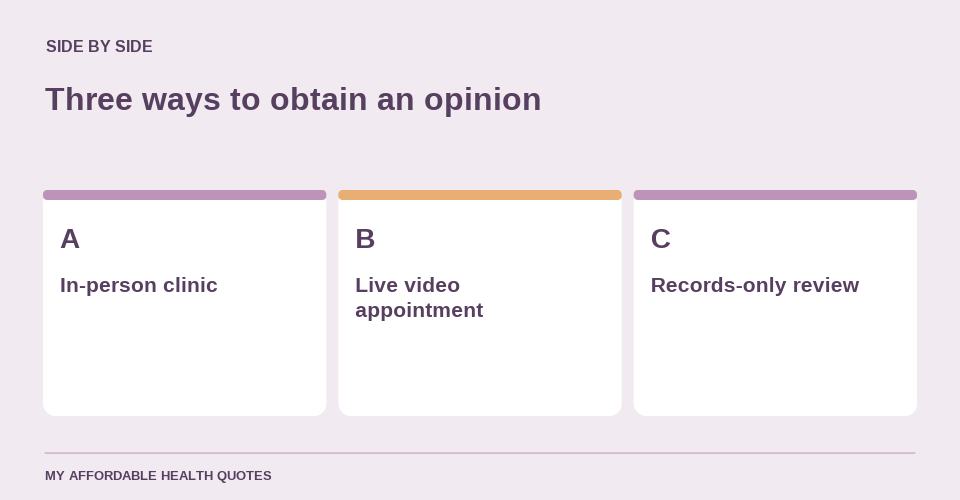
Before choosing a new private policy, put three columns on paper: an in-network opinion at home, the preferred traveling consultation, and a self-funded records review if the office offers it. Compare the actual deliverable in each column. Would you get a written report? A conversation about options? A specialist who can continue to see you? What would still need to be arranged? If the preferred office cannot substantiate its network status, treat it as an unresolved item and seek a written answer. Ohio's Department of Insurance provides consumer assistance for questions within its jurisdiction. A licensed agent can help compare the relevant plan documents when you can describe the real journey you want the policy to support.
Finally, decide what would change your choice. Perhaps you would accept a local consultation if the home team could send the material to a specialist it already works with. Perhaps getting a written opinion from one specific center matters enough to pay for that limited service yourself. Either answer can produce a coherent budget. The difficult choice is a trip sold to you as covered when the only verified item was a single physician's listing at a different office.
Sources and further reading
- HealthCare.gov: Comparing health plans
- HealthCare.gov: Summary of Benefits and Coverage
- HHS: Licensing across state lines
- Ohio Department of Insurance consumer complaint form