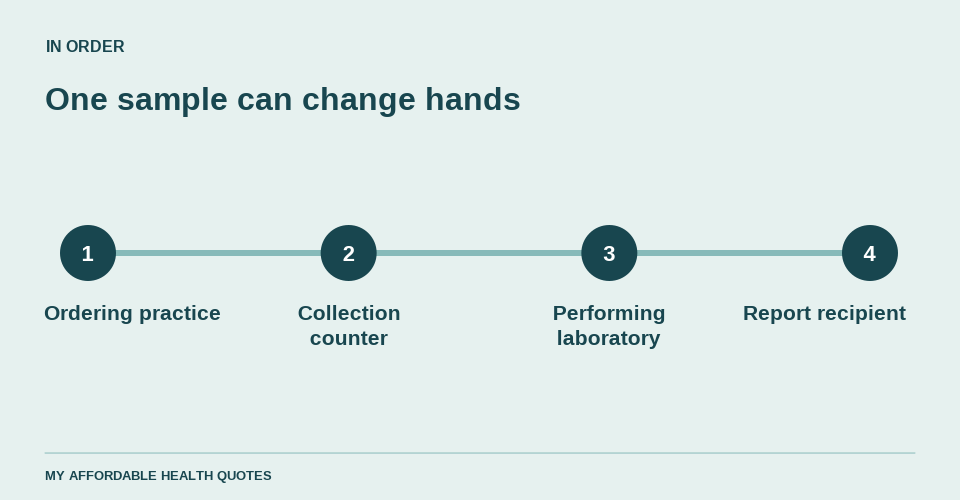
The collection counter at an Ohio clinic is a surprisingly poor place to start identifying who will bill for a specialized laboratory test. The person who draws the sample may put it on a courier route to a completely different organization. The invoice might come from that organization, while the report travels back to the clinician who requested it. For a self-employed person trying to get testing done between client appointments, discovering those distinctions at the counter is inconvenient. Discovering them on a statement several weeks later can be expensive. The best time to sort out the route for a planned test is when the ordering office first mentions sending it out.
Consider Robin, a freelance industrial designer whose physician wants a particular specimen analyzed before a scheduled visit. Robin compares individual insurance quotes every autumn and has a preferred collection office within walking distance. In this example the nearby office accepts both of the candidate plans. That fact settles one question about the convenience of the draw. Neither the office address nor the carrier logo explains where this specific test will be performed. Robin needs a way to investigate without pretending to be the person who decides what test the clinician should order.
Start with the order the clinician actually wrote
A conversation about a general category such as blood work can cover many tests and billing arrangements. Robin asks the office for the name on the order, whether the clinician specified a performing laboratory, and whether there is a test identifier that its billing staff can share. An office might be able to supply a procedure code. Sometimes it first needs the laboratory to identify the final code or a group of related codes. Write down which information is provisional. If the office changes the order after discussing it with the patient, use the updated version for the insurance inquiry.
A more precise question for the nurse is whether the intended laboratory performs the entire order itself. Sometimes a collection site can send routine work to one destination and a particular component elsewhere. If the second destination becomes known only after the first lab receives the order, Robin can ask who will decide, when that happens, and whom to contact about cost at that point. Asking about a potential handoff does not obligate the clinician to substitute a different test. Medical suitability and financial arrangements belong to different conversations, and each person answering should know which question is on the table.
Call the collection office about this sample
The collection office controls practical information that a health plan may never see. Does it accept outside orders from Robin's clinician? Does it collect this specimen on the day Robin wants to go? Does it require an appointment or a kit supplied in advance? Who attaches the order and where does the courier go? A site open all afternoon may have a morning cutoff for a particular send-out test. Missing that cutoff could cost a second trip even if there is no problem with insurance. The ordering or collecting professionals should explain preparation and handling requirements directly.
If the address belongs to a hospital campus, ask how the location bills for a collection appointment. Compare it with a freestanding draw site only if both can carry out the clinician's order. Robin learns that one location can name its regular receiving laboratory immediately, while the other needs to read the actual requisition. The useful judgment here concerns the degree of certainty attached to each answer. A familiar destination used by the office last month is evidence about its usual workflow. A destination confirmed against Robin's current order is stronger evidence about this trip.
Verify the performing organization against the specific policy
A plan representative can look up the names Robin collected. Give the full product and network name, the planned service date if known, both locations and the performing lab's billing identity. An organization with several branches may have different contractual arrangements for different products or locations. Ask how the plan classifies the testing if the referring practice participates, the specimen is drawn locally, and analysis is performed elsewhere. If the plan cannot tell without a claim, ask what information would let it estimate benefits before service. Keep the reference number and the exact names used in the lookup.
Then ask whether the ordered service has a coverage policy, advance review requirement, or designated laboratory. Having a participating supplier and having a covered test address different parts of the purchase. If advance review is required, identify the office responsible for submitting the request and the method the patient can use to learn the decision. A clinic saying that it sent paperwork tells Robin where the process stands. A plan response identifying the service, provider, and dates gives the patient something much more specific to compare with the appointment. Clarify any mismatch with the ordering team before relying on the estimate.
Read a lab estimate like a route map
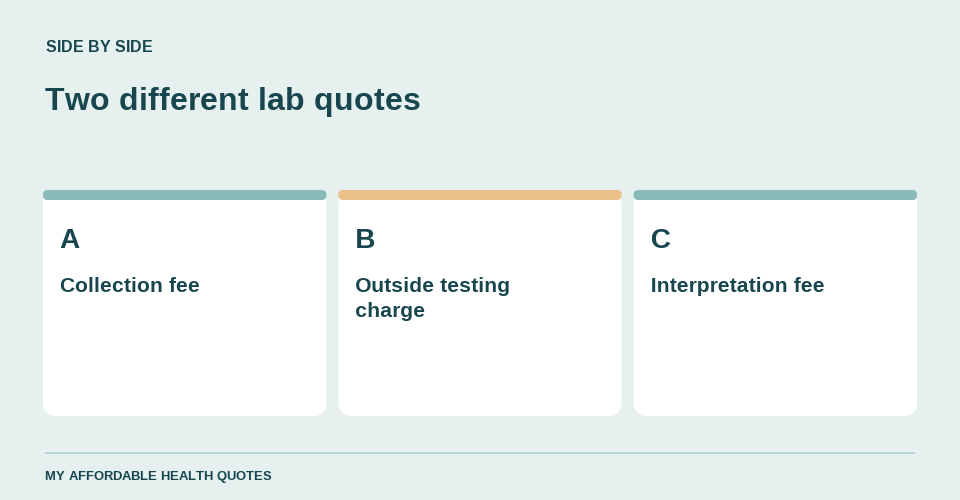
Imagine a collection office quotes thirty dollars for its work and an outside lab estimates a member payment of two hundred dollars for analysis. Those are made-up figures to illustrate two possible entries, not Ohio market prices. If the first office describes its figure as a collection estimate only, adding the two amounts yields a working estimate for the two identified parts. If the second quote already includes collection, adding thirty dollars would double count it. Ask each party which parts are included, whether it assumed insurance billing, and what it knows about the patient's remaining deductible.
A cash option needs separate scrutiny. Ask how payment affects submission of a claim, what the price covers, and whether the lab expects any additional provider to submit a bill. Look into whether an insurer would credit anything toward the deductible under that arrangement. A plan member who estimates reaching the deductible later in the year may value a covered claim differently from someone who expects very few other services. Neither household can choose intelligently if the insurer-based figure describes a complete test but the cash figure describes just one step. Compare equivalent services before comparing payment routes.
Make sure the report reaches the right desk
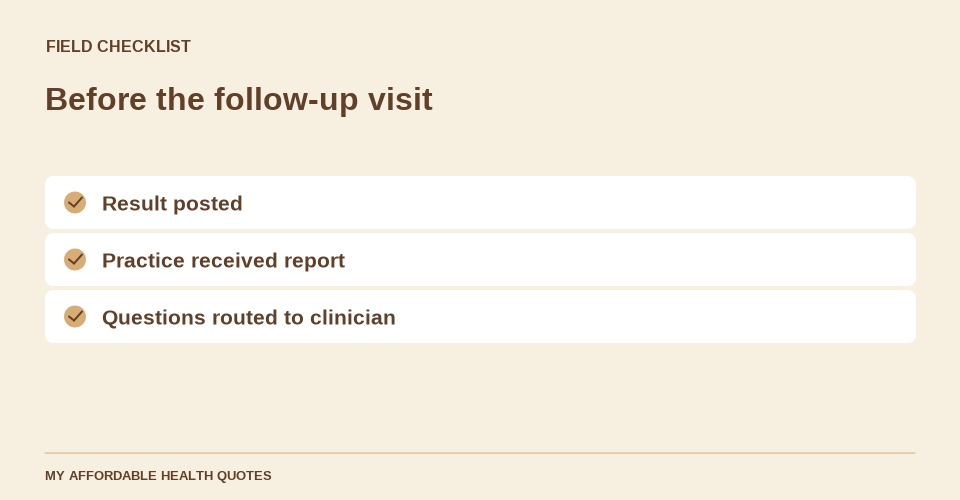
The financial trail and the clinical record trail can diverge. Robin's plan might display a processed claim before the referring practice has received the full report. A laboratory portal might release a report before anyone has interpreted it for the patient. Ask the ordering office when it expects to receive the result, which contact to use if it has not arrived by then, and how the clinician will discuss it. HHS distinguishes access to a completed report from interpretation by the laboratory. If results raise medical questions, direct those questions to the care team administering the test and follow-up.
Robin takes a photograph of the collection receipt with its reference number and checks the actual report destination. A different clinician at the same practice could have a similar surname or a different electronic inbox. If the follow-up is with a specialist, ask whether the ordering office forwards the report or expects the specialist to request it. A screenshot of one result may omit the rest of a report that the specialist needs. Confirm the format with the receiving office and use its preferred secure transfer method. The aim is to make the next booked appointment usable when it arrives.
Reconcile what physically happened with what was billed
Suppose two bills arrive with different company names after a single collection. Before treating either as a duplicate, align each statement with the insurer's explanation of benefits, the date, the activity, and the performing company. One could reflect the draw while another reflects analysis. Conversely, two documents could represent the same balance at different stages of processing. Ask each billing office to identify its role and whether the account has finished insurance processing. Keep a note about an agreed pause on collection activity, including its end date, if the office offers one while investigating a discrepancy.
When a denial refers to a missing authorization, compare the insurer's explanation with the original written decision and the order ultimately performed. An authorization for one destination may not describe a rerouted sample. A claim with an incorrect billing identity might need corrected submission. A decision about a benefit may instead call for review under the plan's appeal instructions. The Ohio Department of Insurance offers consumer help for matters within its authority. Include the order, the plan document, the insurer's reasoning and a short chronology when asking for assistance. A concise account makes the disputed decision easier to identify.
For Robin, the deciding detail between two private quotes turns out to be observable. One plan identifies a convenient draw office, its performing laboratory and a contact for advance review of this order. For the other, the lab destination remains unresolved. The unresolved question belongs in the price comparison alongside premiums and expected cost sharing, especially if multiple collections are likely. Someone with a flexible calendar might accept more travel for a clearly documented route. Someone whose schedule depends on a single reliable appointment can ask a broker to price an alternative that preserves that route and the follow-up it supports.
A practical closing question is whether Robin could explain the whole arrangement to the person covering the office during that appointment. A clear answer names the destination, the approximate time away, the person responsible for delivering the result and the day the next decision is expected. An answer with a blank space shows where one more call would have value.
Sources and further reading
- HHS: Access to laboratory reports
- HealthCare.gov: Comparing health plans
- HealthCare.gov: Summary of Benefits and Coverage
- Ohio Department of Insurance consumer complaint form