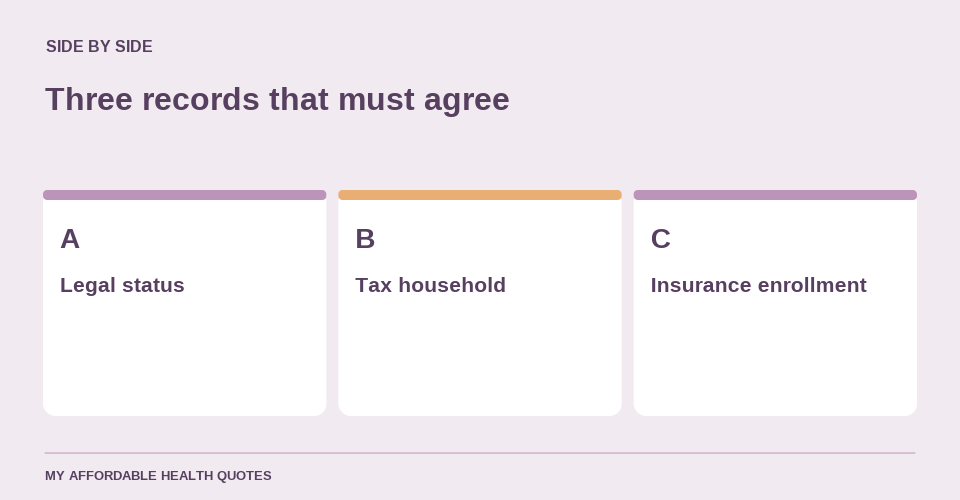
During a divorce, the price of a new health policy is only one part of the coverage problem. The household record may need to change, the source and treatment of income may change, and an existing policy may end on a date that requires prompt action. A Nevada resident should establish those facts before comparing quotes built on an outdated married-household application. The aim is a workable transition based on the actual legal and financial circumstances, not an assumption that moving into separate homes resolves every insurance question.
This guide is an organizational framework. It does not interpret a divorce order, determine a tax filing status, or recommend a settlement. Those decisions belong with qualified legal and tax advisers. An insurance professional can help compare coverage and navigate the application once the relevant facts are established. Keeping the roles distinct reduces the risk that a casual insurance conversation is mistaken for legal advice about property, support, or dependency.
Start with the status that actually applies
Living apart, being legally separated, and being divorced are not interchangeable descriptions. HealthCare.gov explains household inclusion rules and exceptions. Use the current application instructions and the legal facts supplied by counsel. Do not simply remove a spouse because the household has started separate bank accounts. Conversely, do not leave an outdated marital status unchanged after a legally relevant event has occurred.
Ask the tax adviser what filing assumptions are appropriate for the coverage year and how dependents should be represented. A proposed agreement may not be the same as a final order, and a plan for next year may differ from the current year's facts. Keep those years separate. A dated summary of the current status is more useful for enrollment than a long narrative about negotiations that have not yet produced a final result.
Identify the actual loss of coverage
A divorce can affect eligibility under a spouse's employer plan, but the plan administrator should confirm the precise end date and available options. Obtain the notice in writing. The date of a court order, the last date of eligibility, and the date a card stops working should not be treated as interchangeable. If coverage continues temporarily, identify the basis and any required payment rather than assuming it will remain active indefinitely.
HealthCare.gov distinguishes divorce with a coverage loss from divorce without one when discussing enrollment opportunities. Ask the exchange to evaluate the actual circumstances. Do not cancel a policy merely to create a loss and assume that this guarantees enrollment elsewhere. The safest planning sequence is to establish the available enrollment route and replacement effective date before ending coverage that is still valid.
Sort payments by their source and purpose
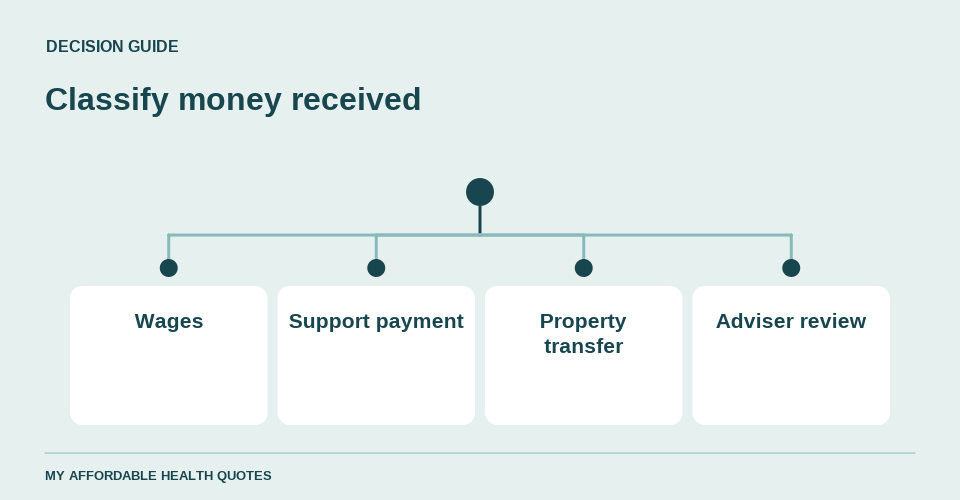
Money received during a divorce can include wages, support, property transfers, retirement-account transactions, or proceeds from selling an asset. These categories can have different tax treatment. The IRS publication for divorced or separated individuals explains important distinctions, including rules that depend on the date and terms of an agreement. Do not label every deposit as support or assume every settlement payment is income. Ask the tax professional to classify the actual items.
Create a list showing the payer, description, expected amount, timing, and supporting document. Mark whether the amount is recurring or one-time. Keep net cash available for living expenses separate from the income figure used in an application. A payment may help fund premiums without being treated the same way as wages, while another transaction may create taxable income even though the proceeds are committed to housing or another obligation.
A hypothetical household reconstruction
Imagine a Nevada resident whose family previously used one Marketplace application. During the divorce process, one spouse moves out, a property sale is planned, and the parties discuss who will claim a child. The resident wants an individual quote immediately. A quote based only on the new address and current monthly paycheck could miss several unresolved facts. The better approach is to identify which facts are final and which require legal or tax confirmation.
The resident obtains the coverage information, asks counsel about the current legal status, and asks the tax adviser to prepare the relevant household and income assumptions. The planned property transaction is evaluated separately from support. The resulting application uses the current confirmed facts and is updated when necessary. This example does not prescribe a filing status or dependency arrangement; it shows why an insurance price should not be built on guesses about them.
Nevada's exchange needs the updated application facts
Nevada Health Link's income guidance identifies sources to consider and sources treated differently. Use it together with the current application and adviser input. Report changes through the exchange's approved process, not only to the insurer or a medical office. A carrier may know where to mail a bill without having authority to resolve the household's financial-assistance record.
Read the resulting eligibility notice and verify the people who remain on each policy. If former spouses need separate applications or policies, ask how to complete the transition without accidentally terminating a child's coverage. Keep confirmation of each change. When several parties are involved, assign responsibility for each task so neither person assumes the other completed the last step. A simple checklist can prevent a complicated coverage gap.
Protect access and privacy during the transition
Review account email addresses, mailing addresses, and authorized contacts. Use a safe and appropriate contact method for sensitive notices. Do not share passwords simply because an account was previously managed jointly. Ask the exchange or insurer how to update authorized access correctly. If safety concerns or special circumstances are present, use the applicable official assistance process rather than improvising changes that could block needed communications.
Keep documents about the legal proceeding in the channels used by counsel. An insurance quote form should not contain the full settlement, Social Security numbers, or detailed medical history unless a specific secure process requires it. Provide the minimum information needed for the task. If evidence is requested, retain the accepted submission and confirmation so sensitive materials are not repeatedly circulated without a clear purpose.
Build a new healthcare budget from actual obligations
A new household budget should show premiums, expected prescriptions and visits, and the policy's patient-cost exposure. Separate these from legal expenses, moving costs, and other transition obligations. The fact that a settlement includes assets does not mean those assets are immediately liquid or available for medical bills. Identify the funds that can cover an early claim before choosing a policy with a large deductible.
Compare the full premium as well as any assistance determination. If income or household status remains subject to change, note that uncertainty and ask how updates should be handled. Do not select a plan solely because an early quote shows a low net amount. The final application facts, eligibility result, and plan benefits all matter. A sustainable budget should remain understandable if one of those assumptions changes.
Preserve the child's care arrangements
When children are involved, list their physicians, specialists, medicines, and regular care locations. Ask which exact policy will cover each child and when. A court agreement about who pays for coverage does not itself verify that the selected plan includes a provider. Legal responsibility and plan suitability need separate review. If care occurs near both parents' homes, check the relevant locations rather than assuming a broad carrier name solves the geography.
Keep a clear record of insurance cards, effective dates, and claims contacts accessible to the people authorized to manage care. Avoid making treatment decisions through an insurance comparison. The purpose is to understand benefits and administrative requirements so necessary care can be coordinated with the treating professionals. A carefully selected policy is more useful when both households know how to use it correctly.
Do not lose the prior-year paperwork
Tax reporting may require information from coverage held before the household changed. Preserve Marketplace tax forms, premium records, and eligibility notices rather than deleting an old account as soon as new coverage begins. Ask the tax adviser how shared-policy information should be handled. The answer can depend on the particular facts, so avoid assuming that each former spouse can independently use the entire same record without coordination.
If a corrected form arrives, send it to the professional handling the tax return and ask whether any further action is needed. Keep the original and correction together. A current insurance policy does not make prior-year reconciliation disappear. Organizing those records now can prevent the coverage transition from becoming a second administrative problem at tax time.
Complete the handoff before calling it finished
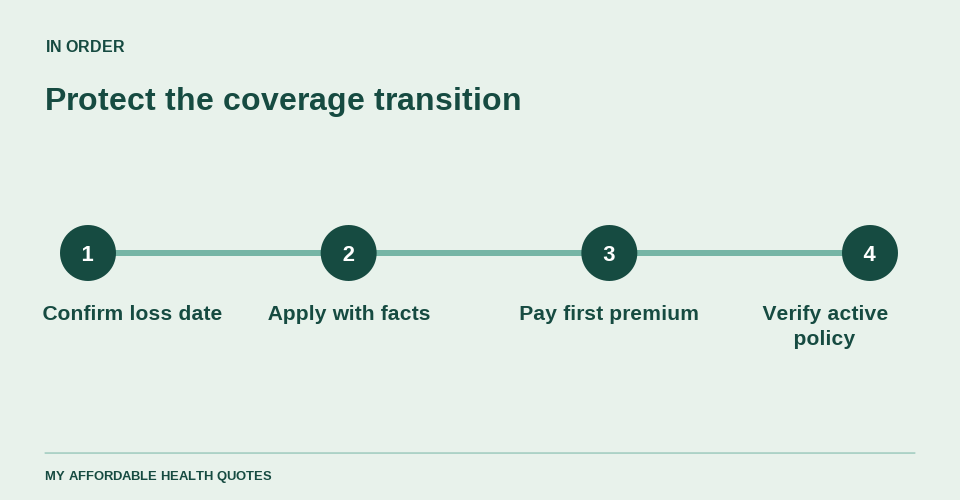
Confirm enrollment, the first premium, and the effective date with the new insurer. Check that old coverage ended only for the intended people and on the intended date. Give updated insurance information to providers and pharmacies. Review the first bill and any early claims for administrative errors. A completed application is an important step, but it is not the same as a verified coverage handoff.
If you need help comparing private options in Nevada, contact My Affordable Health Quotes with the confirmed coverage dates and adviser-supported household information. Keep legal and tax decisions with the appropriate professionals. The insurance work becomes more manageable when the facts are separated clearly: who belongs on the application, what income is relevant, which policy covers each person, and when that coverage begins.
Schedule one final administrative review after the first month. Confirm that notices reach the correct address and that no automatic payment continues for coverage that was intentionally replaced. This check should follow the actual confirmations, not assumptions based on who used to manage the family insurance account.
Sources and further reading
- IRS: Divorced or Separated Individuals
- HealthCare.gov: Household Membership
- HealthCare.gov: Special Enrollment
- Nevada Health Link: Reporting Income