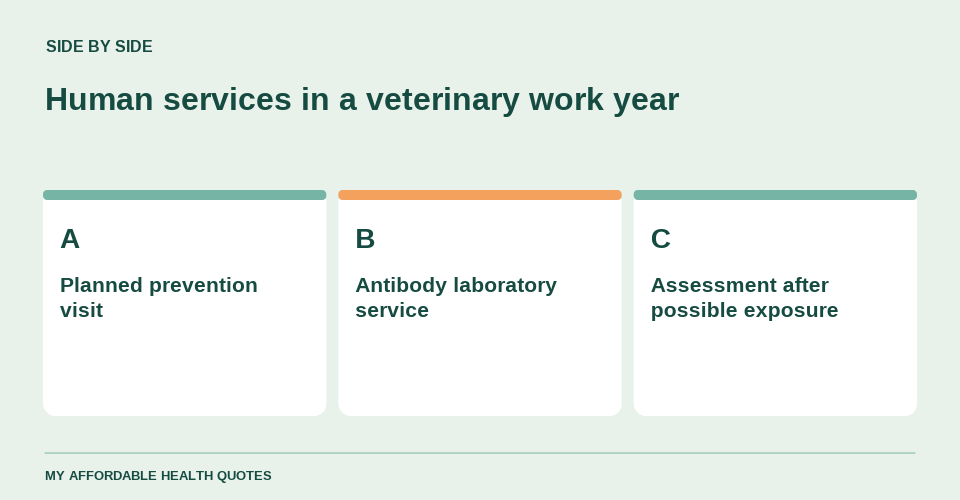
A Nebraska relief veterinarian leaves an employed clinic to cover appointments at several independent practices. The work is familiar, but the employer that previously coordinated the veterinarian’s personal occupational health appointments is gone. While comparing individual health insurance, the veterinarian sees preventive vaccinations described briefly in a brochure. That line does not answer who can provide planned human rabies vaccination, whether a laboratory service falls under the same benefit or how prior vaccination records affect the next conversation with a clinician. Start the insurance comparison with the human medical care the veterinarian needs.
If a possible rabies exposure has already occurred, seek prompt assessment from a health care professional or public health department, including if you have been vaccinated previously. CDC explains that a professional should evaluate the exposure and determine the appropriate response. A pending insurer callback or a planned occupational appointment should never delay that contact. The rest of this guide concerns shopping in advance for coverage and obtaining clear billing information. It is not a way to decide whether a particular animal contact requires medical care.
Recover the record that belonged to your previous job
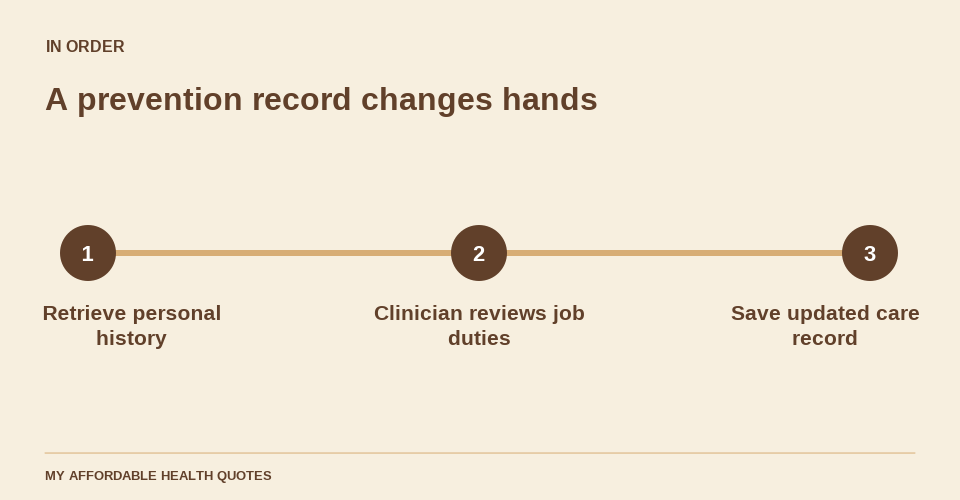
Ask the former occupational health service for your personal vaccination and laboratory records. The useful material identifies what was actually administered, the dates, any test results, and the organization that provided the care. A line in a credentialing file stating that an employee was cleared to work may be perfectly adequate for the former employer while giving a new clinician little help. Use the provider’s secure process and retain a copy where you can reach it on a day away from your usual office. An animal’s vaccination record serves an entirely different purpose from your own.
Bring the record to a health professional qualified to advise on human occupational risks. Explain your actual duties and anticipated duration of work. A veterinarian covering routine companion animal care, someone working with wildlife and a person primarily consulting from a desk may have different considerations. CDC guidance distinguishes risk categories and the appropriate prevention approaches for them. The professional can determine whether a vaccination, a blood test, a follow-up discussion or no immediate service is appropriate. That decision gives the insurance inquiry a concrete subject and helps avoid budgeting for an unnecessary service.
Ask the carrier about the reason for the service
When calling a prospective insurer, describe planned pre-exposure care for a human veterinary professional. If a clinician has recommended an antibody titer, ask about that laboratory service separately. Ask how the plan handles the particular indication and whether network, provider, pharmacy, diagnostic or occupational-service provisions apply. Someone reading a standard list of familiar childhood or adult vaccines may initially answer a different question. Request the policy section or written coverage criteria governing the actual service and ask what additional detail the reviewer needs before it can give an informed answer.
Avoid letting the term preventive do too much work in the family budget. A clinician may use it accurately to describe why care is provided. The plan still has to determine how the particular service, patient circumstances and billing setting fit its terms and applicable requirements. The carrier might need to know which product, professional or facility would bill. The clinic may need the plan’s full name to check participation accurately. A zero-dollar estimate for an unrelated immunization at a retail pharmacy is an unreliable basis for forecasting a human rabies vaccination or a laboratory test.
Find a human provider who can actually supply it
Contact an occupational health clinic, travel medicine service, primary care office or other human medical provider suggested by your clinician. Ask whether the location offers the recommended service, whether an evaluation is needed first, and whether the product has to be ordered for an appointment. Confirm the billing entity, medical location and expected service dates with the insurance carrier. Availability and network participation are independent facts. An in-network office that cannot obtain the product within the planned period may refer to a different location whose financial arrangement deserves a separate check.
For an antibody test ordered by the clinician, ask where blood will be drawn and which laboratory performs the analysis. A nearby draw station may send the specimen to a different organization. Ask whether the patient receives one bill or multiple bills and whether the order has to identify the receiving laboratory in advance. Keep the medical decision about timing with the clinician. If the nearest suitable clinic is a considerable drive, ask whether a local collection site can handle the ordered test. A carrier’s directory entry for a laboratory does not promise that every branch performs every collection service.
Separate a quote into charges you can test
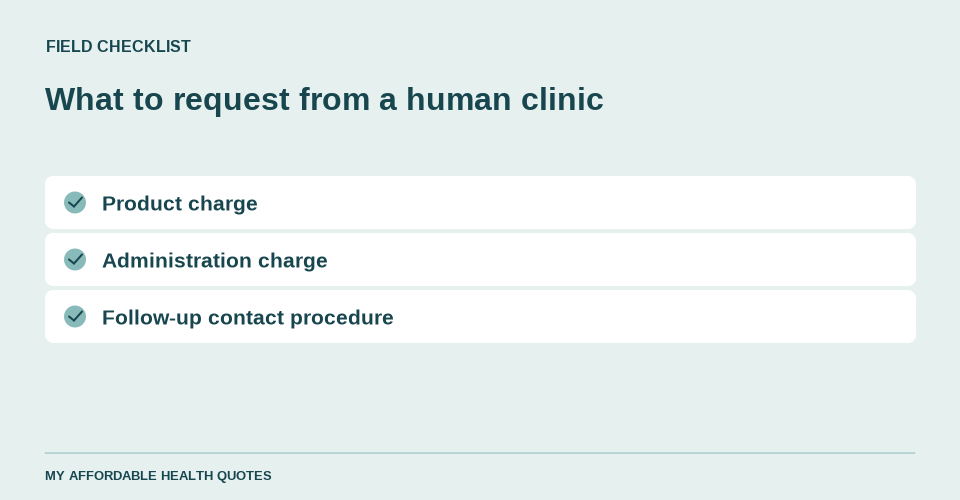
Request an estimate with clearly described pieces. A planned vaccination appointment may involve a clinical evaluation, the vaccine product and an administration charge. A return visit could carry its own charge. A titer can involve collection, testing and review. Ask which are bundled and which are optional or dependent on clinical findings. Where an office requests payment in advance, ask how it handles insurance claims, whether it issues an itemized receipt and how it refunds an excess payment after final claim processing. A high fee collected at the desk is not necessarily the final member responsibility.
Imagine a clinic quotes an illustrative two-hundred-dollar consultation and a separate one-hundred-dollar laboratory service. A second service quotes two hundred fifty dollars for a bundled consultation and draw but says an outside laboratory bills independently. The second quote only appears cheaper if the outside laboratory charge is below fifty dollars, assuming the same work and the same payment basis. Before comparing those figures, determine whether either is a cash price, a billed charge or an estimated insured amount. The arithmetic is easy. Establishing what the figures actually purchase is the more consequential part of the exercise.
Know what your relief contract promises
A practice hiring a relief veterinarian might offer a professional expense allowance, require personal proof of occupational care or offer access to its existing occupational health provider. Obtain the details in writing. Ask whether the arrangement benefits the contractor personally, who schedules the visit, and whether the allowance reimburses a completed service or simply forms part of the contracted day rate. If two hiring clinics offer different arrangements, identify which covers the relevant period. An invoice for professional services and an explanation of benefits from a health carrier answer different financial questions.
Consider how the arrangement travels. A relief professional might work in Omaha one week and spend the next week covering a rural clinic several hours from the original human care provider. Does the clinic agreement extend beyond its own location? Who keeps the records after the contract ends? Which county or state public health service should be contacted for local guidance if a concern arises? Nebraska DHHS publishes resources for health professionals that can help identify the public health route. The patient’s health insurance remains one part of an occupational care plan alongside the clinical and workplace arrangements.
Plan the administrative response to an exposure separately
Before the next shift, learn the host facility’s process for reporting occupational incidents and identify how to reach an appropriate health professional. Store your own record in a secure, accessible format. An animal chart, owner information and an incident narrative may be relevant to the authorities or clinicians assessing an event. Handle those records according to applicable professional and privacy procedures. Animal owners and hiring managers do not determine what personal medical treatment a relief veterinarian should receive. The appropriate clinician or public health professional can consider the event and the individual’s prior history together.
After urgent care needs have been addressed, identify the payer process for any resulting claims. Explain the circumstances honestly if the insurer asks whether they were work-related. If a commercial policy or hiring facility is involved, record the incident or claim identifier and which organization needs follow-up. A decision about coverage for elective pre-exposure services tells you little by itself about the benefit for a subsequent urgent evaluation. Likewise, a past claim from an emergency facility does not show what a plan would pay for planned occupational prevention in an outpatient office next year.
Use the right amount of detail when requesting quotes
A comparison can be concise. State that the purchaser lives in Nebraska, works as an independent veterinarian and needs to evaluate access to clinician-recommended human occupational rabies prevention. Supply the preferred human clinic and laboratory if known. Ask for the policy provisions and the route for a specific cost estimate. The initial sales contact rarely needs the entire medical or occupational file. Detailed health records belong in the appropriate secure channel with the professionals or insurers who require them for the identified task.
Finally, evaluate the rest of the household’s coverage on its own terms. One well-organized specialty service does not compensate for an unusable primary care network or poor access to the family’s routine prescriptions. Compare the additional annual premium with the confirmed costs and access differences, leaving uncertain future services visibly uncertain. Then save the professional’s clinical recommendation, the clinic estimate and the insurance answer as separate records. At renewal you will be able to see what changed in your work, what changed in the care plan and what changed in the policy before paying for another year. That distinction becomes especially valuable when the next assignment takes place far from the previous occupational clinic.
Sources and further reading
- CDC, prevention guidance for clinicians
- CDC, when to seek care
- Nebraska DHHS, rabies information for health professionals