A Nebraska ceramicist who sells commissioned installations receives an estimate from an oral surgeon. The office wants copies of both medical and dental insurance cards. That request sounds promising, but it does not mean that both plans will pay, or that the patient can choose whichever deductible is lower. The artist is also comparing coverage for the next year, which makes the timing especially important. The sensible starting point is the proposed treatment and its billing arrangements, followed by two separate questions about what each candidate contract actually covers.
Ask for an estimate that identifies the work
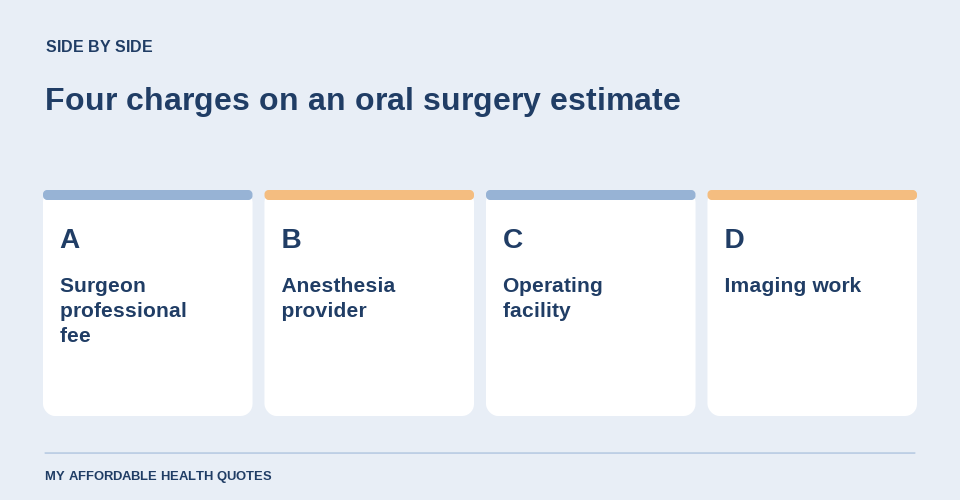
A single estimate labeled oral surgery can represent several different services. Ask the surgeon’s office to separate the procedure, imaging, anesthesia, facility and follow-up when those are expected to be billed separately. Ask what is included in the professional fee, which services are contingent on clinical findings and whether any other provider will issue a bill. If the plan is preliminary, keep that label with the estimate. Two offices may quote different totals simply because one included the facility and the other listed only the surgeon’s own fee.
Obtain the billing descriptions and identifiers the practice expects to use for each insurer. Medical and dental claims can use different coding systems, and the same appointment can require supporting records in different formats. The treating team must select codes that accurately describe the service and clinical circumstances. The patient should never ask the office to characterize ordinary care as an accident or change a description just to make a benefit appear available. The purchasing decision improves when the insurer reviews the real procedure, the actual reason for care and the anticipated site of service.
Locate the medical policy provision
Contact the medical carrier about the plan offered at the ceramicist’s Nebraska home address. Explain that an oral surgeon has proposed specified work and ask which provisions address oral surgery, dental exclusions, related anesthesia and eligible facility services. If the carrier requires documentation before it can consider benefits, find out who submits it and whether a review is available before enrollment or only after coverage begins. Record which questions a prospective quote can answer and which require a member-specific determination. A generic statement that surgery is covered is too broad to budget against.
Pay particular attention to the site. A surgeon might be willing to perform certain services in an office or another setting if clinically appropriate. Ask whether the applicable policy rule differs by site and whether each named location participates. Anesthesia provided by a different professional needs its own review. Never choose a setting solely because its fee appears lower. The clinical team can explain what is safe and suitable. Once that range is established, the insurer can clarify the financial differences among appropriate alternatives, including whether advance authorization is required.
Read the dental quote as a full contract
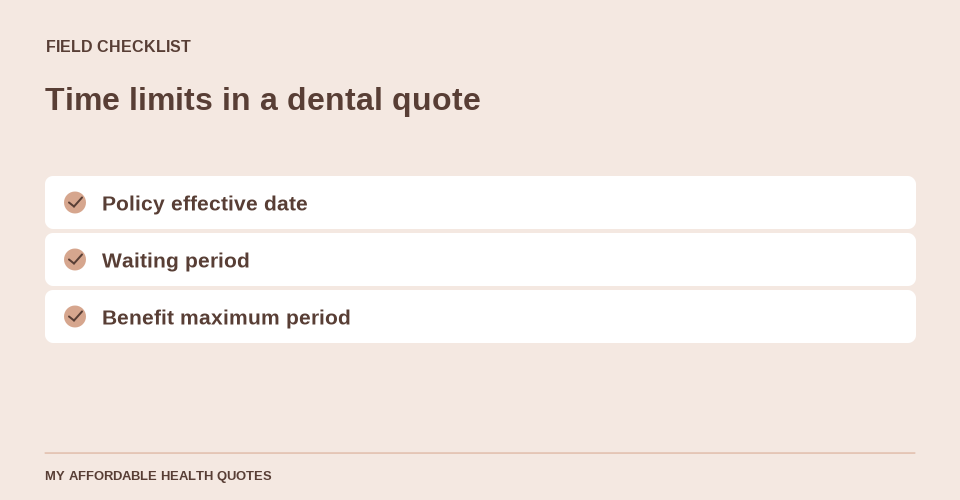
HealthCare.gov explains that Marketplace dental coverage may be offered as part of a medical plan or through a separate dental plan, and that adult dental benefits can have waiting periods. Determine which arrangement each quote represents. Ask whether the specific service is covered, what benefit category it falls into and whether a waiting period would still be running on the planned date. If the proposed dental policy has an annual benefit maximum, ask whether that maximum describes how much the insurer pays and what period resets it. A percentage in a brochure can become much less valuable once a maximum is reached.
Ask how the dental carrier treats a predetermination, also called a pretreatment estimate by some plans. What information does the office have to submit? How long does the estimate remain useful? Which changes could affect final payment? A predetermination based on expected treatment and current remaining benefits can change if other claims arrive, the patient changes coverage or the procedure changes. Save the decision alongside its assumptions. Ask separately whether the medical carrier requires an authorization, since satisfying the dental plan’s review process may leave the medical plan’s requirements untouched.
Confirm which carrier needs the first decision
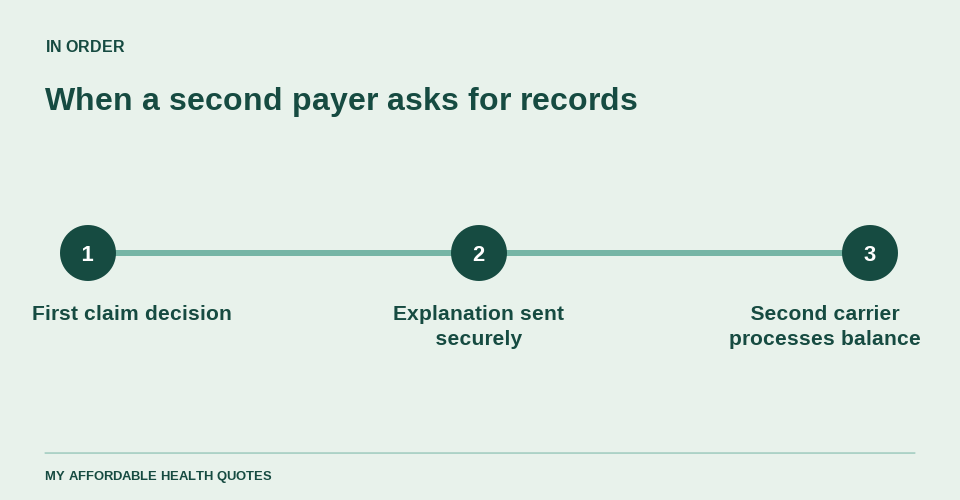
An office that routinely handles both payers can often explain its expected submission sequence. Confirm with the insurers because the policy terms and claims circumstances control. Does either carrier require a written explanation from the other? Who submits that explanation, and how is the claim matched to the correct patient and date? If neither carrier appears willing to review first, ask for each one’s instructions in writing and have the billing office identify the exact point of disagreement. A medical denial may sometimes furnish information requested by a dental plan. It does not by itself establish payment under the dental contract.
Keep the sequence organized by service. A facility may file one claim, the surgeon another and the anesthesia group a third. A dental estimate for the surgeon’s work need not include either of the other charges. List the party handling each claim and the insurer that has answered so far. Ask about submission deadlines and keep copies of documents sent through approved channels. A second carrier may need the first insurer’s complete explanation rather than a screenshot showing only an amount. One complete file can prevent several calls in which each party is waiting on information held by another.
Put real meaning behind a percentage
Imagine a dental contract that would pay fifty percent of a hypothetical allowed two-thousand-dollar eligible service after a deductible that has already been met. The preliminary calculation produces one thousand dollars. If only six hundred dollars of an applicable annual benefit maximum remains, the plan payment could be limited to six hundred under the example’s assumptions. The patient still needs to understand the provider’s contracted amount and whether other charges are excluded. A proposed fifty percent benefit and a six-hundred-dollar payment can both be accurate descriptions of different points in that calculation.
Now consider the medical side of the same appointment. If the medical plan confirms only that it will review the anesthesia claim, assigning it a payment of half the overall estimate would be pure guesswork. Show three totals instead. One column holds the office’s expected charges by billing party. Another holds confirmed estimates under each policy. A final line identifies unresolved items and deposits. Keep any deposit credited to the final bill from being counted twice. The point of a low and high scenario is to show which unresolved answer has the biggest effect on the household’s cash requirement.
Connect timing to the artist’s commission calendar
A self-employed artist may want a planned procedure between a delivery deadline and a gallery installation. Ask the clinical team about medically appropriate scheduling and follow-up. The insurance side needs the effective date, any waiting period and whether preoperative, procedure and follow-up charges are treated under different dates. A new plan year between the initial consultation and treatment can change network participation, deductible balances or the validity of an authorization. An elective timing discussion is appropriate only within the clinician’s guidance. New or urgent concerns deserve prompt professional attention independent of financial planning.
The studio’s production schedule deserves separate accounting. A kiln firing already arranged with an assistant might continue without a major revenue interruption. A commissioned installation requiring the artist’s presence could require a paid substitute or a revised deadline. Record those costs outside the medical estimate. Compare the annual premiums for the entire household with the likely covered benefits across all care, including routine dental care where relevant. Buying a new dental policy just for a single near-term service can disappoint if the service is excluded, subject to a waiting period or limited by a maximum.
Read the explanations before reconciling the balance
After services are furnished, match each bill to the corresponding insurer explanation. Was the charge a surgeon fee, anesthesia, imaging or facility use? Did the insurer apply a deductible, deny the benefit or request another payer’s response? Those outcomes require different actions. A provider correcting a missing identifier is doing something different from the patient appealing a contractual denial. Follow the instructions and deadlines in the documents. If needed, Nebraska’s Department of Insurance can help direct consumers with questions about policies within its jurisdiction.
When the ceramicist requests the next quote, the most informative details are the provider’s legal billing name, proposed work, location and desired time frame. Ask the advisor to identify what the medical and dental contracts each say and which items require separate confirmation by the carriers. Keep the surgery estimate outside a generic household dental budget until it has been reconciled. The family can then decide what coverage is worth purchasing with a realistic view of the planned procedure, the ordinary care it buys throughout the year and the money it may still need to set aside.
Before closing the file, ask the provider to confirm how any overpayment will be returned if both carriers process claims after the deposit was collected. Keep the final balance and any refund record with the original estimate. When a future procedure raises the same question, you will know which part of the practice handled coordination successfully and where the previous estimate proved incomplete. That record also helps another household member evaluate the same policy without assuming every oral surgeon uses the same facility, the same anesthesia group or the same order for submitting claims.