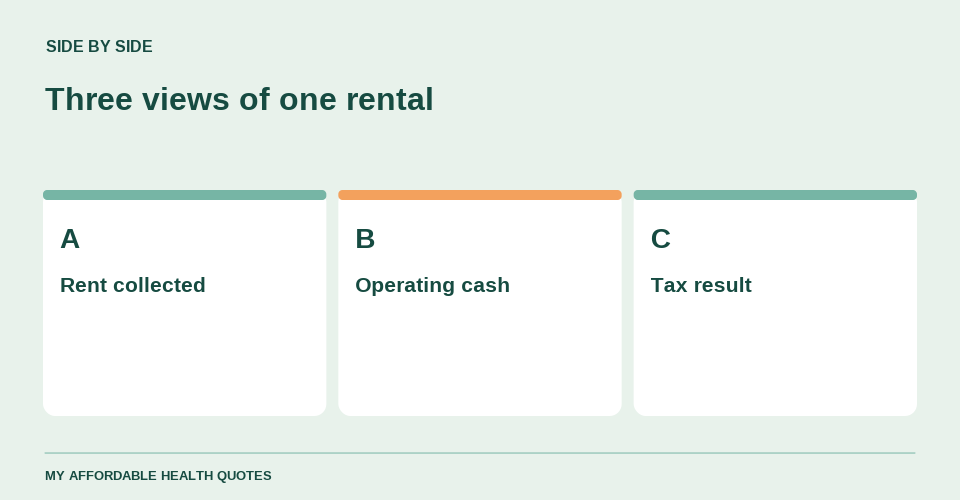
A rental property can send money to a household every month without producing the same amount of income for a health insurance application. Rent collected, cash left after bills, and the tax result are different measures. Montana property owners comparing private coverage should begin by asking which measure each document shows. That single question prevents both overstating income from gross rents and understating it by subtracting every payment made from a property account.
The practical objective is not to turn an insurance application into a property-tax return. It is to obtain a reasonable, documented annual household forecast and use it consistently. A tax professional should determine how rental rules apply to the property. An insurance agent can then help compare available plans using the resulting information. This guide focuses on organizing that handoff, especially when rental activity changes during a year without employer coverage.
Give each property its own record
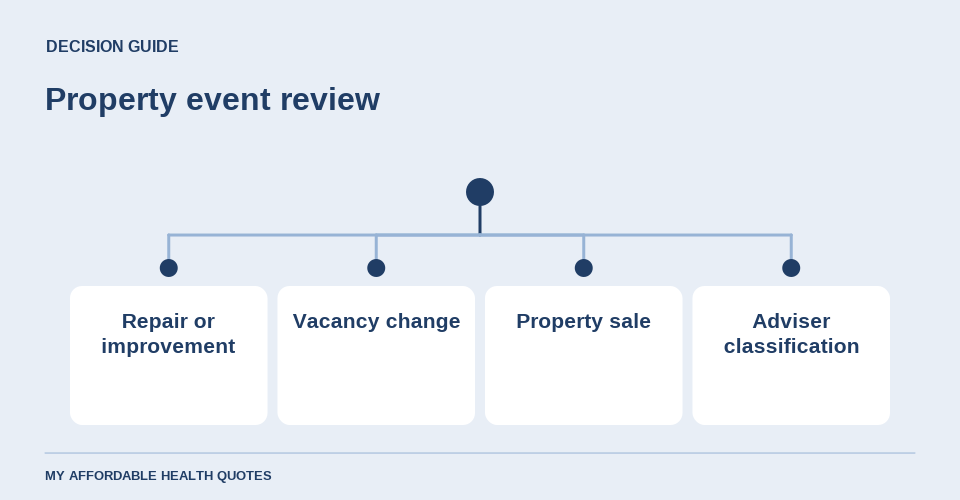
Start with one ledger per property, even if a management company sends a combined deposit. Record receipts, operating expenses, major projects, and periods when the property was unavailable or vacant. Preserve the manager's statement and the underlying explanation for unusual charges. A single annual bank-deposit total may be convenient, but it can hide refunds, deposits, transfers, and other items that need separate treatment. The tax preparer needs enough detail to classify them correctly.
The IRS discusses rental receipts, expenses, depreciation, and related distinctions in Publication 527. Do not assume that a property payment has the same treatment merely because it reduced available cash. A repair, an improvement, principal repayment, and a transfer into a reserve account can raise different questions. Rather than deciding these issues inside the insurance worksheet, flag them for the person preparing the rental tax calculation.
Why the bank balance can mislead
Suppose a hypothetical Montana landlord collects rent and then makes mortgage payments, replaces equipment, and moves money into a maintenance reserve. The amount left in checking is a useful liquidity measure. It is not automatically the property's taxable result. If the landlord uses that balance as income, the application may reflect personal cash management rather than the appropriate tax calculation. If the landlord uses all rent collected, it may ignore expenses that the rules permit.
Build a small reconciliation showing gross receipts, categories reviewed by the tax adviser, and the resulting forecast. Keep the cash-flow budget beside it but label it differently. This avoids arguing about which number is correct when both numbers serve legitimate purposes. The cash budget helps pay premiums and repairs; the income forecast supports the application and tax planning. Clear labels are more useful than forcing one total to do both jobs.
Account for the rest of the household
Rental activity is often only one part of a household's finances. A spouse may earn wages, an owner may consult, or investment accounts may distribute income. Add those sources without losing the distinction between the rental calculation and the household total. HealthCare.gov identifies net rental and royalty income among the categories to report. Follow the current application instructions and use professional help for classification questions that the general guidance does not resolve.
Do not omit a household member simply because that person does not need insurance. Conversely, do not assume every person living in the property belongs in the applicant's tax household. A tenant, adult relative, or business partner can have a financial relationship with the owner without being part of the same insurance application. Establish the household correctly before combining income. When ownership is shared, ask whose tax records should include each part of the rental result.
Distinguish a bad month from a new annual forecast
One vacant month does not necessarily mean the entire year will resemble that month. A new long-term lease can also make last year's vacancy pattern a poor guide. Use actual results so far and a reasoned forecast for the remaining months. Describe the assumptions: scheduled lease income, expected vacancy, known projects, and management fees. If an assumption changes materially, update the forecast rather than waiting until the tax return is prepared.
For a seasonal property, avoid multiplying the busiest month's receipts by twelve. Also avoid using the quietest month as though it represents the full year. Review the property's operating pattern and any change in use. The appropriate tax treatment of mixed personal and rental use can be more complicated than ordinary long-term leasing, so bring those facts to the tax professional. The insurance process should reflect the resulting estimate without pretending that seasonal cash receipts are a steady salary.
Losses require more than a minus sign
A property may show a loss in its records, but the amount that affects a household's tax result can depend on applicable limitations. IRS Publication 925 explains passive-activity and at-risk rules. Do not simply subtract a projected property loss from wages or other income without checking whether the relevant rules allow that result for the year. This is particularly important when a high-income household has several properties or ownership interests.
Keep a separate line for losses or adjustments still under review. Ask the preparer to explain whether the current forecast includes them and what could change that conclusion. A clear answer such as “included subject to this assumption” is more useful than a vague statement that real estate creates deductions. The household can then understand the sensitivity of its estimate without making an unsupported claim on an application.
A sale or major change deserves a fresh review
Selling a property is different from collecting rent. A refinance, ownership transfer, or conversion from personal to rental use can also introduce questions that do not fit the normal monthly ledger. Notify the tax adviser when those events become definite. Ask for the effect on the coverage-year estimate and, if relevant, the next year's forecast. Do not carry an old rental total forward after the underlying property has been sold or its use has changed.
The transaction's cash proceeds may be needed for taxes, debt, another property, or living costs. Keep those commitments separate from the health insurance budget. A large deposit can temporarily make a household look more able to absorb a deductible than it really is. The budget should identify funds actually available for premiums and care, not funds already reserved for closing obligations or another planned transaction.
Compare coverage where the household receives care
Montana property ownership does not by itself establish residence or the correct insurance market. Use the applicant's actual residence and the applicable enrollment rules. If the household lives in one area but manages properties elsewhere, distinguish business travel from a permanent move. An insurance plan should be evaluated for the places where household members need routine care, not chosen according to where an investment property happens to be located.
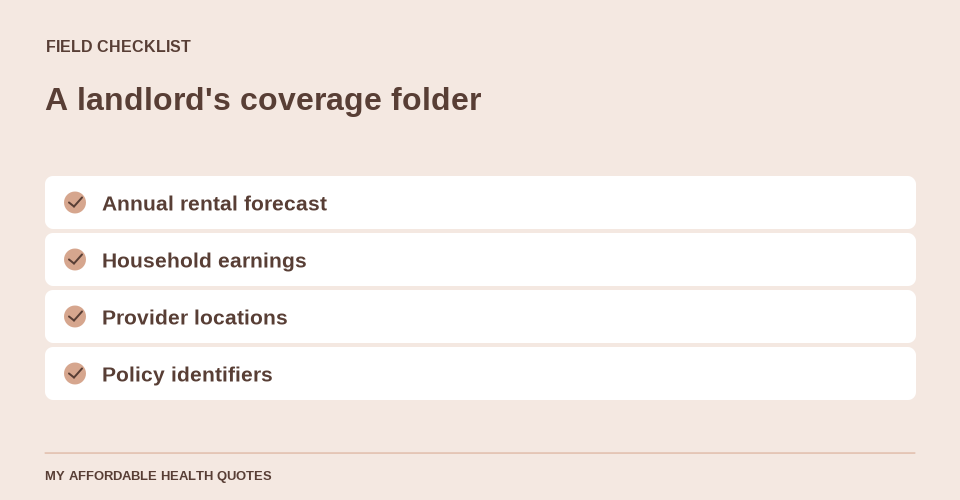
For Montana residents who travel to specialists, list the physician, facility, and location before comparing policies. Verify each against the exact plan network. Ask how out-of-area routine care is handled and what costs may fall outside the plan's in-network protection. A policy's familiar brand name does not establish that a distant hospital participates. The practical question is whether the particular coverage works for the household's actual care pattern.
Keep property risk and medical risk in separate budgets
Landlords are accustomed to planning for a roof, a vacancy, or an emergency repair. Medical cost exposure deserves its own reserve rather than competing silently with the same cash. Compare the premium, deductible, and covered in-network out-of-pocket limit for each candidate policy. Then write down what liquid funds could meet an early-year medical expense without assuming the property will immediately generate extra rent.
This exercise does not mean the household must choose the lowest deductible. It means the tradeoff should be deliberate. A lower premium may leave more cash for reserves, while a different plan may offer more predictable costs for expected treatment. Provider access, prescription coverage, and administrative demands also matter. The right comparison uses the household's care needs and financial constraints together, rather than treating rental ownership as proof that any patient-cost exposure is affordable.
Prepare a concise adviser handoff
Bring the tax professional the property ledgers and unusual-event notes. Bring the insurance discussion the current annual household estimate, the intended coverage dates, and the providers and medicines that matter. You generally do not need to give an insurance agent every tenant record or lease to explain your forecast. Share only what the application or a specific verification request requires through an appropriate secure channel.
Ask for the date of the estimate and the next event that should trigger a review. That trigger might be a lease signing, property sale, completed project, or updated year-end projection. Assign responsibility so the task does not disappear between the property manager, accountant, and household member who handles insurance. A forecast is much easier to maintain when someone knows which new fact should cause a second look.
Close the loop after enrollment
Save the final policy selection, first-payment confirmation, and effective date with the household coverage records. Continue maintaining the rental forecast after coverage begins. If the Marketplace requests documentation, answer the specific request and retain the submitted version. If the estimate changes, record both the new amount and why it changed. That history makes renewal and tax reconciliation easier than rebuilding the year from scattered bank statements.
For a private-plan comparison, ask My Affordable Health Quotes for licensed-agent help and explain that rental income is part of your household's finances. A useful conversation starts with an adviser-supported estimate and a clear care checklist. It ends with a policy whose benefits and costs you understand, while the property records remain detailed enough to support the financial information used in the application.
Sources and further reading
- IRS: Residential Rental Property
- HealthCare.gov: Income to Include
- IRS: Passive Activity and At-Risk Rules