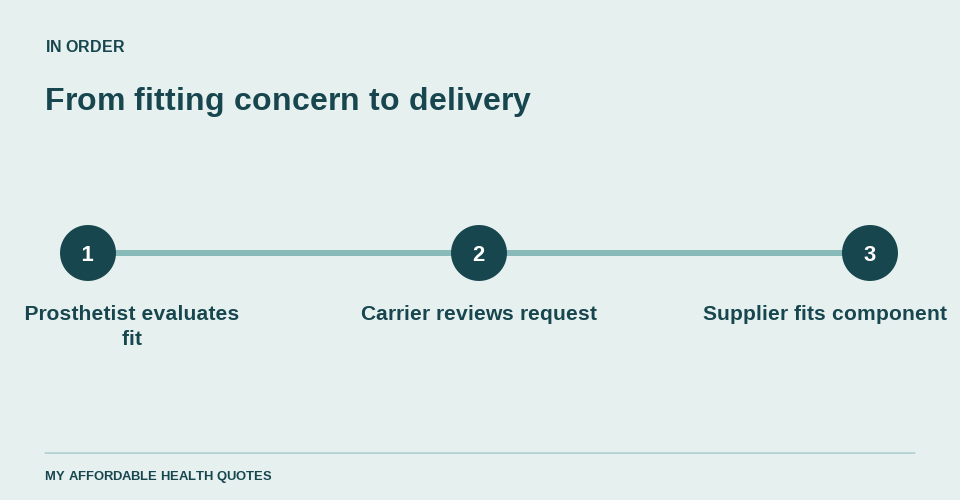
A Missouri commercial photographer has used the same prosthetic limb through years of studio work. The foot component still functions, but the socket no longer fits as it did, and long days on location have become a scheduling concern. During insurance shopping, a quote labels prosthetics a covered benefit. The photographer’s actual decision is more specific. Will the plan support evaluation by the current prosthetist, fabrication of a replacement socket if prescribed, and adjustments after delivery? A good comparison follows the individual pieces and people involved before it puts a price on the whole device.
Begin with the part that needs attention
Ask the clinical team to describe the current issue in its own terms. A socket interfaces with the person’s limb. A liner, suspension system, foot or other component serves a different function. A change in fit does not necessarily mean that a whole prosthesis must be replaced. The prosthetist and prescribing clinician can explain the options appropriate to the individual. The insurance shopper’s role is to learn which option the supplier anticipates billing, how the plan categorizes it, and what information a decision about that service would require.
Separate known work from possible future work. A consultation may already be scheduled while a socket remains only one possibility. The need for another adjustment might emerge weeks after delivery. A repair may fall inside an existing manufacturer warranty, while labor or shipping follows separate terms. List these stages independently. If an advisor says the plan typically pays a percentage for durable medical equipment, ask where the specific prosthetic service appears in the contract. Some plan documents organize benefits under different categories. Applying a broad equipment percentage to every line can produce a convincing but unreliable estimate.
Read Missouri’s offer language carefully
Missouri publishes a summary of its health insurance mandates and uses Section 376.1232 for prosthetic devices and services. The statute describes an offer of coverage and identifies exclusions from its scope. When considering an individual policy, ask the insurer whether the coverage described is included in the exact product and whether an option or rider is involved. Obtain the policy language and any evidence that an option was selected. A buyer who starts with the state’s wording can ask a more precise question than whether Missouri has a law about prosthetics.
Ask what type of contract the advisor is quoting. A fixed payment product might send a specified amount after a qualifying event and leave the household responsible for procuring the device. A comprehensive health plan can have a provider network, clinical review requirements and cost-sharing rules for an eligible service. Understand which arrangement the quote represents before comparing premiums. State guidance helps locate the question, but an insurance department’s chart does not identify a specific person’s coverage, prescribe a component or guarantee that a particular claim will satisfy the plan’s requirements.
Check the supplier separately from the referring physician
A physician may work at an in-network practice while the prosthetist bills under the name of a separately owned supplier. Ask the prosthetic clinic for its legal billing name and the address for the proposed services. Confirm both with the insurer, including whether the plan requires an approved specialty supplier. A clinician who accepts a carrier for one employer plan may have a different arrangement for an individual product. Give both sides the exact network and plan name and ask whether their answer includes evaluation, fabrication, fitting and later office adjustments.
If an alternative supplier is suggested, discuss a transfer with the treating team before assuming it is simple. Are prior fitting notes available? Is an existing component compatible with the proposed approach? Will the new clinic adjust an item it did not supply? Which responsibilities remain with the original clinic under its warranty or service agreement? These are questions for the people doing the work. A lower advertised coinsurance percentage may have limited practical value if the household must pay privately for a familiar local provider or take repeated days away from work to use a distant supplier.
Request an itemized estimate with assumptions visible
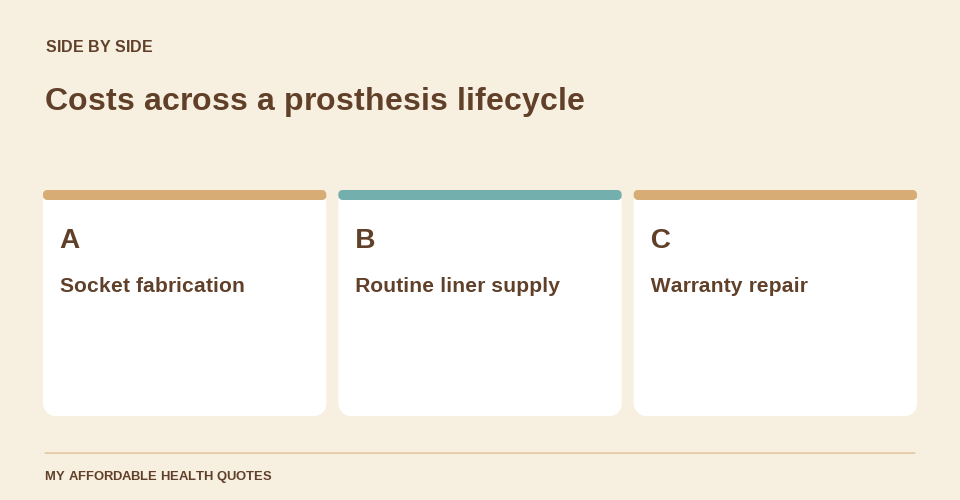
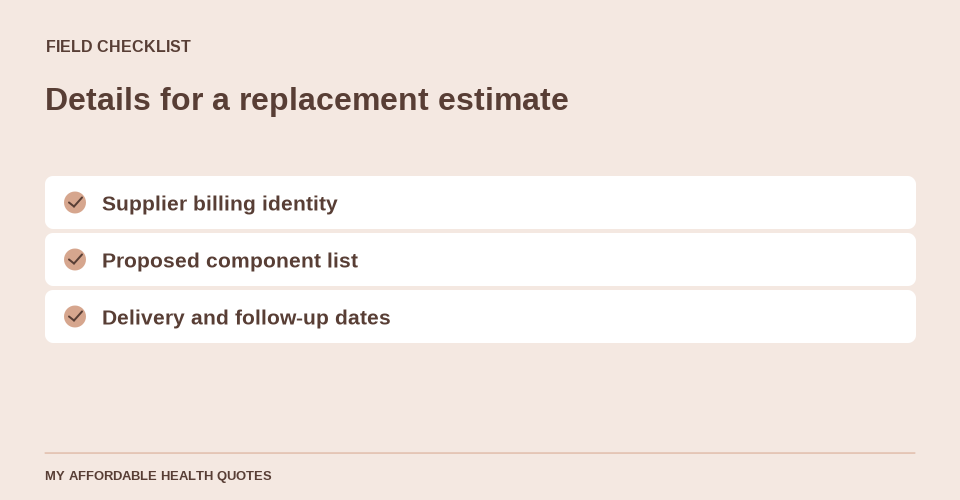
Ask for a written description of the anticipated services, identifiers the clinic uses for billing, and which services are included in the device price. The list might include an evaluation, a test socket, fabrication, final fitting, liners and a follow-up adjustment. The clinic can say which items apply. Ask whether the quotation represents full charges, expected negotiated amounts or estimated patient responsibility at the time it was prepared. A supplier may reasonably be unable to predict the final result until evaluating the fit. Record what could change the estimate and when a revised version will be available.
Here is an invented illustration. Suppose the insurer estimates an allowed amount of four thousand dollars for covered in-network work. The member has eight hundred dollars of deductible remaining and owes twenty percent of the amount after the deductible. Under those assumptions the arithmetic is eight hundred plus twenty percent of thirty-two hundred, or fourteen hundred forty dollars. A warranty repair processed without an insurance claim would follow different math. A separately excluded upgrade could add its full price. Confirm which individual lines the estimate covers before planning a withdrawal from the household account.
Give prior review enough detail to be meaningful
Find out whether the insurer requires prior authorization and who submits the records. Ask the clinic what information it expects from the prescribing professional and what the plan needs to understand the change in fit or function. An occupational description may be helpful when it accurately explains everyday activities, walking surfaces and time spent standing. It cannot substitute for the clinical assessment. Avoid purchasing a component based only on an expectation that the insurer will approve it later. Ask about deposits, the point at which fabrication becomes nonrefundable and what happens if the insurer requests another evaluation.
When a decision arrives, compare the approved supplier, services, units and dates with the written estimate. A decision about one socket may leave a liner, repair or future adjustment unresolved. A change in components during fabrication can require the supplier to check the approval again. If coverage will renew before delivery, ask how the carrier determines the service date and whether an existing authorization carries forward. Payment can still depend on enrollment and the claim as submitted. A copy of the approval lets the person identify discrepancies without assuming every future expense has already been accepted.
Compare the hidden time costs without inflating them
Make a calendar with the fitting visits the clinic presently anticipates, including likely follow-up. A photographer who can schedule two visits between indoor shoots may lose little income. Another appointment during a paid location assignment could require hiring an assistant or shifting the entire crew. Put only actual expected expense in the cash forecast and list inconvenience separately. A day away from the studio does not always equal a lost day of revenue, yet multiple out-of-town fittings can materially change the value of an otherwise attractive insurance quote.
Consider what happens if the device needs attention while the photographer is traveling. Ask the original clinic whom to contact, what the warranty requires, and whether another supplier can make an adjustment without changing service arrangements. Then ask the insurer how it handles an eligible repair outside the usual local network. A spare component recommended by the clinical team may have its own purchase and coverage terms. Check the facts before treating a business equipment policy, travel benefit or private medical plan as interchangeable protection for a personally prescribed device.
Revisit the decision after delivery
Keep the final invoice and explanation of benefits alongside the supplier agreement. Compare the parts listed with what was delivered and ask the clinic to explain any unfamiliar billed units. Record the last day to report an issue under the written fitting or warranty arrangement. If an insurer denies part of the claim, determine whether the reason involves an omitted document, network issue, benefit exclusion or clinical decision. Each calls for a different response. Follow the written deadlines and appeal process when disputing a coverage decision, and ask the treating team which documentation addresses the stated reason.
At the next renewal, the household may be considering an ordinary maintenance year rather than another new device. Look at which supplies were actually used, which adjustments were included and how responsive the supplier was when something needed attention. Those records are better predictors than repeating the initial fabrication estimate every year. When requesting Missouri quotes, tell the advisor whether this is a fitting, a component replacement or a maintenance comparison, identify the preferred clinic and request the relevant benefit language. The resulting conversation can connect the price to the prosthetic services the photographer reasonably expects to use.
Finally, make sure the person wearing the device has the last word about which tradeoffs are acceptable. The premium, supplier drive and fitting schedule can be compared on paper. Comfort discussing changes in function with an experienced prosthetist is personal. Write down that preference alongside the figures so the family can distinguish an essential relationship from an optional convenience when a new plan presents a different network. For a final check, ask the clinic to review only the supplier details on the comparison. That small correction can prevent an entire decision from resting on a similarly named practice at a different address.
Sources and further reading
- Missouri Department of Insurance, health insurance mandates
- Missouri Revisor of Statutes, Section 376.1232