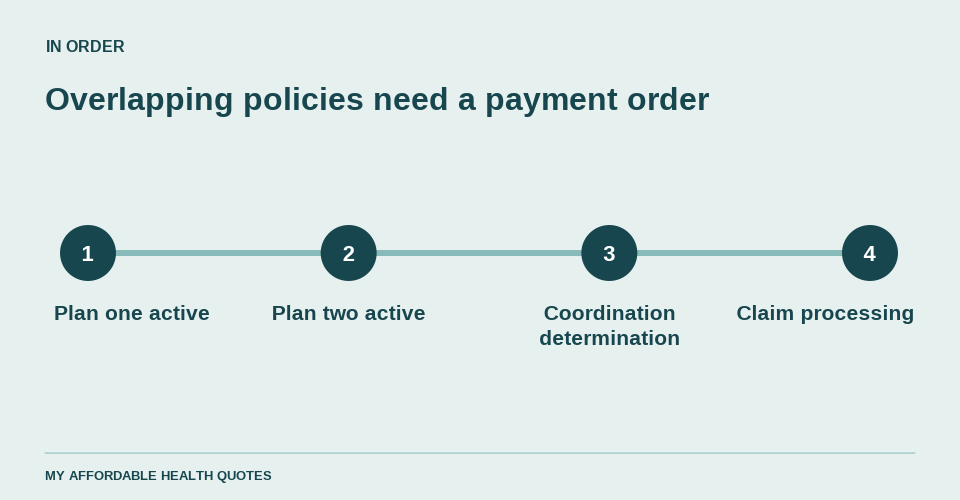
If you work for two staffing agencies or transition between them during a Mississippi assignment, health coverage may overlap. Tell both plans about the other coverage and ask how coordination of benefits applies before assuming you can choose which insurer pays a visit. Two active cards do not necessarily mean double benefits, and a second plan does not automatically eliminate deductibles or every remaining bill.
This guide focuses on overlapping agency medical coverage, whether intentional or accidental. The applicable payment order depends on the plans and circumstances, so it does not assign a universal primary insurer based on which job pays more, which card you prefer, or which agency contract began most recently. HealthCare.gov defines coordination of benefits as the process used to determine who pays first when more than one plan is responsible for a claim. Your plan documents supply the details.
First establish whether both policies are truly active
Collect each plan's effective date, termination date if known, member information, employer sponsor, and enrollment confirmation. A card from a former agency can remain in your wallet after coverage ends. A new payroll deduction can appear before you have received a new card. Confirm the actual dates with the administrators rather than using either physical cards or deductions as the sole test.
Ask whether the overlap applies to you alone or also to dependents. One agency election may include family coverage while the other is employee-only. A spouse or child's payment order can involve additional facts, so do not assume your own coordination answer automatically applies to every household member. Report accurate enrollment information for each person who is covered.
Also identify whether either item is something other than comprehensive medical insurance. A fixed-benefit policy, accident supplement, discount arrangement, or other product may operate differently from a second major medical plan. Read the product description and policy rather than treating every insurance deduction as equivalent. A supplementary benefit can have value, but it should not be mistaken for another comprehensive network and claims system.
Ask the plans to determine the order
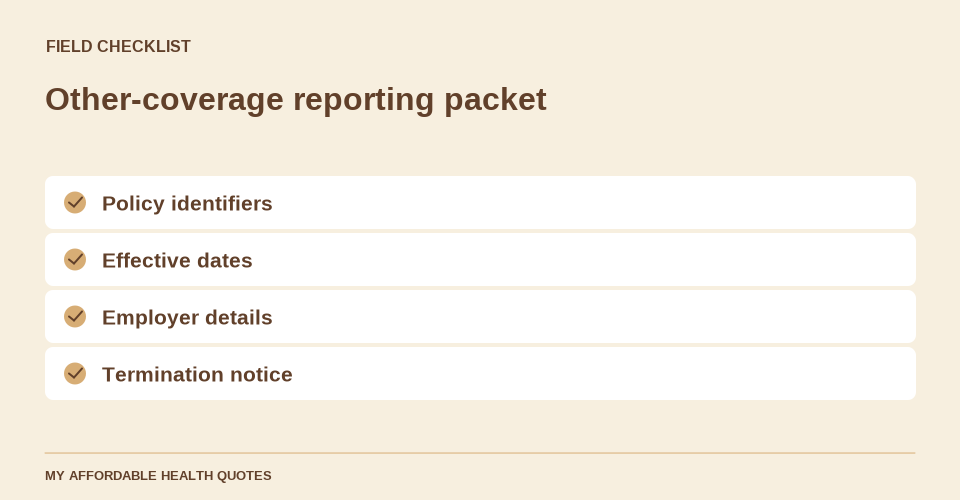
Contact each administrator through its established process for reporting other insurance. Provide the requested policy identifiers and dates. Ask for the coordination rules that apply to your situation and whether a form must be completed. If the two administrators give conflicting answers, request that the issue be reviewed before a planned expensive service. Keep a record of the information supplied and the response received.
Do not attempt to choose a primary plan by withholding the other card. The provider needs accurate information to submit claims correctly, and the insurers may ask about other coverage during processing. An omission can lead to delays or later adjustments. The better approach is to resolve the order openly and give the billing office both plans with the current determination.
Ask how the secondary plan calculates its responsibility. It may apply its own terms, exclusions, network rules, or allowable amounts. Avoid assuming that it simply pays whatever the first plan leaves behind. A general statement that benefits coordinate is not a personalized estimate. For an upcoming service, request an explanation using that service and the actual providers involved.
Compare the value of keeping both
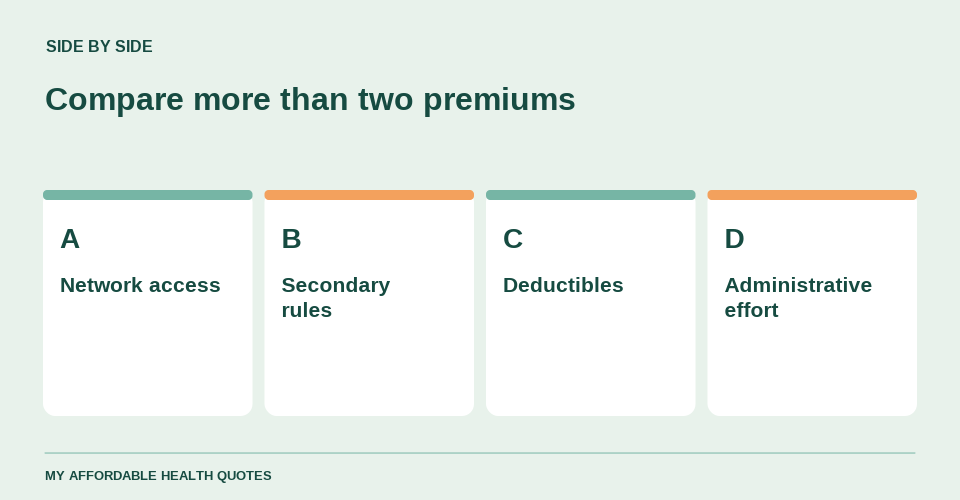
Begin with the combined premium you pay, including any employee contributions through both agencies. Then examine whether the second policy adds meaningful access or financial protection under its coordination terms. A plan with a useful specialist network may have value beyond a small difference in copays, but only if its rules support the intended use when another plan is primary. Verify that detail rather than assuming network advantages remain unchanged.
Read each Summary of Benefits and Coverage and the more detailed coordination provisions. The standard summary helps compare broad benefits, but it may not answer the entire dual-coverage question. Ask about deductibles, out-of-pocket accumulation, authorization, and filing requirements. Do not assume spending counted by one insurer is automatically credited in the same way by the other.
Include administrative effort in the decision. Two plans may mean two member portals, two sets of requests for other-coverage information, and additional billing follow-up. That burden does not make overlap inherently bad, but it is part of the practical cost. A clinician working long shifts may prefer a simpler arrangement if the additional coverage provides little verified benefit.
A worked overlapping-contract example
Consider a hypothetical imaging technologist, Andre, finishing an assignment with Agency North while beginning per-diem shifts through Agency South in Mississippi. North confirms medical coverage through the end of the month. South confirms coverage beginning earlier in that same month after Andre completes its enrollment process. Andre has a scheduled specialist visit during the overlapping period and receives two insurance cards.
Andre contacts both administrators, reports the overlap, and asks them to establish the appropriate payment order. He gives the specialist's billing office both records and the dates. The office initially has only the old policy, so Andre corrects the information before the visit. This does not guarantee the claim outcome, but it reduces the likelihood that the first submission is based on incomplete coverage information.
For a hypothetical financial comparison, suppose keeping the second election for an additional two months would cost Andre $90 per month, or $180. He asks what actual benefit it might provide under the coordination rules for expected care. If the answer is uncertain, he marks it uncertain instead of treating the second plan as $180 worth of guaranteed savings. He also investigates whether cancellation is permitted at the desired time and what future enrollment restrictions would apply.
Suppose one insurer later requests the other plan's explanation of benefits. Andre supplies it through the secure process and keeps the request deadline. He does not submit the same bill as though neither insurer has paid or ask for duplicate reimbursement. The objective is correct coordination, not collecting the full amount twice. If processing remains inconsistent, he requests a written explanation and follows the applicable review procedure.
Watch for authorization and network mismatches
A service can require approval or other steps under one or both plans. Ask each administrator what is required when it is primary or secondary, and make sure the provider knows the answer. Do not assume authorization from one insurer binds the other. If the planned service changes, the facility, clinician, or billing team may need to update the request rather than reuse an approval that no longer matches.
Likewise, a provider participating in one plan may not participate in the other. Ask how that affects the claim under the coordination rules. The phrase out-of-network can have different financial consequences across products. Obtain an explanation for the specific service, rather than adding two separate benefits summaries together and assuming the combination creates a broader unrestricted policy.
For prescriptions, tell the pharmacy about other coverage and ask how claims are coordinated. Do not switch between cards solely to obtain whichever immediate price appears lower without understanding the plan rules. If a cash option is considered, ask how it affects insurance processing and accumulation. The pharmacy can help identify the transaction issue, while the insurers determine their benefit responsibilities.
Cancel only after checking the consequences
If you decide that one policy is unnecessary, ask the employer or plan whether and when the election can be changed. Employer benefit elections can have restrictions, so a desire to save money is not itself proof that immediate cancellation is available. Obtain the effective date of any approved change and confirm that the remaining policy continues. Do not stop payroll deductions on your own and assume that is a valid cancellation method.
Think beyond the next paycheck. The agency whose plan you keep may have an assignment ending soon, a reduced-hours review, or a different eligibility rule for time off. Ask about those facts before leaving a policy that provides longer continuity. At the same time, do not keep expensive overlap indefinitely just because the paperwork is inconvenient. Make the decision with documented dates and a realistic view of the next work period.
If dependents are affected, confirm their remaining coverage individually. A cancellation that looks harmless for you could remove a child's only active policy if the second election did not include that child. Review the household list before submitting the change and retain the administrator's confirmation. Family enrollment details deserve the same attention as the payment-order question.
Reconcile claims after the overlap ends
Notify the continuing plan when the other coverage terminates and provide any required evidence. Otherwise, it may continue asking for a primary explanation of benefits from a plan that is no longer active. Give providers updated information for future service dates, while retaining the old records for claims from the overlap period. The correct insurer arrangement follows the date of care, not simply the date a bill arrives.
Review adjustments carefully. A plan may reprocess a claim after receiving complete coordination information. Compare the explanations of benefits and provider statements before paying an unexplained balance. If a denial remains, use the plan's claims and appeal instructions; the Department of Labor's guide explains the importance of written reasons and relevant documents for employer-plan claims. Keep formal deadlines visible during informal billing conversations.
For future overlapping work, make other-coverage reporting part of onboarding with each agency. Record exact dates, tell both administrators, and clarify the payment order before routine claims accumulate. When comparing health options for Mississippi clinical work, evaluate the verified function of a second plan rather than the appealing idea of having two cards. Accurate coordination is what turns overlapping coverage into a usable arrangement.