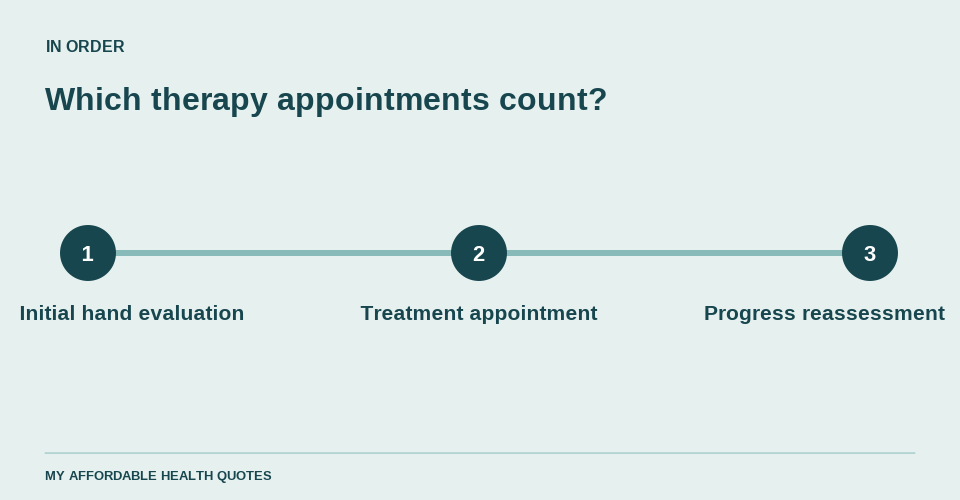
For a self-employed court reporter, a two-hour court appearance can generate several more hours of editing. A hand condition that affects both tasks can put a busy month into question. If a treating professional recommends hand therapy, the practical health insurance question is how an entire course of care would work. One attractive copay on a quote reveals little about an initial evaluation, the number of eligible visits, fabrication of a splint or the date the insurer expects another review. Start by asking exactly what the practice would submit.
Identify the therapist behind the directory entry
Hand therapy is an area of specialty practice. The clinician may bill as an occupational therapist or physical therapist. Ask the practice which professional would evaluate the patient, what discipline would appear on the claim, and the legal name and location under which it bills. A referring surgeon’s participation does not by itself establish the therapist’s status. A therapist may also work at a hospital-based clinic on some days and a separately billed community office on others. Ask for the specific location likely to offer the appointment times you can use.
Call the insurer with those details and the exact product name. Ask whether the relevant discipline is covered under outpatient rehabilitation, what referral requirements apply and whether the identified setting changes cost sharing. For a person who reports proceedings in different Maryland counties, a clinic near the courthouse may seem convenient until the schedule changes. Include one location the household could reliably reach during a quiet week at home. A directory that lists a specialty is a starting point. It does not confirm a suitable clinician is accepting patients or has opening times compatible with a court calendar.
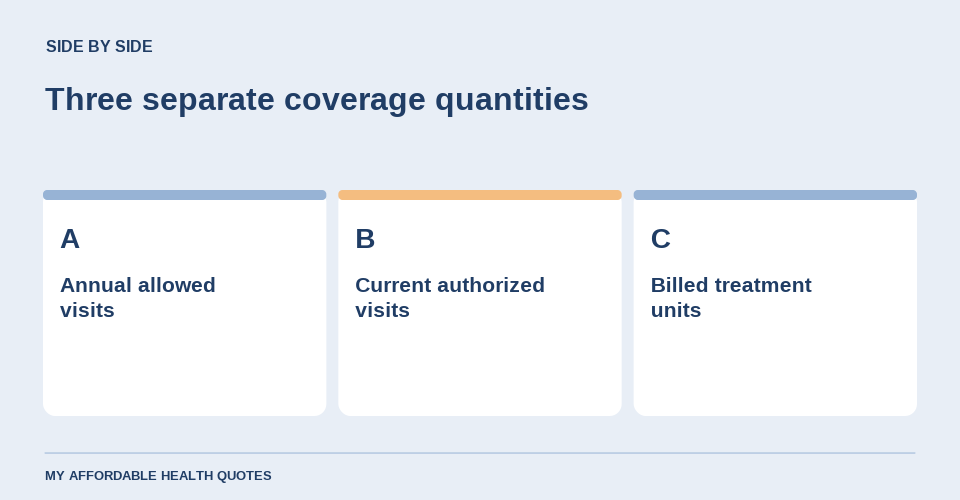
Find three different numbers
The first number is the policy benefit. Does the plan describe a visit allowance for the year, and if so, what counts against it? Determine whether physical and occupational therapy share one allowance, whether the rule applies to each person or the whole family, and what time period is used. Check for exceptions and whether the policy treats different conditions differently. Ask specifically about the evaluation. An insurer might handle that first appointment differently from a treatment visit, and guessing one way or the other can distort the remaining balance.
The second number concerns authorization. The first course a clinician requests may receive approval for a limited number of sessions or a period ending on a particular date. That approval window need not equal the plan’s entire annual benefit. The third number appears on an actual claim, where a professional may bill several units of treatment during one appointment. Ask how the insurer translates those units into visits under the contract. A progress note describing three activities does not establish that three visits were used. A calendar counting appointments does not establish how the carrier processed them.
Use an invented course of care to test the rule
Imagine an individual plan with a hypothetical twenty-visit shared outpatient therapy limit. Earlier in the year the patient used six physical therapy visits for a different problem. If all six count toward the same limit, fourteen remain before the hand evaluation. Suppose the plan counts that evaluation and the therapist obtains authorization for five subsequent treatment appointments. After the evaluation and all five, eight visits remain under the annual cap. The patient has used the current authorization, however, and another approval may be necessary before using the remaining eight. The example describes arithmetic, not a standard Maryland benefit.
Change just one fact. Perhaps the earlier therapy was furnished during the previous policy year, or it applied to a separate discipline-specific allowance. The available number would change, even with identical medical circumstances. A plan comparison should therefore identify its assumptions about the dates, the discipline and the meaning of one visit. Keep authorization expiration dates on the calendar as well. An unused approved session may no longer be available under that decision once the date passes. The practice can explain the process for requesting further review if the treating professional considers it appropriate.
Ask who pays for things you leave the office wearing
A hand therapist may recommend equipment or a custom orthosis as part of care. Ask the professional to identify the item, who furnishes it and whether fitting or later adjustments are bundled. The insurer may process an orthosis under a different benefit from a therapy appointment. If an outside supplier is involved, confirm the supplier’s participation and any documentation it needs. An estimate for an appointment alone may omit materials or fabrication, and a portal label for a piece of equipment may omit the clinical time spent fitting it.
Imagine a quote listing a forty-dollar therapy copayment. If a separate covered item is subject to a deductible, the full member responsibility for the day may exceed forty dollars. Conversely, a provider may include a routine adjustment in an earlier supplier arrangement. Ask which charge applies before budgeting for a series of separate bills. The clinician decides what care and equipment are appropriate. The insurer can clarify its benefits, and the practice can estimate its anticipated charges. None of those parties can conclusively speak for the other two without reviewing the same proposal.

Compare the whole episode against a work calendar
For a reporter, appointment timing can have a larger practical effect than a small premium difference. One practice may offer two early visits a week while another can offer occasional midday slots at short notice. Ask how it schedules an evaluation, how far in advance regular visits can be booked, and whether continuity with the same therapist is possible. The treating team will determine an appropriate plan of care. Enrollment is the time to find out whether the available providers can deliver the type of schedule a professional could reasonably follow without declining every long proceeding.
Run two financial examples. In a short course, include the premium difference, evaluation and a few treatment visits. In a longer course, include any additional authorization, the possible change after a deductible is reached and any estimate for a separate orthosis. Keep missed income out of the medical benefit column. A rescheduled transcript delivery may have no lost revenue, while declining a nontransferable hearing might. Add the actual expense of substitute coverage if another reporter would need to be hired. This produces a useful household budget without pretending an insurer reimburses the cost of a disrupted work calendar.
Track the first claim before the series gets long
After the evaluation, look at the explanation of benefits as soon as it is available. Match the professional, discipline, date, setting, member amount and any visit count reported. If the provider lists multiple billing units, ask the carrier how many visits were deducted. Look for any difference between the amount the office collected and what the insurer assigns to the member. An estimate or deposit may be reconciled later. A first claim can also reveal that the carrier used a different provider identifier or place of service than the parties expected.
When an error is suspected, ask the insurer whether it needs a corrected claim from the practice or a member appeal. A billing name entered incorrectly requires a different response from a clinical denial. Keep the decision letter, reference numbers and evidence of submission. Maryland’s Insurance Administration explains its appeals and grievances process, including how to seek help with certain medical necessity denials. Review the instructions that apply to the actual plan. A letter about exhaustion of a stated benefit is a different issue from a decision that additional treatment has not been shown medically necessary.
Prepare the next renewal from actual records
Maintain a short appointment list showing the approved period and the insurer’s confirmed count. Treat the clinician’s plan and the carrier’s accounting as separate records. A professional may recommend a reassessment after several weeks while the insurer wants different documentation before paying. If care continues across a renewal, ask whether the new plan requires its own evaluation, referral or authorization and whether the therapist still participates. An approval issued by the old carrier should never be assumed to transfer automatically simply because the same person will provide the next visit.
For a quote request, identify the preferred practice, the therapy discipline and which costs need comparison. Ask the advisor for the benefit summary and the relevant full policy provision, then read the limit and exceptions alongside the provider’s expected billing. Leave treatment frequency and clinical outcomes to the treating professional. The purchasing decision concerns something measurable: whether the plan gives the reporter a realistic path through evaluation, appropriate follow-up, equipment if needed and a clear method for disputing an incorrect count.
At the end of the course, ask the insurer for its reported remaining benefit and compare it with your own records. If they disagree, find the appointment that caused the difference while the clinic can still retrieve the relevant documentation easily. That small reconciliation can matter months later if a new episode arises. It also gives the reporter a reliable starting point when comparing the next year’s coverage with the actual cost of keeping work and rehabilitation appointments on the same calendar. Keep the last explanation in the same folder as the original authorization and the equipment receipt. Together those documents show which part of the total expense came from visits and which came from a separately purchased item.
Sources and further reading
- HealthCare.gov, summary of benefits and coverage
- Maryland Insurance Administration, appeals and grievances