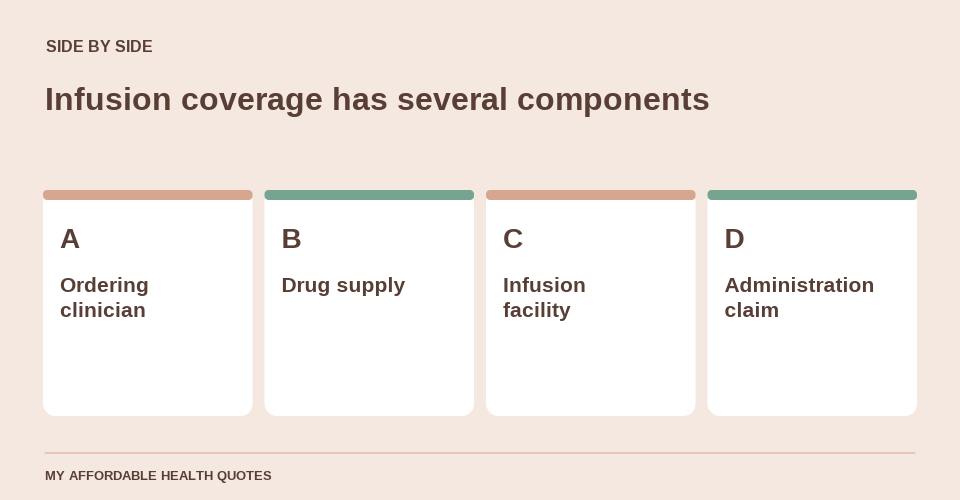
If you receive recurring specialty infusions and are considering a Louisiana travel assignment, verify the entire treatment pathway before departure. A covered drug and an in-network specialist do not by themselves establish that a particular infusion center, drug supplier, and administration service will be covered together. Coordinate with your treating clinician, the proposed local facility, and the health plan using the exact product and treatment details.
The decision is usually whether treatment can continue safely near the assignment, whether scheduled trips home are practical, or whether the assignment timeline needs reconsideration. This article is about insurance and logistics, not changing treatment. Your clinician should determine appropriate timing and medical alternatives. Do not stretch an interval, skip a dose, or change the route of treatment merely because a coverage representative has not finished reviewing paperwork.
Describe the treatment pathway without oversharing
Ask the current treatment team what information a receiving practice needs to evaluate a transfer of care. That may include an order, relevant records, recent testing, and contact information for clinical questions. Use the practices' secure channels rather than sending a full medical history to a recruiter. An agency generally needs to know your scheduling requirement, not every clinical detail behind it.
For the insurance discussion, identify the exact medication, how it is administered, where it is normally obtained, and the expected service setting. Ask whether the drug falls under the medical benefit, pharmacy benefit, or another specific arrangement in your plan. The answer determines which department and documents are relevant. Do not rely on a retail formulary search alone when the medicine is administered in a facility and billed through a medical claim.
Record the plan name, network, group identifier, and coverage dates. If you will change agency coverage when the assignment starts, perform the review under the new plan rather than assuming approval under the old plan will carry over. A prior authorization is associated with particular circumstances and does not automatically become portable because the same clinician recommends the same treatment. Ask what must be submitted again and who owns that task.
Verify the facility and the service separately
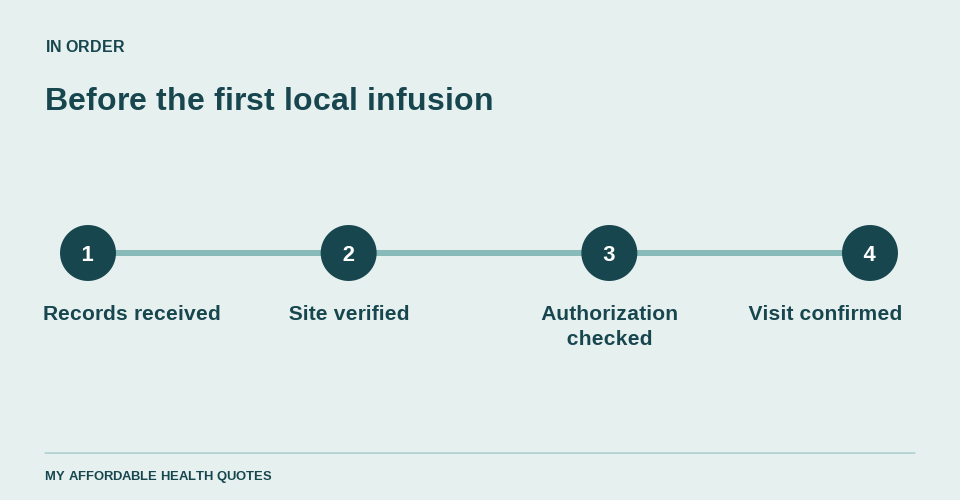
Search for an appropriate infusion site near your Louisiana housing, then confirm participation with the insurer and the site's billing team. Use the actual street address and billing entity. A hospital system may operate several outpatient locations, and a general statement that the system accepts the insurer is not sufficiently precise. Ask whether the proposed visit will be treated as hospital outpatient care, an office service, home infusion, or another setting under the plan.
Next, ask whether the plan has a site-of-care requirement or a designated supplier for the medication. Frame this as a question, not as a rule you assume exists. The facility can explain what it can accommodate, while the insurer can explain the plan's requirements. If their answers conflict, request a joint clarification before an appointment is treated as financially settled. A scheduled chair time is not proof that the benefit questions are complete.
HealthCare.gov recommends checking providers through the insurer's directory and contacting both the plan and provider. Its prescription guidance also explains that covered medications, exceptions, and pharmacy access require plan-specific review. For an infusion, combine those checks rather than choosing only one. Keep each component visible: clinician, facility, drug, administration, and any related laboratory work.
Create a transfer calendar with enough working time
List the last planned treatment at home, the first expected treatment during the assignment, and the dates your new coverage begins and ends. Ask the receiving practice how long its intake and clinical review normally take, without treating that estimate as a guarantee. Add any testing or consultation the clinician requires before accepting the transfer. The clinical process may take longer than the insurance verification process, or the reverse.
Then assign responsibility for each task. The current practice may send records, the receiving clinician may submit an order, the facility may verify benefits, and you may provide updated insurance details. If everyone assumes someone else is requesting authorization, a complete set of records can still sit unused. A small tracker with an owner, a requested date, and a confirmation date makes the handoff easier to manage while you are also arranging housing and orientation.
Ask how you will be notified if the insurer requests additional information or denies a request. Confirm whether the facility will contact you before treatment if authorization remains unresolved. Avoid an arrangement in which silence is interpreted as approval. If the appointment is approaching and a decision is outstanding, involve the treating clinician promptly so that medical urgency and appropriate next steps can be communicated through the correct process.
A worked assignment example
Consider a hypothetical nurse, Priya, who receives a recurring infusion and accepts a twelve-week assignment in Baton Rouge. Her treatment schedule means two visits are likely to fall during the contract. Her home plan is active throughout the assignment, but the directory search shows several different facility arrangements. Priya first asks her clinician whether local treatment is medically appropriate and what records a receiving practice would need.
She obtains two possible local sites. Site A is closer to her housing, but its billing team cannot yet confirm the required drug supply arrangement. Site B is farther away and confirms that it can submit the necessary review to the insurer. Priya does not interpret the shorter drive as the better overall option until the drug, service setting, and benefit questions are answered. She also checks appointment availability around her work schedule.
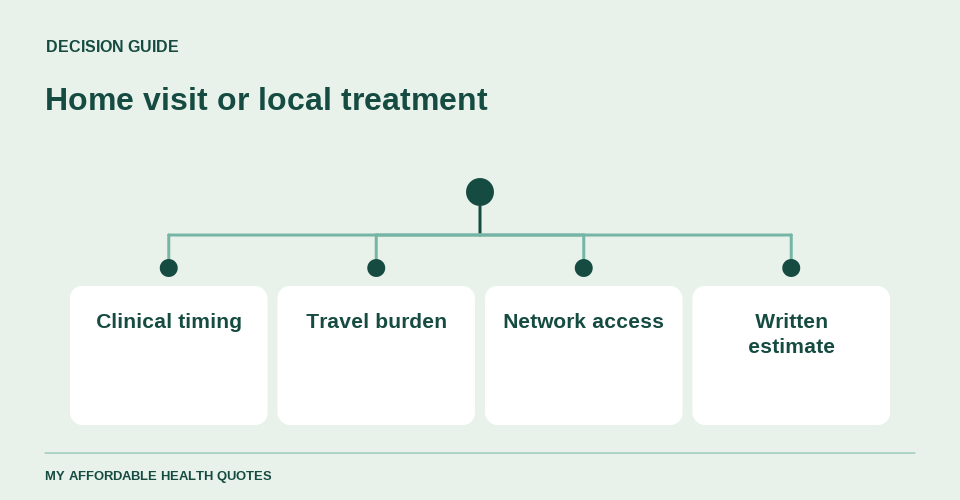
For a purely hypothetical travel calculation, suppose a trip home would cost $260 in transportation and require one unpaid shift, while local transportation would cost $35. Those figures are planning assumptions, not prices for treatment or an estimate of insurance responsibility. Priya adds the actual written medical cost estimates when available and considers the physical burden of travel. She does not reduce the decision to transportation dollars if her clinician identifies a continuity concern.
If the local request is denied, Priya asks for the specific reason and the available appeal procedure. A denial based on missing records may require a different response from a site-of-care issue or a medical-necessity determination. Her clinician can address clinical evidence, while she supplies correct plan and assignment information. The Louisiana Department of Insurance explains that consumers can seek information about internal and external appeals, while the department itself does not decide medical necessity.
Ask for an estimate that identifies its assumptions
A useful estimate names the service, setting, network status, remaining deductible if known, and any coinsurance or copay used in the calculation. Ask whether the drug and administration are estimated separately and whether associated laboratory services are included. If the facility cannot provide an exact figure, ask which variables remain unknown. An honest range with stated assumptions is more useful than an unexplained promise that insurance should cover everything.
Check whether the deductible or out-of-pocket accumulation will reset during the assignment. A contract spanning a plan-year boundary can change the expected patient share even if the drug and facility remain the same. If you switch employers or plans, ask whether any accumulated spending transfers; do not assume it does. Keep the financial estimate tied to the service date and plan that will actually apply.
Also ask what happens if the assignment ends early. Will you remain eligible for the policy that authorized the upcoming treatment? Can the appointment proceed under a continuation option or replacement plan, and what would need to be reverified? The receiving practice should have your updated information before the visit. A prior approval under coverage that has ended is not a substitute for active benefits on the treatment date.
Preserve continuity without promising a transfer right
Some circumstances may involve transition-of-care or continuity protections, but do not assume that every voluntary relocation creates an automatic right to use an out-of-network infusion site. Ask the plan whether a relevant process exists and what criteria apply. Explain the current treatment relationship and the proposed dates accurately. Request a written determination rather than treating a general customer-service statement as authorization.
If the available local network cannot provide the service within a clinically appropriate timeframe, ask the insurer how to request assistance locating care. Document the facilities contacted and their responses. Your clinician can help explain urgency and treatment requirements. This creates a specific access problem for the plan to address instead of a broad complaint that the network is inconvenient.
Close the loop after the first local visit
Review the first explanation of benefits against the estimate and the coverage confirmations. An explanation of benefits is not itself a provider bill, but discrepancies can reveal an incorrect network classification, missing authorization reference, or unexpected separate claim. Contact the plan and facility with the relevant identifiers. Keep the clinical team informed if an administrative problem could affect the next scheduled treatment.
Before the assignment ends, plan the transfer back with the same care used for the initial move. Confirm records, future appointments, and any coverage changes. The practical goal is a treatment plan that remains clinically appropriate and administratively workable through both transitions. If comparing health plans for future travel, bring the entire infusion pathway to the conversation; a carrier name or a broad promise of nationwide access cannot answer this specialized coverage question.