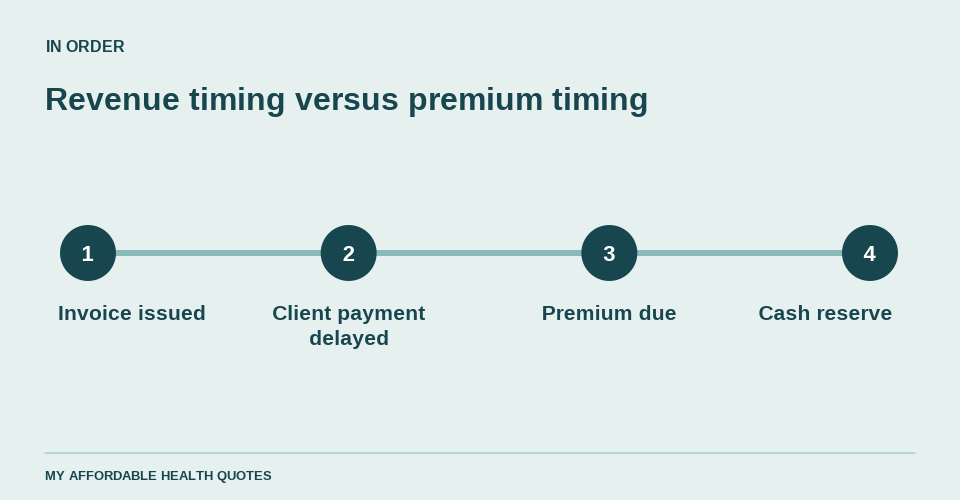
A profitable business can still have a late-paying client, and a late receivable does not move the owner's health-insurance due date. If your individual premium depends on one customer payment arriving on time, the coverage budget has a timing problem even when the annual income projection looks healthy. Build the payment process around cash that is available, not an invoice you expect to collect.
This guide addresses a specific problem for solo owners and freelancers: protecting an individual policy when customer payments are uneven. It does not assume that every late invoice requires changing plans. Often the first improvement is a clearer cash calendar, a protected payment reserve and a prompt response to any failed premium transaction.
Put the premium on a cash calendar
Write down the insurer's due date, the payment processing date and the account used. Place expected client receipts on the same calendar, distinguishing confirmed payments from estimates. A customer promising to pay next Friday is different from money already available in the account.
Include other obligations that use the same cash, such as taxes, rent, payroll for any staff and household expenses. The purpose is to reveal collisions. If a large business payment and the insurance premium draw on the same small balance, the calendar should show that before either transaction fails.
The Consumer Financial Protection Bureau's cash-flow tools focus on the timing of income and expenses, not just monthly totals. That distinction is useful for an owner whose revenue arrives in irregular batches.
Separate the premium reserve from the medical reserve
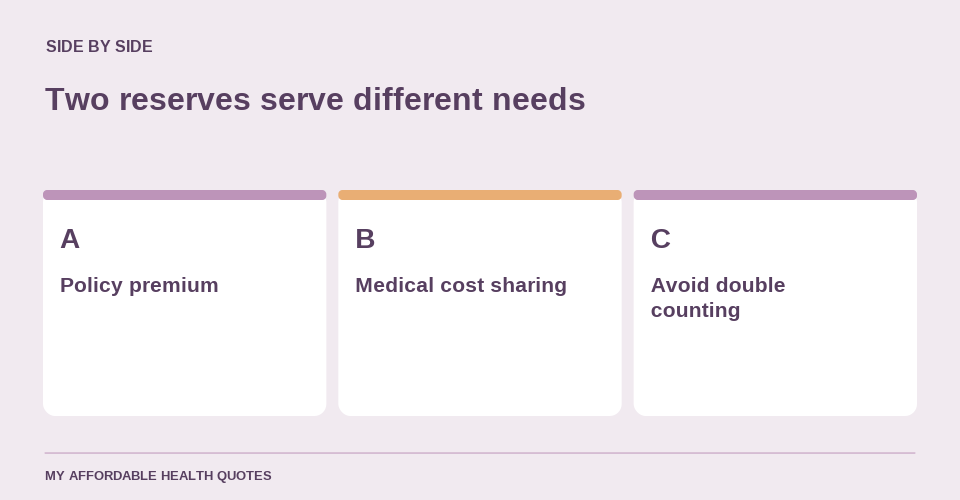
A premium reserve keeps the policy paid. A medical reserve helps with deductibles, copays and other care costs. The same dollars cannot fully serve both purposes at the same time. Label the amounts separately in your budget even if they remain in the same financial institution.
Choose a reserve target based on your own payment volatility and available resources. There is no universal number of months that fits every business. Review how late important clients have actually paid and how quickly you could replace the missing cash without disrupting essential obligations.
Do not create the appearance of a reserve by counting unpaid invoices as cash. Receivables may be valuable business assets, but they cannot make an automatic premium payment until collected. Your payment plan should distinguish expected revenue from funds available today.
A simple timing example
Consider a hypothetical freelance editor whose individual premium is $480 per month. A large client normally pays $4,000 near the end of the month, just before the premium is withdrawn. The editor's annual budget comfortably includes the insurance cost, but one delayed client payment leaves only $300 available on the withdrawal date.
The issue is not that the premium suddenly became more expensive. It is that the cash plan depended on a narrow sequence. A reserve funded from earlier receipts could absorb the delay, while a calendar review could identify the shortfall before the automatic payment failed.
If the editor chooses an illustrative reserve target of two monthly premiums, the arithmetic is $960. That is a planning example, not a recommendation that two months is sufficient for everyone. The appropriate target depends on the household's other resources, payment pattern and competing needs.
After the client finally pays, the editor replenishes the reserve before treating the full receipt as spendable income. Without that replenishment step, the next late invoice creates the same problem again.
Make automatic payment observable
Automatic payment can reduce forgotten bills, but it is not a guarantee of successful payment. A changed bank account, expired card, insufficient balance or processing issue can interrupt it. Set a reminder to verify that the insurer received the payment rather than assuming enrollment in autopay completes the task forever.
Keep contact information current with the insurer so payment notices reach you. Check the billing portal or confirmation through the insurer's official channel. Do not rely solely on a bank withdrawal if the insurer's account still shows an unresolved balance.
If you change payment methods, ask when the new instruction becomes effective and whether the next bill needs manual action. Avoid making duplicate payments without understanding how the insurer will apply them. Save the confirmation of the change and the next successful transaction.
Know the actual consequences of a missed premium
HealthCare.gov explains that missed premiums can end coverage and that grace-period rules depend on circumstances. A commonly discussed three-month period applies only when specified Marketplace conditions are met. It is not a universal free extension for every policy or every first payment.
Ask your insurer for the applicable rules, amount owed and deadline if a payment is missed. Do not assume that paying the newest month automatically clears an older balance. Confirm how payments are applied and what must be paid to keep coverage.
HealthCare.gov also explains that losing Marketplace coverage for nonpayment does not by itself create a Special Enrollment Period. That makes deliberate nonpayment a poor substitute for reviewing affordability through the proper process. Other enrollment opportunities require their own eligibility review.
Respond to a failed payment the same day you discover it
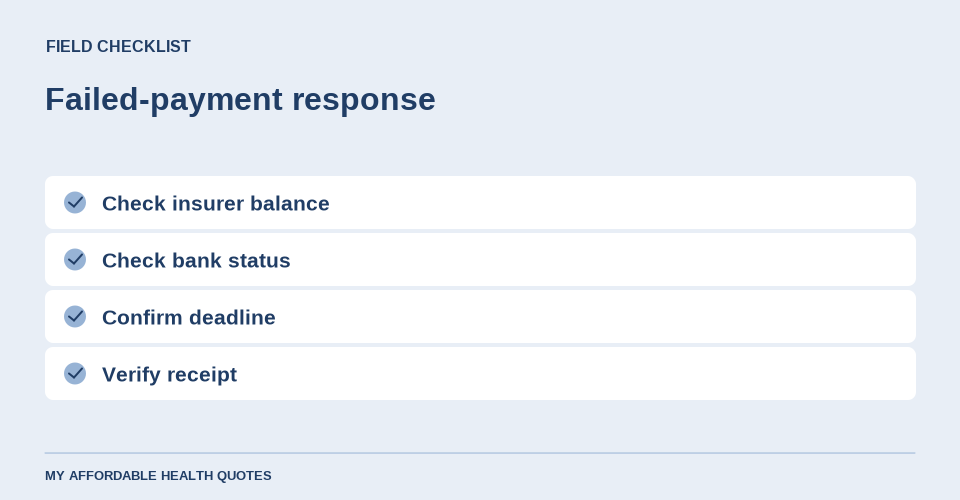
Contact the insurer using the official number or portal. Ask whether the payment failed, whether coverage is active, what balance is due and what action is required. Record the date, representative or reference number and the instructions received.
Check the bank or card account separately to understand the cause. A transaction may be pending, reversed or rejected. Resolving the banking issue does not necessarily update the insurer automatically, so confirm both sides.
If you have already received care during a period with a premium problem, ask the insurer how claims are being handled. Do not assume the answer from an old article or another person's policy. Keep the response with the payment records and seek clarification if the notice is unclear.
Distinguish a temporary delay from a lasting income change
A customer paying two weeks late may create a cash-flow gap without changing the full-year income estimate. Losing a major contract can change both cash flow and expected annual income. These situations call for different responses.
If the supported household income estimate changes and you use Marketplace coverage, review the official update process. HealthCare.gov directs consumers to report relevant income and household changes. Do not lower an income estimate simply because today's bank balance is low if the annual forecast has not actually changed.
Ask your accountant about the appropriate income treatment when invoices remain unpaid or business expectations change. The accounting method and circumstances can matter. Use a defensible estimate rather than converting a short-term cash concern into an unsupported application change.
Review plan affordability at a legitimate decision point
If premiums are repeatedly difficult to pay, revisit the coverage budget before the next enrollment opportunity. Compare the premium with expected medical spending and the financial protection provided. A lower monthly payment may shift costs to care, so the comparison should include more than the bill due today.
Check whether the alternative is comprehensive insurance and whether your providers and prescriptions are covered. A discount program or fixed-benefit product should not be treated as an interchangeable replacement solely because it is easier to fund during a slow month.
Confirm when a change is permitted and when the new policy can begin. Do not end the current arrangement first and assume that another policy can be activated immediately. The official enrollment result and insurer confirmation determine the available path.
Improve the business collection process separately
Review whether invoices are sent promptly, payment terms are clear and overdue accounts receive timely follow-up. A predictable billing process can reduce the frequency of cash surprises, although it cannot guarantee that every customer pays on time.
For future contracts, discuss appropriate deposits, milestones or payment schedules with your business adviser. Keep those decisions separate from the insurer's rules. The insurer is not a party to the customer contract and does not have to wait for the customer to pay.
Track the concentration of receipts. If one client funds most recurring household costs, a delay from that client deserves an earlier warning. Use the information to plan reserves and spending rather than assuming a long relationship makes payment timing certain.
Protect the first premium when changing policies
A new policy may require an initial payment before coverage starts. HealthCare.gov instructs consumers to follow the insurer's first-premium requirements and verify enrollment. Do not spend the amount set aside for that payment while waiting for a card to arrive.
Record the first-payment deadline separately from the normal monthly billing schedule. Ask the insurer how to confirm receipt and the effective date. A selected plan displayed in an application does not remove the need to complete the payment step.
When replacing a policy, coordinate the final old payment and first new payment carefully. The transition month may require a different cash sequence from an ordinary month. Budget from the confirmed instructions rather than assuming one automatic withdrawal simply replaces another.
Use a brief monthly check
Once a month, verify the next due date, available reserve, successful prior payment and any change in expected household income. This review can be short if the records are organized. Its value is catching a problem before a missed notice becomes a coverage interruption.
If the review repeatedly shows a shortfall, address the structural budget problem with appropriate financial and insurance advice. A grace period is an emergency rule, not a business financing strategy.
Request a comparison of available health plans if your current coverage no longer fits a sustainable budget. Bring the premium you can consistently fund, your care needs and the relevant enrollment dates. A plan is more useful when the payment process can support it through an ordinary late-client month.
Sources and further reading
- HealthCare.gov: Premium payments and grace periods
- HealthCare.gov: First premium and enrollment
- HealthCare.gov: Reporting changes
- CFPB: Cash-flow planning toolkit