An employee who declines the company health plan still needs an accurate offer record. For a small-business owner, the task is to document the choice, follow the insurer's participation process and give the employee reliable information about the offer. The task is not to pressure the person to enroll or collect a detailed account of their household's medical and financial circumstances.
A declined offer can affect the group's application and may matter to the employee's individual coverage decisions. It also differs from an unanswered enrollment request. A consistent waiver process helps the business distinguish those situations and avoid using incomplete records when requesting quotes, setting payroll deductions or responding to later questions.
Start with a complete offer
Before asking for a waiver, provide the actual plan information, employee contribution, eligibility date and election deadline. An employee cannot make an informed decision if the company supplies only a monthly price or a promise that the benefits are good.
Make the benefit summary and provider-search information available through the approved channels. Explain how to ask confidential questions of the insurer or administrator. The owner does not need to evaluate the employee's prescriptions or treatment needs to explain the available offer.
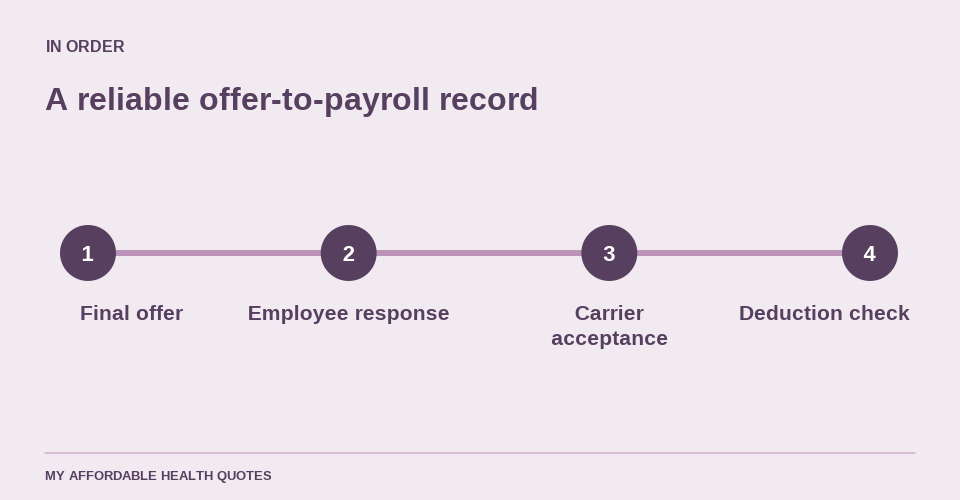
Retain the version of the offer used for the election. If pricing or plan terms change before enrollment, ask the administrator whether updated materials or a new election are needed. A waiver tied to an earlier proposal may not establish a response to the final arrangement.
Distinguish waiver, pending choice and missing response
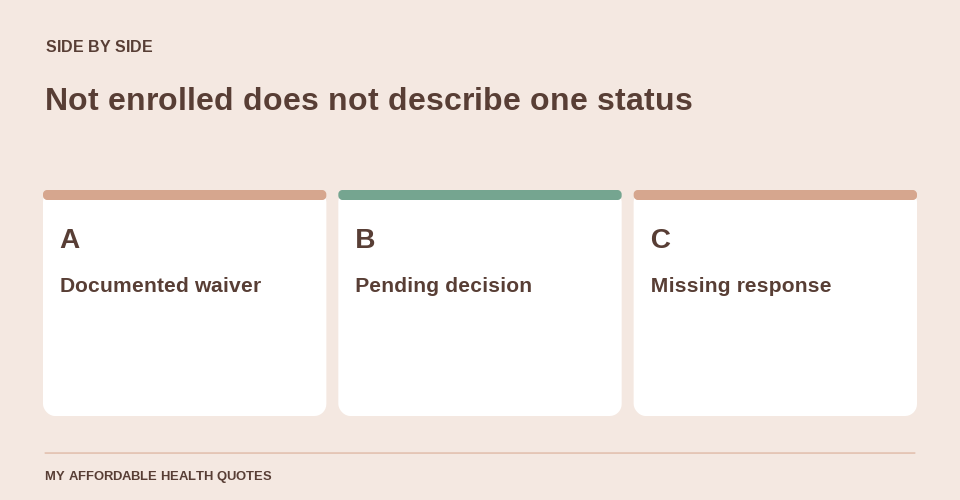
A waiver is an affirmative decision not to enroll, documented through the required process. A pending choice means the employee has not completed the decision. A missing response may mean the materials were not received or the instructions were unclear. Do not code all three as declined coverage.
Use a roster with separate statuses and follow-up dates. Assign someone to resolve incomplete records before the insurer's deadline. The follow-up should explain the action required without implying that enrollment is mandatory when it is a voluntary choice.
If an employee cannot access the enrollment system, provide an approved alternative or technical help. A technology problem should not be treated as a waiver. Keep evidence of the final response rather than assuming that an unanswered automated reminder proves intent.
Use the insurer's waiver requirements
Ask the insurer or administrator what information is required for a valid waiver and how other coverage is documented. Do not invent a form that collects more personal information than needed. If the carrier has a specific process, follow it and retain the accepted record.
Participation requirements can depend on the arrangement. HealthCare.gov's SHOP eligibility guidance explains that workers with other coverage are treated differently from certain rejections when calculating participation. That does not mean the owner should apply a remembered formula to every insurer.
Request the actual participation calculation for the proposed group. Ask which employees are included, which waivers count in a particular way and what evidence supports the result. Keep the carrier's answer with the census so a later staffing change can be evaluated using the same documented method.
A hypothetical census with three different nonenrollees
A small business offers coverage to ten employees. Seven enroll. One supplies an accepted waiver showing other coverage, one is still comparing household options and one never received the enrollment message because an email address was wrong.
The owner initially reports three declines to the broker. The administrator separates the records, helps deliver the missing materials and asks the undecided employee to complete the election process by the applicable deadline. The carrier then evaluates the accurate census rather than a rough count.
The example does not assume the group qualifies or fails participation. It shows why the status behind each number matters. A corrected contact address and a completed waiver can change the quality of the information without changing anyone's right to choose.
After enrollment, payroll uses the accepted elections, not the preliminary census. The two people who did not enroll should not receive deductions simply because their names appeared in the quote request. The records used for pricing and the records used for payroll have different purposes.
Explain Marketplace implications without making a determination
An employee may decline because they already have an individual Marketplace plan. Give them the employer-offer details needed to evaluate that coverage. HealthCare.gov explains that an affordable offer meeting applicable standards can affect Marketplace assistance even if declined.
Do not tell the employee that declining automatically preserves a subsidy, and do not assume the entire household has the same eligibility result. Direct the person to the Marketplace or qualified enrollment assistance with the accurate contribution and coverage information.
The business should answer factual questions about its offer, such as who is eligible and what the employee must pay. The employee's household income, tax filing situation and final assistance determination belong in the appropriate personal application process, not a manager's informal estimate.
Keep reasons limited and respectful
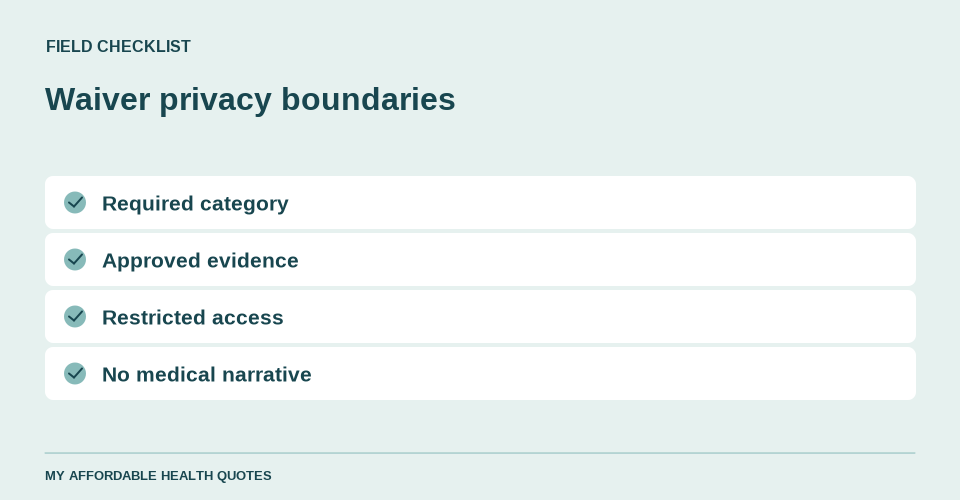
If the insurer requires a reason category, use the approved categories and collect only the necessary information. “Covered through another source” may be relevant, while a detailed explanation of a family member's diagnosis usually is not part of an ordinary employer waiver discussion.
A worker may prefer not to discuss why a spouse's plan is more suitable. Respect that boundary. The employer's operational need is a complete election or waiver and any required supporting information, not a persuasive argument about the employee's private life.
Store waiver records with controlled access. A supervisor may need to know that an election is complete without seeing the supporting coverage document. Define who can retrieve the record if the insurer or authorized adviser asks for it later.
Do not promise cash instead without review
An owner may want to reward employees who decline by giving them the amount the company would otherwise spend. That is a separate compensation and benefits-design question. Do not assume an informal opt-out payment has no effect on plan, tax or affordability analysis.
Ask the accountant and benefits adviser to review any proposed payment before it is offered. Provide the actual terms, who would qualify and how it would be administered. The final arrangement should be documented and communicated consistently.
Avoid bargaining individually with workers to reach a participation target. The company should use the insurer's permitted process and qualified advice rather than pressuring someone to abandon other coverage or promising an unreviewed cash alternative.
Tell employees how future enrollment works
A waiver today does not necessarily mean the employee can join the plan whenever they change their mind. Provide the plan's enrollment rules and a contact for reporting relevant life changes. Do not replace those rules with a blanket statement that the door is always open.
The Department of Labor describes special-enrollment opportunities after certain losses of other coverage. The employee should contact the administrator promptly when circumstances change so the applicable event, deadline and documentation can be reviewed.
Keep the original waiver and any later enrollment request as separate dated records. Do not overwrite the earlier election in a way that makes it appear the employee was enrolled all along. A clear history helps explain payroll and coverage dates.
Use offer records for the right reporting purpose
Some employers have federal coverage-reporting responsibilities. The IRS explains reporting by applicable large employers, including information about offers. Ask the accountant or reporting provider which records your business must retain and submit.
Even where that specific reporting requirement does not apply, an accurate offer file can resolve ordinary employee questions. It should show what was offered, when the employee became eligible and how they responded. Avoid assuming that a zero payroll deduction proves there was no offer.
Do not use a waiver as a broad release of every benefit-related right. Have the administrator or legal adviser review form language. The purpose is to document the election through the approved process, not obtain an improvised disclaimer from an employee.
Recheck the census when the workforce changes
A new hire, departure or changed election can affect the group information used by the insurer. Update the roster through the normal process and ask whether the participation calculation needs review. Do not wait until renewal to disclose a material change the insurer requires you to report sooner.
Keep quote versions separate from the final enrolled roster. If the company shops for another plan later, provide current statuses and the insurer-required waiver information. A copied spreadsheet from last year may contain people who have left or whose other coverage has changed.
At renewal, give employees the new offer rather than assuming the old waiver answers every future question. Follow the administrator's instructions about renewed elections and documentation. A person who declined a prior plan may evaluate a changed offer differently.
Close the process with a payroll check
After enrollment is finalized, confirm that only the approved deductions appear in payroll and that waived employees are not charged. If an error occurred, coordinate the correction with payroll and the administrator, explain it to the employee and retain the calculation.
Check the insurer roster as well. A waiver in the employer's file does not prove the insurer removed an accidental enrollment. Resolve the discrepancy through the approved channel and verify the result on the relevant records.
Ask whether the employee communication was clear enough. Repeated confusion about deadlines, plan names or contribution amounts suggests the offer process needs improvement. Better instructions can reduce incomplete elections without pushing anyone toward a particular personal choice.
Request a coverage review if participation or affordability concerns suggest the current offer needs reconsideration. Bring an accurate census with completed elections and waivers. A good small-business benefits process respects employees' choices while giving the insurer, payroll team and owner records they can actually rely on.
Sources and further reading
- HealthCare.gov: SHOP participation and eligibility
- HealthCare.gov: Employer coverage offers
- DOL: Coverage after job loss
- IRS: Applicable large employer reporting