
A plan that lists a therapy copay has not yet answered how much therapy it covers. For a Kentucky household comparing individual health insurance, the critical details may be the number of covered visits, the counting period, whether disciplines share a limit, and whether additional authorization is required. Those details matter most when more than one kind of therapy is part of the care plan.
Begin with the clinician's recommended services rather than a generic insurance category. Physical therapy, occupational therapy, and speech-language services can address different needs and follow different schedules. Your coverage review should identify how the policy treats the actual services, without changing the clinical plan simply to fit an assumed benefit.
Find the limit and its unit
Search the contract for rehabilitation, habilitation, physical therapy, occupational therapy, speech therapy, outpatient therapy, visits, days, and benefit period. Read both the benefit section and limitations. A number without its unit is incomplete: visits, treatment days, sessions, and billed units can mean different things in administration.
Ask the insurer to explain what counts when two disciplines are provided on the same day. Does that use one day, two visits, or another measure under this policy? Do not infer the answer from the clinic's scheduling calendar. Ask for the written provision and a concrete example using the services you expect.
Also ask whether an initial evaluation counts toward the limit. If reevaluations or separate assessments are anticipated, list those too. A family can budget a course of treatment incorrectly if it assumes the entire allowance is available for follow-up sessions while the plan counts evaluation services within the same total.
Determine whether benefits are combined
A policy may describe separate categories or a combined allowance. Request a clear answer about which services share the limit, if any. Include therapies received at different clinics, because changing providers does not necessarily create a new benefit allowance. The relevant unit may be the insured member's benefit, not the clinic's own record.
Ask how habilitative and rehabilitative services are categorized under the contract and applicable requirements. These terms describe different treatment purposes, and the classification should reflect the actual care. Do not ask a provider to relabel a service simply to avoid a limit. If the classification is unclear, have the provider and insurer resolve it using the treatment documentation.
Insurer clinical guidance illustrates that therapy benefit limits and medical-necessity criteria can be separate questions. A service may be clinically appropriate while another contractual condition still needs review. Conversely, a remaining visit allowance does not automatically approve every proposed session. Verify both the benefit and the clinical-review process for the exact plan.
Define the counting period
Ask when the allowance starts and resets. Is it tied to a calendar year, policy year, benefit period, condition, or another definition? Locate that definition in the contract. If you are joining midyear, ask whether the allowance is prorated or otherwise affected, rather than assuming a full annual total is immediately available.
If you renew with the same insurer but select a different policy, ask how prior utilization is handled. If you change insurers, ask the new plan about its own rules and documentation. Do not assume that a new identification card either resets every counter or carries every authorization forward; those are separate administrative questions.
Keep the intended coverage date in every comparison. A limit shown in an old summary may not reflect the new plan year. When therapy is expected to continue across a renewal, request the next year's benefit language before relying on the current year's remaining visits.
Make a treatment calendar for insurance review
Ask the treating professionals for their anticipated frequency and duration, recognizing that clinical needs may change. Use that schedule to create a planning calendar. Mark evaluations, recurring visits, and likely review points. You are not predicting the final course of care; you are testing whether the proposed policy can support the expected pattern.
Consider a hypothetical child who receives occupational therapy and speech therapy at separate practices. Each practice sees only its own appointments. If the insurance policy combines certain services, the family needs a consolidated count. Otherwise both offices may believe there are visits remaining because neither sees the other office's claims.
In that example, the practical solution is a shared record of service dates and insurer-processed visits, plus confirmation of the actual counting rule. It is not to cancel therapy based on a guessed limit. The clinicians should guide care while the insurer explains the available benefit and any review or exception process.
Distinguish approved visits from benefit visits
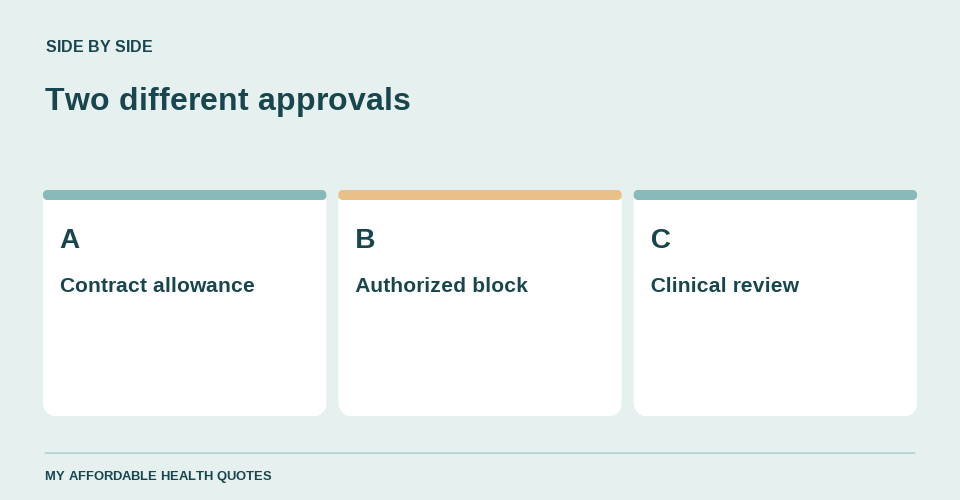
An authorization may approve a smaller block of sessions than the policy's maximum allowance. Ask when the provider must submit progress information for the next block. A plan's benefit maximum is not necessarily the number approved in one authorization, and an authorization is not necessarily permission to exceed a contractual maximum.
Record the approval dates, services, provider, and number of sessions. Ask whether changing therapists or locations requires an update. If an appointment is rescheduled beyond the approved period, the office should check whether the authorization remains valid. These details are easier to resolve before the visit than after a claim rejection.
Ask who tracks the authorization count and how the office alerts you when another request is needed. A clinic's internal counter and the insurer's processed-claim counter may temporarily differ. Establish a process for reconciling them rather than treating either as automatically definitive without checking pending claims.
Compare setting and provider requirements
Therapy may be delivered in a private practice, hospital outpatient department, home, or another setting. Ask how the policy handles the proposed setting and whether different limits or cost sharing apply. Do not assume that the same therapist produces the same insurance result in every location.
Verify the individual clinician, practice, and billing entity under the exact network. If a facility bills separately, request a complete estimate. Ask whether the plan requires a referral or other documentation. The purpose is to identify administrative conditions that could prevent a covered therapy benefit from being used as expected.
If the directory has few available providers, document your attempts to obtain appointments and ask the insurer about access assistance or an applicable exception process. A listed provider who is not accepting patients does not solve the practical access problem. Obtain a specific next step rather than accepting a generic instruction to search again.
Understand the financial projection
Multiply a copay by a planned number of visits only after confirming that the copay applies to those services and that the visits are covered. Some arrangements may involve deductible or percentage-based costs instead. Ask how separate disciplines and same-day services are charged under the policy.
Keep covered cost sharing separate from potentially uncovered visits. If a limit might be reached, ask what process applies before assuming either continued payment or a complete loss of coverage. Obtain the provider's self-pay terms for planning only if relevant, and do not treat a cash quote as a substitute for checking an available appeal or exception.
Include the timing of claims in your worksheet. A backlog can make the insurer's displayed count look lower than actual use. Save appointment records and compare them with explanations of benefits. This is especially helpful when a claim is corrected, reversed, or resubmitted and the visit counter does not appear to match.
Respond to a limit-related denial precisely
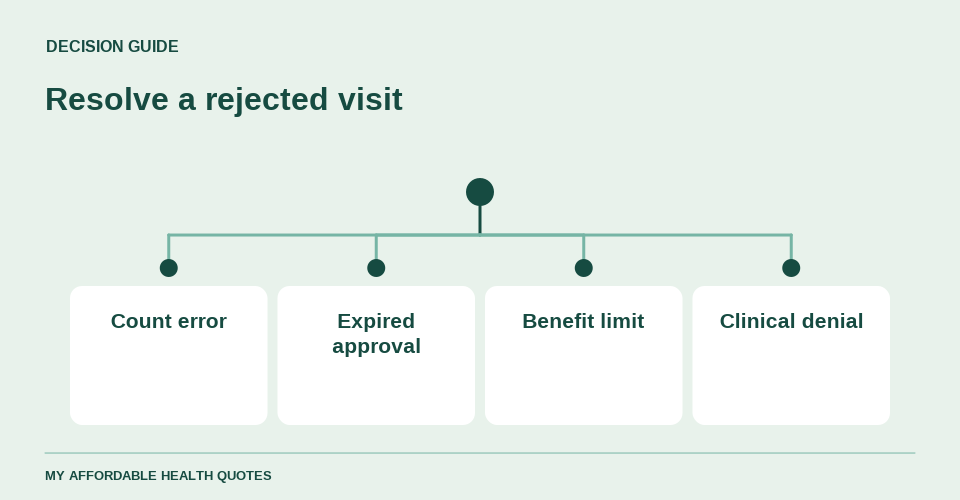
Read whether the insurer denied a visit because the allowance was exhausted, authorization ended, medical necessity was not established, or a service was classified differently. Ask for the count and the underlying dates if exhaustion is cited. A duplicate or incorrectly categorized claim can create a counting issue that needs correction rather than a broad clinical appeal.
Kentucky's Department of Insurance describes different review paths for medical determinations, coverage limitations, and other plan-rule issues. Its current utilization-management materials provide additional process requirements. Follow the specific notice and ask the Department which route applies to your coverage rather than assuming every denial goes to the same reviewer.
For a clinical disagreement, ask the treating provider to address the actual rationale with relevant records. For a counting disagreement, supply a clear reconciliation of dates and claims. If treatment is time-sensitive, have the clinician explain whether expedited review is appropriate. Keep the review process separate from medical advice about continuing care.
The purchase decision in one usable record
Before selecting a plan for ongoing therapy, you should know the covered disciplines, counting unit, shared or separate limits, reset period, authorization process, network, and estimated patient cost. Mark every unresolved point. A policy comparison is stronger when uncertainty is visible than when an agent or family fills gaps with assumptions.
Bring the treatment calendar and existing benefit documents to a My Affordable Health Quotes review if you want help organizing available policies. Ask for a comparison that tests your expected therapy pattern rather than highlighting only a low office-visit copay. The important result is a documented route to the services your clinicians recommend, with the policy's conditions clearly understood.
Give each provider the same utilization picture
When several practices are involved, ask each office what information it needs to coordinate its insurance requests. You may be able to provide a simple record of dates and disciplines without sharing unrelated clinical details. Use secure communication for records and let the treating teams determine which clinical information is relevant. The goal is administrative coordination, not taking over the therapists' treatment decisions.
At each review point, compare scheduled visits, completed visits, and processed claims as separate numbers. A canceled appointment should not be treated as delivered therapy, and a pending claim should not disappear from your planning. This three-column record makes a potential limit issue visible while there is still time to ask the insurer and clinicians about the next step.
Sources and further reading
- Anthem home-based rehabilitation and habilitation clinical guideline
- Kentucky Department of Insurance denial appeal guide
- Kentucky 2026 utilization-management review guide