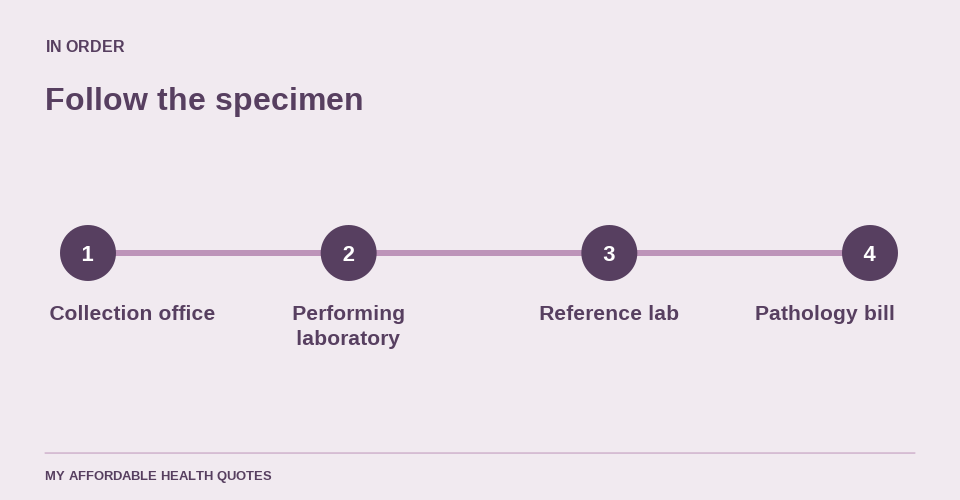
Having blood drawn or a specimen collected at an in-network office does not tell you which laboratory will perform the test or which organization will bill for it. For planned testing in Iowa, ask where the specimen goes, which exact test is ordered, and whether another laboratory or pathology group may become involved. That is the starting point for a useful coverage check.
The purpose is not to interfere with a clinician's choice of test. It is to make the billing pathway visible before an elective or scheduled service. Some questions cannot be settled until a specimen is examined, but the office should still explain the expected process and identify which details remain uncertain.
Trace the specimen's route
Ask the ordering office who collects the specimen and who performs the analysis. If those are different organizations, record both names. Ask whether the laboratory may send some work to a reference laboratory or a separate specialist. A collection-site receipt may not identify every later billing entity.
For a biopsy or other pathology service, ask whether technical preparation and professional interpretation are billed together or separately. Obtain the anticipated pathology group's name when available. You do not need to predict every code; you need enough information for the insurer to check the actual entities and service categories.
If the office says it uses “the usual lab,” ask which lab that means for your test and policy. The answer may depend on the test ordered rather than one office-wide arrangement. Keep the name and location in your notes instead of relying on a general impression that the office handles everything in network.
Identify the test precisely
Request the test name and anticipated billing code when available. A broad description such as a hormone panel, genetic test, or screening panel can include several components. Ask which parts the clinician ordered and whether additional testing may occur based on the initial result.
If reflex testing is possible, ask the clinician or laboratory to explain the decision pathway and how additional tests are billed. Do not refuse clinically necessary testing based on an administrative assumption. Instead, ask what information can be provided beforehand and how you will be informed if the scope changes.
Avoid confusing a commercial test brand with an insurance benefit category. The insurer may need a code, clinical indication, or performing laboratory to evaluate the request. If the first representative cannot identify the test, ask the ordering office for the information the insurer requires rather than accepting an unsupported yes-or-no answer.
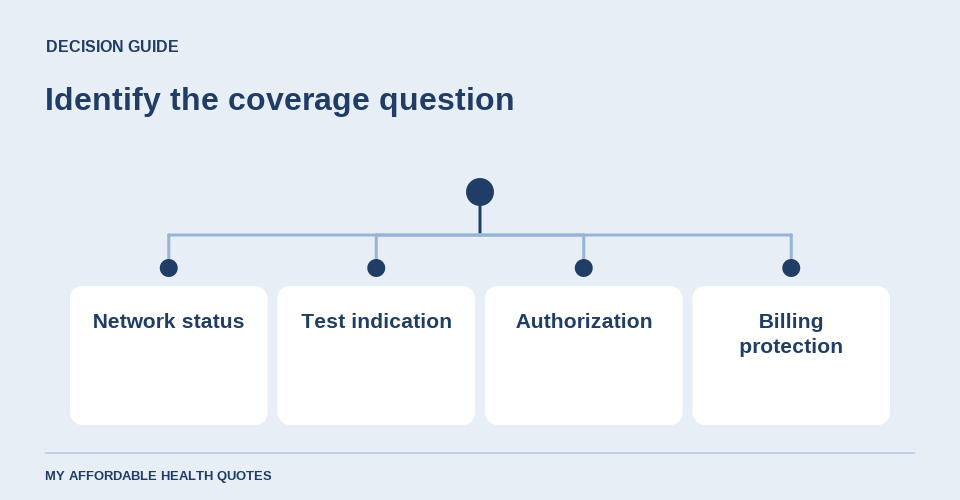
Check network status for each billing entity
Use the exact policy name when contacting the insurer. Ask about the collection office, performing laboratory, and any known pathology or reference-lab group. A national laboratory may participate in some networks but not establish the status of every related entity or arrangement. Request a dated response or reference number.
Ask whether the plan requires a preferred laboratory for the proposed service. If so, have the ordering office confirm whether the test can be sent there without changing the clinical order. Do not transport or redirect specimens yourself unless the clinical team provides appropriate instructions.
If no participating laboratory can perform the test, ask the insurer about its process for access assistance or an exception. Document which labs were contacted and what they reported. A narrow question about a specific unavailable service is more actionable than a general complaint that the network is small.
Know when surprise-billing protections may matter
Federal protections can apply to certain out-of-network ancillary services connected with care at specified in-network facilities. CMS identifies laboratory and pathology services among relevant ancillary categories and explains limits on using notice-and-consent waivers. The setting and circumstances are important, so do not assume that a specimen collected anywhere receives the same protection.
For an ordinary office-based collection, ask the insurer how the specific situation is handled under your policy and applicable law. A protection that applies to a hospital outpatient encounter should not be casually extended to every community office or direct-to-consumer test. Keep the facility classification in the record if a later billing dispute arises.
Also separate balance-billing protection from benefit eligibility. A service can raise questions about medical necessity, exclusions, or authorization even when a billing rule limits out-of-network charges. Ask which issue the insurer is deciding rather than treating all unfavorable processing as the same kind of surprise bill.
Confirm the reason for the test
Ask the ordering clinician how the test is being used: screening, diagnosis, monitoring, or another purpose. The insurer may need that clinical context to apply its rules. Do not ask the office to change a diagnosis or code merely to obtain a more favorable payment result. Accurate documentation is the foundation of a reliable claim.
A patient may assume that a routine annual visit makes every associated test preventive. That assumption should be checked against the actual order and policy. Ask the insurer whether the specific test and indication are subject to cost sharing rather than inferring the answer from the appointment label.
If the service requires authorization, identify who obtains it and whether the approval includes any expected reflex testing. Record the approved test, laboratory, and dates. A general statement that the office obtained approval for “labs” may not be specific enough to resolve a later claim question.
Compare insurance and direct-pay offers carefully
Some laboratories offer a direct-pay price. Ask whether that arrangement bypasses insurance, whether a claim will still be submitted, and what services the price includes. A direct-pay amount and an insurer estimate should be labeled separately. You cannot compare them meaningfully if one includes a full panel and the other only one component.
Consider a hypothetical Iowa patient, Theo, whose office quotes a collection fee while the outside lab quotes the analysis. Theo initially thinks the two numbers are competing prices. After asking, he learns they are separate components of the same visit. The example shows why identifying who bills is as important as comparing amounts.
If choosing a cash arrangement, ask your insurer whether any payment can count toward the applicable deductible and what documentation would be required. Do not assume a lower cash price automatically receives insurance credit. Keep the laboratory's cancellation and refund terms if payment is required before the sample is processed.
What to retain before testing
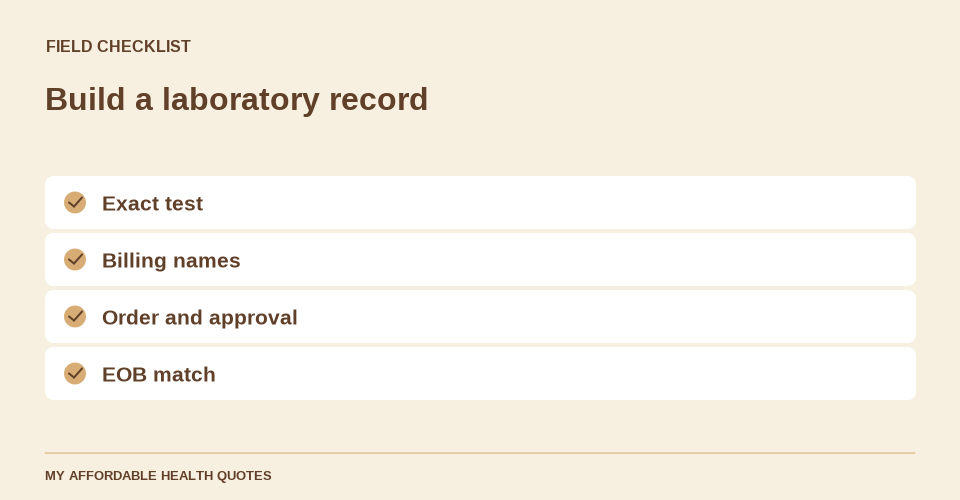
Save the order or test description, laboratory names, network response, authorization if needed, and estimate assumptions. A simple note can state which questions remain unanswered, such as whether a reference lab may be used. That is more honest and useful than recording the entire process as confirmed when one important component is still unknown.
Use secure channels for orders and clinical details. A general insurance quote form does not need a laboratory report or genetic information. You can ask an agent to help identify the relevant benefit questions without distributing sensitive test information unnecessarily.
If the laboratory changes after collection, ask the ordering office to document why and identify the new entity. There may be a valid clinical or operational reason. The point is to preserve the information needed for an accurate coverage review, not to assume that any change is improper.
Investigate a bill by matching the pieces
When a bill arrives, identify the performing entity, service date, test description, and corresponding explanation of benefits. Ask whether insurance was billed using the correct member information. A bill received before a claim is processed may require a different response from a final patient balance after denial.
If the insurer denied the claim, obtain the exact reason. Missing information, incorrect coding, lack of authorization, out-of-network processing, and a clinical-necessity determination require different follow-up. Ask the provider about a corrected claim where appropriate, while preserving any separate appeal deadline stated in the notice.
Iowa's Insurance Division explains consumer appeal and external-review options for certain health coverage decisions. Use its guidance to identify the route for the specific dispute. If the issue may involve federal surprise-billing protections, CMS offers a complaint process; include the facility and billing details that show why you believe the protection applies.
Make this a plan-comparison question
If you expect recurring specialized testing, use the actual laboratory arrangement when comparing individual plans. Ask about the performing lab, relevant test policy, and authorization process. A plan's general laboratory benefit does not establish access to every specialized test or every laboratory.
My Affordable Health Quotes can help organize the policy documents and questions for that comparison. Bring a test description from the ordering team and identify the preferred laboratory. A complete review follows the specimen from collection through analysis and billing, making it easier to understand what the policy promises and what still requires confirmation.
Do not let the result replace the billing record
A laboratory report and a billing statement serve different purposes. The report may identify the laboratory that produced the result, while a bill may come from a different legal entity. Retain enough information to connect them, but avoid sending the full clinical result to a billing representative unless it is necessary and requested through an appropriate channel. Often the test name, date, and claim identifier are sufficient to start an inquiry.
If the office orders the same test again, use the earlier paperwork as a question list rather than assuming the previous result guarantees identical coverage. The policy, laboratory, reason for testing, and authorization may have changed. A short recheck of those variables is more useful than repeating a broad question about whether laboratory services are covered.
Sources and further reading
- CMS notice and consent guidelines, ancillary services
- CMS provider FAQ on No Surprises rules
- Iowa Insurance Division external review
- CMS consumer complaint process