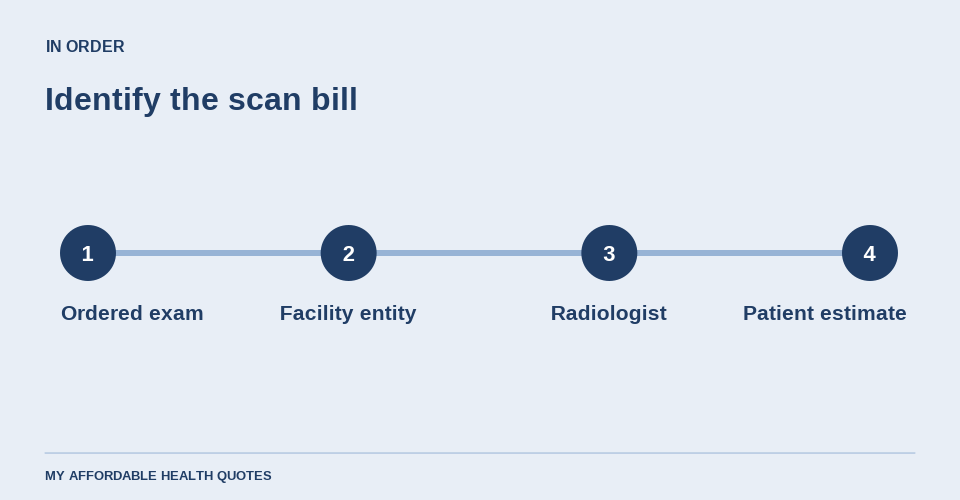
Before comparing prices for a scheduled scan in Iowa, identify what kind of facility will provide it and who will interpret the images. A hospital outpatient department and an independent imaging center can submit different combinations of charges. The closest location or the lowest number quoted by a scheduler may not represent the complete insured cost of the exam.
This is a verification guide for nonemergency imaging. If you need urgent medical attention, follow clinical advice rather than delaying care to complete a price worksheet. For a planned exam, however, a few targeted questions can reveal whether two estimates are genuinely comparable and whether the proposed location matches your policy's requirements.
Start with the ordered exam
Ask the ordering office for the precise exam description, body area, and whether contrast or another component is planned. Request the anticipated billing codes if the office can provide them. Do not select a cheaper exam that differs from what the clinician ordered without returning to that clinician for guidance.
Confirm whether the order includes one study or several. A conversation about “an MRI” can leave out another body area or additional service. If the order changes after the estimate is prepared, ask for the estimate to be updated. Keep the original order and revised version so everyone can identify which service was priced.
Ask whether any preparation, laboratory test, sedation, or follow-up service is expected. Not every exam involves those items, but an estimate should identify what it includes. You do not need to know medical coding to ask whether the quoted total covers the entire planned visit or only the imaging component.
Identify the facility's billing identity
Ask the location whether it bills as a hospital outpatient department or an independent center. Obtain the legal billing name and address, not just the name on the building. A location that looks like a neighborhood office may have a different billing relationship from what its appearance suggests.
Tell the insurer the exact location and billing entity when checking participation. An insurer can contract with one location or product arrangement without that answer establishing every related facility's status. Keep a written or reference-number record of the network check for the specific policy you are evaluating.
If a health system offers several locations, ask whether moving the appointment changes the billing entity, authorization, or patient estimate. Do not assume that an approval naming one site applies everywhere within the system. A convenient rescheduling decision can create a new insurance question even when the clinical exam stays the same.
Separate taking the image from reading it
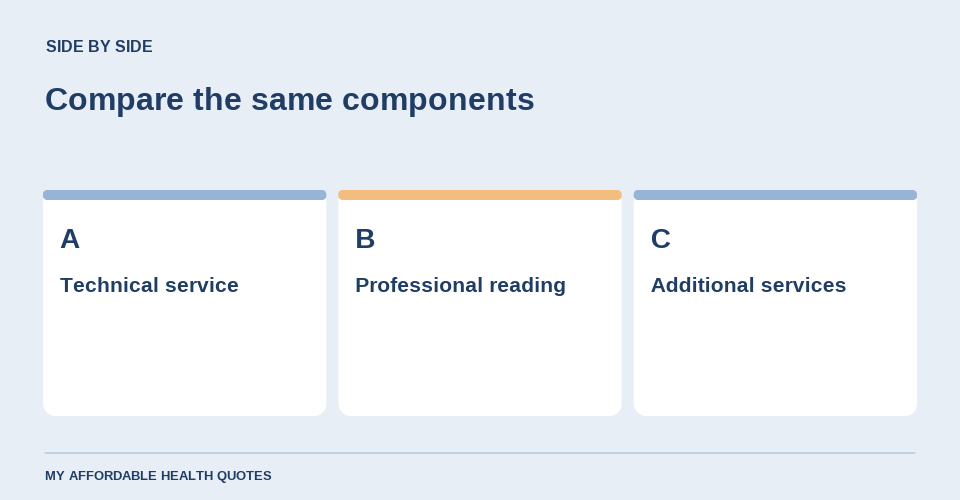
Ask whether the estimate includes the radiologist's interpretation. The technical service and professional reading may be billed separately. Obtain the name of the radiology group when possible and ask the insurer about the relevant participation and billing protections. A quote from the imaging location alone may not include every bill.
For certain nonemergency care connected with an in-network hospital, hospital outpatient department, or ambulatory surgical center, federal surprise-billing protections can apply to out-of-network providers. CMS explains that the setting matters. Do not assume every independent office or imaging location receives the same treatment under those provisions.
Keep the distinction between network protection and service coverage clear. A billing-protection rule does not automatically establish that the ordered scan is a covered benefit or medically necessary under your contract. You still need to confirm the exam, authorization requirements, and applicable benefit terms.
Confirm authorization before the appointment
Ask who is responsible for obtaining any required prior authorization: the ordering office, imaging facility, or another review organization. Request the authorization number and the approved exam, location, and dates. If the appointment falls outside the approved period, ask the responsible office to resolve that before the scheduled service when possible.
A statement that the office “sent it in” does not tell you whether the request is complete or approved. Ask for the status and any missing information. Keep the tone practical: you are trying to ensure the clinical order and administrative approval refer to the same visit.
If a review recommends a different setting, discuss that with the clinician and insurer. Ask whether the proposed alternative can perform the ordered exam and whether the authorization needs revision. Avoid treating a scheduling employee's suggestion as a substitute for clinical approval of a different test or location.
Build two genuinely comparable estimates
Use the same exam description, policy, coverage date, deductible information, and anticipated billing components for both locations. Ask each estimator to state whether the amount represents billed charges, the insurer's allowed amount, or your estimated share. Those are different numbers and should not be placed in one column as if they mean the same thing.
A hypothetical shopper, Lena, receives an estimate from a hospital-affiliated location and another from an independent center. The independent center quotes a cash price, while the hospital estimate assumes insurance processing. Lena asks both locations for a consistent comparison and verifies whether the cash arrangement would be submitted to her insurer. Until then, the lower figure does not answer her insurance question.
If you choose a self-pay arrangement, ask what services the written price includes and what happens if the exam changes. Also ask your insurer whether a self-paid service can be credited toward any deductible or other limit. Do not assume that a receipt automatically produces the same credit as an adjudicated covered claim.
Recognize the limits of a pre-service estimate
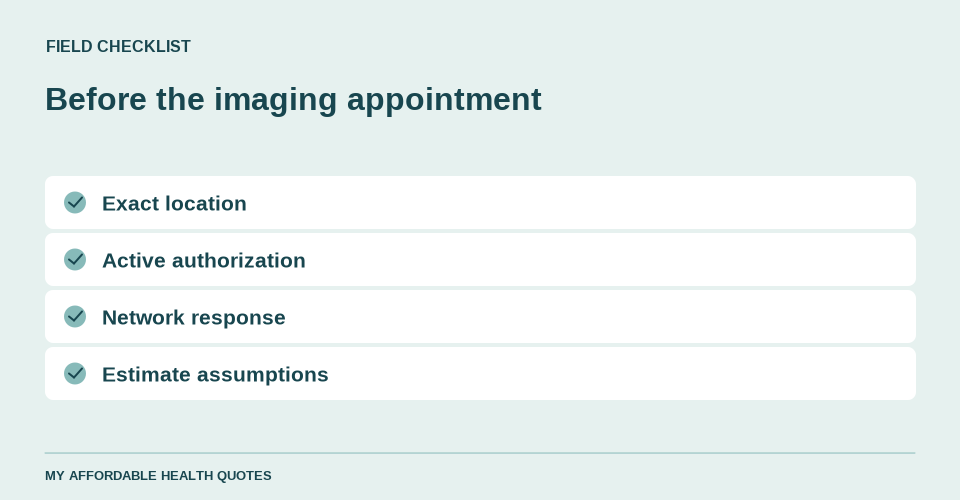
An estimate often depends on information available before the appointment. Ask what could change it, including a revised order, additional services, different billing entities, or a change in deductible status. Save the assumptions with the estimate rather than keeping only the total.
Ask how long the estimate is valid and who can answer follow-up questions. If the insurer's estimator and the facility's estimate disagree, provide both to the relevant teams and ask which inputs differ. The disagreement may be resolvable without choosing which organization to believe blindly.
For budgeting, consider the timing of separate bills. Even when the total estimate is acceptable, a facility deposit and later professional bill can arrive on different schedules. Ask about payment procedures and any refund process if an advance payment exceeds the final patient responsibility.
Review the claim after the scan
When the explanation of benefits arrives, match it to the exam date, provider, and service. It is a statement of the insurer's processing, not itself a bill. Compare the patient-responsibility amount with the provider's bill and investigate differences before assuming both are correct.
If a claim was denied, identify the reason. An incorrect location, missing authorization, coding error, or benefit decision calls for a different response. Ask the provider whether a corrected claim is appropriate, and ask the insurer whether an appeal is needed. Keep those processes distinct so a billing correction does not accidentally replace an appeal you must submit.
Iowa's Insurance Division describes external review for certain medical-necessity, setting, level-of-care, effectiveness, and experimental-treatment determinations. That does not mean every billing disagreement is eligible. Follow the denial notice and ask the Division which route fits your plan and issue, particularly if care is time-sensitive.
A practical phone script
To the imaging location: “Please confirm the exact exam, billing entity, facility classification, and whether the estimate includes the professional interpretation. If another group bills separately, please identify it. I also need to know whether authorization names this location and whether any deposit is based on an estimate or final insurer processing.”
To the insurer: “I am checking this ordered exam at this specific location under this exact policy. Please identify the benefit category, network status, authorization requirement, and calculation of my estimated share. If the facility and reading physician bill separately, explain how each component is handled.” These questions narrow the conversation without asking either party to predict an impossible final total.
Write the answers in a short comparison table and mark unresolved items. If the proposed scan is a recurring need, retain the worksheet for future comparisons, but refresh the location, network, authorization, and policy details each time they change. An old estimate is useful history, not permanent confirmation.
When comparing private health plans, use the imaging arrangement you would actually use as a test case. My Affordable Health Quotes can help organize the policy comparison, while the insurer and imaging provider supply the service-specific determinations. The objective is a complete, consistent estimate with clear assumptions, not simply the smallest number offered over the phone.
Compare access as well as billing
Ask the ordering clinician whether each location can supply the images and report in the format needed for follow-up. A lower estimate is less useful if the study must be repeated because the receiving team cannot use it or the location cannot perform the ordered protocol. Let the clinician resolve clinical suitability; your role is to surface the question before scheduling.
Check the appointment date, travel requirements, and process for obtaining prior images. If the clinician needs an earlier comparison study, ask who transfers it and whether you must authorize release. These practical details do not establish insurance coverage, but they can prevent avoidable delays and duplicated work after the financial comparison is finished.
Finally, record where the results will be sent and who will explain them. A radiology bill, a technical report, and a clinical follow-up are different pieces of the experience. Ask whether the follow-up appointment is included in an estimate or will be a separate service. This keeps the cost discussion aligned with the complete care pathway rather than stopping at the moment the scan is performed.
Sources and further reading
- CMS medical bill rights when using insurance
- Iowa Insurance Division external review
- Iowa Insurance Division claim appeals guide