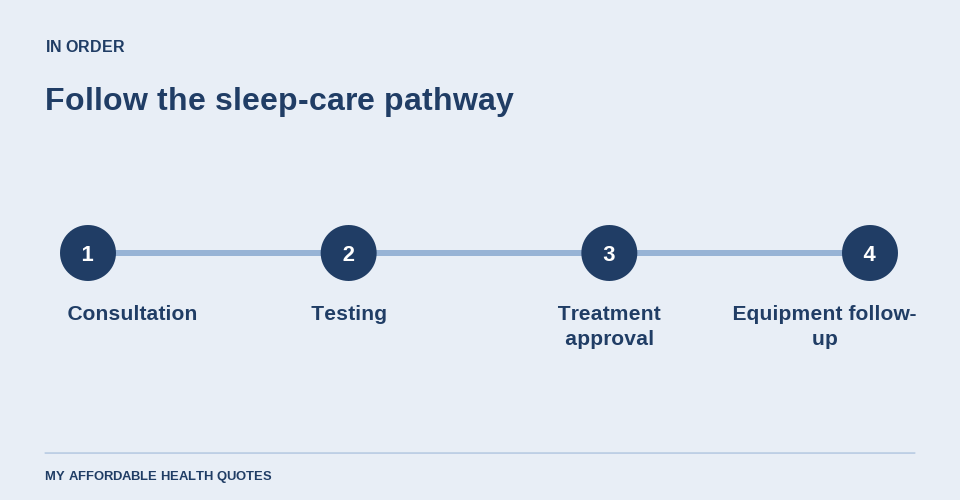
Coverage for a sleep study does not automatically establish coverage for the treatment that follows. A sleep consultation, home test, laboratory study, positive-airway-pressure device, supplies, and follow-up can involve different providers and benefit rules. When comparing an Indiana individual health plan, map that pathway rather than asking only whether the plan covers CPAP.
Your clinician should determine which test and treatment are appropriate. This guide explains the insurance questions to ask around that recommendation. Do not diagnose yourself from a policy document, select a different test solely to reduce a bill, or stop prescribed treatment because of an unresolved administrative issue.
Begin with the clinician's proposed evaluation
Ask what service is being ordered and why that setting is recommended. A home sleep test and an attended laboratory study are not interchangeable labels for billing. The insurer may apply different criteria or authorization requirements, so the order should be specific enough for a meaningful coverage review.
Request the ordering provider's name, testing organization, location, and anticipated billing description. If the test is mailed to your home, identify who bills for the equipment and interpretation. A website offering a test may not be the same entity that processes the clinical service or submits the insurance claim.
Ask whether an initial consultation, test interpretation, or follow-up appointment is billed separately. A quoted test price can leave out those components. Your comparison should include the anticipated evaluation pathway, while marking any treatment that will depend on the results as a later question.
Match the medical policy to the insurance product
Insurers publish sleep-testing guidance that may distinguish home testing, attended studies, titration, and repeat testing. UnitedHealthcare's current policy listings are one example. The existence of such a policy does not guarantee that every service is covered under your member contract or that the same version applies to every product.
Ask the insurer which policy and benefit provision apply to the exact plan under consideration. Verify the effective date and any state or product exceptions. If a provider sends you a Medicare coverage explanation, request the private-policy answer instead; a supplier's familiarity with Medicare does not settle an individual-plan question.
If the insurer requires a different testing setting from the clinician's recommendation, ask the clinician to address the criteria and any exception request. Do not attempt to resolve a clinical disagreement by choosing the cheaper location yourself. The appropriate process should connect the medical rationale to the insurer's review.
Obtain a complete testing estimate
Ask whether the estimate includes the test, equipment handling, professional interpretation, and facility charges if relevant. Identify the billing entities and verify their participation. A sleep clinic can coordinate services without every related organization necessarily sharing the same network status.
For a home test, ask about deposits, return deadlines, damage or loss charges, and what happens if the recording is incomplete. Those supplier terms are distinct from the insurer's benefit. Read them before accepting equipment so a failed or delayed test does not create an unexpected commercial obligation.
For a laboratory test, confirm the location named in any authorization and the scheduled date. If the appointment is moved, ask whether the approval remains valid. A different facility within the same health system may require an administrative update even if the clinical order stays unchanged.
Approval of testing is only one checkpoint
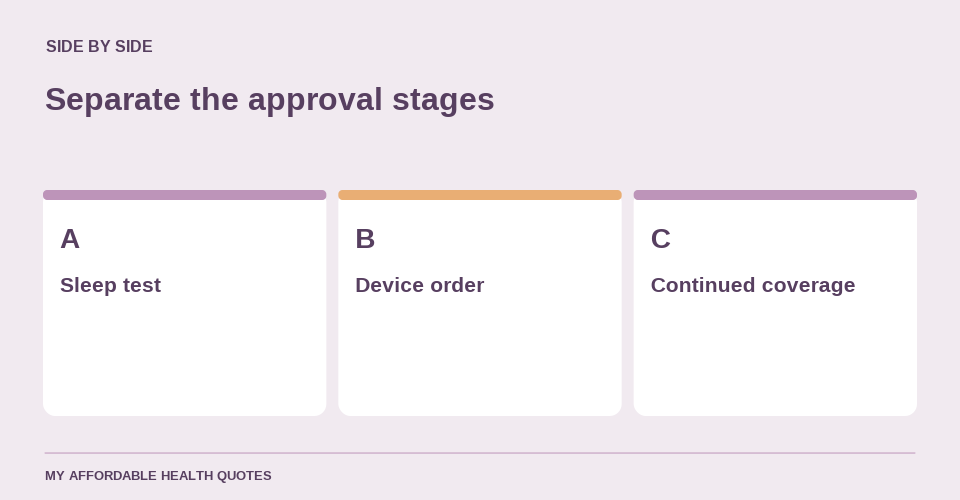
Save the test authorization and ask what it covers. It may not approve a later device, titration, repeat study, or specialist visit. After the clinician reviews the results and recommends treatment, begin the relevant treatment verification rather than assuming the first approval extends indefinitely.
Ask the clinical office who submits the next request and which documents are needed. The test report, prescription, and follow-up notes may be held by different organizations. A clear handoff can prevent a device order from remaining incomplete because each office believes another has sent the necessary record.
If the insurer asks for additional information, identify the exact missing item and responsible office. “Insurance is waiting” is not an actionable status. A short checklist of documents, submission dates, and responses makes it easier to resolve a delay without repeated broad phone calls.
Verify the equipment arrangement
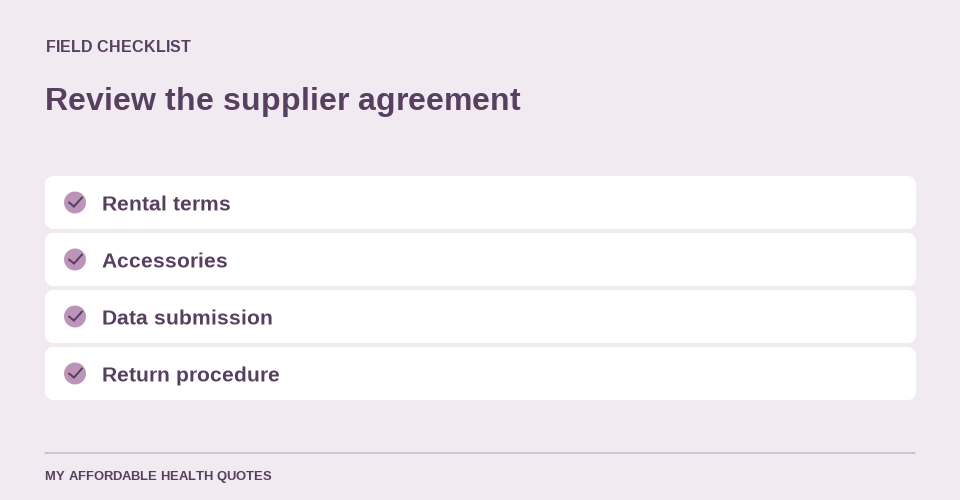
If positive-airway-pressure equipment is prescribed, ask the supplier to identify the device, accessories, and billing arrangement. Is it rented, purchased, or supplied through another structure? When, if ever, does ownership transfer? What happens if treatment changes or the device is returned? Obtain the terms in writing.
Check the supplier's participation under your exact policy. Ask whether a designated supplier is required and whether the authorization names a particular item or code. A device sold by an online retailer may not be processed the same way as equipment from a participating supplier.
List masks, tubing, filters, humidification components, and other anticipated supplies separately where applicable. Ask the clinician and supplier which are needed. Then ask the insurer about replacement rules and patient costs. A device benefit should not be treated as unlimited coverage for every accessory or recurring shipment.
Understand continued-coverage requirements
Some insurer and supplier arrangements require follow-up documentation for continued equipment payment. Ask for your policy's requirements rather than assuming a universal usage threshold or trial period. The clinician and supplier should explain what records are needed, who receives them, and when the review occurs.
If you have difficulty using prescribed equipment, contact the treating team promptly. Do not wait until an insurance deadline to discuss discomfort, fit, or other problems. Clinical support and administrative documentation should be coordinated, but the medical issue should not be reduced to satisfying an insurer's counter.
Ask how data are transmitted and who can access them. Use the provider's and supplier's approved systems, and avoid sending detailed health information through a general quote form. Understanding the process helps you identify whether a missing record reflects actual treatment information or a transmission problem.
A hypothetical first-year comparison
Suppose Caleb is comparing two individual policies before a clinician-recommended evaluation. One proposal highlights a low specialist copay, while another has a different deductible arrangement. Caleb builds separate rows for the consultation, test, interpretation, potential device, and follow-up. He does not assume the specialist copay applies to every row.
After testing, the clinician recommends a device. Caleb asks for a new estimate based on the actual prescription and supplier rather than relying on the earlier hypothetical treatment projection. This keeps the budget connected to the care that was ultimately recommended.
If rental extends into a new plan year, Caleb asks how the deductible and authorization may be affected. He records the renewal date and ownership terms. The example illustrates a planning method, not a prediction that any specific insurer will cover a device on a particular schedule.
Compare alternatives through the clinician
If the care team discusses another treatment approach, ask for a separate benefit review. Oral appliances, surgery, and other interventions can have distinct policies, providers, and authorization processes. Approval of one approach does not automatically establish payment for another.
The clinician should explain the options and suitability. Your role is to obtain accurate coverage information for the options being considered, including network and financial terms. Avoid using an insurer's medical policy as a self-treatment guide or assuming that an intervention listed online is recommended for you.
If a provider offers a cash package, ask exactly what it includes and whether insurance will be billed. Determine whether any payment can receive deductible credit under your plan. Keep the cash agreement and insurance estimate separate so you do not compare unlike totals.
Resolve denials by identifying the stage
A rejected sleep claim could concern testing criteria, a missing authorization, an out-of-network entity, equipment eligibility, or continued-use documentation. Obtain the written reason and locate it on your pathway. This prevents a response about the original diagnosis from being sent when the actual issue is a missing supplier record.
Ask the provider whether a corrected claim or additional information is appropriate, and preserve any formal appeal deadline. Indiana's Department of Insurance offers consumer guidance for coverage questions. The applicable review route depends on your plan and the determination, so use the actual notice rather than a deadline copied from another policy.
If the issue affects timely treatment, ask the clinician about an expedited process and safe care planning. Do not stop treatment or return equipment based solely on an unresolved bill. Clarify the medical recommendation, insurer decision, and supplier agreement as separate matters.
Keep the pathway current
After each major step, compare the actual claim with the expected benefit. Confirm that the test, interpretation, and equipment are processed as anticipated. If a payment differs, identify the reason before projecting future costs. An early correction can prevent recurring misunderstandings during a rental or supply arrangement.
When changing insurers, ask the new plan about the existing device, supplier, and documentation. Do not assume earlier approvals transfer or that the device is already owned. Keep the old and new coverage dates with the supplier's written transition instructions.
Bring the clinician's proposed pathway to My Affordable Health Quotes when comparing Indiana individual plans. A useful review covers evaluation through ongoing equipment support, not just an attractive CPAP headline. The final record should show who provides each service, which approval is needed, how you pay, and which clinical questions remain with your care team.
At the end of the review, assign an owner to each unfinished task: the ordering clinician, testing organization, equipment supplier, insurer, or you. A named owner and target date are more useful than a general note that approval is pending, especially when several organizations must exchange records before the next appointment.
Sources and further reading
- UnitedHealthcare current sleep-study policy listing
- Highmark commercial PAP equipment policy example
- Indiana Department of Insurance health guidance