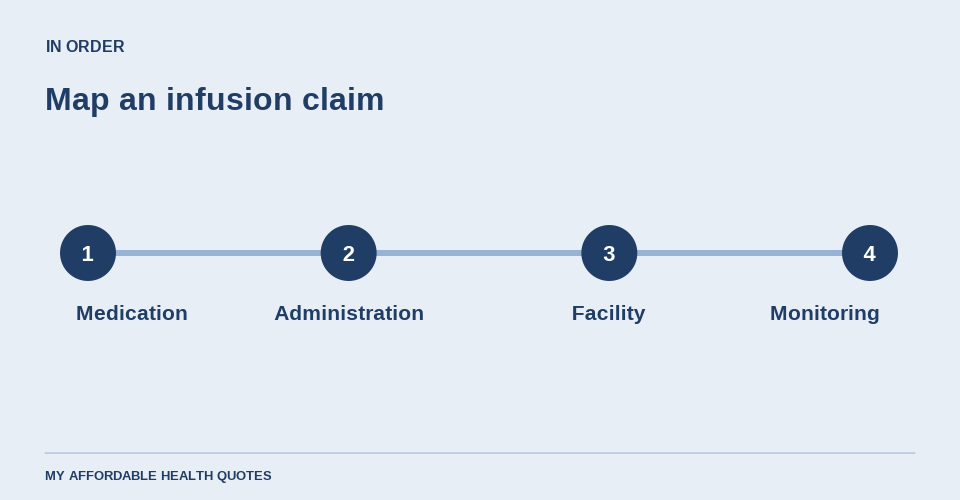
An infused medication can involve more than a prescription benefit. The drug itself, the professional who administers it, the facility, and the pharmacy supplying it may each need a separate coverage check. For an Indiana shopper comparing individual health insurance, the useful question is not just whether a medication appears on a drug list. It is whether the complete treatment arrangement works under the exact policy.
Begin with your treating clinician's description of the proposed therapy. Ask for the medication name, dose, administration method, expected frequency, and proposed location. Keep clinical decisions with the clinician. Your insurance review should identify financial and administrative conditions, not encourage you to change treatment without medical guidance.
Identify the benefit handling the drug
Ask the insurer whether this medication and administration route are reviewed under the medical benefit or pharmacy benefit. The answer can affect where to look for coverage criteria and which team processes the request. A retail prescription search may not show the relevant rules for a provider-administered infusion.
UnitedHealthcare's provider materials illustrate this distinction by describing programs for specialty injectable drugs under the medical benefit, including prior authorization and medication sourcing. Those materials are an example of an insurer's process, not a statement that every Indiana plan follows the same rules. Always match the policy to the insurer, product, and effective date you are considering.
If the plan has multiple drug documents, ask which one applies. Save the document title rather than a search result screenshot alone. A list for an employer group product, Medicare product, or another state can be easy to confuse with an individual policy. The similar branding does not make the documents interchangeable.
Treat the infusion visit as several linked components
Create a treatment ledger with a row for the medication and another for administration. Add any facility charge, clinician visit, laboratory testing, monitoring, and supplies the provider expects to bill. Ask the provider which charges are included together and which are submitted separately. The purpose is to make the estimate complete, not to predict billing codes yourself.
For every row, record the billing entity and its network status. The physician may be in network while a separate facility or supplying pharmacy raises another issue. A single reassuring answer about the doctor's participation can leave most of the treatment ledger unchecked.
Ask who owns the medication at each stage and where it will be delivered. Some arrangements use a provider's supply, while others involve a specialty pharmacy sending the drug. Before accepting a sourcing arrangement, confirm that the treating office can receive and use it and that the insurer approves that process for your policy.
Why the location can change the coverage review
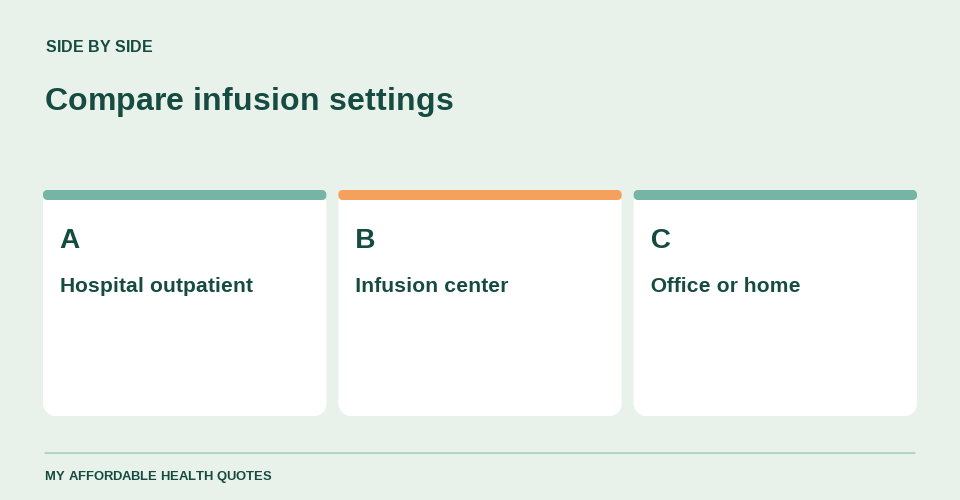
An insurer may evaluate a hospital outpatient infusion differently from an office, independent infusion center, or home setting. Ask whether the policy has a site-of-care requirement and obtain the current criteria. Do not infer that a hospital location is automatically covered because the drug is covered, or that a nonhospital site is medically appropriate for every patient.
The clinician should explain any clinical reason for the proposed location. If the insurer requests documentation, have the provider submit it through the authorization process. A patient should not have to translate a complex safety concern into a homemade appeal when the treating team has the relevant records.
If the insurer suggests another location, ask for a specific participating provider that can administer the exact therapy. Verify availability, scheduling, and acceptance of the policy. A directory entry alone does not establish that the location has the required staff, medication handling, or appointment capacity.
Authorization must match the actual arrangement
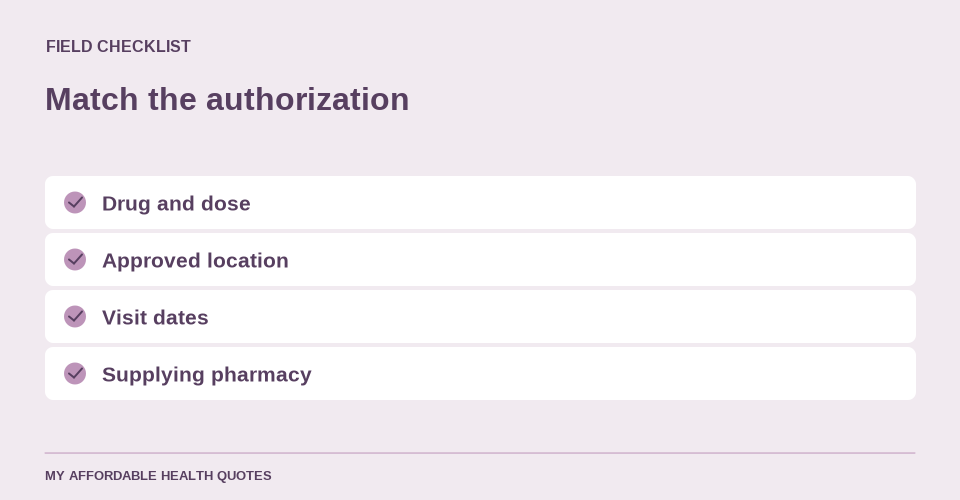
Ask whether approval identifies the drug, dose, frequency, number of visits, location, and billing provider. Check the dates. An authorization for one arrangement may not resolve a changed dose, a different infusion center, or a new policy year. Keep a copy of the approval and note when another review is due.
Clarify who submits the request and who follows up if information is missing. The prescribing office, infusion facility, and specialty pharmacy may each assume another party is handling a step. A short shared checklist can prevent an otherwise approved treatment from reaching appointment day with an unfinished administrative requirement.
Do not equate authorization with a promise that every charge will be paid. Active coverage, benefit terms, coding, and other conditions may still matter. Ask the insurer to identify the remaining conditions in the written response so you understand what the approval does and does not establish.
Compare patient costs on the same basis
Request an estimate that identifies the allowed amount or other basis used to calculate your share when available. Ask which deductible and coinsurance apply to each component. A pharmacy copay and medical-benefit coinsurance are different ways of expressing cost; neither tells the full story without knowing which claims will be submitted.
A hypothetical patient, Devin, receives two estimates for the same therapy. One includes only the medication share. The other includes medication, administration, and a facility component. The second looks higher until Devin asks the first provider to include the missing charges. The comparison becomes useful only after both describe the same treatment visit.
For a repeated infusion, extend the estimate across the expected schedule without assuming every visit has an identical cost. Deductible status, approval periods, or treatment changes may affect later visits. Label the projection as an estimate and write down the assumptions so an unexpected bill can be investigated against the original calculation.
Ask about delays and treatment continuity
If you are changing plans while receiving ongoing therapy, start the review before the new coverage begins. Ask whether existing records and authorizations must be resubmitted. Do not assume the prior insurer's approval transfers automatically. Give both the current treatment team and the prospective insurer the intended transition date.
Ask the clinician how administrative timing should be managed safely. If a delay could affect your health, the clinician can explain the urgency through the appropriate process. Do not stretch medication intervals or skip treatment based on an insurance estimate. This article addresses benefit verification, not treatment scheduling advice.
Keep an escalation contact at each organization. When a shipment or appointment is held up, identify the exact missing item: authorization, benefit confirmation, prescription, delivery instructions, or patient consent. A precise question is more actionable than asking several offices why the medication is not ready.
Separate assistance programs from insurance benefits
If a manufacturer or other program may help with expenses, ask for its terms in writing. Determine what it pays, who qualifies, how long assistance may last, and how the health plan treats those payments. Do not enter an assistance amount into your long-term budget until you understand the conditions.
Ask whether the insurer's estimate assumes assistance and whether the provider's estimate does too. Two estimates can appear inconsistent because one subtracts outside help while the other shows the insurance obligation before assistance. Keep those columns separate so you can see the underlying policy exposure.
A plan should not be selected solely because someone says a drug will be free through a program. Consider the alternative if the program changes, eligibility ends, or treatment moves to another setting. The point is not to reject assistance; it is to avoid confusing a conditional outside arrangement with a contractual health benefit.
What to do when answers conflict
If the formulary team says the drug is covered but the infusion office reports a denial, ask for the actual reason. The issue may involve the benefit channel, location, clinical criteria, sourcing, or incomplete information. Obtain the written determination and identify which part of the treatment ledger it addresses.
Indiana's Department of Insurance offers consumer guidance on health insurance and can help direct coverage questions. Its guidance also notes that individual and group coverage requirements differ. Use the correct plan category when seeking assistance, and follow the appeal instructions attached to the specific determination rather than borrowing a deadline from another product.
Before selecting a policy, you should have a documented answer about the medication benefit, infusion site, provider network, supplying pharmacy, authorization, and expected patient share. Any unresolved row deserves a follow-up before you treat the proposal as suitable for ongoing infusion care.
Bring that ledger to a My Affordable Health Quotes comparison if you need help organizing available plans. A narrow review of the actual therapy is more valuable than a broad assurance that a policy has strong prescription coverage. Keep the final insurer documents with your treatment records so future dose, location, or plan changes can be checked against a clear starting point.
Check the first processed visit before projecting the rest
After the first infusion under a new policy, compare every explanation of benefits with the treatment ledger. Confirm that the medication, administration, and facility were processed under the expected benefit. If a charge is missing, do not assume it was included elsewhere; ask whether a separate claim is still pending. This review can identify an error before the same arrangement produces repeated disputed bills.
If the actual patient share differs from the estimate, identify the reason in writing. The difference may arise from deductible status, a separate claim, changed treatment, or incorrect processing. Ask for a corrected estimate for future appointments after the discrepancy is resolved. A one-time arithmetic correction is less useful than understanding which assumption failed.
Keep shipment confirmations and appointment records only as needed for your own care coordination, and use the insurer's or provider's secure channels for sensitive documents. A general quote form is not the right place for infusion records or detailed diagnoses. The initial plan comparison can begin with a description of the verification task, followed by appropriate private communication with the people handling treatment.
Sources and further reading
- UnitedHealthcare medical-benefit specialty drug programs
- UnitedHealthcare current medical and drug policies
- Indiana Department of Insurance health insurance guidance