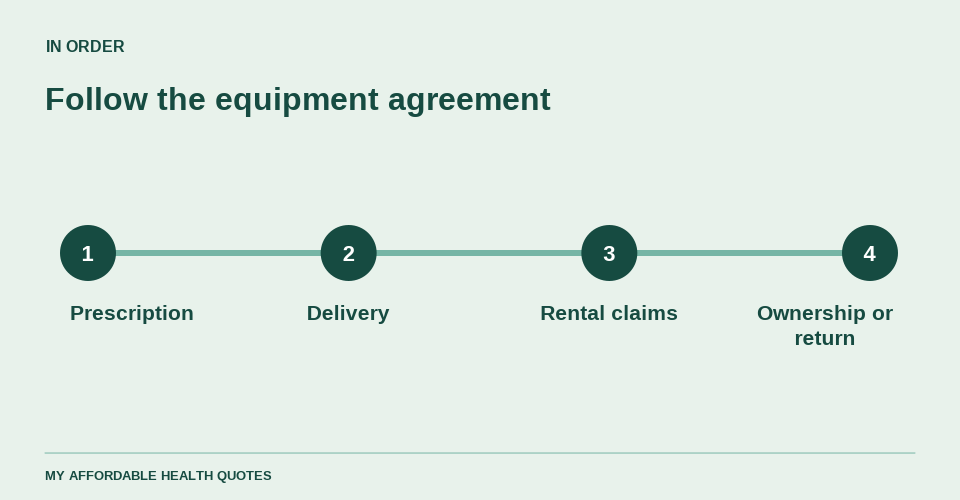
When a private health plan covers medical equipment, that does not necessarily mean it buys the device outright on the first claim. Coverage may involve rental, purchase, a rental-to-purchase arrangement, or different treatment for particular items. Before accepting equipment in Indiana, ask what you are agreeing to pay, who owns it, and what happens if insurance coverage changes while you still use it.
This review is especially useful for equipment supplied over several months. The first delivery can feel like a completed purchase even when future claims and obligations remain. A clear written agreement should connect the prescribed item, insurer benefit, supplier contract, and expected patient payments. Do not rely only on the amount collected at delivery.
Identify the exact equipment and accessories
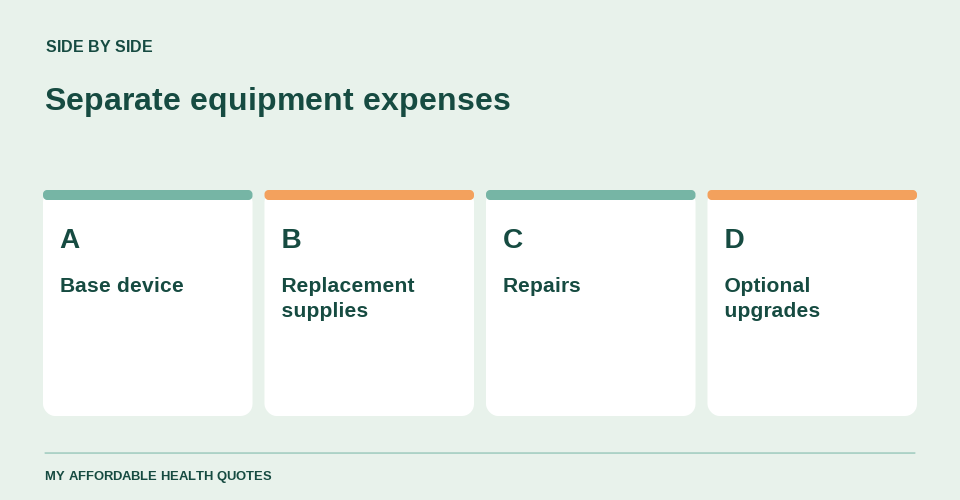
Ask the prescribing clinician and supplier to identify the item, model when relevant, and billing description. List accessories, disposable supplies, fitting, setup, and training separately. A covered base device may not answer every question about optional features or recurring components. The supplier should explain which items are clinically required and which are upgrades.
If an upgrade is offered, ask for a written comparison with the covered standard option. Determine the added charge and whether it is one-time or recurring. Do not assume that a more expensive device will receive the same insurance payment or that signing an upgrade form has no effect on your financial responsibility.
Keep the clinical prescription separate from the commercial choice. The treating professional should decide what equipment is appropriate. If the supplier suggests a substitute, ask the clinician and insurer to confirm that it meets the medical need and benefit requirements rather than accepting a change solely because it is immediately available.
Confirm the supplier as well as the item
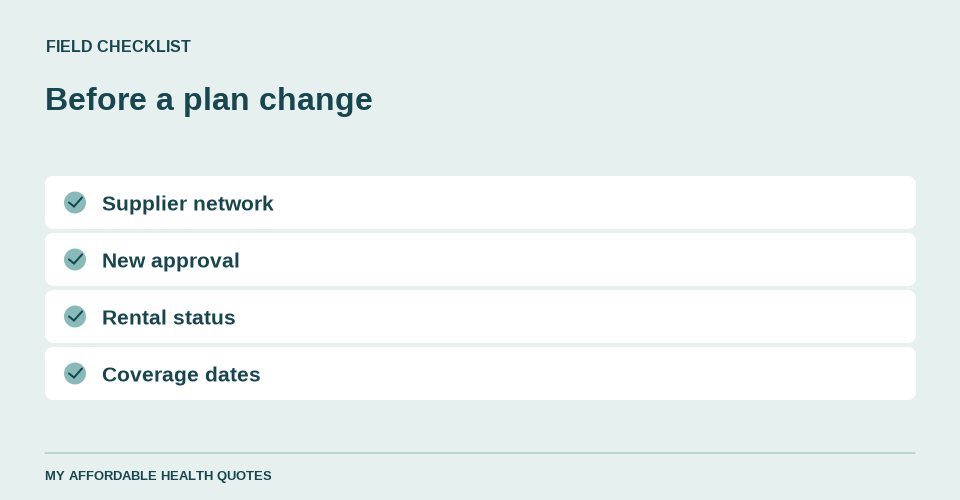
Check the supplier's participation under the exact policy. A retailer may sell the right equipment without being a participating medical-equipment supplier. Ask whether the specific branch and billing company are in network, and save the confirmation. A familiar brand name on the equipment does not establish anything about the supplier's contract.
Ask whether the plan requires a designated supplier or advance approval. If the supplier says it can bill your insurance, clarify whether that means it is contracted or merely willing to submit an out-of-network claim. Those are materially different arrangements for your estimate and potential remaining balance.
If the supplier is unavailable or cannot deliver the needed item, ask the insurer for an alternative and document the access problem. Avoid assuming that buying the item elsewhere will automatically be reimbursed. Obtain the plan's instructions before making a discretionary purchase whenever the clinical timeline permits.
Determine whether you rent, buy, or earn ownership
Ask for the exact rental arrangement in writing. How often are claims submitted? Is there a maximum rental period? Does ownership transfer after specified payments, or does the device remain the supplier's property? What happens if therapy stops before the arrangement ends? These questions should be answered by the agreement for the actual equipment.
Insurer documents can distinguish purchase-only, rental-to-purchase, and continuous-rental equipment. That illustrates why a single general DME benefit line is not enough. The plan and supplier must identify which arrangement applies to your item; a rule used for another device or another insurance program may not transfer.
Do not borrow Medicare's rental rules for a private individual policy. Even when the same supplier serves both populations, the contracts and payment arrangements can differ. Ask for your policy's terms explicitly, and avoid treating a supplier's explanation beginning “Medicare usually…” as the final answer to your private-plan question.
Project the payments across time
Request the anticipated billed amount, allowed amount when available, and patient share for each rental period. Ask whether setup, delivery, maintenance, or supplies are included. An initial estimate that covers only one month can understate the commitment if you assume it represents the entire equipment cost.
A hypothetical patient, Owen, is quoted a small payment when a device is delivered. He later learns that the device is rented monthly and that replacement supplies are billed separately. Before signing, Owen asks for a schedule showing each expected claim and the event that ends rental. The example demonstrates the questions to ask, not a typical price or universal rental rule.
If the arrangement crosses a policy-year boundary, ask how a renewed deductible could affect later payments. You cannot predict every future claim, but you can see which months fall under a different benefit year. Keep the policy premium, rental share, and recurring supplies as separate lines in your household budget.
Read the return and cancellation terms
Ask how to return the equipment if the clinician stops treatment or if you choose another supplier. Obtain the required notice, return method, pickup process, and proof of receipt. Do not assume that telling the clinician or insurer automatically terminates a separate supplier rental agreement.
If the supplier picks up the device, request a dated receipt identifying the item. Review the next statement to confirm that charges stopped when the agreement says they should. An unrecorded return can become difficult to resolve months later when the device is no longer in your possession.
Ask about damage, loss, shipping, and cleaning charges. Distinguish an insurer's coverage decision from a supplier's contractual charge. A health plan's refusal to pay a charge does not itself explain whether you agreed to it or whether it is valid under the supplier's contract. Keep both documents available for review.
Supplies and maintenance need separate answers
For recurring supplies, ask about covered quantities, replacement frequency, medical-necessity requirements, and the ordering process. Do not enroll in automatic shipments without understanding how they are authorized and billed. The amount a supplier is willing to ship may not match what the plan covers or what you currently need.
Ask whether repairs are included during rental and what happens after ownership transfers. Determine who services the equipment, whether a temporary replacement is available, and whether advance approval is required. A useful plan comparison accounts for keeping the device functional, not only obtaining it initially.
If a replacement is requested, ask what documentation is needed and whether the insurer distinguishes repair, replacement, and upgrade. The clinician and supplier should provide the relevant information. Avoid purchasing a replacement first and assuming the insurer will treat it as covered because the original device was approved.
Check the authorization conditions
An equipment approval may identify a specific item, supplier, quantity, or time period. Read it and compare it with the delivery paperwork. If the supplier substitutes a different model or code, ask whether the authorization needs revision. This is an administrative check, not a request to choose equipment without clinical guidance.
Ask whether continued coverage requires follow-up documentation. If so, identify who supplies it and when. Do not assume the supplier, clinician, and insurer automatically exchange every necessary record. A calendar reminder can help you ask about a missing document before a recurring claim is denied.
If approval is refused, obtain the written reason. A benefit exclusion, insufficient documentation, lack of medical necessity, or nonparticipating supplier calls for a different response. Indiana's Department of Insurance can direct consumer questions about coverage it regulates; follow the specific plan's appeal instructions for an adverse decision.
Changing insurance while equipment remains at home
Before a planned coverage change, ask the current supplier how it handles a new insurer. Confirm whether it participates with the new policy and whether the new insurer needs a fresh prescription, authorization, or rental arrangement. Do not assume prior rental payments establish ownership or transfer automatically between insurance arrangements.
Ask both insurers which service dates each would process, and keep the coverage end and start dates. If there is an overlap or gap, request clear instructions rather than letting the supplier guess which card to bill. Incorrect payer information can create avoidable denials and confusing statements.
For equipment that is clinically essential, involve the treating team early in any transition problem. Do not return or stop using prescribed equipment solely because an administrative question is unresolved. Ask the clinician about safe care while the insurer and supplier clarify the payment arrangement.
Reconcile the paperwork after delivery
Compare the delivered item, signed agreement, authorization, and first explanation of benefits. Verify that the claim describes the expected item and rental or purchase arrangement. If a deposit was collected, ask how it is applied after insurance processes the claim and how overpayments are refunded.
Keep a simple equipment file with the model, serial number if relevant, delivery date, supplier contact, ownership terms, and return instructions. This is useful for maintenance and disputes without retaining unnecessary health details in a general quote request. Use secure channels when sharing prescriptions or clinical records.
Before selecting an Indiana individual policy for ongoing equipment needs, ask My Affordable Health Quotes to help organize a comparison around the actual device and supplier. The strongest answer is a written account of the complete arrangement: acquisition, recurring costs, supplies, maintenance, and the endpoint. A generic statement that DME is covered leaves too much of that decision unanswered.
Resolve bundled charges before signing
If the supplier describes one monthly package, ask for a list of what it contains and how each component appears on claims. A package might combine a device, service support, and supplies, while the insurer processes them differently. Compare the supplier agreement with the benefit response and ask about any item that appears in only one document. This prevents a single reassuring monthly figure from hiding separate obligations.
Ask whether you can decline optional shipments or services and how to document that choice. Keep the confirmation with the equipment file. If your needs change, notify the supplier through its stated process rather than assuming that fewer appointments or an updated prescription will automatically change a recurring commercial arrangement.
Sources and further reading
- Anthem individual policy example, equipment benefits
- Anthem DME clinical guideline
- Indiana Department of Insurance health guidance