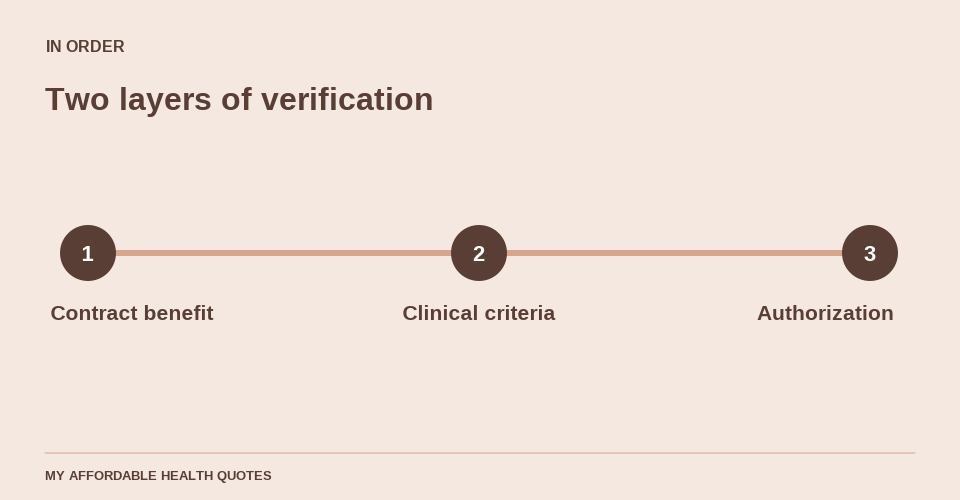
Finding an insurer's bariatric surgery medical policy online does not prove that the health plan you are buying covers the procedure. A medical policy can explain clinical criteria while the member contract determines whether the benefit is included, excluded, or subject to specific conditions. For an Illinois individual-plan shopper, both documents must be checked before relying on a surgical coverage claim.
Start with the exact product name and coverage year. Ask the insurer to identify the contract provision governing bariatric treatment, then ask which clinical policy applies if the benefit is available. This order matters: meeting a clinical criterion does not necessarily overcome a contractual exclusion, and a covered benefit still may require clinical review.
Ask for the benefit answer before the clinical checklist
A useful first question is, “Does this individual policy cover the specific proposed bariatric procedure, and where does the contract say so?” Request the page, relevant definitions, exclusions, and endorsements. Avoid beginning with a detailed discussion of eligibility criteria if nobody has confirmed that the product includes the service.
Insurer policy libraries often contain material for several markets and states. UnitedHealthcare, for example, publishes bariatric medical guidance with an application section that distinguishes product categories and state applicability. That is a reminder to check scope, not an endorsement or a statement about the availability of any particular Illinois product.
Ask whether the document you received belongs to individual insurance, an employer plan, or another program. A surgeon's office may be familiar with one product from an insurer while your proposed product has different terms. Share the exact plan identifier so the office does not perform verification against a broadly similar policy.
Map the proposed procedure and related care
Request the surgeon's proposed procedure name and anticipated billing description. If several approaches are being considered, record them separately. A policy may address procedures differently, and a general answer about weight-loss surgery may not resolve the specific operation recommended for you.
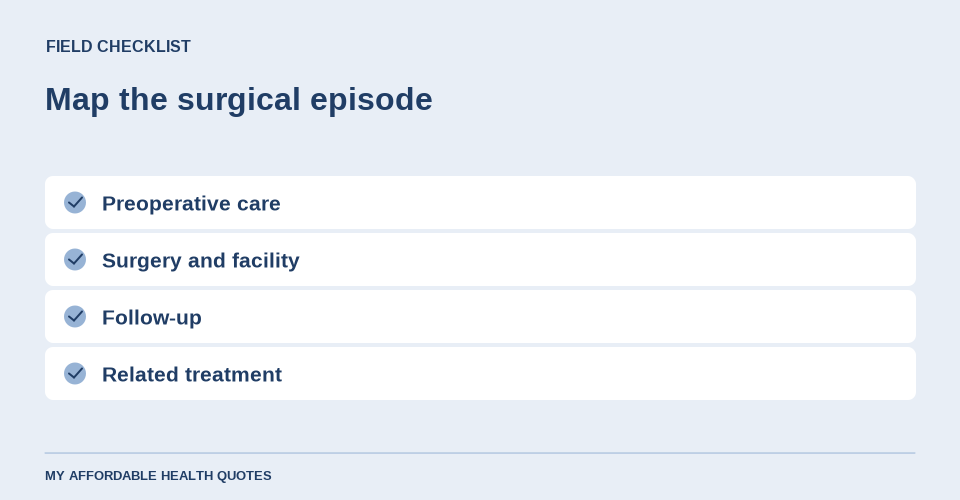
List preoperative evaluations, laboratory tests, nutrition services, behavioral assessments, the operation, anesthesia, facility care, and expected follow-up. Ask the care team which services are part of its package and which are billed by other organizations. The surgery line alone is not the entire financial pathway.
If a procedure could change during care, ask how the insurer handles that possibility. The clinician should explain medical contingencies, while the insurer explains the authorization and benefit process. Do not try to choose a medical approach solely because a generic online list seems easier to qualify for.
Read exclusions with their exceptions
Search the contract for bariatric, obesity, weight reduction, surgery, nutritional counseling, complications, and reconstructive services. Read the surrounding text. An exclusion may have an exception, and a benefit statement may refer you to limitations elsewhere. Keep the full relevant section rather than a cropped sentence.
Ask what happens when care is related to a prior bariatric procedure. Revision, reversal, treatment of complications, and unrelated emergency care are distinct questions. Do not assume an exclusion for the original procedure either excludes all later care or guarantees that every later service is covered. Request an answer for the actual service and indication.
If the insurer cites an exclusion that appears inconsistent with an endorsement or applicable requirement, ask for clarification in writing. You do not need to settle a legal interpretation on a sales call. The Illinois Department of Insurance can direct consumer questions about policies it regulates, while the insurer remains responsible for its coverage determination.
Identify any required program or facility
Ask whether the policy requires a designated surgical center, particular network, or structured program. Obtain the names of participating locations for the exact product. A surgeon may be in the insurer's general directory but not meet a separate program requirement for the proposed benefit.
Verify the hospital or surgery facility and expected professional billing groups. Ask whether the surgeon's consultation location and operating location have different network arrangements. A successful office visit does not establish coverage for a later facility admission at another site.
Include travel, scheduling, and follow-up logistics in your decision. If a designated center is distant, ask how local testing or follow-up is coordinated and whether those services must also use specified providers. The practical question is whether the whole pathway is workable, not merely whether one operation appears in a benefit description.
Keep medical eligibility with the clinical team
If the benefit is included, ask the surgeon's authorization staff to identify the insurer's current criteria and required documentation. The clinician should explain how your medical history relates to those criteria. Do not alter records, omit information, or rely on an online checklist as a substitute for a professional assessment.
Ask which records already exist and which evaluations the treating team recommends. Record the expected submission date and who follows up on missing information. A request can remain incomplete because one part of a multidisciplinary evaluation has not reached the insurer, even when other steps are finished.
If the insurer requests a period of documented treatment or another condition, ask for the exact requirement and its source. Do not assume a requirement from a friend's policy applies to yours. Likewise, do not assume that completing a familiar program guarantees approval under a different contract or coverage year.
Compare costs using a complete episode
Request estimates from the surgeon and facility that identify included and separately billed services. Ask the insurer which deductible, coinsurance, or other cost-sharing provisions apply to the episode. Keep the premium separate from the treatment estimate so the total plan comparison remains understandable.
Consider a hypothetical shopper, Nia, who sees a private-pay surgery package and an insured estimate. The package includes the surgeon and facility but has separate follow-up terms. The insured estimate includes different assumptions about network providers and approval. Nia cannot compare the two totals until she lists the same services and identifies what happens if additional care is required.
Ask how deposits, cancellations, and refunds work if approval is delayed or the clinical plan changes. A provider's financial agreement is separate from the health policy. Read both before committing money, and retain the written terms rather than relying on a scheduler's informal explanation.
Plan for the period after surgery
Ask the care team which follow-up visits, tests, medications, and supplies are anticipated. Then check those benefits individually as appropriate. Coverage for an operation does not answer every question about ongoing nutritional support, medications, or later procedures. Avoid grouping all future care under a single vague “aftercare” label.
If your policy year will change during treatment, ask how the next year's benefit terms and authorization process could affect planned services. You cannot guarantee future coverage from the current contract, but you can identify the renewal date and set a reminder to review updated documents before scheduling later care.
Discuss continuity with the treating team if you expect to change plans. Ask whether a new insurer would require fresh review or different providers. Do not assume that approval from the old policy transfers. Keep the clinical and financial transition questions separate so neither is overlooked.
Handle an adverse answer without guessing
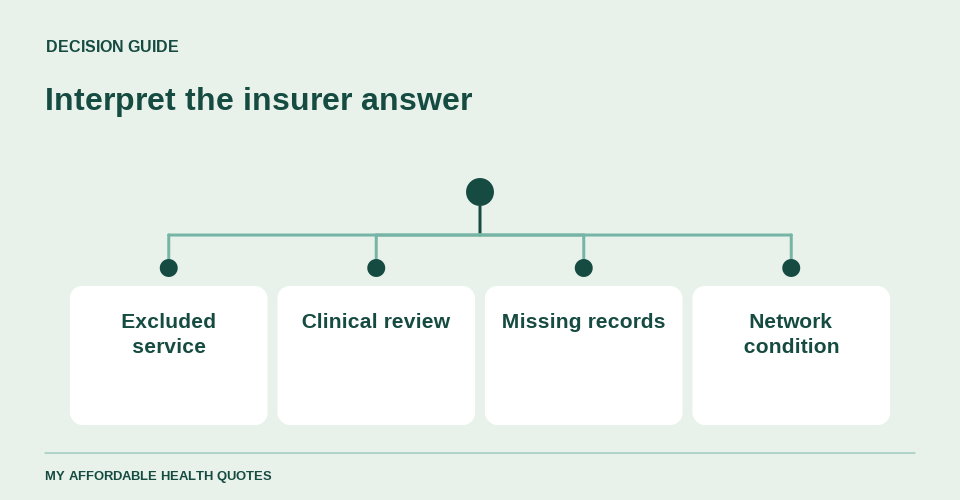
If the insurer says no, obtain the written reason. An exclusion, a clinical-necessity determination, an incomplete record, and a network issue call for different responses. Ask whether the provider should submit missing information, correct a claim, request authorization, or support an appeal. Record the applicable deadlines.
A clinical appeal should address the actual rationale with the treating team's evidence. A contractual dispute should identify the relevant policy language and any applicable exception. A general letter explaining how much you want the procedure may not resolve either issue. Focus the response on the question the insurer decided.
If the denial affects urgent care, ask your clinician about the appropriate expedited process and safe treatment planning. Do not delay emergency care or make treatment changes based on this administrative guide. The role of the insurance review is to clarify benefits and review rights, not to replace medical judgment.
A final verification meeting
Before selecting a policy primarily for bariatric coverage, review the file with the agent and insurer: exact product, contract benefit, exclusions, applicable clinical policy, required program, provider network, authorization process, and complete estimate. Ask each party to identify any assumption that remains unverified.
You should be able to explain why the plan appears suitable without saying only that the insurer covers bariatric surgery. The stronger explanation names the actual policy provision and the steps still needed for approval. That distinction protects against buying a product based on information that belongs to another member's coverage.
My Affordable Health Quotes can help arrange a focused comparison of available individual-plan documents. Bring the proposed procedure and care pathway from your treating team. A useful quote review ends with specific written answers and visible open questions, allowing you to make a coverage decision before entering a separate surgical financial agreement.
Verify the document set again at enrollment
If several weeks pass between research and purchase, confirm that the final proposal still names the same product and start date. Ask whether any benefit document was replaced during that period. Save the enrollment confirmation together with the reviewed policy materials so the connection between the purchased coverage and your research is clear.
After coverage begins, give the surgical office the new member information and request its formal verification using the active policy. A pre-purchase discussion helps you choose, but the office still needs the correct identifiers for authorization and claims. Compare its response with your earlier notes and investigate any difference before relying on an appointment date or paying a nonrefundable charge for planned care.
Sources and further reading
- UnitedHealthcare bariatric surgery medical policy
- Anthem explanation of medical policies and benefit terms
- Illinois Department of Insurance