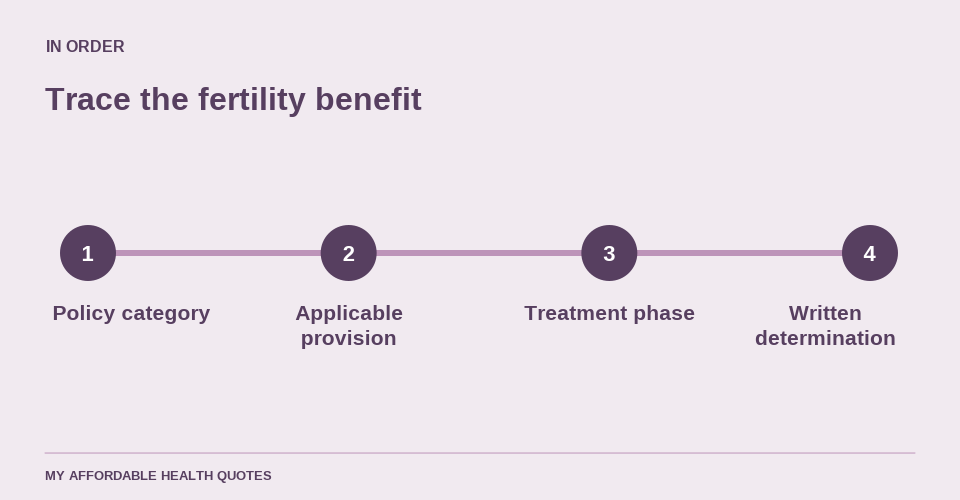
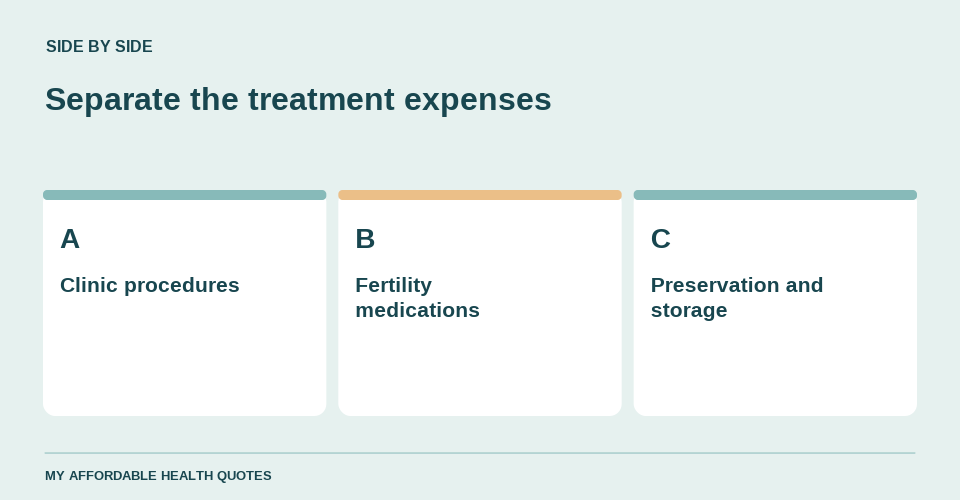
An Illinois fertility coverage headline is not enough to establish what an individual health insurance policy will pay. Before selecting a plan, locate the exact policy, coverage year, fertility provisions, and applicable state requirements. Then separate diagnostic testing, treatment, medications, preservation, and storage into different questions. A statement that a plan covers infertility may leave several of those questions unanswered.
This matters when buying directly from an insurer or through an agent. The purchasing channel does not establish the scope of fertility benefits. Neither does the presence of maternity coverage. You need an answer tied to the actual individual product you are considering, with the relevant page or endorsement attached. The goal is to identify a usable benefit before making appointments or committing to a treatment package.
Why an Illinois mandate requires a scope check
The Illinois Insurance Code's infertility section includes distinct language for group policies and changes applying to group policies issued, amended, delivered, or renewed on or after January 1, 2026. That makes the market category essential. Do not copy a statement about group insurance into a conclusion about an individual policy. Read the applicable section and ask the insurer or Illinois Department of Insurance how it applies to your specific coverage.
A useful question is, “Which legal provision or policy provision establishes this benefit for this individual plan?” That invites an answer you can retain. A vague response that Illinois requires fertility coverage does not identify the affected product, effective date, or exceptions. You do not have to interpret the entire Insurance Code alone, but the person confirming coverage should be able to explain the basis.
Also distinguish a fully insured policy from a self-funded employer arrangement when comparing alternatives. Two cards can display the same insurance company while the underlying plan structure differs. If you are deciding between an individual policy and a partner's employer coverage, obtain the documents for both rather than assuming one set of state rules governs them identically.
Build a treatment map with the clinic
Ask the fertility clinic to describe the expected pathway in phases. You might need an initial consultation, laboratory work, imaging, diagnostic procedures, treatment, medication, and follow-up. The clinic should identify what is included in its package and what other entities may bill separately. You are seeking billing information, not asking the clinic to guarantee what an insurer will pay.
For each phase, request the anticipated service description and billing codes when available. A broad phrase such as “fertility testing” may combine services with different coverage rules. If the treatment plan changes after evaluation, update the map. A pre-purchase review based on one service cannot automatically answer for a later, more complex procedure.
Record which individual is the patient for each service. In a couple's treatment journey, testing or procedures may relate to different insured people. Donor-related services introduce another question about whose policy, if any, is relevant. Do not assume that a benefit for one member pays every expense associated with a shared reproductive goal.
Search the policy in more than one place
Begin with terms such as infertility, fertility, assisted reproduction, reproductive services, preservation, cryopreservation, and storage. Then examine exclusions, prescription provisions, laboratory benefits, and any amendments. Search results are a starting point; read the surrounding paragraph and definitions to understand whether the phrase describes a covered service, an exclusion, or an exception to an exclusion.
When the main policy and an endorsement appear inconsistent, ask which provision controls and retain the insurer's explanation. A later amendment may change the earlier contract. A sales summary may omit conditions that appear in the full policy. Keep the document version and effective date in your notes so the answer does not accidentally rely on last year's product.
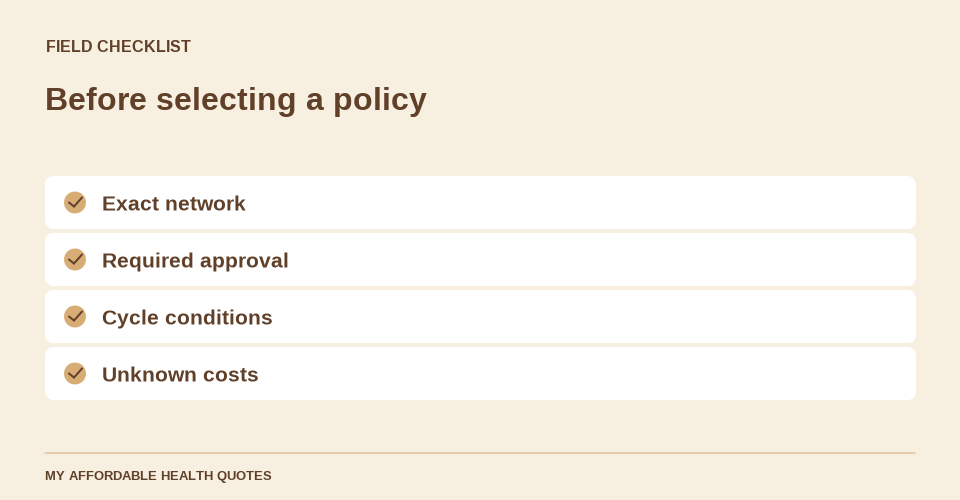
The Summary of Benefits and Coverage can help identify broad categories, but a short summary may not resolve cycle limits, storage, or authorization requirements. Request the full contract and applicable benefit riders before treating the summary as a complete answer. If a document is unavailable before enrollment, state clearly which questions remain unresolved in your comparison.
Separate eligibility from approval of a procedure
A policy may describe who qualifies for a benefit and separately require review of a proposed service. Ask what documentation is needed to establish eligibility and who submits it. Then ask whether each proposed procedure needs prior authorization. These are related steps, but one answer does not necessarily complete the other.
Your clinician should determine appropriate care. If the insurer requires clinical information, ask the clinic's authorization team to submit the relevant records through its normal secure process. Do not alter or omit medical history to fit a coverage description. If the insurer declines approval, obtain the reason and the available review process rather than relying on a telephone summary.
Ask whether a benefit confirmation is prospective and conditional. It may assume active enrollment, network participation, correct coding, or completion of authorization. Write those assumptions next to the answer. This helps you understand what must remain true when treatment occurs and which team is responsible for each remaining step.
Medications need their own review
Request the anticipated drug names, formulations, and dispensing route from the clinic. Check whether the medication falls under a pharmacy benefit, medical benefit, or a separate fertility program. A drug's presence on a list does not answer whether the intended use, quantity, dispensing pharmacy, and treatment cycle meet the plan's conditions.
Ask about required specialty pharmacies, authorization, shipping coordination, and what happens if the treatment schedule changes after medication is dispensed. Confirm the financial terms before paying. Medication expenses can occur on a different schedule from clinic charges, which makes an apparently manageable treatment estimate difficult to use as a cash-flow plan.
If a clinic offers a medication package or cash arrangement, compare it carefully with insurance processing. Ask whether any direct payment is submitted to the plan and whether it can count toward applicable cost sharing. Do not assume that choosing a lower cash price automatically receives the same treatment as a covered insurance claim.
Model a cycle without inventing a price
Use a worksheet with columns for service, provider, benefit category, approval requirement, estimated patient share, and unresolved question. Leave an unknown amount marked unknown. It is more useful than filling the cell with an attractive guess. Ask the clinic and insurer to identify the inputs needed to narrow the estimate.
Consider a hypothetical couple, Avery and Morgan, comparing two individual policies. One summary mentions fertility services, while the other offers a clearer description of diagnostic testing but does not resolve treatment. They do not rank the first plan as better until they obtain its exclusions and authorization requirements. Their first task is to turn both proposals into comparable information.
In the example, the clinic's package includes some office services but excludes medications and storage. Adding those separate rows reveals why the package total is not the household's entire financial commitment. The lesson is not that one arrangement always costs more. It is that each quote must describe the same set of services before the totals are meaningful.
Check the people and places involved
Verify the physician, clinic, surgery location, laboratory, and other anticipated billing entities against the exact network. A clinic's statement that it accepts an insurer does not identify every product. Ask the insurer to confirm the specific practice location and plan. If a center-of-excellence or designated-program requirement applies, identify it before arranging treatment.
Travel and scheduling can matter when a required facility is distant. Ask whether local monitoring, outside laboratory work, or coordination with another clinician is permitted under the benefit. Keep clinical practicality in the comparison. A nominal benefit that cannot be accessed on a workable schedule may not serve the household's intended treatment plan.
When a provider proposes an out-of-network arrangement, ask what the policy pays and what the provider may charge you. Avoid treating a reimbursement estimate as a guarantee that the remaining balance disappears. Obtain a written financial agreement and resolve ambiguity before making a deposit whenever the timing of care allows.
Keep a decision record
Your final record should contain the exact policy name, coverage year, fertility benefit language, applicable amendments, provider checks, drug review, and remaining conditions. Add the date and reference number for insurer conversations. If the answer changes, ask which new fact or document caused the change instead of simply replacing the old note.
A practical stopping point is when you can explain, in your own words, which parts of the proposed treatment are included, excluded, conditional, or still unknown. If you cannot do that, request a focused follow-up. Buying first and searching for the fertility provisions afterward puts the most important verification step in the wrong order.
For a broader explanation of policy categories, read the existing private health insurance guide, then return to this benefit-specific worksheet. A My Affordable Health Quotes conversation can help organize available individual-plan documents, but only the applicable contract, current rules, and insurer's determination can establish the actual benefit. Bring the clinic's treatment map so the comparison answers your question rather than a generic fertility headline.
Keep financial commitments separate from coverage answers
Before paying a clinic deposit, ask what happens if insurance approval is delayed or the proposed service is not covered. Review the clinic's cancellation, refund, and package-allocation terms. A favorable conversation with an insurer does not replace the separate agreement you sign with the clinic. If the package includes future services, ask how unused portions are handled.
Give yourself a final document check before signing: does the policy being purchased match the one reviewed, and does the clinic's current proposal match the treatment map? This last comparison catches changes in product name, start date, provider, or treatment scope that could otherwise remain hidden behind an earlier reassuring answer.
Sources and further reading
- Illinois Insurance Code, infertility coverage section 356m
- Illinois Department of Insurance
- CMS essential health benefits reference