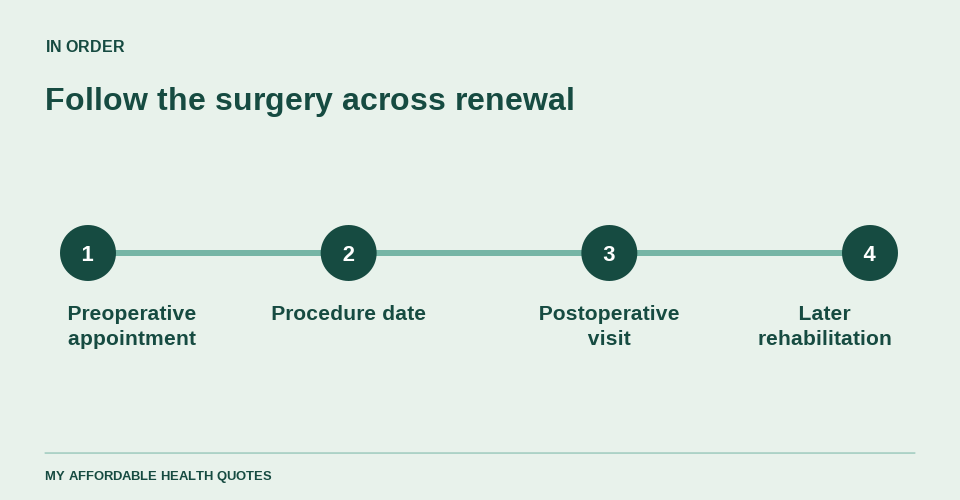
An appointment card says December for surgery and January for the return visit. The practice calls the second appointment a postoperative check. Your renewal packet says the new policy starts on the first of the year. These three straightforward statements leave unanswered which services are already included in a professional fee, which could generate new claims and which professionals will be participating when the patient returns. The uncertainty is manageable if the household separates the dates and asks the right offices to explain each charge.
Take an independent electrician who expects to buy individual coverage for another year. His surgeon has recommended a procedure late in December and wants to see him afterward. The electrician is weighing a renewal offer against a new insurer. He can afford either premium. His concern is paying for promised access twice, or discovering that he has no covered route to the clinician who needs to examine him in January. He does not want administrative issues to determine the timing of medically needed care. This is a comparison of arrangements for the schedule he and the surgeon have already discussed.
Take the appointment card apart
On a sheet of paper he lists the actual services that have been scheduled, in chronological order. There is a preparation visit at the practice, the procedure at a separate facility and the first return visit at the office. He adds a different section for services that the surgeon says may be needed but have not been ordered or booked. This keeps estimates of known expenses distinct from possibilities. A household with two insurance cards should also identify which card applies on each service date and where the office has recorded it.
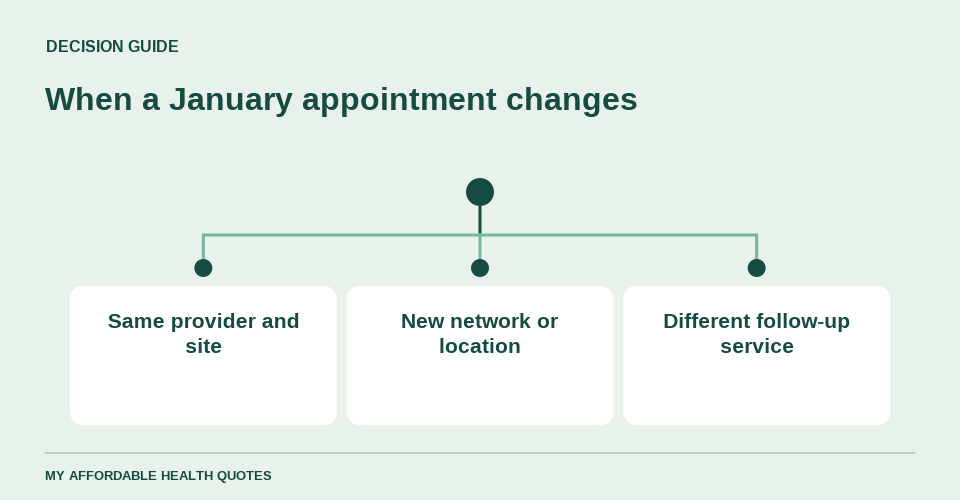
The surgeon's scheduler can say which clinician normally handles follow-up and where it takes place. A practice may schedule a return at a branch office closer to the patient's home, or have another clinician in the same group conduct it. Ask whether those arrangements matter to billing and network participation. A location with the same signage can still be registered under a different billing arrangement. If the hospital's checklist mentions testing by a separate organization, put that organization on the timeline. It may be possible to identify it only after orders have been placed.
Find out what the surgeon means by included
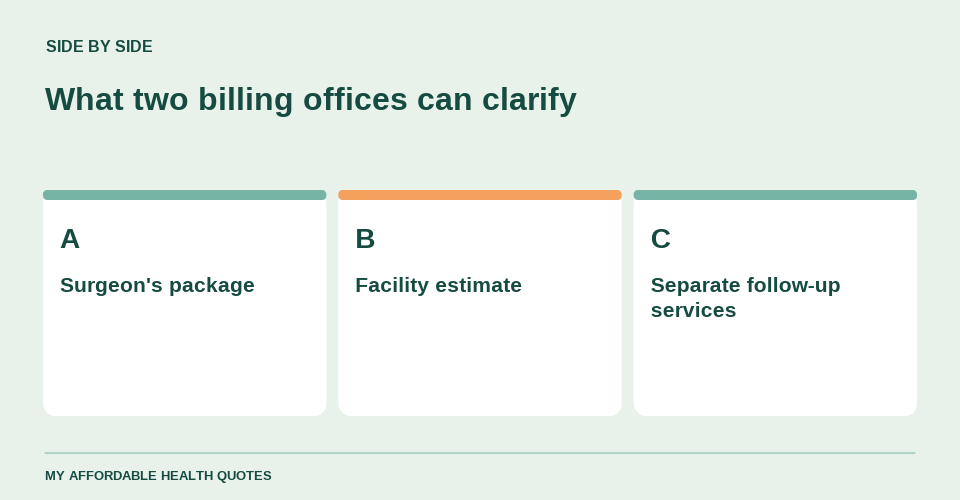
The professional billing office is the right place to ask whether it expects the planned January appointment to fall within a postoperative package. Ask it to describe which services it expects the package to cover, what could be billed separately and what happens administratively if the patient's insurer changes. A practice saying that a routine return does not usually carry a separate professional charge is valuable information about its own billing. It does not answer questions about tests, facilities, other clinicians or services outside that package. Give both insurers the office's description when discussing the transition.
The electrician discovers that the estimate in his inbox is headed surgery estimate but was prepared by the surgeon alone. He requests the facility's estimate separately and asks who will bill for the other identifiable services on the expected date. If someone offers a bundled price, get a list of the parties and dates included. The term can describe an arrangement among specific participants rather than every service the patient might receive. A quote that excludes the facility should never occupy the same spreadsheet cell as a quote covering professional and facility services together.
Ask each insurer about its own year
First contact the current plan. Ask it to check the procedure, facility and surgeon against the coverage expected for December, including any required authorization. Save the actual scope and effective dates of a decision. Then contact the candidate plan for January. Identify the return clinician and site, describe what the professional office expects to bill, and ask how the plan would handle any separately billed work. A representative for the old plan cannot bind the new insurer. Even a renewal through the same carrier deserves a check against the specific upcoming product and network.
Ask when the applicable deductible and out-of-pocket accumulation periods begin and end. For a policy operating on a calendar year, deductible spending in December and deductible spending the following January may belong to different periods. A household changing plans should not assume that an accumulated balance transfers. Ask each insurer to explain any exception it actually offers in writing. Also ask which services are subject to the deductible and which follow a different cost-sharing rule. A new accumulation period matters only to the extent that the particular service produces a charge to which that rule applies.
Build two estimates without inventing a January claim
Suppose, for illustration, the surgeon's office expects no separate professional charge for the ordinary first return. A nearby imaging service, if the care team orders it, might have an estimated allowed amount of two hundred and forty dollars. These example figures create a base case with the confirmed appointment and a separate scenario with imaging. Applying the plan's January deductible to the hypothetical image in both cases would make the base case too expensive. Assuming that everything furnished at the follow-up is included in the surgery fee would make the second scenario too cheap.
Compare each scenario under both insurance choices. One might have a higher premium but a documented network route to the follow-up site. Another might cover the same visit yet direct any additional diagnostics to a different facility. Record the difference in travel, scheduling and estimated member cost for that separately supplied service. The electrician bills for completed jobs and can usually rearrange one short appointment. A second round trip across town on a different morning might require paying a colleague to cover a scheduled inspection. That personal expense should sit beside the health plan estimate as a separate business consideration.
Confirm where responsibility shifts
Before the procedure, ask who receives calls about postoperative questions, who handles any new referral and what contact details should be used if an appointment needs to move. The practice can explain its clinical instructions and coverage arrangements for its own staff. The plan can explain referral or authorization rules for separately ordered services. If the patient is moving to another insurer, ask how quickly the new member number will be available and what the receiving office can do before the card arrives. An office may prepare records in advance even if a new plan cannot review a request until coverage begins.
Give the scheduler the actual date of the policy change. A January appointment moved into December or a December appointment postponed into January may cross both the insurance boundary and an authorization expiration. Ask the office and insurer to update their checks for the new date. If the reason for changing the date is medical, let the clinician determine the response. The person answering a billing line should not put a patient in the position of deciding whether a delay is clinically safe based on an estimate of member cost.
Read the first January statement without assuming a mistake
The electrician receives a statement in January for a December service. He checks the date of service rather than classifying the claim by the date the envelope arrived. He matches the provider, service, insurance identification and explanation of benefits before making any conclusion about the new deductible. A January bill may legitimately concern the old year. Conversely, a return appointment entered under the old card could trigger a denial that the office can resolve by updating coverage and resubmitting the claim. The first step is diagnosing which date and participant the document actually represents.
If the return visit was supposed to be included but a bill appears, ask the professional office to identify the billed service and why it falls outside its earlier estimate. A facility charge, separately performed procedure or service furnished by an independent organization may have its own explanation. If the insurer made an adverse coverage decision, request the written reason and follow the applicable appeal instructions and deadlines. Keep the original estimate, any description of the package, the actual appointment record and both plan documents together. A short timeline is generally easier for a reviewer to understand than a folder of undated screenshots.
The electrician asks the broker for two answers before selecting the new year's coverage. Which parts of the known return arrangements are confirmed for this exact product? Which uncertainties could create an additional trip or a separately billed claim? A good answer may leave some clinical contingencies open while clearly identifying who can resolve each insurance question. When the January return is over, he can compare the actual sequence with his estimate and close out both years' paperwork. That practical ability to finish a course of follow-up deserves a place in the decision alongside twelve months of premiums.
One last practical detail concerns payment cards kept on file. If the practice asks for a deposit before December surgery, ask whether it applies the deposit to a particular account, when it reconciles the amount and which statements will show that payment. A statement from a different entity may not reflect the money already paid to the surgeon. If a credit appears after the old insurer finishes processing, ask the practice how it will return or apply the credit. Documenting that answer makes the year-end insurance comparison more useful when bank transactions and claim notices start arriving in a different order.
Sources and further reading
- HealthCare.gov: Summary of Benefits and Coverage
- HealthCare.gov: Comparing health plans
- HealthCare.gov: Marketplace benefits
- HealthCare.gov: Appealing a health plan decision