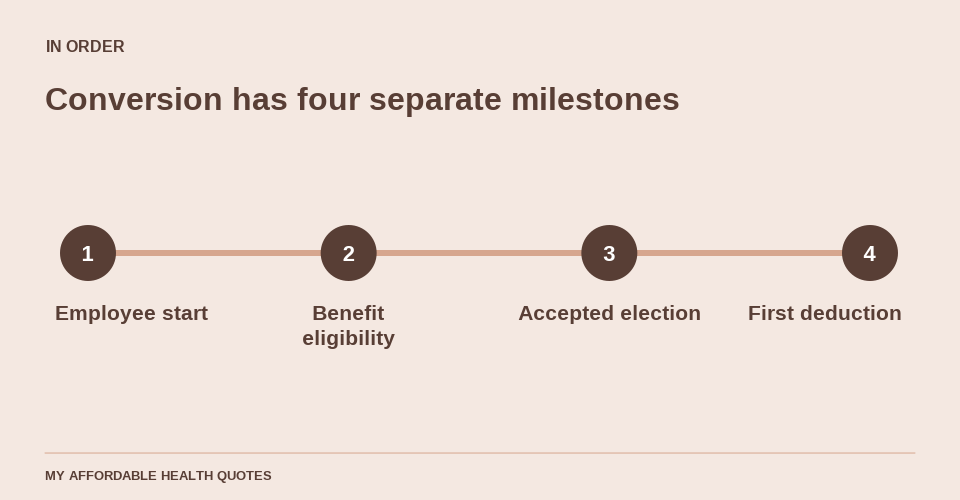
When an established business brings several contractors onto payroll, health-benefit administration needs its own conversion plan. The employment offer, payroll start date, benefit eligibility date and insurer enrollment are separate events. Treating them as one checkbox can lead to deductions without coverage, missed elections or workers ending individual policies too early.
This guide assumes the business is obtaining appropriate advice about worker classification. It focuses on the records and handoffs needed after the company decides to establish an employee relationship. Insurance should not be used to disguise the nature of work, and a new contract label does not resolve an earlier classification question.
Resolve classification before designing the benefit exception
The IRS explains that worker classification depends on the actual relationship, including control, financial arrangements and the parties' relationship. No single label decides the issue. Have the company's tax or employment adviser review the facts and any historical concerns.
Do not ask the insurer to treat someone as an employee while payroll continues to treat them as an independent business merely because the person wants group coverage. The records should describe the actual arrangement consistently. If the advisers identify a correction that reaches back into an earlier period, let them determine the appropriate process.
Once the classification and effective employment date are established, give the benefits administrator the relevant facts. Keep legal conclusions and sensitive tax records in the appropriate file. The enrollment team needs accurate instructions, not every document generated during the classification review.
Build a conversion roster with distinct dates
For each worker, record the agreed employee start date, expected schedule, applicable benefit class, eligibility date, election deadline and requested coverage tier. Use the plan's actual terms to determine eligibility. A contractor's first day working with the company years earlier is not automatically the date the insurer will use.
Ask the administrator whether prior service affects eligibility under the plan and what documentation is required. Do not promise credit for prior service before that question is resolved. The answer may depend on the arrangement and the facts rather than a manager's preference.
Mark people whose dates are tentative. A worker may postpone conversion to finish a project or resolve another contract. Update the roster before payroll and enrollment files are sent, so a change does not leave one system showing an employee while another still shows a contractor.
Explain the offer with real benefit documents
Provide the plan summary, employee contribution, available dependent tiers and relevant eligibility instructions. A recruiting phrase such as “full benefits included” does not tell the worker what they will pay or when coverage begins. Use the confirmed terms in the written offer or accompanying materials.
Give workers a way to compare providers and prescriptions privately. They can review the exact insurer directory and drug list or contact the insurer. The business should not collect diagnoses to decide whether an employee belongs in the group plan.
If multiple options are offered, explain how to obtain the comparison materials and where to ask questions. Avoid steering everyone into one option based solely on its payroll deduction. The employee's household and care needs may make another available choice more appropriate.
Address the waiting period without guessing
The Department of Labor advises workers to check waiting periods when changing jobs. Federal rules limit waiting periods for otherwise eligible individuals, but the administrator must apply the plan's terms to the actual situation. Do not replace that review with a blanket statement that coverage always starts immediately or always starts after ninety days.
Obtain the expected effective date in writing and communicate it before the worker cancels other insurance. Explain any remaining steps, such as an election form or insurer acceptance. A date projected by the hiring manager is not the same as a confirmed enrollment.
If there is a gap between the new employee start date and benefit eligibility, the worker needs accurate information early enough to review personal options. The company can direct them to official enrollment resources without promising that a particular temporary product or Special Enrollment Period will be available.
A hypothetical three-worker conversion
A marketing firm plans to hire three long-term contractors as employees on April 1. One will work a regular full-time schedule, another has a different expected schedule and the third delays the start until May. The owner initially sends payroll one list and tells the broker that all three need coverage immediately.
The administrator asks for the plan-relevant facts and corrects the enrollment schedule. Human resources sends each person their own confirmed instructions. Payroll receives deduction information only for accepted elections and the appropriate coverage periods.
One worker already has individual Marketplace coverage. The firm supplies the employer-offer details the worker needs to evaluate that coverage and any assistance. It does not log into the worker's personal Marketplace account or tell them to cancel based on an unconfirmed start date.
The example shows why a batch conversion still requires individual records. A common announcement can explain the project, but the dates, eligibility and elections may differ for each person.
Keep individual coverage decisions with the worker
Some contractors will arrive with individual insurance, a spouse's employer plan or another source of coverage. Ask only for the election or waiver information required by the group's process. Do not demand a detailed explanation of the worker's medical or financial reasons for declining.
An offer of employer coverage can affect Marketplace assistance. HealthCare.gov explains that an affordable offer meeting applicable standards can matter even when declined. Give the employee accurate offer information and direct them to the Marketplace or qualified assistance for their personal determination.
If a worker asks whether to keep their current plan, explain the limits of the company's role. The employer can describe its offer; it should not guarantee a subsidy result or choose coverage for the household. The employee can compare networks, total costs and enrollment dates with an appropriate professional.
Design the payroll handoff around accepted elections
Have the administrator provide payroll with a controlled file showing the employee identifier, coverage tier, deduction amount and start period. Include who approved the file and when. Avoid entering deductions from a preliminary quote or a verbal election.
Ask payroll to demonstrate how the monthly employee contribution becomes a per-paycheck deduction. The answer depends on the payroll schedule and the approved arrangement. Review how partial months, delayed enrollment and corrections will be handled before the first check is issued.
Keep employer contributions and employee deductions distinct in the accounting records. A company payment to the insurer does not prove that every employee deduction is correct. Reconcile the two streams against the enrollment record rather than assuming the invoice total validates payroll.
Verify insurer acceptance, not just file transmission
After sending the enrollment information, obtain confirmation that the insurer accepted it. A successful upload or email delivery proves transmission, not necessarily enrollment. Review rejected records and missing documents promptly.
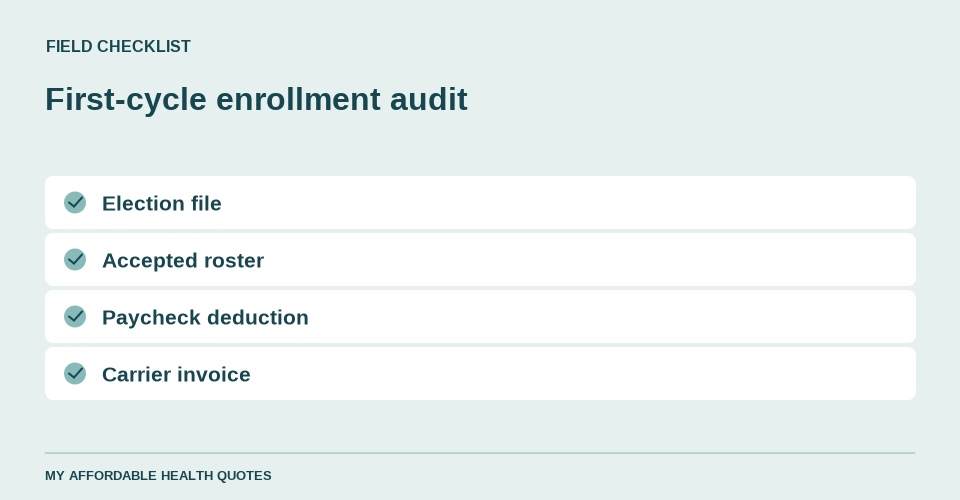
Give employees instructions for obtaining identification information and checking their coverage. If someone cannot locate their enrollment, investigate before assuming the issue is only a delayed card. Compare the accepted roster with the election file and insurer response.
Set a deadline for resolving discrepancies before the intended effective date where possible. If an issue remains, communicate the known facts to the employee and escalate through the administrator. Do not tell them they are covered merely to reduce anxiety when confirmation is still missing.
Audit the first two payroll cycles
Compare each new employee's election with the deduction and the insurer roster. Look for deductions applied to someone who waived coverage, missing dependent tiers and a deduction that began before the approved period. Review the invoice for the same coverage month.
If a correction is needed, have payroll and the administrator determine the proper adjustment. Explain the correction to the employee in plain language and retain the supporting record. Avoid collecting or refunding an arbitrary amount simply to make the next paycheck resemble an estimate.
Repeat the review after the second cycle because some errors appear only when a delayed enrollment or adjustment reaches the insurer bill. Once the records align, move the employees into the company's normal monthly reconciliation process.
Keep a separate log of employee questions during the first month. If several people misunderstand the same instruction, revise the explanation rather than treating each case as an isolated mistake. For example, distinguish the date a worker submits an election from the date coverage takes effect. Better instructions can prevent the next group of hires from repeating the same avoidable cancellation or deduction error.
Update the ongoing onboarding process
Document what the conversion revealed. If the company had no clear owner for benefit eligibility, assign one. If offer letters used vague promises, update the template. If payroll and the broker received different start dates, establish one approved source for future changes.
Retain the classification and employment records in their proper locations, separate from routine insurance elections where appropriate. A future reviewer should be able to identify the effective employment date and benefit instructions without receiving unrelated confidential material.
Train managers to refer questions about exceptions rather than making promises. A supervisor who wants to help a valued worker may unintentionally describe coverage terms the plan cannot provide. A clear escalation path allows the question to be answered accurately before it becomes part of an offer.
Request help reviewing available health coverage if the conversion changes the business's needs. The immediate administrative priority is to align employment facts, plan eligibility, accepted elections and payroll deductions. When those records agree, the new employees can evaluate their choices with reliable information and the owner can manage the benefit with fewer surprises.
Sources and further reading
- IRS: Contractor or employee
- DOL: Changing jobs and health benefits
- HealthCare.gov: Employer coverage offers