Leaving a job does not always end the financial relationship with that employer. A departing employee may receive a stock award, an accelerated vesting event, or shares delivered after the final workday. If the household is also buying private health insurance, the stock paperwork belongs in the coverage planning folder. The key is to separate the date insurance ends from the dates compensation becomes reportable and shares are sold. Those are different events, even when they happen within the same week.
This guide uses Colorado as the setting because residents applying for Marketplace financial help use Connect for Health Colorado, and its document process must be coordinated with the payroll and brokerage evidence. It does not recommend holding or selling shares, or deciding when to leave a job. Those choices have investment, employment, and tax consequences beyond insurance. The useful insurance task is narrower: obtain a reliable household income estimate and select coverage using confirmed plan details.
Start with the award, not the brokerage balance
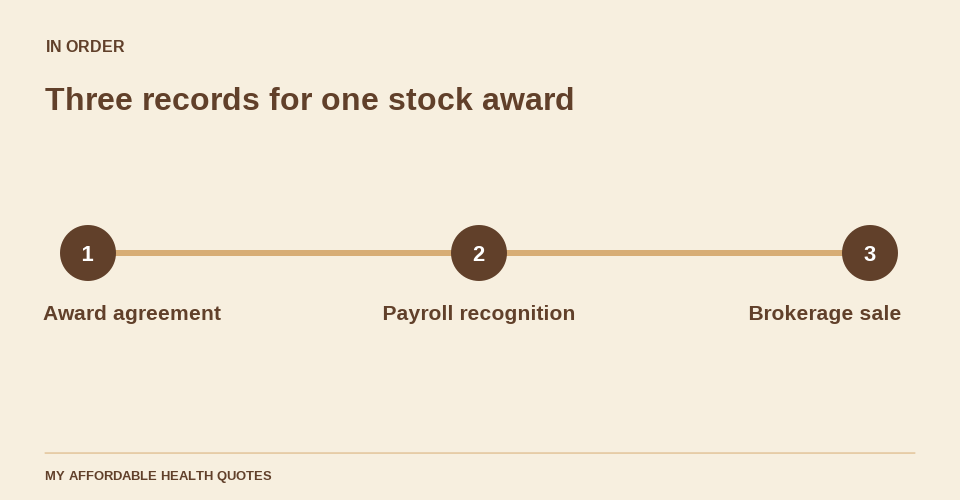
Stock compensation can appear in several places. There may be a grant notice, vesting statement, payroll entry, sale confirmation, and year-end tax form. The amount visible in a brokerage account is not necessarily the amount included as wages, and the value originally announced in an offer letter is not necessarily the value eventually recognized. Ask payroll to identify what has already been included in federal taxable wages and what remains expected. Ask the tax preparer how later sales affect the forecast.
The IRS discusses stock compensation in Publication 525. Different awards can follow different tax rules, so an RSU, restricted stock grant, and stock option should not be treated as interchangeable simply because all involve company shares. Record the award type exactly as shown in the agreement. If a separation agreement changes its treatment, provide the actual agreement to the appropriate adviser rather than summarizing it as a bonus.
A hypothetical compensation handoff
Consider a Colorado product manager who leaves an employer in June. Regular salary has already been paid, the health plan ends at a date confirmed by human resources, and an award is scheduled for settlement later. The household also expects consulting income. A rushed insurance application might include only the consulting estimate because salary has stopped. A better worksheet preserves the salary earned earlier in the year, adds expected compensation using payroll guidance, and separately forecasts the new business.
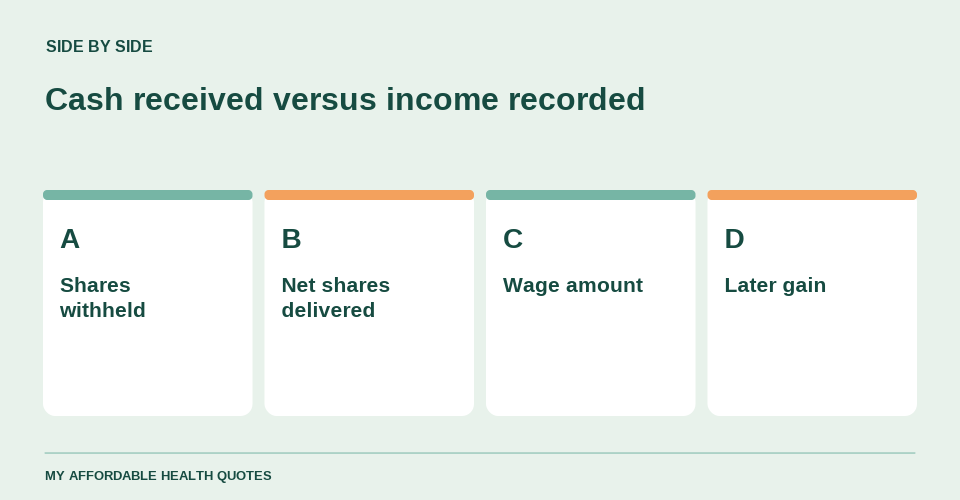
Suppose the award statement shows shares withheld for taxes and fewer shares delivered to the brokerage account. The household should not automatically use the net delivered value as the wage figure. Withholding is a payment toward taxes, not a general rule for measuring income. If the remaining shares are later sold, the tax preparer should reconcile their basis and sale proceeds so compensation already counted is not inadvertently counted again as an entirely new gain. These are recordkeeping questions, not reasons to improvise a tax calculation.
Keep two calendars beside each other
The coverage calendar contains the employer plan end date, available enrollment opportunity, replacement effective date, and first premium deadline. The compensation calendar contains payroll dates, scheduled vesting or settlement dates, sale dates if a sale occurs, and dates when reliable tax records become available. Put both calendars in the same file. Doing so reveals whether an insurance decision must be made before every compensation number is final, which is a common and manageable situation.
When a number remains uncertain, label it as an estimate and document the basis. A written payroll estimate is more useful than a remembered discussion. A range can help the household understand uncertainty privately, but the application still needs the best supported figure requested by the Marketplace. Do not choose the lowest scenario solely because it produces a more attractive premium. If the award later differs from the estimate, update the relevant application promptly through the correct channel.
Colorado's evidence process deserves attention
Connect for Health Colorado explains its documentation requirements on the Submit Documents page. Read the specific request in the account, including the deadline and the period the requested evidence must cover. A current pay stub may demonstrate recent wages without explaining the entire year's expected stock compensation. A brokerage screenshot may establish an account value without establishing the correct income amount. The strongest response answers the question asked rather than uploading every financial document available.
If records do not naturally match the forecast, ask the exchange what explanation or accepted evidence it needs. Keep a copy of what was submitted and the confirmation. Avoid sending an unredacted account archive through a public quote form. A licensed insurance agent may help with the coverage application, while payroll and a tax professional resolve compensation classification. Giving each person a concise question reduces the chance that one professional is expected to make a determination outside their role.
Build the household figure once
Start a source list rather than an unstructured total. Include employment compensation, expected consulting profit, a spouse's relevant income, and investment items that the tax preparer identifies. HealthCare.gov's income guidance describes the categories used for Marketplace estimates. The worksheet should distinguish information already included in another line. For example, a year-to-date wage total may already include a stock event, so adding the same award separately would duplicate it.
Assign each line an owner and an update date. Payroll owns the wage estimate; the business ledger supports consulting profit; the investment records support sales; the tax preparer resolves classification. This is useful even when the household expects no financial assistance. It gives the insurance discussion a consistent set of facts and helps prevent an old estimate from being carried into renewal after the job transition has settled into a new earnings pattern.

Shop the policy independently of the award
A large stock event does not tell you whether an individual plan has a suitable network. Begin the coverage comparison with the doctors, prescriptions, and facilities the household expects to use. Verify the exact product and coverage year. A familiar carrier name is not enough. A plan sold through the exchange and one sold directly by a carrier may differ, so preserve each plan identifier in the comparison rather than reducing both to a company logo.
Compare the full monthly premium as well as any assistance determination, the deductible, the out-of-pocket limit, and the expected handling of recurring care. If employer coverage has already accumulated deductible credit, ask how a change affects that progress. Do not assume the amount transfers. A household with substantial assets can still value predictable specialist access or lower administrative burden. The correct choice is not determined by a stereotype about what high earners are supposed to buy.
What if the award arrives after enrollment?
An enrollment completed earlier in the year does not freeze the household's financial facts. When payroll confirms a change, preserve the notice and review whether the annual estimate must be revised. If the household receives advance financial assistance, ask how the revised estimate affects it. If no assistance is involved, still keep the revised income record for future applications and tax work. Do not cancel a plan just because compensation changed; coverage and financial assistance are related but distinct issues.
It is also worth checking whether a later job offer introduces another coverage option. A new employer's benefits should be evaluated using its actual eligibility and effective dates. Stock arriving from an old employer does not mean the old health plan is still active. Likewise, a new employment agreement does not establish that insurance began on the first workday. Written benefits confirmations remain more useful than assumptions based on paychecks or equity statements.
A clean handoff to the people helping you
Prepare a one-page cover sheet with the last employer coverage date, the intended replacement date, the award type, the latest payroll estimate, and the unresolved tax questions. Attach the supporting documents separately. Ask payroll whether the wage forecast includes the award. Ask the tax adviser whether a proposed sale changes recognized income. Ask the agent which available policies meet the household's care requirements. This division keeps the work focused while allowing everyone to see the same timeline.
Before finalizing enrollment, check that every covered person is listed correctly, the payment amount is understood, and the insurer has confirmed the start date. After the stock event, update the worksheet and retain the final forms. For a Colorado private-plan comparison, request licensed-agent assistance from My Affordable Health Quotes and explain that your employment income includes equity compensation. The goal is a coverage decision supported by accurate records, with the investment and tax decisions handled by the professionals responsible for them.
Resolve corrections without losing the audit trail
Sometimes payroll corrects a wage statement after the household has already updated its application. Keep the original estimate and the corrected statement together, with a short note explaining the change. Do not erase the earlier record as though it never existed. A clear sequence helps an adviser distinguish a genuine correction from a new payment and helps the household understand why two documents show different totals.
Check the coverage account after submitting a revision. Confirm that the correct year was changed and that the household did not accidentally begin a duplicate application. Save any new eligibility notice and review the next premium bill. If the bill differs from the notice, ask the exchange and insurer to reconcile the discrepancy rather than deciding that one of them can be ignored. Administrative follow-through is part of making the compensation update useful.
Sources and further reading
- IRS: Taxable and Nontaxable Income
- HealthCare.gov: Income to Include
- Connect for Health Colorado: Submit Documents